Have you ever heard someone say a friend is a shining star or that a classroom was a zoo? They are not saying those things are literally true. They are using a metaphor to paint a picture with words. That is why so many students search for Metaphor for Kids when they first learn about figurative language.
A metaphor can seem confusing at first because it compares two different things without using the words like or as. Once you understand the simple idea behind it, metaphors become fun to spot in books, songs, movies, and everyday conversations.
The good news is that learning metaphors does not have to feel like solving a puzzle. With clear explanations and easy examples, children can quickly understand how these creative comparisons make writing more colorful and interesting.
In this guide, you will learn what a metaphor is, how it differs from a simile, why writers use it, how to recognize one, and how to create your own. By the end, you will be able to identify metaphors with confidence and use them to make your writing more imaginative.
Quick Definition
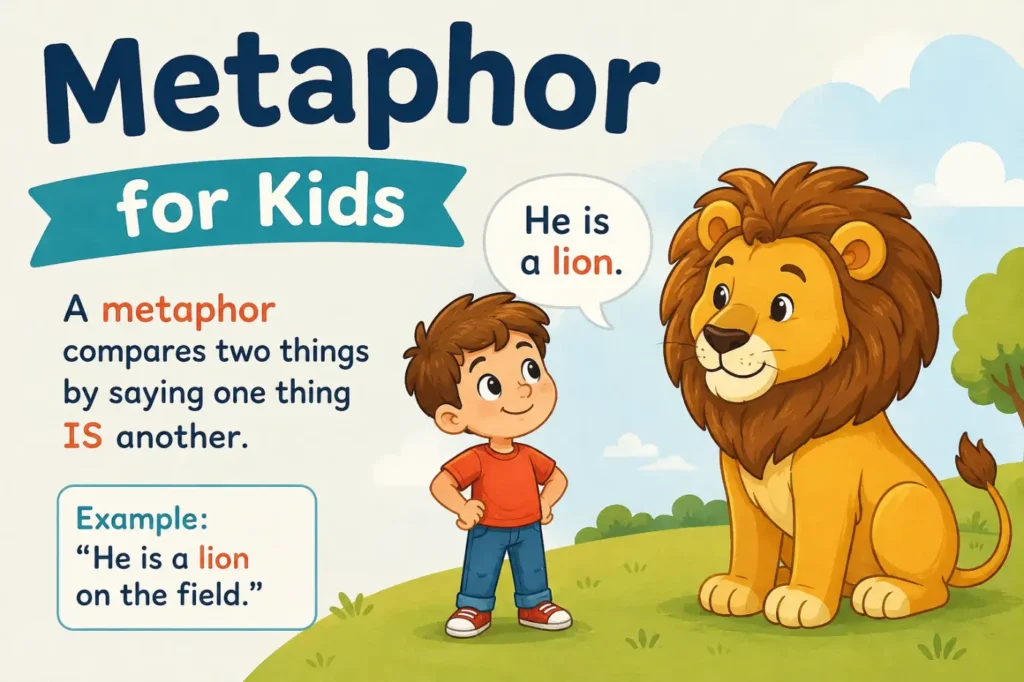
A metaphor is a figure of speech that says one thing is another to create a vivid comparison. It does not mean the statement is literally true. Instead, it helps readers imagine an idea, feeling, or object more clearly by comparing it to something familiar.
Quick Answer
If you need a fast answer, remember these key points.
- A metaphor compares two different things.
- It does not use the words like or as.
- It helps readers create pictures in their minds.
- Writers use metaphors to make stories and descriptions more interesting.
- Children use metaphors in reading, writing, poetry, and everyday conversations.
What Is A Metaphor
A metaphor is a creative way of describing something by saying it is something else. The comparison is not meant to be taken literally. Instead, it highlights a shared quality between two different things.
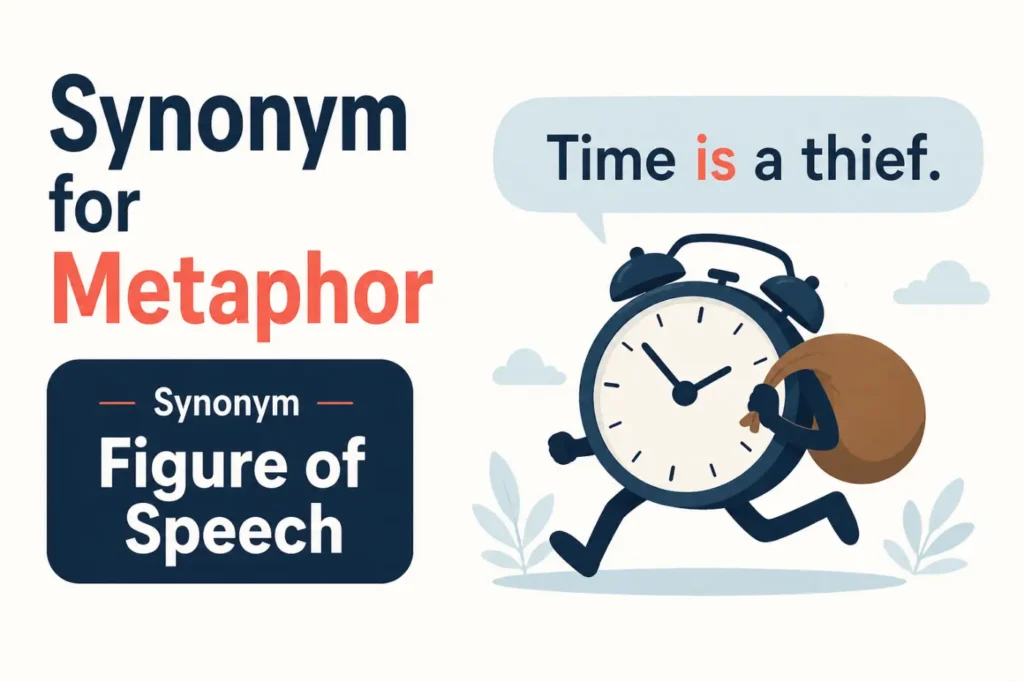
For example, imagine someone says, Time is a thief. Time cannot actually steal anything. The sentence means time passes quickly and quietly, taking away moments we cannot get back.
Here are a few simple examples.
- My teacher is a treasure.
- The playground was a jungle.
- His smile is sunshine.
- Her ideas are fireworks.
- The clouds were fluffy pillows.
Each example encourages the reader to imagine something instead of simply describing it with ordinary words.
Metaphor Vs Simile
Children often confuse metaphors and similes because both compare two different things. The biggest difference is the way the comparison is made.
| Metaphor | Simile |
|---|---|
| Says one thing is another | Compares using like or as |
| Creates a direct comparison | Creates an indirect comparison |
| The classroom is a zoo. | The classroom is like a zoo. |
| Her voice is music. | Her voice sounds like music. |
| He is a rock. | He is as strong as a rock. |
Think of it this way. A metaphor speaks as if the comparison is real. A simile reminds you that it is only a comparison by using like or as. Understanding this difference helps children recognize figurative language more easily in books and classroom activities.
As your vocabulary grows, knowing other words for metaphor can make it easier to recognize and discuss figurative language in stories, poems, and everyday conversations.
Why Metaphors Help Kids Learn
Metaphors do much more than make writing sound interesting. They help children understand new ideas by connecting them to things they already know.
For example, imagine a teacher says, Your brain is a muscle. Your brain is not actually a muscle, but the comparison reminds students that practice makes it stronger, just as exercise strengthens muscles.
Metaphors also make learning more memorable because the images stay in your mind. It is much easier to remember The moon was a silver coin than a plain sentence describing its shape and color.
Children benefit from metaphors in many ways.
- They improve reading comprehension.
- They encourage creative thinking.
- They strengthen vocabulary.
- They make writing more engaging.
- They help students express emotions clearly.
- They develop imagination and storytelling skills.
That is why teachers introduce metaphors in elementary school and continue using them throughout middle school and high school.
How To Spot A Metaphor
Finding a metaphor becomes easier when you know what to look for. Instead of reading every sentence literally, ask yourself if the writer is making an imaginative comparison.
Here are some simple steps.
- Read the sentence carefully.
- Look for two different things being connected.
- Check if the sentence avoids the words like and as.
- Ask if the comparison creates a picture in your mind.
- Think about the shared quality between the two things.
Consider this sentence.
The baby was an angel.
The baby is not literally an angel. The writer is comparing the baby’s gentle and sweet nature to the qualities people often associate with angels.
Now look at another example.
The city never sleeps.
Cities cannot actually sleep. This metaphor suggests the city is always active and full of life.
With practice, spotting metaphors becomes almost automatic.
Pronunciation Guide
Knowing how to pronounce the word correctly helps children feel more confident when reading aloud or answering questions in class.
IPA Pronunciation
/ˈmet.ə.fɔːr/
Syllable Breakdown
The word has three syllables.
Met a for
The stress falls on the first syllable.
Common Pronunciation Mistakes
Some learners make small pronunciation errors when they first encounter the word.
Here are the most common ones.
- Saying mee ta for instead of met a for.
- Placing the stress on the second syllable.
- Dropping the middle vowel sound when speaking quickly.
Listening to teachers, audiobooks, or dictionary recordings can help children develop the correct pronunciation naturally.
How To Remember What A Metaphor Is
A simple memory trick can make metaphors much easier to understand.
Remember this sentence.
A metaphor says one thing is another.
That single idea explains almost every metaphor children will encounter.
Here are a few examples to practice.
- My brother is a superhero.
- The snow is a white blanket.
- The classroom is a beehive.
- Her laughter is music.
- The wind is a playful dancer.
None of these statements are literally true. They compare one thing with another to create a strong mental picture.
Whenever you are unsure, ask yourself one question.
Is the writer trying to help me imagine something instead of stating a fact?
If the answer is yes, you have probably found a metaphor.
10 Examples Of Metaphors For Kids
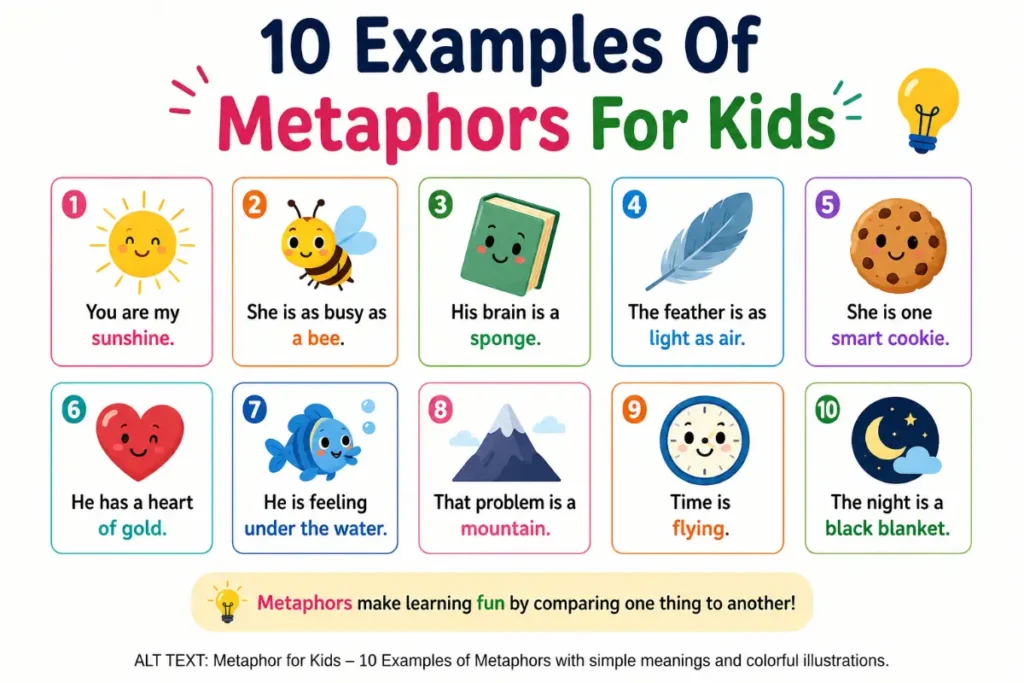
The easiest way to understand metaphors is to see them in action. Each example below compares two different things to create a clear mental picture. None of the comparisons are meant to be taken literally.
- My brother is a superhero.
- The classroom is a beehive.
- Her smile is sunshine.
- The moon is a silver coin.
- The clouds are fluffy pillows.
- My backpack is a treasure chest.
- The playground is an adventure land.
- His voice is thunder.
- The river is a ribbon of glass.
- Our teacher is a guiding star.
After reading each sentence, ask yourself what quality the writer wants you to notice. For example, calling a teacher a guiding star suggests the teacher helps students find the right direction. Saying the river is a ribbon of glass helps readers picture calm, smooth water.
Short Metaphors For Kids
Short metaphors are perfect for younger learners because they are easy to read, remember, and use in classroom activities.
Here are some simple examples.
- Books are windows.
- Time is gold.
- Hope is a seed.
- Kindness is magic.
- Knowledge is power.
- My room is a volcano.
- My dog is a shadow.
- The sun is a giant lamp.
- Her heart is gold.
- Laughter is music.
Even though these examples are short, each one creates a strong image that makes the sentence more interesting than a plain description.
Funny Metaphors For Kids
Humor is a great way to introduce figurative language. Funny metaphors capture children’s attention and make lessons easier to remember.
Here are some playful examples.
- My little brother is a tornado in sneakers.
- Dad is a sleepy bear before breakfast.
- Our puppy is a popcorn machine because it never stops bouncing.
- My backpack is a black hole that eats my homework.
- The classroom is a popcorn pot during recess.
- Grandpa is a walking joke book.
- My hair is a bird’s nest every morning.
- My stomach is a roaring lion before lunch.
- My baby cousin is an alarm clock with legs.
- Our kitchen is a cookie factory during the holidays.
These examples exaggerate familiar situations in a fun way while still helping children understand how metaphors work.
Metaphors In Sentences
Writers use metaphors in complete sentences to make stories, poems, and conversations more vivid. Reading longer examples helps children recognize figurative language in real writing.
Here are several natural examples.
- The school bell was music to the students after a long afternoon.
- Emma’s imagination is a bright rainbow filled with endless ideas.
- The old tree stood as the neighborhood’s gentle guardian.
- Liam’s excitement was a fire that spread through the whole class.
- The library is a treasure chest filled with adventures.
- Mia’s words were warm blankets on a cold day.
- The busy hallway became a flowing river of students between classes.
- Ethan’s determination was an unbreakable bridge across every challenge.
- The night sky was a sparkling blanket covered with tiny diamonds.
- Grandma’s hugs are medicine for a difficult day.
Notice that every sentence paints a picture instead of simply stating facts. That is one reason metaphors make writing more enjoyable to read.
Common Mistakes
Many children make similar mistakes when they first learn metaphors. These errors are completely normal and usually disappear with practice.
Confusing Metaphors With Similes
This is the most common mistake.
A metaphor says one thing is another.
A simile compares two things using like or as.
For example:
- The baby is an angel. This is a metaphor.
- The baby is like an angel. This is a simile.
Learning this simple difference helps students identify both figures of speech more accurately.
Taking The Meaning Literally
Children sometimes think every metaphor describes a real fact.
For example, if someone says The classroom is a zoo, they do not mean animals are sitting at the desks. They mean the classroom is noisy, busy, or difficult to control.
Whenever a sentence sounds impossible, look for the hidden comparison instead of reading it literally.
Creating Confusing Comparisons
A good metaphor connects two things that share an obvious quality.
For example:
- Her smile is sunshine.
- My teacher is a lighthouse.
These comparisons are easy to understand because readers can quickly recognize the shared idea.
Avoid comparisons that seem random or have no clear connection. If readers have to guess the meaning, the metaphor loses its impact.
Using Too Many Metaphors
Metaphors make writing stronger, but using too many in one paragraph can overwhelm readers.
A few well chosen comparisons usually create a greater impact than filling every sentence with figurative language.
Grammar Rules
Although metaphors are creative, they still follow normal English grammar.
Metaphors Usually Use Linking Verbs
Many metaphors connect ideas with verbs such as is, are, was, or were.
Examples include:
- My teacher is a lighthouse.
- The clouds are cotton candy.
- His courage was a shield.
These verbs help create direct comparisons between two different things.
Keep The Comparison Clear
Readers should immediately understand the shared quality between the two ideas.
For example:
- Her voice is velvet.
- The classroom is a beehive.
- His mind is a sponge.
Each comparison creates a clear image that supports the writer’s message.
Match The Context
Choose metaphors that fit the topic and the audience.
A classroom story should use familiar images that children already understand. Comparing homework to climbing a mountain works because many students know that feeling. A comparison involving advanced scientific concepts may confuse younger readers.
Avoid Mixed Metaphors
A mixed metaphor happens when two unrelated comparisons appear in the same sentence.
For example:
Our team climbed the mountain and sailed through the finish line.
The sentence combines two different images that do not belong together.
Instead, keep one clear comparison throughout the sentence.
Real Life Usage Examples
Metaphors are not limited to storybooks. They appear in everyday conversations, classrooms, songs, speeches, advertisements, and children’s novels.
Daily Conversation
People often use simple metaphors without realizing it.
Examples include:
- You are my sunshine.
- That test was a breeze.
- My phone is my lifeline.
- Her heart is gold.
- His room is a disaster zone.
School Writing
Teachers encourage students to use metaphors because they make descriptive writing more engaging.
Examples include:
- The playground was a kingdom of adventure.
- The pencil became my magic wand.
- The classroom was a garden where ideas grew.
Children’s Literature
Many authors use metaphors to make stories memorable. These comparisons help young readers picture characters, places, and emotions more clearly without lengthy descriptions.
Songs And Media
Songwriters, movie scripts, and television shows regularly include metaphors because they express feelings in creative and memorable ways.
Once children begin recognizing them, they often discover that metaphors are everywhere, from bedtime stories to favorite songs and everyday conversations.
Related Literary Devices And Commonly Confused Terms
As children learn about metaphors, they often discover other figures of speech. Some are very similar, while others have a completely different purpose. Knowing the differences helps young readers become stronger writers.
| Literary Device | Meaning | Example |
|---|---|---|
| Metaphor | Directly compares two different things | Her smile is sunshine. |
| Simile | Compares using like or as | Her smile is like sunshine. |
| Personification | Gives human qualities to nonhuman things | The wind whispered through the trees. |
| Hyperbole | Uses exaggeration for effect | I have told you a million times. |
| Idiom | A phrase with a meaning different from its literal words | It is raining cats and dogs. |
| Alliteration | Repeats the same beginning sound | Busy bees buzzed. |
These literary devices all make writing more interesting, but they do it in different ways. Learning to tell them apart will help children understand stories and express their own ideas more creatively.
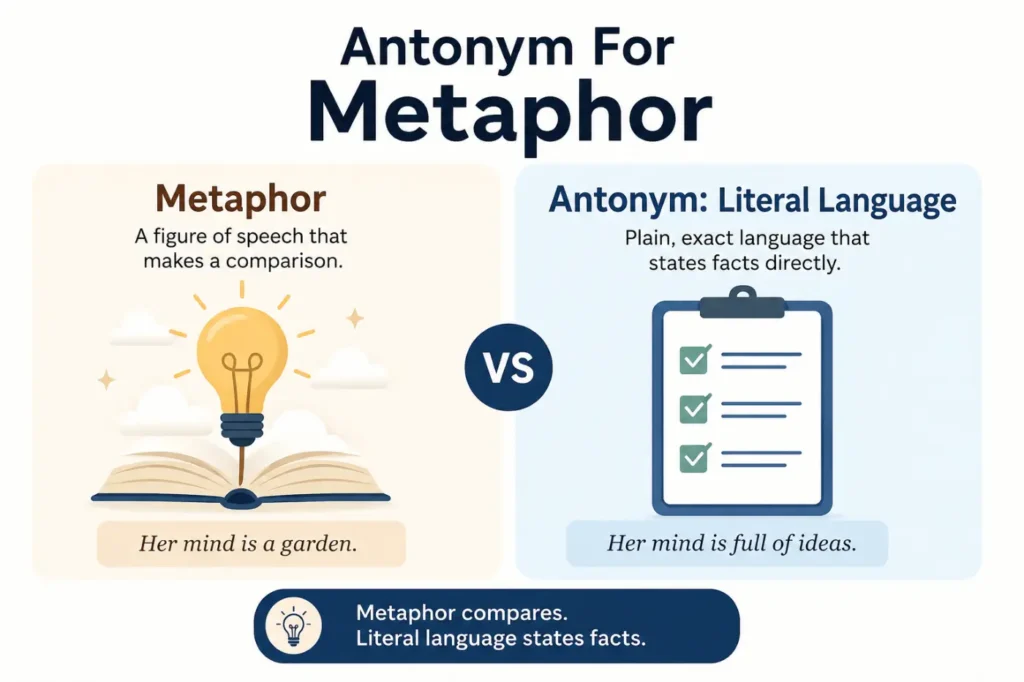
If you’re curious about expressions that rely on literal meaning instead of figurative language, exploring words that contrast with metaphor can help you understand the concept even better.
Expert Language Insight
Children sometimes think a metaphor is simply a fancy sentence. In reality, it is a powerful thinking tool. Good writers use metaphors because they help readers understand unfamiliar ideas through familiar images.
For example, saying My mind is a sponge instantly communicates the idea of learning and absorbing information. A long explanation could express the same meaning, but the metaphor makes it easier to imagine and remember.
Experienced teachers also encourage children to explain why a metaphor works instead of simply identifying it. This builds reading comprehension, vocabulary, and critical thinking at the same time.
When children begin writing their own metaphors, they often choose comparisons based on things they already know, such as animals, weather, sports, food, or nature. Those familiar connections usually create the strongest and most memorable descriptions.
The best metaphors are clear, meaningful, and easy for the reader to picture. They should support the writing instead of confusing the audience with unusual or unrelated comparisons.
Practice Activity For Kids
Now it is your turn to practice. Read each sentence and decide what the metaphor is trying to say.
- My classroom is a spaceship.
- Dad is a walking encyclopedia.
- The snow is a white blanket.
- My best friend is a ray of sunshine.
- The busy playground is an ant hill.
Think about the shared quality in each sentence before reading the explanations.
Sample Answers
- The classroom feels exciting and full of discovery.
- Dad knows a lot of information.
- The snow covers everything like a blanket.
- A best friend brings happiness and kindness.
- The playground is crowded with people moving around.
Creating your own metaphors is another great way to practice. Pick an object around you and compare it with something that shares a similar quality. There is no single correct answer as long as your comparison makes sense.
Frequently Asked Questions
What is a metaphor for kids?
A metaphor is a figure of speech that directly compares two different things by saying one thing is another. The comparison is not meant to be taken literally. Instead, it helps readers picture an idea more clearly and makes writing more interesting.
What is the difference between a metaphor and a simile?
A metaphor says one thing is another, while a simile compares two things using like or as. Both create comparisons, but they use different sentence structures.
Why do writers use metaphors?
Writers use metaphors to create vivid images, explain ideas, express emotions, and make stories more memorable. A good metaphor helps readers understand something quickly by connecting it to a familiar idea.
Can children write their own metaphors?
Yes. Children can create simple metaphors by thinking about two things that share a similar quality. The comparison should be easy to understand and should help the reader imagine the idea more clearly.
Are metaphors used only in books?
No. People use metaphors every day in conversations, speeches, songs, movies, advertisements, and classrooms. Once children learn how they work, they begin noticing them almost everywhere.
How can I tell if a sentence contains a metaphor?
Ask yourself if the sentence compares two different things without using like or as. If the comparison is imaginative rather than literal, it is probably a metaphor.
What are some easy metaphor examples?
Simple examples include Her smile is sunshine, The classroom is a beehive, My backpack is a treasure chest, and Time is a thief. Each comparison creates a picture that helps readers understand the idea.
Why should kids learn metaphors?
Learning metaphors improves reading comprehension, vocabulary, creative thinking, and writing skills. They also help children understand stories more deeply and express their own ideas with confidence.
Conclusion
Learning metaphors is an exciting step in becoming a stronger reader and writer. Instead of describing something in a plain way, a metaphor paints a picture that helps people see an idea through fresh eyes.
The key idea to remember is simple. A metaphor says one thing is another to highlight a shared quality. It does not use like or as, and it is not meant to be taken literally. Once children understand this rule, they can recognize metaphors in books, conversations, songs, and classroom activities.
The best way to improve is through practice. Read stories, look for creative comparisons, and try writing your own. Start with familiar objects, people, or places, then think about what makes them special. With time, creating vivid and meaningful metaphors will become a natural part of your writing.