
The FR meaning in text is usually “for real.” People use this popular abbreviation to show that they agree with someone, mean what they say, or feel surprised by something. For example, if your friend says, “This movie is amazing,” you can reply “FR” to show that you completely agree.
You may see FR in WhatsApp messages, Instagram comments, Facebook posts, Snapchat chats, and other social media conversations. It is short, easy to type, and works in many casual situations. However, its tone can change depending on the sentence, punctuation, and relationship between the people chatting. Understanding these small differences will help you use it naturally and avoid confusing it with other slang.
Quick Answer
FR stands for “for real.” It is an informal texting abbreviation that people use to express agreement, honesty, seriousness, or surprise. It can also work as a question when someone wants to confirm something surprising.
For example:
- Agreement: “This weather is terrible.” “FR!”
- Honesty: “I really appreciate your help, fr.”
- Surprise: “You won the competition? FR?”
- Emphasis: “I am tired fr.”
In simple words, FR can mean seriously, exactly, honestly, or really, depending on the conversation.
What Does FR Mean in Texting?
FR is made from the first letters of the words “for real.” People use it when they want to make a statement sound genuine or show that they strongly agree with another person. Instead of typing a complete phrase, they can use two letters to communicate the same basic idea.
For example, imagine your friend says, “Nobody understands how stressful exams are.” You can reply, “FR,” to show that you share the same feeling. Your response tells them that you understand and genuinely agree.
However, this abbreviation does more than show agreement. It can also emphasize your own feelings, confirm that you are telling the truth, or express disbelief when someone shares unexpected news.
1. FR Shows Agreement
One of the most common uses is to agree with another person’s opinion. When someone shares something you strongly relate to, a simple FR can work as a complete response. It is similar to saying “Exactly,” “I agree,” or “That is so true.”
Example:
Alex: Mondays should be removed from the week.
Jordan: FR. I cannot deal with Monday mornings.
Meaning: Jordan agrees with Alex and feels the same way. The reply is casual, friendly, and easy to understand.
2. FR Shows Honesty
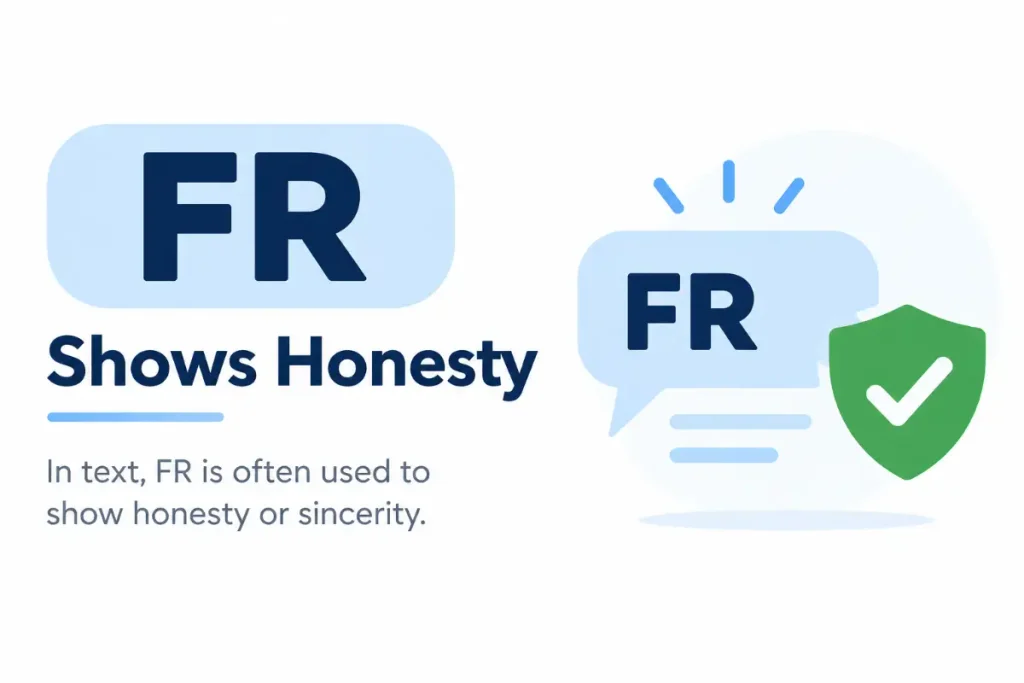
People also add FR to a sentence when they want others to know they are serious. It works like a small reminder that they are not joking or exaggerating. You can place it at the beginning or end of a message.
Example:
Mia: I really enjoyed spending time with you today.
Chris: Same here. I had a great time fr.
Meaning: Chris genuinely enjoyed the time they spent together. The abbreviation makes the message sound more sincere.
3. FR Expresses Surprise
When someone shares unexpected news, you can use FR as a question. Adding a question mark makes it sound like you want confirmation because the information is difficult to believe. It is similar to asking, “Are you serious?” or “Really?”
Example:
Taylor: I just got free tickets to the concert.
Sam: FR? That is amazing!
Meaning: Sam is surprised and wants to confirm that Taylor is telling the truth.
4. FR Adds Emphasis
You can also use FR to make your feelings or opinions sound stronger. It often appears at the end of a sentence, especially when someone wants to stress that something is genuinely true.
Example:
Riley: I have never been this tired in my life fr.
Morgan: You should get some rest.
Meaning: Riley is emphasizing how exhausted they feel. The abbreviation adds seriousness without changing the main message.
What Does FR Mean on WhatsApp?
On WhatsApp, FR usually means “for real.” People use it in private messages, family groups, friendship chats, and conversations with classmates. It helps them agree with someone, express genuine feelings, or react to surprising information without writing a long response.
For example, your friend might send, “This traffic is unbelievable today.” You can reply, “FR, I have been stuck here for an hour.” Your response shows that you agree and have experienced the same problem.
Here are some common WhatsApp situations where people use it.
- Agreeing with friends: Someone complains about a difficult day, and you reply, “FR, today has been exhausting.”
- Showing excitement: Your friend shares good news, and you say, “FR? That is wonderful!”
- Being sincere: You write, “I really miss those days fr,” to express genuine feelings.
- Reacting to jokes: Someone sends a funny message, and you respond, “FR 😂 That is exactly what happened.”
- Supporting someone: A friend shares a personal problem, and you reply, “FR, you deserve better.”
The tone depends on the conversation. A simple FR can sound funny in a friendship group, but it can also feel supportive during a serious discussion. Therefore, consider the other person’s feelings before using it as a quick reply.
What Does FR Mean on Instagram?
On Instagram, FR appears in comments, captions, Reels, Story replies, and direct messages. People mainly use it to agree with a post, react to relatable content, or emphasize an opinion. It is especially useful when someone wants to leave a short response instead of writing a full sentence.
For example, imagine someone posts a Reel about waking up late every morning. You might comment, “FR, this is literally me.” This tells the creator that you relate to the situation.
Here are a few more examples.
- Instagram comment: “Nobody talks about how good this song is.” Reply: “FR!”
- Story reply: “I need a vacation so badly.” Reply: “FR, same here.”
- Photo comment: “This outfit looks amazing.” Reply: “FR 🔥”
- Direct message: “I cannot believe the weekend is already over.” Reply: “FR, time flies.”
- Reel reaction: “Why is this video so accurate?” Reply: “FR 😂”
On Instagram, the abbreviation can make a conversation feel relaxed and friendly. However, it does not automatically mean that someone is flirting or trying to start a romantic conversation. The rest of the message gives you a better idea of their intention.
What Does FR Mean on Facebook?
Facebook users also use FR to express agreement, sincerity, and surprise. You may notice it under funny posts, personal updates, discussion threads, shared videos, and comments from friends. It works much like it does in ordinary text messages.
For example, someone might post, “Growing up means getting excited about staying home.” A friend could comment, “FR, staying home is the best feeling.” The comment shows that the person relates to the post.
FR can also appear in Messenger conversations. If a friend tells you something unexpected, replying “FR?” shows that you want to know if they are serious. Meanwhile, adding FR to your own statement makes it sound more genuine.
Remember that Facebook is used for both casual and professional conversations. Therefore, use the abbreviation with friends and people who understand internet slang. In formal discussions or business communication, write the complete phrase instead.
What Does FR Mean in Text From a Guy?
When a guy sends FR, he usually means “for real.” However, his exact intention depends on what you are discussing and how he uses the abbreviation. He might be agreeing with you, showing that he is serious, reacting to something surprising, or expressing genuine feelings.
For example, if you tell him, “I had a really good time with you,” and he replies, “FR, I enjoyed it too,” he is confirming that he feels the same way. His response sounds positive and sincere, but it does not automatically mean he has romantic feelings.
Here are some common situations.
1. He Agrees With You
If you share an opinion and he replies with FR, he probably agrees. For example, if you say, “Good communication makes every relationship better,” and he responds, “FR,” he is supporting your point.
2. He Is Being Honest
A guy might add FR when he wants you to understand that he genuinely means something. For example, “You are one of the nicest people I know fr” sounds like a sincere compliment. He is emphasizing that he is not just saying it to be polite.
3. He Is Surprised
If you share unexpected news and he replies, “FR?”, he may be asking if you are serious. For instance, telling him that you are moving to another city could make him respond, “Wait, FR?”
4. He Is Being Playful
Some guys use FR during funny conversations to agree with a joke or exaggerate a reaction. If you say, “I could sleep for three days,” and he replies, “FR 😂,” he is probably relating to your tiredness.
5. He May Be Showing Interest
If a guy uses FR while responding to a personal or romantic message, he may be showing that he genuinely agrees with you. However, the abbreviation alone cannot confirm attraction. Pay attention to his other messages, questions, compliments, and overall behavior to understand his intentions.
What Does FR Mean in a Relationship?
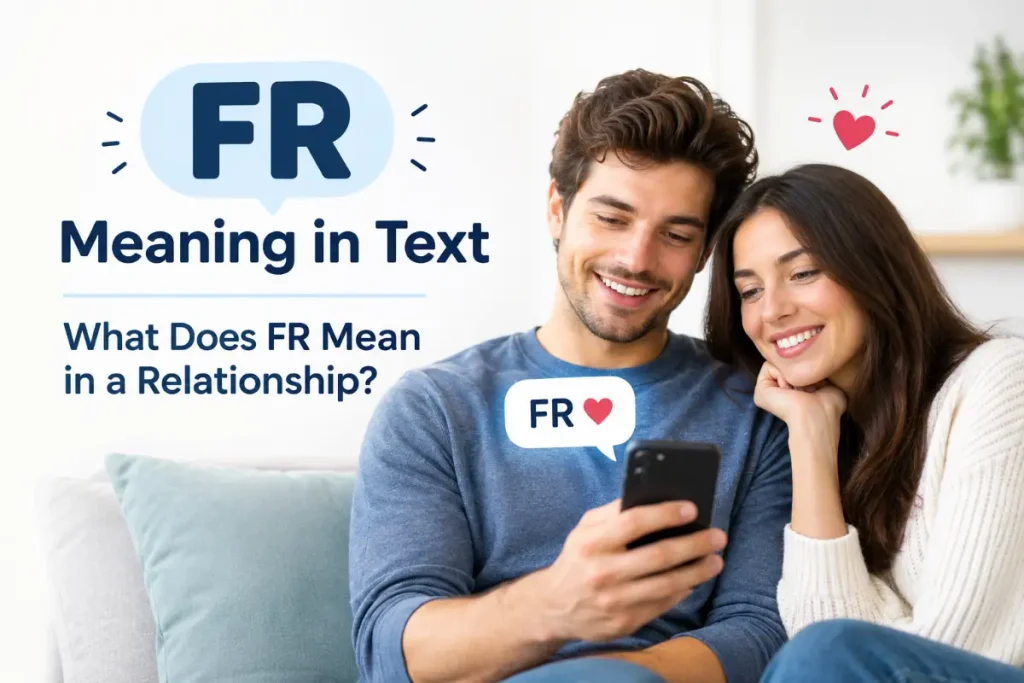
In a relationship, FR usually means “for real” and can express honesty, agreement, affection, or serious feelings. Couples and people who are dating may use it to show that they genuinely mean what they say. It can also make emotional conversations feel more natural and less formal.
For example, your partner might say, “I feel lucky to have you in my life fr.” This means they genuinely feel that way. Similarly, if you tell your partner, “We should always be honest with each other,” they might reply, “FR, trust matters.”
Here are some relationship situations where the abbreviation fits naturally.
| Situation | Example message | Meaning |
|---|---|---|
| Showing love | “I am lucky to have you fr.” | The person genuinely appreciates their partner. |
| Expressing trust | “Honesty matters fr.” | The person strongly believes in honesty. |
| Sharing feelings | “I miss you fr.” | The person genuinely misses their partner. |
| Agreeing | “We need more time together.” “FR.” | Both people want to spend more time together. |
| Expressing disappointment | “That really hurt me fr.” | The person is serious about their feelings. |
Does FR Mean Someone Loves You?
No. FR does not directly mean “I love you.” It simply adds honesty, seriousness, or agreement to a statement. Someone who says “I miss you fr” may genuinely miss you, but that message does not necessarily express romantic love.
Likewise, if your partner says, “I care about you fr,” they are emphasizing their feelings. You should consider the complete conversation rather than treating two letters as proof of a particular emotion.
FR Meaning in Text Funny
FR can make funny conversations even more entertaining. People often use it to agree with relatable jokes, exaggerate everyday problems, or react to something that feels surprisingly accurate. Adding an emoji can make the message sound even more playful.
For example, if your friend says, “My bed is my favorite place in the world,” you can reply, “FR 😂.” This means you completely agree with the statement.
Here are some original funny examples.
1. Friend: I need a vacation after my vacation.
You: FR. I am tired of relaxing 😂
2. Friend: My phone battery dies faster than my motivation.
You: FR 😭
3. Friend: I opened the fridge five times hoping new food would appear.
You: FR. Maybe the sixth time will work.
4. Friend: Sleep is my biggest talent.
You: FR. We should go professional.
5. Friend: I spend money like I have unlimited savings.
You: FR, but my bank account disagrees.
6. Friend: Monday needs to apologize to everyone.
You: FR. We deserve better.
7. Friend: I went to the kitchen and forgot why I was there.
You: FR 😂 My brain does that every day.
These examples show that FR does not need to create a joke by itself. Instead, it supports the humor by showing that you understand or relate to the situation.
How to Reply to FR in Chat
Your response depends on the meaning and tone of the original message. If someone uses FR to agree with you, you can continue the conversation naturally. If they use it as a question, give them a clear answer instead of leaving them confused.
You do not need to reply with another abbreviation every time. A short sentence, a friendly emoji, or a related question can keep the conversation moving.
Here are some natural replies for different situations.
| Situation | What you can reply |
|---|---|
| Someone agrees with you | “Exactly!” |
| Someone says FR? | “Yes, I am serious.” |
| Someone shares genuine feelings | “I feel the same way.” |
| Someone reacts to good news | “Yes! I still cannot believe it.” |
| Someone agrees with a joke | “Haha, you get it.” |
| Someone compliments you | “Aw, thank you!” |
| Someone expresses sadness | “I understand. I am here for you.” |
Short and Casual Replies
If you are chatting with friends, you can keep your responses simple and relaxed. These replies work well in everyday conversations.
- “Exactly!”
- “I know, right?”
- “So true.”
- “Same here.”
- “You get it.”
- “No doubt.”
- “That is what I am saying.”
Friendly and Funny Replies
If the conversation is playful, add humor to your response. You can use emojis or a short joke to match the other person’s energy.
- “Finally, someone understands me 😂”
- “We are on the same page.”
- “Great minds think alike.”
- “I was waiting for you to say that.”
- “You read my mind.”
- “We need to stop thinking alike.”
Replies to FR From Someone You Like
If someone you like uses FR while agreeing with your feelings or complimenting you, you can respond warmly. However, keep your answer natural instead of assuming that every message has a romantic meaning.
- “That means a lot to me.”
- “I am glad you feel the same way.”
- “You always know what to say.”
- “I really appreciate that.”
- “I feel the same about you.”
What Does FRFR Mean?
FRFR means “for real, for real.” It is a stronger version of FR that people use when they want to emphasize their honesty or agreement. Repeating the abbreviation adds extra weight, much like repeating a phrase in spoken conversation.
For example, if your friend says, “I seriously need a break,” you might reply, “FRFR, we both need a vacation.” Your response shows that you strongly agree.
Here are a few more examples.
- “You are my best friend frfr.” This expresses genuine appreciation.
- “That was the best meal ever frfr.” This emphasizes how much the person enjoyed the food.
- “I am not joking frfr.” This makes it clear that the person is serious.
- “We need to meet soon frfr.” This shows that the sender genuinely wants to meet.
FR and FRFR have almost the same basic meaning. The main difference is the level of emphasis. Use FR for normal agreement or sincerity, and FRFR when you want to sound even more serious or enthusiastic.
What Does Be FR Mean?
Be FR means “be for real.” People use it when they want someone to stop joking, think seriously, or admit the truth. Depending on the situation, it can sound playful, frustrated, or slightly confrontational.
For example:
Alex: I can finish this entire project in ten minutes.
Jordan: Be FR. It took you two hours yesterday.
Meaning: Jordan thinks Alex is exaggerating and wants them to be realistic.
The phrase can also appear as a reaction to an unbelievable statement. If someone makes an excuse that sounds unrealistic, another person might reply, “Be FR right now.” They are basically saying, “Come on, be serious.”
Another related expression is BFFR, which stands for “be fucking for real.” It is a more forceful and vulgar version. Because it includes profanity, it may sound rude or aggressive in certain conversations.

FR Meaning on Urban Dictionary
Urban Dictionary includes FR as an abbreviation for “for real.” Its user-submitted definitions describe the expression as a way to show agreement, sincerity, or disbelief in online conversations. Some entries also explain how adding a question mark can turn it into a request for confirmation.
For example, one person might write, “I am exhausted fr,” to emphasize that they genuinely feel tired. Another person might respond to surprising news with “FR?” to ask if the statement is true.
However, Urban Dictionary is a user-generated slang reference, so its entries do not all carry the same authority. Some definitions may reflect personal interpretations, jokes, or less common uses. The most useful approach is to focus on the widely understood meaning and use the surrounding conversation to identify the intended tone.
Related Slang Terms Similar to FR
Several internet abbreviations have meanings close to FR. You may see them in the same conversations, especially when people agree with someone, express honesty, or react to surprising information. However, each term has a slightly different purpose.
Understanding these expressions will help you recognize the difference instead of treating every abbreviation as interchangeable.
| Slang | Full Form | Meaning |
|---|---|---|
| FR | For Real | Shows agreement, honesty, or surprise. |
| FRFR | For Real, For Real | Adds extra emphasis to a statement. |
| ONG | On God | Emphasizes that someone is telling the truth. |
| NGL | Not Gonna Lie | Introduces an honest opinion or confession. |
| TBH | To Be Honest | Shows that someone is sharing their genuine opinion. |
| No Cap | No lie | Means someone is being truthful or not exaggerating. |
| BFFR | Be Fucking For Real | Tells someone to be serious, often with frustration. |
| IMO | In My Opinion | Introduces a personal opinion. |
FR vs ONG
FR and ONG can both express honesty, but they do not work exactly the same way. FR means “for real,” while ONG means “on God.” People often use ONG to make a strong claim or emphasize that they are telling the truth.
For example, “I am telling you FR” emphasizes sincerity, while “ONG, I did not take your charger” makes a stronger promise that the statement is true. Both are informal expressions.
FR vs NGL
NGL means “not gonna lie.” People use it before sharing an honest thought, confession, or opinion. For example, “NGL, I did not enjoy that movie” introduces a personal opinion, while “That movie was boring FR” emphasizes that the speaker genuinely thinks it was boring.
FR vs TBH
TBH means “to be honest.” It often introduces an honest statement, even if the speaker thinks the other person might disagree. FR usually confirms something or emphasizes sincerity. For example, “TBH, I prefer staying home” introduces a personal preference, while “Staying home is better FR” emphasizes the speaker’s agreement with that idea.
FR vs No Cap
No cap means “no lie” or “I am not exaggerating.” It is often used to emphasize that someone is telling the truth. FR can serve a similar purpose, but it also works as a quick agreement or question. For example, “This is the best pizza, no cap” and “This is the best pizza FR” communicate nearly the same idea.
Common Mistakes When Using FR
Although FR is easy to understand, people sometimes misunderstand its tone or use it in situations where another expression would work better. Knowing these common mistakes can help you communicate more clearly.
1. Thinking FR always means agreement. It often shows agreement, but it can also emphasize honesty or express surprise. For example, “You met your favorite singer? FR?” is a question rather than an agreement.
2. Confusing FR with FRFR. Both expressions mean “for real,” but FRFR adds extra emphasis. You do not need to repeat the abbreviation unless you want your message to sound stronger.
3. Assuming FR is always romantic. A person who replies FR to your message may simply agree with you. Do not assume that the abbreviation is a sign of attraction without considering the rest of the conversation.
4. Ignoring punctuation. A simple “FR” often shows agreement, while “FR?” usually asks for confirmation. Punctuation can change the tone even when the letters remain the same.
5. Using it in formal communication. FR is internet slang, not a professional replacement for complete sentences. In business emails, academic work, or official messages, use phrases such as “I agree,” “seriously,” or “I genuinely mean it.”
When Should You Use FR?
FR works best in casual conversations where people understand internet slang. You can use it with friends, siblings, classmates, and people you regularly chat with online. It is also useful in comments, captions, and private messages when you want to respond quickly.
Here are some situations where it feels natural.
- When agreeing: Your friend says, “Weekends should be longer.” You reply, “FR!”
- When being sincere: You write, “I really appreciate everything you did for me fr.”
- When reacting to news: Someone says they won a competition, and you ask, “FR? Congratulations!”
- When sharing an opinion: You say, “This is the best restaurant in town fr.”
- When joking: Your friend says, “I need coffee before talking to anyone.” You reply, “FR 😂”
However, avoid using it when the other person may not understand texting slang. It is also better to avoid abbreviations in serious professional conversations where clear communication matters.
How to Know What Someone Means by FR
Sometimes, a message does not provide enough information to identify the intended meaning immediately. In that case, look at the words before and after the abbreviation, the punctuation, and the topic of the conversation.
For example, if someone writes “I love this song fr,” they are emphasizing their opinion. If they send “FR?” after hearing surprising news, they want confirmation. If they reply with a simple “fr” after you share an opinion, they probably agree.
You can also consider the relationship you have with the sender. A close friend may use the abbreviation casually, while someone you barely know may use it to start a conversation or react to your post.
If you still feel confused, ask a simple question such as “Do you mean seriously?” or “Are you agreeing with me?” There is no reason to guess when a quick clarification can make the conversation easier.
FAQs About FR
1. What Does FR Mean in Text Messages?
FR means “for real.” People use it to show agreement, honesty, sincerity, or surprise. For example, “I am exhausted fr” means the person is genuinely exhausted. It can also appear as a question when someone wants to confirm unexpected information.
2. What Does FR Mean From a Girl?
When a girl sends FR, she usually means “for real.” She may be agreeing with your opinion, emphasizing that she is serious, or reacting to something surprising. For example, if you tell her that you enjoyed talking to her and she replies, “FR, I had fun too,” she is showing that she genuinely agrees.
3. What Does FR Mean From a Guy?
A guy usually uses FR to express agreement, honesty, or surprise. If he says, “You are really funny fr,” he is emphasizing his compliment. However, the abbreviation alone does not confirm romantic interest, so consider the rest of his messages.
4. What Does FR Mean in a Relationship?
In a relationship, FR means “for real.” Partners may use it to express genuine feelings, agree with each other, or emphasize something important. For example, “I am lucky to have you fr” means the person genuinely appreciates their partner.
5. What Does FR FR Mean in Chat?
FR FR means “for real, for real.” It is a stronger version of FR that emphasizes honesty, seriousness, or agreement. For example, “You are my best friend frfr” shows genuine appreciation.
6. What Does FR Mean on Instagram and Facebook?
On Instagram and Facebook, FR usually means “for real.” People use it in comments, captions, posts, and direct messages to agree with someone or emphasize an opinion. For example, commenting “FR” under a relatable post means you strongly agree with its message.
7. Is FR Rude or Disrespectful?
No, FR is not usually rude. It is a casual abbreviation that people use to express agreement or sincerity. However, replying “FR?” to someone can sound doubtful or sarcastic in certain situations, so consider your tone and relationship before using it.
8. What Is the Difference Between FR and FRFR?
FR means “for real,” while FRFR means “for real, for real.” Both express honesty and agreement, but FRFR adds extra emphasis. You can use FR in everyday chats and FRFR when you want to stress your point more strongly.
Conclusion
FR is a simple texting abbreviation that stands for “for real.” People use it to agree with someone, express genuine feelings, emphasize an opinion, or react to surprising news. You can find it in WhatsApp messages, Instagram comments, Facebook posts, and everyday online conversations.
The most important thing is to understand the context. A simple FR usually shows agreement, while FR? asks if someone is serious. FRFR adds extra emphasis, and expressions such as NGL, TBH, and No Cap offer slightly different ways to communicate honesty. Once you understand these differences, you can use FR naturally and understand what others mean without confusion.