A cat’s tail can reveal a lot about how it feels. A tail held high may signal confidence and friendliness, while a tail that lashes from side to side can suggest irritation or intense excitement. Even a small twitch at the tip can tell you something about your cat’s attention or mood.
Understanding cat tail meanings can help you recognize when your cat feels relaxed, playful, nervous, or uncomfortable. Cats communicate through their entire bodies, so tail movements make the most sense when you also notice their ears, eyes, whiskers, posture, and the situation around them. A wagging tail does not always mean happiness, as it often does in dogs.
You might notice your cat wrapping its tail around its paws while sitting, curling it into a question mark when greeting you, or tapping it against the floor while lying down. Each movement can offer a clue, but no single position tells the whole story. Your cat’s personality, surroundings, and usual behavior also matter.
This guide explains common tail positions and movements, including wagging, twitching, puffing, and curling. You will also learn why cats move their tails while playing, resting, or being petted, along with signs that a tail movement could indicate pain or stress.
Quick Answer
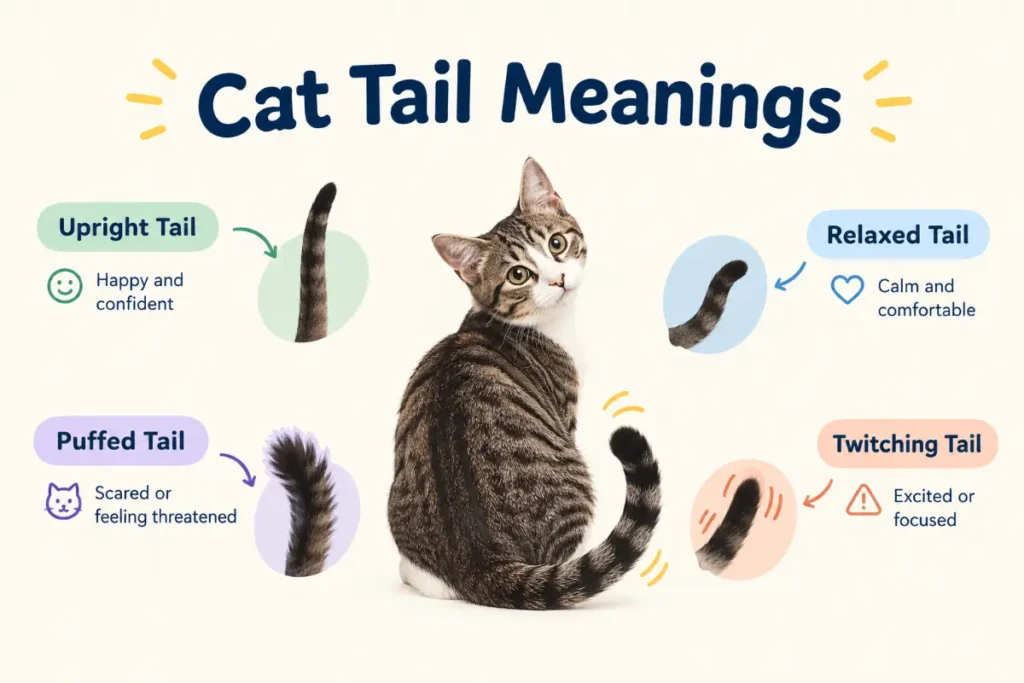
A cat’s tail communicates mood, attention, confidence, and discomfort. An upright tail often signals friendliness, a puffed tail can indicate fear or alarm, and a rapidly lashing tail may suggest irritation or high arousal. A gently moving tip can reflect concentration or mild excitement. Always consider the cat’s ears, eyes, body posture, and surroundings before interpreting a tail movement.
Why Cats Use Their Tails to Communicate
Cats use their tails for more than balance. Tail movements are part of feline body language, helping cats communicate with other animals and people. The tail can signal confidence, caution, fear, excitement, or a desire for space.
A cat’s tail also helps with physical movement. It contributes to balance while walking along narrow surfaces, climbing, jumping, and changing direction. Although cats can perform impressive balancing acts without a full tail, the tail still plays an important role in movement for many cats.
The emotional meaning of a tail movement depends on the whole situation. A slowly moving tail while watching a bird may indicate concentration, while a similar movement during petting could signal growing irritation. Learning your cat’s normal patterns makes these differences easier to recognize.
Read the Whole Body
Before interpreting a tail, look at the rest of your cat’s body. Relaxed ears, soft eyes, loose muscles, and a comfortable posture often suggest that a cat feels safe. Flattened ears, wide pupils, tense muscles, and a crouched position can point to fear, stress, or defensive behavior.
For example, a cat with an upright tail and relaxed ears may be greeting you happily. A cat with a puffed tail, flattened ears, and an arched back is more likely feeling threatened. The tail provides useful information, but the surrounding body language helps you understand what it means.
Common Cat Tail Positions and Their Meanings
A cat’s resting tail position can offer a quick glimpse into its mood. Some positions are easy to recognize, while others require a little more attention to context.
Tail Held Straight Up
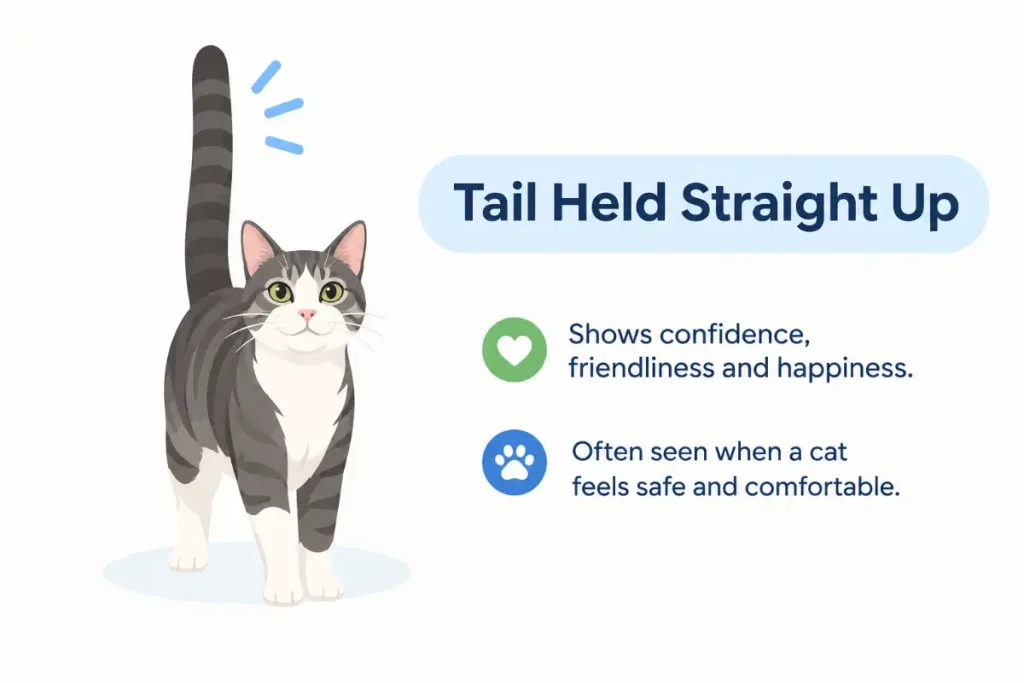
A tail held straight up is commonly a friendly signal. Cats often approach familiar people with their tails raised, especially when they expect attention, food, or a pleasant interaction. Kittens also raise their tails when approaching their mothers.
If your cat walks toward you with an upright tail, a relaxed body, and ears facing forward, it may be greeting you comfortably. You might notice this behavior when you return home or enter a room where your cat is resting.
A raised tail does not automatically mean your cat wants to be picked up or petted. Let your cat approach, offer a hand to sniff, and watch how it responds before reaching for it.
Tail Curled Like a Question Mark
A tail that stands upright with a curved tip resembling a question mark often indicates a friendly, playful, or curious mood. This position commonly appears when a cat greets a familiar person or explores an interesting environment.
You may see your cat approach you with this tail shape before rubbing against your legs or inviting interaction. It can be a positive sign, particularly when the cat’s ears are forward and its body looks relaxed.
The curved tip can also accompany playful excitement. If your cat seems interested in engaging, try offering a toy rather than assuming it wants to be touched.
Tail Wrapped Around the Body
Cats often wrap their tails around their bodies while sitting or resting. This position can help them conserve warmth and feel comfortable. It may also appear when a cat is calmly observing its surroundings.
A cat sitting with its tail wrapped neatly around its paws may simply be relaxed and content. However, if the cat also crouches low, keeps its ears turned sideways, or seems tense, it could be feeling cautious.
Pay attention to the rest of the posture. A neatly wrapped tail alone is not a reliable sign of fear, happiness, or illness.
Tail Tucked Between the Legs
A tail tucked tightly beneath the body or between the legs often suggests fear, insecurity, or an attempt to make the body appear smaller. Cats may adopt this position when confronted by unfamiliar animals, loud noises, or stressful situations.
If your cat suddenly tucks its tail during a visit from guests, give it a quiet place to retreat. Avoid forcing interaction or pulling it out of hiding. A safe hiding spot can help a frightened cat regain confidence.
If the tail remains tucked for an unusual length of time or the cat appears painful, weak, or reluctant to move, consider contacting a veterinarian. Persistent changes in posture can sometimes indicate a physical problem.
Tail Held Low
A low tail can mean caution, uncertainty, or discomfort. Some cats naturally carry their tails lower than others, so compare the position with your cat’s usual posture.
If a normally confident cat suddenly walks with its tail low, ears back, and body tense, something may be making it uncomfortable. The cause could be a nearby animal, a noisy environment, or an unfamiliar person.
A tail held low does not always indicate a serious problem. Look for other changes, such as hiding, reduced appetite, unusual vocalization, or sensitivity around the back and tail.
Tail Puffed Up
A puffed up tail is a classic sign that a cat is startled, frightened, or highly aroused. The fur stands away from the body, making the tail look much larger than normal. This response can help a cat appear more intimidating when it feels threatened.
Cats may puff their tails after hearing a sudden noise, encountering an unfamiliar animal, or becoming surprised during play. Some kittens also puff up while practicing defensive behavior.
Give a cat with a puffed tail some space. Do not corner it or try to calm it by grabbing or holding it. Once the perceived threat disappears, the tail will often return to its normal appearance.
Cat Tail Meanings When Wagging or Twitching
Many people assume that a wagging tail means a cat is happy. In reality, tail movements can signal several different emotional states. The speed, direction, and intensity of the movement matter, as does what the cat is doing at the time.
Slow Tail Wagging
A slow, deliberate tail movement can indicate concentration, curiosity, uncertainty, or mild irritation. For example, a cat watching a bird through a window may slowly move its tail while focusing on the potential prey.
If your cat is resting beside you and slowly moving its tail, it might be monitoring its surroundings or deciding how to respond to something. The movement alone does not tell you if it is content or annoyed.
Look at the cat’s face and posture. Relaxed muscles and soft eyes suggest a different emotional state from tense shoulders, flattened ears, and a rigid body.
Fast Tail Swishing
Fast, forceful swishing often indicates heightened arousal. A cat may be irritated, overstimulated, excited by a moving object, or preparing to react to something nearby.
During petting, a rapidly swishing tail can be an early sign that the cat has had enough. Continuing to touch it may lead to a bite or scratch, particularly if the ears begin to flatten or the body stiffens.
Pause the interaction and let the cat decide what happens next. Recognizing this signal early can prevent many unwanted encounters.
Twitching Tail Tip
A twitching tip is a subtle movement that can indicate attention, curiosity, excitement, or mild frustration. You may notice it when your cat watches a toy, listens to a sound, or observes something moving outside.
A cat lying comfortably beside you may also twitch its tail tip while remaining relaxed. In this situation, it may simply be alert to its environment.
If the twitching becomes unusually frequent, appears involuntary, or occurs alongside pain or changes in movement, seek veterinary advice. Normal communication movements should be distinguished from persistent or unexplained physical symptoms.
Tail Thumping Against the Floor
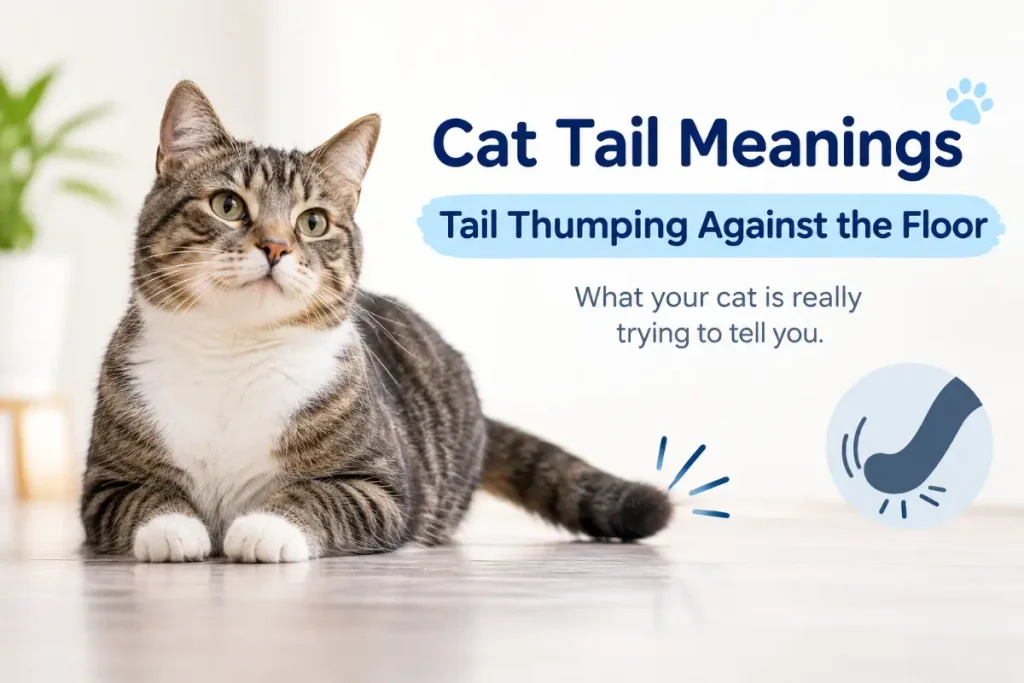
A cat that repeatedly thumps its tail against the floor may be annoyed, excited, or intensely focused. This movement is especially important to notice during petting or handling.
If your cat is lying down and starts hitting the floor with its tail, it may be signaling that it wants the interaction to stop. Some cats also thump their tails while watching prey or engaging with a toy.
The safest response is to pause and observe. If the cat relaxes, it may be comfortable continuing the interaction later. If it remains tense or moves away, respect that choice.
Why Does My Cat Wag His Tail When I Pet Him?
A cat may wag its tail during petting because it enjoys the attention but is becoming overstimulated, or because it is concentrating on another stimulus. Some cats tolerate petting for only a short time before they need a break.
Start by noticing where you are touching the cat. Many cats enjoy gentle strokes around the cheeks and head but dislike repeated touching near the belly, paws, or base of the tail. Individual preferences vary.
If the tail begins swishing faster, the ears turn sideways or backward, or the skin ripples along the back, stop petting and give your cat space. These signs can indicate that the interaction has become uncomfortable.
Cat Tail Meanings While Lying Down
A cat’s tail can remain active even when the rest of its body appears completely relaxed. The meaning depends on whether the cat is sleeping, resting lightly, watching something, or interacting with you.
Tail Tip Moving While Resting
If your cat is lying down with only the tip of its tail moving, it may be alert to something nearby. Cats often rest while keeping track of sounds, movement, and activity around them.
A gentle twitch can mean curiosity or concentration. If the tail starts moving more forcefully when you approach or touch the cat, it may be signaling irritation or a need for space.
Check the cat’s ears and eyes to understand the situation. Soft eyes and loose muscles usually suggest relaxation, while tense muscles and ears turned backward may indicate discomfort.
Tail Wrapped Around the Paws
A cat lying or sitting with its tail wrapped around its paws may be conserving warmth or settling into a comfortable resting position. This is a common posture, particularly when a cat is resting on a cool surface or watching its surroundings.
If your cat looks relaxed, breathes normally, and responds as usual, there is generally no reason to worry about this position. Some cats simply prefer to keep their tails close to their bodies.
However, a cat that suddenly changes its resting posture and seems reluctant to stretch or move may be experiencing discomfort. Look for additional symptoms rather than drawing conclusions from the tail position alone.
Tail Flicking During Sleep
A sleeping cat may twitch its tail, paws, whiskers, or ears. Small movements can occur during sleep and may be part of normal dreaming or other sleep related activity.
These movements are usually brief and do not require intervention. Let your cat rest rather than waking it unnecessarily.
If the movements are prolonged, unusually forceful, or accompanied by stiffness, difficulty waking, or abnormal breathing, seek veterinary guidance. A veterinarian can help distinguish ordinary sleep movements from a possible medical concern.
Cat Tail Meanings When Sitting
The way a cat positions its tail while sitting can reveal whether it feels relaxed, alert, cautious, or ready to move. However, breed, body shape, temperature, and individual habits also influence sitting posture.
Tail Curled Around the Feet
When a cat sits with its tail curved around its feet, it may feel comfortable and settled. This posture allows the cat to remain still while observing what happens around it.
Some cats adopt this position when they are calm but attentive. Others use it because they feel slightly cautious in a new environment.
If the cat’s ears remain neutral, its body looks loose, and it responds normally to familiar people, the position is generally nothing to worry about.
Tail Stretched Out Beside the Body
A cat sitting with its tail stretched along the floor may be relaxed and comfortable. The tail can rest naturally beside the body when the cat has no immediate reason to move.
If the tail begins twitching or sweeping from side to side, the cat may be becoming more alert or stimulated. The change in movement is often more informative than the resting position itself.
Avoid assuming that a stretched tail always signals happiness. The rest of the body provides important clues about the cat’s emotional state.
Tail Wrapped Around Another Cat
Cats sometimes rest their tails against or around another familiar cat. This behavior may occur among cats that are comfortable sharing space, especially when they are resting together.
However, tail contact alone does not prove a close bond. Look for other signs of social comfort, such as relaxed postures, gentle grooming, peaceful sleeping nearby, and a lack of aggressive behavior.
If the cats seem tense, stare at each other, or repeatedly swat, give them room to separate. Respecting their space helps prevent conflict.
Cat Tail Movements During Play
Play can produce some of the most dramatic tail movements. A cat may flick its tail, puff it up, curve it sharply, or hold it low while stalking a toy. These actions can reflect excitement and concentration rather than anger.
Why Does a Cat Puff Up Its Tail While Playing?
Some cats puff up their tails when they become excited during play. Kittens, in particular, may jump sideways with an arched back and an enlarged tail as they practice movements associated with defense and social interaction.
This behavior can look dramatic, but it is not necessarily a sign of aggression. If your cat is bouncing around, approaching toys, and returning for more play, the puffed tail may reflect excitement.
Still, watch for signs of genuine fear. Flattened ears, hissing, prolonged hiding, or attempts to escape suggest that the cat needs a break.
Tail Low While Stalking a Toy
A cat may hold its tail low while stalking a toy, crouching, or preparing to pounce. This position can help the cat maintain balance and control during movement.
You might notice it when your cat watches a feather wand, tracks a rolling ball, or prepares to chase a toy across the room. A twitching tail tip can accompany this intense focus.
Interactive play gives cats an opportunity to practice natural hunting behaviors. Use toys instead of your hands or feet so your cat learns appropriate ways to chase and grab.
Tail Straight Up During Play
An upright tail during play can signal confidence and friendly engagement. A cat may approach a person or another familiar pet with its tail raised before initiating a chase or batting at a toy.
The movement is generally encouraging when the cat’s body remains loose and its behavior is playful. If the tail becomes rigid, the ears flatten, or the cat begins growling, stop the game and allow it to settle.
Short play sessions with breaks can help prevent overstimulation, especially in young cats with high energy levels.
Do Cat Tail Meanings Change in Male Cats?
Male cats use the same basic tail signals as female cats. An upright tail can indicate friendliness, a puffed tail can signal fear, and rapid swishing can suggest irritation or excitement. A cat’s individual personality and the situation usually matter more than its sex.
However, hormones and reproductive behavior can influence certain tail related actions. An unneutered male may raise his tail and spray urine on vertical surfaces to mark territory. During spraying, the cat often backs toward a surface, raises its tail, and may quiver it while releasing a small amount of urine.
Neutering can reduce hormone related spraying in many male cats, although spraying can also occur because of stress or territorial concerns. If a cat suddenly starts spraying or changes its normal bathroom habits, consult a veterinarian to rule out medical causes.
The key point is that tail position alone cannot tell you a cat’s sex, personality, or reproductive status. Observe the entire behavior before deciding what it means.
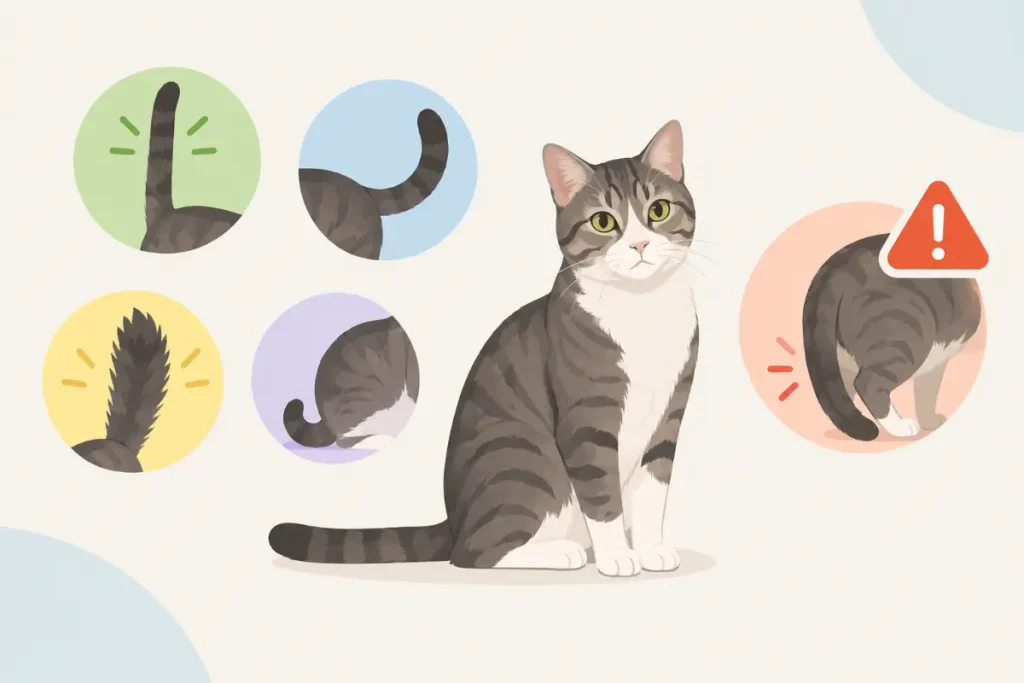
When Cat Tail Language May Indicate a Problem
Most tail movements are ordinary forms of communication, but sudden changes can sometimes indicate pain, injury, or illness. Cats often hide discomfort, so unusual body language deserves attention when it appears alongside other changes.
Watch for these warning signs:
- A limp or dragging tail. This can indicate an injury or nerve damage, particularly after a fall, accident, or tail pulling incident.
- Sensitivity around the tail. If your cat cries, bites, or tries to escape when you touch its tail, pain may be present.
- A sudden change in tail position. A tail that hangs unusually low or cannot move normally deserves veterinary assessment.
- Persistent licking or chewing. Repeated attention to the tail may indicate irritation, a wound, parasites, or another source of discomfort.
- Changes in bathroom habits. Tail or back injuries can sometimes affect nerves involved in urination and defecation.
Seek urgent veterinary care if a tail injury occurs alongside weakness in the hind legs, difficulty urinating, loss of bladder control, or severe pain. Do not pull, straighten, or manipulate an injured tail yourself.
A cat’s tail is connected to the spine and contains bones, nerves, and muscles. Prompt treatment can be important when an injury affects these structures.
Frequently Asked Questions
Why do cats wag their tails when they are happy?
Cats may hold their tails upright or gently curve the tips when greeting familiar people. These positions often suggest friendliness and confidence. However, rapid wagging or forceful swishing can indicate irritation or excitement, so consider the entire body language.
What does it mean when a cat wags its tail while lying down?
A cat lying down may move its tail because it is concentrating, monitoring its surroundings, feeling excited, or becoming irritated. A gentle tip twitch is often less concerning than repeated, forceful thumping, especially during petting.
Why does my cat’s tail look like a question mark?
A tail held upright with a curved tip often signals friendliness, curiosity, or playful interest. Cats commonly use this position when greeting familiar people or exploring their surroundings.
What does a puffed up cat tail mean?
A puffed tail usually indicates fear, surprise, or intense arousal. The cat is making itself look larger in response to a perceived threat. Give it space and let it calm down rather than trying to pick it up.
Do male cats have different tail meanings from female cats?
Male and female cats share the same basic tail language. Hormones can influence behaviors such as territorial spraying in unneutered males, but ordinary tail positions are not reliable indicators of sex.
When should I worry about my cat’s tail movements?
Seek veterinary advice if your cat develops sudden changes in tail movement, persistent pain, a limp tail, or unusual sensitivity. A dragging tail, hind leg weakness, or difficulty urinating after an injury requires urgent veterinary attention.
Conclusion
Understanding cat tail meanings can help you recognize when your cat feels relaxed, curious, playful, frightened, or irritated. An upright tail often signals friendliness, a question mark shaped tail can indicate curiosity, and a puffed tail usually means the cat feels startled or threatened. Tail swishing and twitching require more attention to context because they can reflect excitement, concentration, or discomfort.
The best way to understand your cat is to observe its entire body and learn its usual behavior. Pay attention to its ears, eyes, posture, and surroundings, and give it space when it shows signs of stress. With time, these small signals can help you build trust, prevent unwanted interactions, and respond more thoughtfully to your cat’s needs.