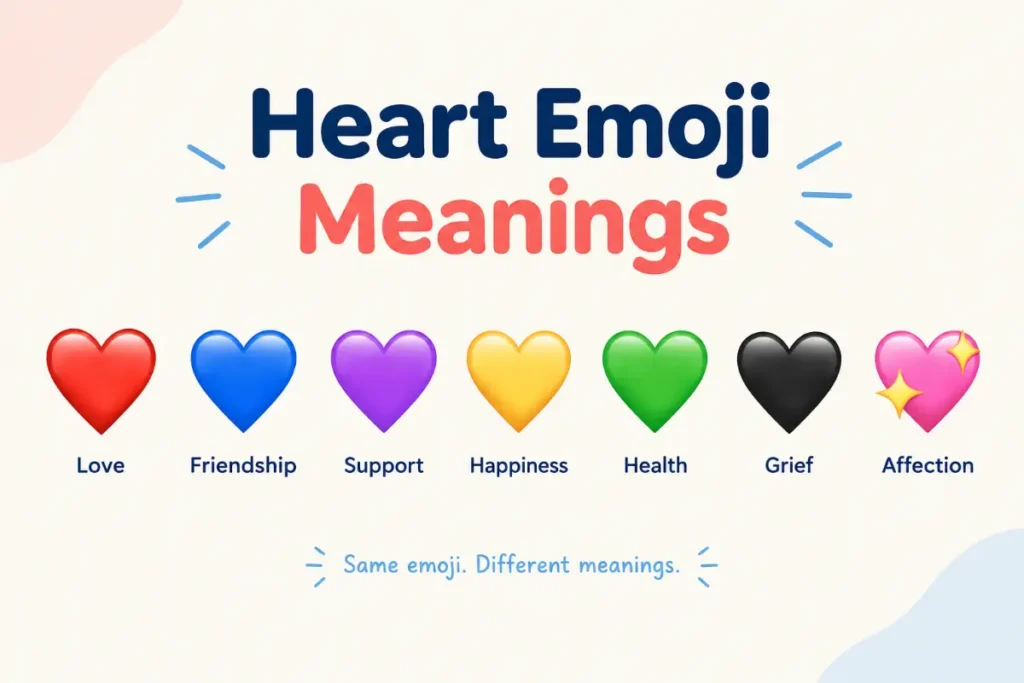
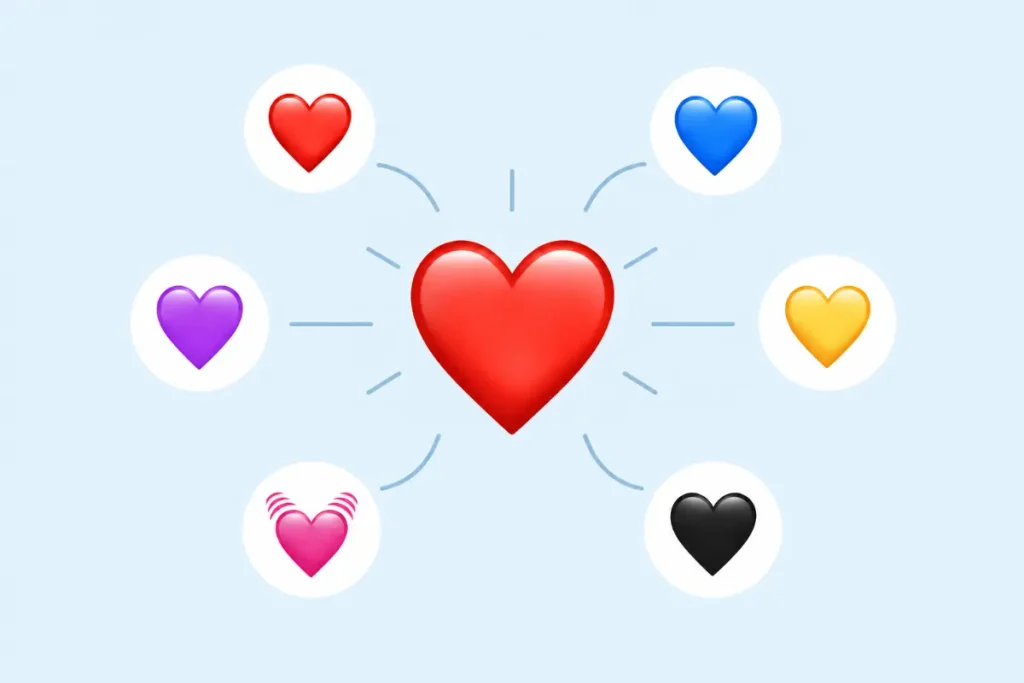
Heart emoji meanings help people express feelings that can be difficult to put into words. A simple red heart can communicate love, while a yellow heart may suggest friendship, happiness, or warmth. Meanwhile, a purple, black, or white heart can carry a different meaning depending on the conversation, the relationship, and the sender’s personal style.
Understanding heart emoji meanings can make texting, social media posts, and online conversations easier to interpret. People use hearts to show romantic interest, support friends, celebrate milestones, express sympathy, and react to everyday messages. However, the same emoji can communicate different feelings in different situations. A heart sent by a romantic partner may carry a different message from one sent by a coworker or close friend.
Color also plays a role. Red and pink hearts often communicate affection, while blue and green hearts can express friendship, support, or shared interests. Other designs, such as the two hearts, beating heart, and broken heart, add another layer of meaning.
This guide explains the meanings of popular heart emojis, how people use them in relationships and friendships, and how to interpret them without jumping to conclusions.
Quick Answer
Heart emojis express love, affection, friendship, gratitude, support, and other emotions. The red heart usually represents romantic love or deep affection, while the yellow heart often signals friendship and happiness. Blue and green hearts can represent loyalty, calmness, or shared interests. Purple hearts may suggest affection or admiration, and black hearts can express dark humor, grief, or a particular aesthetic. Context matters because no heart emoji has one fixed meaning in every conversation.
What the Different Heart Colors Mean
Heart emoji meanings can vary by person, culture, platform, and context.
Red Heart ❤️
The red heart is the classic symbol of love and affection. People often send it to romantic partners, spouses, family members, and close friends to express strong feelings or appreciation.
In romantic conversations, it can communicate passion, commitment, or emotional closeness. For example, someone might send a red heart after receiving a loving message or use it in an anniversary post. However, the emoji is not limited to romance. Parents may send it to their children, and friends may use it to show genuine care.
The red heart is often the safest choice when you want to express warmth clearly. Still, consider your relationship with the recipient. In a professional conversation, a red heart might feel more personal than a simple thumbs up or smile.
Orange Heart 🧡
The orange heart often represents warmth, friendship, encouragement, and affection. It can feel less intense than a red heart, making it useful for expressing care without emphasizing romance.
Friends may use it to celebrate good news, support someone during a difficult time, or show appreciation. It can also fit autumn themes, orange colored outfits, sports teams, and social media posts featuring warm colors.
Some people use the orange heart when they want to communicate affection while keeping the tone casual. However, it does not have a universal meaning as a less romantic version of the red heart. The sender’s habits and the conversation matter more than the color alone.
Yellow Heart 💛
The yellow heart commonly represents friendship, happiness, positivity, and warmth. Its bright color gives it a cheerful feeling, making it popular in friendly messages and social media comments.
You might send a yellow heart to thank a friend, celebrate someone’s success, or show appreciation for a kind gesture. It can also communicate support without suggesting romantic interest.
For example, if a friend helps you through a stressful week, a yellow heart can express gratitude and affection. On social media, it may also match sunny photos, happy memories, or posts about close friendships.
Although yellow hearts often have a friendly tone, some romantic partners use them too. The emoji itself cannot determine the exact nature of a relationship.
Green Heart 💚
The green heart can represent nature, health, growth, harmony, and environmental awareness. People also use it to show support for causes, celebrate green themed events, or express affection for someone who loves plants and the outdoors.
In friendships, it can communicate care and encouragement. In some online communities, the green heart may be associated with a favorite team, artist, or shared interest.
The emoji can also carry meanings related to jealousy or envy, although that interpretation is not always intended. For instance, a green heart attached to a gardening photo will likely have a different meaning from one used during a conversation about romantic competition.
Blue Heart 💙
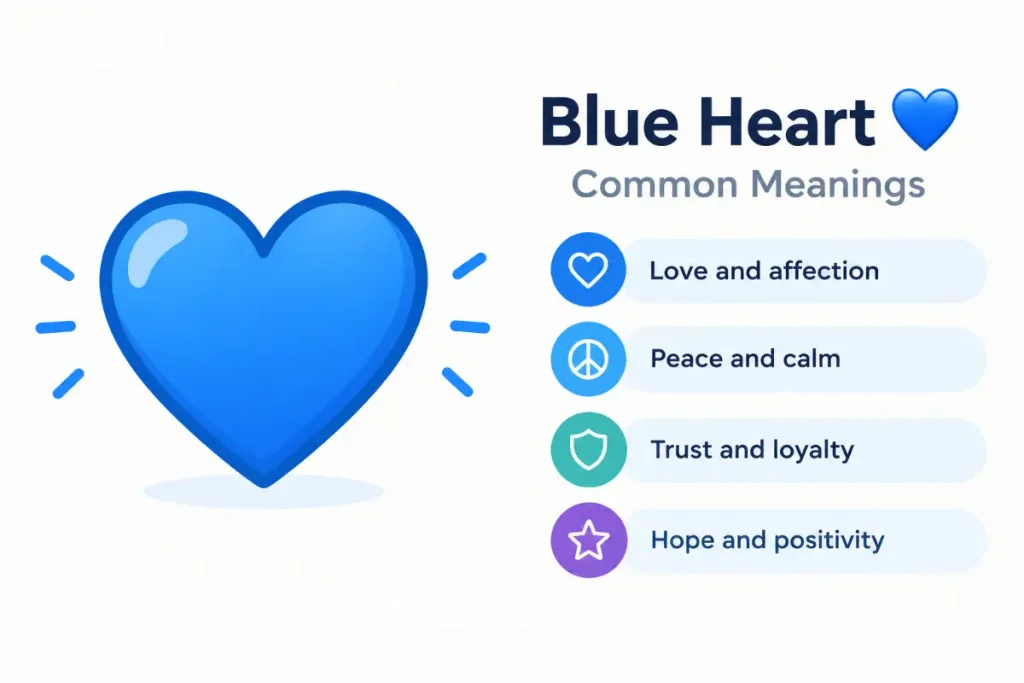
The blue heart often communicates trust, loyalty, calmness, and dependable affection. It is popular among friends, family members, and people who want to express care in a relaxed way.
Because blue is often associated with calmness and stability, some people use this heart to show steady support rather than intense passion. It can also appear in posts about oceans, sports teams, awareness campaigns, or favorite colors.
A friend might send a blue heart after offering reassurance, while a family member might use it to express love. Romantic partners can use it as well, especially if blue is meaningful to them.
The blue heart does not automatically mean someone has friend zoned you. Look at the wider conversation before interpreting it as a statement about romantic interest.
Purple Heart 💜
The purple heart can represent affection, admiration, compassion, and support. It may feel playful, elegant, or expressive depending on the conversation and the people involved.
Friends use it to show appreciation, while romantic partners may choose it to express affection in a different style from the traditional red heart. It also appears in fandoms, creative communities, and conversations about purple themed interests.
Some people associate purple with luxury, creativity, or spirituality. Others connect the purple heart with a favorite musician, character, or online community. These associations can give the emoji a more personal meaning.
Because purple hearts have several uses, do not assume that someone is flirting simply because they send one. Their usual texting style and the surrounding message provide better clues.
Black Heart 🖤
The black heart can express dark humor, sadness, grief, emotional complexity, or an alternative fashion aesthetic. It can also communicate deep affection in a style that feels less traditional than a red heart.
Some people use it when making sarcastic jokes or sharing memes. Others include it in posts about loss, difficult experiences, or personal struggles. In fashion and music communities, it may simply match a darker visual style.
For example, a friend might send a black heart after a sarcastic comment because it matches the joke. Someone else might use it in a tribute to a person they have lost.
The black heart does not always signal sadness or negativity. Its meaning depends on the sender’s intention and the situation.
White Heart 🤍
The white heart often represents pure affection, peace, sincerity, sympathy, and emotional support. People may use it to express gentle love or show someone that they care.
It can be especially fitting in messages of comfort, memorial posts, and conversations about meaningful relationships. Some people also use it to express a quiet, uncomplicated kind of affection.
For example, a white heart may accompany a message thanking someone for their support during a hard time. It can also appear in wedding posts, minimalist designs, and neutral colored social media themes.
Although people sometimes associate the white heart with purity, its meaning is not limited to that idea. It can express many forms of care.
Brown Heart 🤎
The brown heart can represent warmth, stability, comfort, and connection to nature. People also use it in conversations about coffee, chocolate, autumn, earthy colors, and cultural identity.
In personal messages, it can communicate steady affection or appreciation. Its earthy appearance may feel grounded and relaxed, making it a useful alternative to brighter heart colors.
Some users choose the brown heart because it matches their favorite color palette or the style of their social media posts. Others use it to celebrate cultural identity or show support for a community.
As with other heart colors, the brown heart does not have a single universal definition. The conversation and the sender’s preferences shape its meaning.
Pink Heart 🩷
The pink heart often represents tenderness, sweetness, affection, care, and gentle romance. It can feel playful and warm without carrying the same intensity that some people associate with the red heart.
Friends may use it to express appreciation, while romantic partners may send it during affectionate conversations. It also appears in messages about self care, celebrations, and supportive friendships.
For example, someone might send a pink heart after receiving a thoughtful gift or use it when complimenting a friend’s outfit. It can also add a sweet tone to a birthday greeting.
Pink hearts are not exclusively romantic. They can express friendship, family love, and general kindness just as easily.
Light Blue Heart 🩵
The light blue heart often conveys calmness, gentleness, friendship, and peaceful affection. Some people use it when they want a softer visual tone than the standard blue heart.
It can appear in conversations about the sky, water, winter, favorite colors, or personal interests. It may also communicate support or appreciation in a friendly message.
However, light blue does not have a fixed emotional meaning. One person may use it because it represents calmness, while another simply prefers its appearance.
Grey Heart 🩶
The grey heart can represent neutrality, quiet support, subtle affection, or a muted emotional tone. Some people choose it because they prefer understated colors or want a heart that matches a grey themed post.
It may also appear in messages about difficult feelings or complicated situations, although that is not its only use. In some conversations, it simply adds a softer alternative to brighter hearts.
Because grey is visually neutral, the emoji can feel understated rather than dramatic. Nevertheless, the sender’s intention matters more than the color itself.
What the Different Heart Emoji Designs Mean
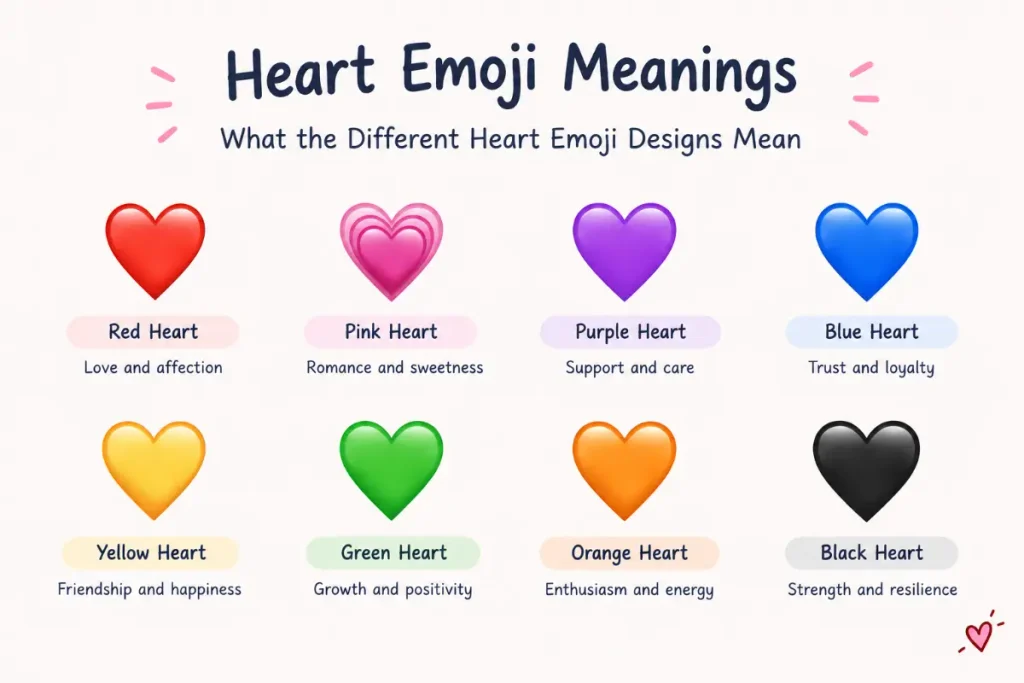
Color is only one part of the story. Heart emojis also come in designs that express specific emotions, such as excitement, heartbreak, affection, or a growing connection.
Two Hearts 💕
The two hearts emoji often represents affection, closeness, romance, and a loving connection. It can suggest that someone feels happy, appreciated, or emotionally connected to another person.
Friends may use it to celebrate a close bond, while couples may send it during affectionate conversations. It can also appear in social media comments when someone wants to show enthusiasm or admiration.
The two hearts emoji does not necessarily mean two people are in love. It can simply express warmth, happiness, or a positive reaction to something meaningful.
Heart with Arrow 💘
The heart with arrow emoji often represents falling in love, romantic attraction, or the excitement of a new crush. Its design resembles Cupid’s arrow, which is traditionally associated with romance.
People may use it on Valentine’s Day, in flirtatious messages, or when talking about someone they find attractive. It can also add a playful romantic tone to a compliment.
For example, someone might use it after describing a memorable date or sharing a picture of a romantic gift. The emoji usually carries a stronger romantic association than a plain yellow or blue heart.
Beating Heart 💓
The beating heart emoji often expresses excitement, affection, emotional intensity, or a strong reaction. Its animated appearance suggests a heart that is full of feeling.
Someone might send it when they feel excited about a date, receive wonderful news, or want to show how much a message means to them. It can also express nervous excitement when a person has a crush.
However, the beating heart is not limited to romantic relationships. People may use it to show enthusiasm for a favorite celebrity, an exciting event, or a meaningful personal achievement.
Growing Heart 💗
The growing heart emoji represents expanding affection, emotional warmth, and feelings that seem to become stronger. Its layered design can suggest love that is growing over time.
Romantic partners may use it to express increasing closeness, while friends may use it to celebrate a friendship that has become especially meaningful. It can also communicate gratitude after someone offers kindness or support.
The growing heart often gives a message a sweet, encouraging tone. Still, it does not automatically indicate that romantic feelings are developing.
Sparkling Heart 💖
The sparkling heart often communicates admiration, excitement, affection, and enthusiasm. Its sparkles make it feel bright and celebratory.
People may use it to compliment a friend, react to a beautiful picture, celebrate an achievement, or express affection toward someone special. It can also fit messages about fashion, beauty, music, and other interests.
Compared with a plain red heart, the sparkling heart may feel more expressive or playful. It can show that someone is especially excited about the person or thing they are discussing.
Heart with Ribbon 💝
The heart with ribbon often represents love given as a gift. Its design resembles a heart wrapped like a present, making it suitable for birthdays, anniversaries, Valentine’s Day, and other celebrations.
People use it to express appreciation, affection, or the idea that someone holds a special place in their life. It can also accompany a message about a thoughtful surprise or meaningful gift.
The emoji works for romantic partners, family members, and close friends. Its central idea is generosity and affection rather than romance alone.
Broken Heart 💔
The broken heart represents heartbreak, disappointment, grief, and emotional pain. It is commonly used after a breakup, during a difficult experience, or when something upsetting happens.
Someone might send it to explain that they feel hurt or disappointed. It can also appear in conversations about sad movies, unfortunate news, or a personal setback.
Although the broken heart usually conveys sadness, people sometimes use it humorously. For example, someone might add it to a message about a favorite restaurant closing or missing a concert.
Heart Exclamation ❣️
The heart exclamation emoji combines a heart with an exclamation mark. It often communicates strong affection, enthusiasm, appreciation, or excitement.
People may use it to emphasize a loving message or show that they feel especially enthusiastic about something. It can make a thank you or compliment feel more expressive.
Its meaning is generally positive, although the tone depends on the words around it. A short affectionate message with this emoji can feel energetic and sincere.
Heart on Fire ❤️🔥
The heart on fire emoji represents intense passion, strong attraction, desire, or overwhelming enthusiasm. It can express romantic excitement, but it also works for anything someone feels strongly about.
For example, a person might use it to react to a picture of someone they find attractive or to describe a performance they loved. It can also communicate intense enthusiasm for a hobby, song, or personal goal.
Because it often suggests intensity, this emoji can feel more flirtatious than a simple red heart. Consider the relationship and conversation before interpreting it as a direct romantic signal.
Mending Heart ❤️🩹
The mending heart represents healing, recovery, and emotional repair. It is often used when someone is working through grief, recovering from a breakup, or trying to move forward after a difficult experience.
Friends may send it to offer comfort or show support during a painful period. It can also represent personal growth and the gradual process of feeling better.
Unlike the broken heart, which emphasizes pain, the mending heart highlights recovery. It communicates the idea that healing takes time and that emotional difficulties do not have to last forever.
What Heart Emojis Mean in Text Messages
The meaning of a heart emoji often becomes clearer when you look at the message that accompanies it. The same red heart can communicate romance in one conversation and ordinary affection in another.
When a Friend Sends You a Heart
When a friend sends a heart, they may be expressing appreciation, support, happiness, or closeness. For example, a yellow heart after a thoughtful favor often signals gratitude, while a pink heart might add warmth to a compliment.
Some friends use hearts regularly as part of their texting style. Others reserve them for special moments. If your friend often sends hearts to several people, the emoji may reflect their general communication style rather than a unique message.
When a Crush Sends You a Heart
A heart from a crush can feel exciting, but it does not automatically prove romantic interest. A red heart, heart with arrow, or heart on fire may suggest flirtation, particularly when the conversation already includes romantic compliments or plans for a date.
However, some people use hearts casually. They may send them to friends, coworkers, and family members without intending to flirt.
Pay attention to the broader pattern. Does the person initiate conversations, show genuine interest in your life, and make plans to spend time with you? Those actions provide more useful information than a single emoji.
When Your Partner Sends You a Heart
When a romantic partner sends a heart, they may be expressing love, reassurance, appreciation, or emotional closeness. A red heart may communicate affection, while a growing heart or two hearts may add a sweet, playful tone.
The exact meaning often depends on your relationship’s communication habits. If your partner regularly uses hearts, the emoji may be a simple way to maintain connection throughout the day.
If your partner rarely uses emojis, a heart may feel especially meaningful. Rather than relying on a universal definition, consider what feels natural and sincere in your relationship.
When a Coworker Sends You a Heart
A heart from a coworker often expresses appreciation, friendliness, or support. For example, someone might use a heart to thank you for helping with a project or congratulate you on an achievement.
However, workplace communication depends on professional boundaries and individual habits. A heart does not automatically indicate romantic interest, even if the sender uses it in a one on one conversation.
If you are unsure how to interpret the message, consider the wording, the work relationship, and the person’s usual style. A polite response that matches the professional tone is usually appropriate.
How to Choose the Right Heart Emoji
Choosing a heart emoji becomes easier when you consider the emotion you want to communicate and the relationship you have with the recipient.
| What you want to express | Heart emoji to consider |
|---|---|
| Romantic love | ❤️ Red heart |
| Friendship and happiness | 💛 Yellow heart |
| Warmth and encouragement | 🧡 Orange heart |
| Trust and loyalty | 💙 Blue heart |
| Compassion and admiration | 💜 Purple heart |
| Gentle affection | 🩷 Pink heart |
| Comfort and sympathy | 🤍 White heart |
| Dark humor or a darker aesthetic | 🖤 Black heart |
| Excitement or intense passion | ❤️🔥 Heart on fire |
| Emotional healing | ❤️🩹 Mending heart |
| Heartbreak or disappointment | 💔 Broken heart |
| Love as a gift | 💝 Heart with ribbon |
These suggestions offer a useful starting point, but you do not need to follow them strictly. You can choose a heart because it matches your favorite color, fits a photo, or reflects an inside joke between you and the recipient.
If you are communicating with someone new, a simple heart or smile may be easier to interpret than a more intense symbol. As you become more familiar with each other’s communication styles, you can use emojis more naturally.
Common Mistakes When Interpreting Heart Emojis
Even though emojis make digital conversations more expressive, they can also create confusion. A heart may look romantic to one person and completely friendly to another. Therefore, avoid treating any single emoji as a guaranteed statement about someone’s feelings.
One common mistake is assuming that every red heart signals romantic love. People send red hearts to relatives, close friends, and even public figures they admire. Similarly, a yellow heart does not always mean friendship, and a black heart does not always indicate sadness.
Another mistake is assigning fixed meanings to every color. People choose emojis for many reasons, including personal preference, visual style, humor, and shared experiences. Instead of relying on color alone, read the complete message and consider the relationship.
Finally, remember that people communicate differently. Some use emojis in nearly every message, while others rarely use them. Their usual texting habits provide valuable context when you interpret a heart.
Frequently Asked Questions
What do heart emoji meanings depend on?
Heart emoji meanings depend on the color, design, conversation, and relationship between the sender and recipient. A red heart may communicate romantic love, while a yellow heart often expresses friendship or happiness. However, personal habits and shared experiences can change the intended message.
Which heart emoji means love?
The red heart ❤️ is the most widely recognized symbol of love and affection. People use it to express romantic feelings, family love, and strong friendships. Other designs, such as the heart with arrow 💘 and the two hearts 💕, can also communicate romantic affection.
Which heart emoji means friendship?
The yellow heart 💛 is commonly associated with friendship, happiness, and positive feelings. The orange heart 🧡 and blue heart 💙 can also express friendly affection, support, and appreciation. The best choice depends on your relationship and the tone you want to convey.
What does a purple heart mean from a girl?
A purple heart 💜 from a girl can communicate affection, admiration, friendship, or support. It may also reflect her favorite color or a shared interest. The emoji alone does not prove romantic attraction, so consider the conversation and her usual texting style.
What does a black heart mean from a guy?
A black heart 🖤 from a guy may express affection, dark humor, sympathy, or a preference for a particular aesthetic. Some people use it romantically, while others send it casually to friends. The surrounding message provides better clues than the emoji alone.
Can a heart emoji mean flirting?
Yes, a heart emoji can be flirtatious, especially when someone uses it alongside romantic compliments, playful messages, or invitations to spend time together. However, many people use hearts with friends and family. Look for consistent signs of interest rather than interpreting one emoji as proof.
Conclusion
Heart emojis help people express affection, friendship, excitement, sympathy, and countless other feelings in digital conversations. From the classic red heart to the playful sparkling heart and the emotional broken heart, each design offers a different way to communicate. Still, no emoji has a universal meaning that applies to every person or situation.
The best way to understand heart emoji meanings is to consider the color, design, relationship, and surrounding message together. A heart from a close friend may express appreciation, while the same symbol from a romantic partner may communicate deeper affection. When you focus on context instead of assumptions, you can use heart emojis more confidently and interpret other people’s messages more accurately.