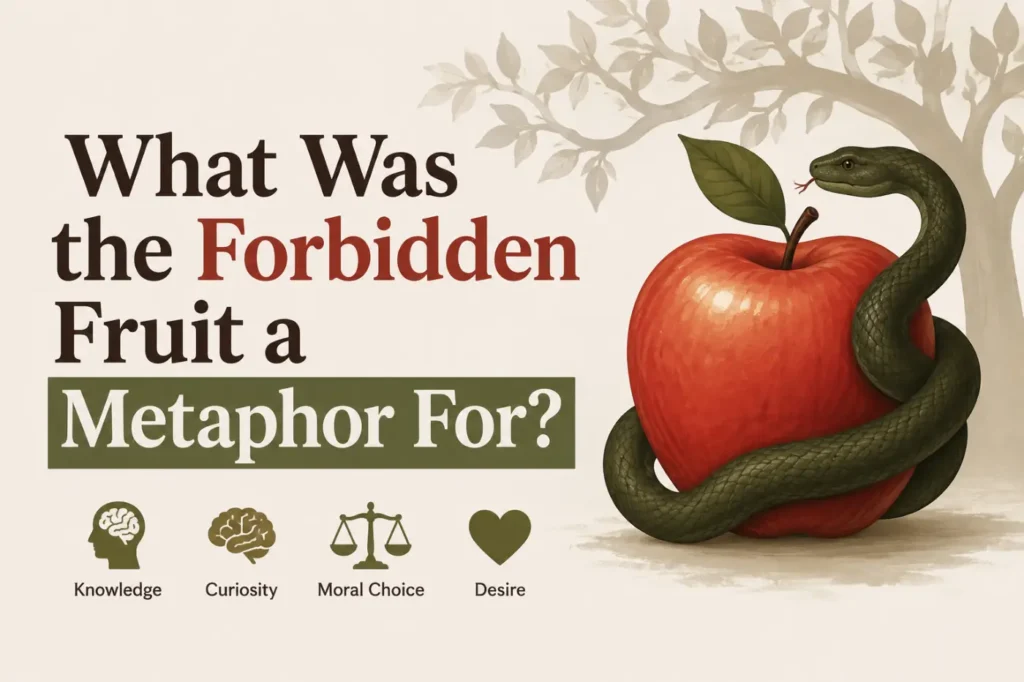
Have you ever wondered What Was the Forbidden Fruit a Metaphor For? The story of Adam and Eve is one of the most well known passages in the Bible, yet it is also one of the most misunderstood. Many people assume the fruit was an apple, while others believe the fruit itself held magical power. The biblical account tells a different story.
The forbidden fruit was not presented as a magical object. Instead, it became a powerful symbol of choice, temptation, trust, and the consequences of disobeying God. The fruit mattered because of the command attached to it, not because of its appearance or its type.
For centuries, theologians, historians, and Bible scholars have explored the deeper meaning behind this story. Jewish, Christian, and Islamic traditions all discuss the Garden of Eden, yet they do not always interpret the symbolism in exactly the same way. That is one reason the topic continues to generate questions today.
This guide examines what Scripture actually says, explains the symbolism behind the forbidden fruit, explores common interpretations, and clears up popular misconceptions. You will also learn why the apple tradition developed, what happened after Adam and Eve ate the fruit, and what this ancient story can still teach readers today.
Quick Definition
The forbidden fruit is a biblical symbol of human free will, temptation, moral responsibility, and the choice to obey or disobey God. The Bible never identifies the fruit by name. Its importance comes from God’s command and humanity’s response rather than the fruit itself.
Quick Answer
If you want the short answer, remember these key points.
- The forbidden fruit represents a test of obedience rather than a magical object.
- It symbolizes temptation, free will, moral choice, and the consequences of sin.
- The Bible never says the fruit was an apple.
- The focus of the story is humanity’s relationship with God, not the type of fruit.
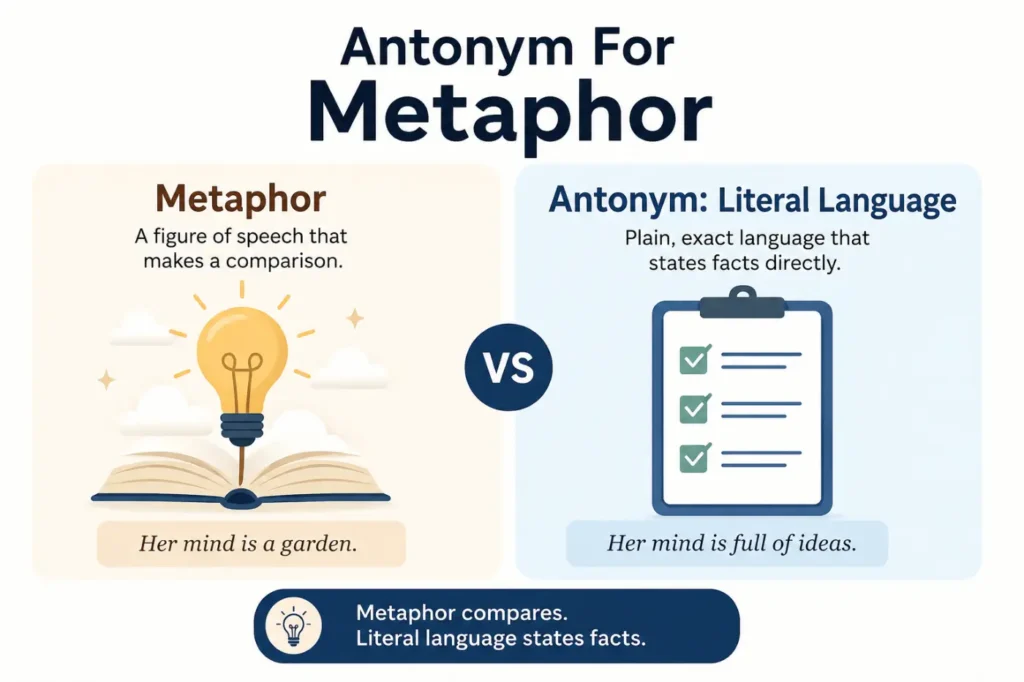
While the forbidden fruit is often understood symbolically, distinguishing a metaphor from its literal meaning can help clarify what the biblical story is actually describing.
What Does The Bible Actually Say
The account of the forbidden fruit appears in the opening chapters of the Book of Genesis. According to the biblical narrative, God placed Adam and Eve in the Garden of Eden and allowed them to enjoy every tree except one.
God gave a single command. They could eat freely from every tree in the garden except the tree of the knowledge of good and evil. Eating from that tree would bring death.
Later, the serpent questioned God’s command and persuaded Eve to eat the fruit. Eve then gave some to Adam, who also ate it. Immediately afterward, they became aware of their nakedness, experienced shame, and hid from God.
The passage never suggests that the fruit contained magical properties. Instead, the emphasis remains on the decision to ignore God’s instruction.
One of the most frequently cited passages appears in Genesis 2:16–17, where God says:
You are free to eat from any tree in the garden. But you must not eat from the tree of the knowledge of good and evil, for when you eat from it you will certainly die.
Another key passage is Genesis 3, which describes the temptation, the act of disobedience, and the consequences that followed.
These verses have shaped religious thought, literature, philosophy, and art for thousands of years.
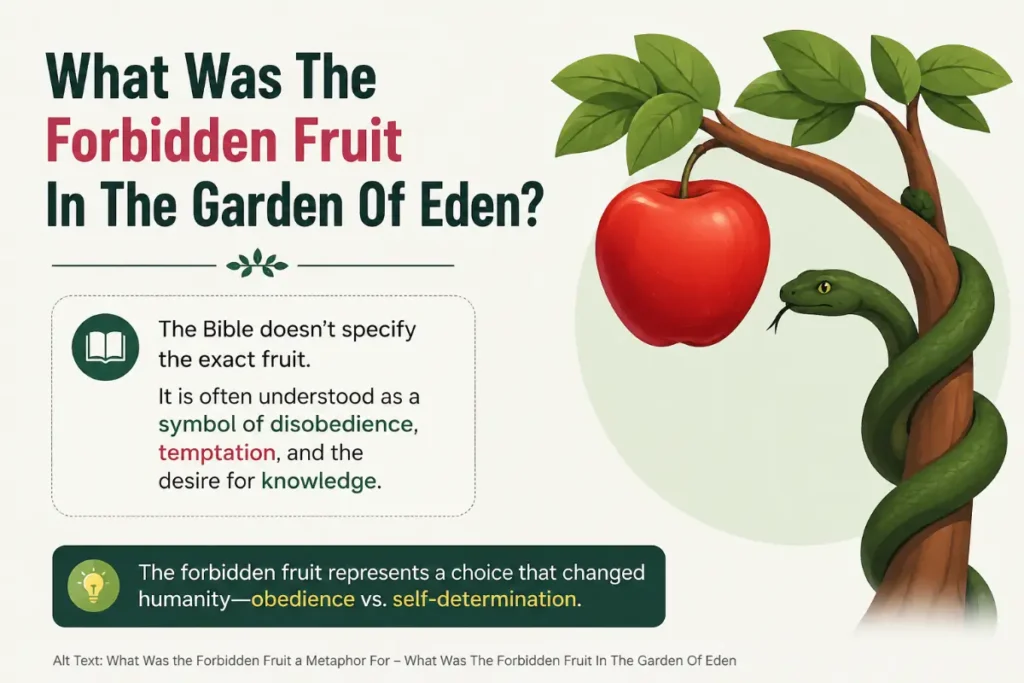
What Was The Forbidden Fruit In The Garden Of Eden
One of the biggest misconceptions is that the Bible identifies the fruit as an apple.
It does not.
The Book of Genesis simply refers to it as the fruit of the tree of the knowledge of good and evil. No species or variety is mentioned.
Because Scripture leaves the fruit unnamed, scholars have suggested different possibilities throughout history, including:
- Fig.
- Grape.
- Pomegranate.
- Citron.
- Wheat in symbolic interpretations.
- An unspecified fruit known only within the story.
None of these ideas can be proven from the biblical text itself.
The apple tradition became popular much later, largely through Western art and medieval interpretations rather than the original Hebrew Scriptures. As paintings, literature, and religious imagery spread across Europe, the apple gradually became the fruit most people associated with Eden.
Today, many readers are surprised to discover that the Bible never makes that identification.
Why Was The Fruit Forbidden
The central question is not what kind of fruit it was but why God prohibited eating it.
Most biblical scholars agree that the prohibition served as a test of obedience and trust. Adam and Eve had genuine freedom to choose. Without the possibility of disobedience, obedience itself would have carried little meaning.
Several themes emerge from this command.
- Human beings were given free will.
- God established moral boundaries.
- Trust required obedience even when the reason was not fully explained.
- Every choice carries consequences.
The command also highlighted the relationship between humanity and God. It demonstrated that true freedom includes responsibility, not unlimited permission to do everything a person desires.
Rather than viewing the fruit as dangerous because of its physical nature, many theologians understand it as representing the boundary between trusting God’s wisdom and relying solely on human judgment.
What Was The Forbidden Fruit A Metaphor For
Although different religious traditions emphasize different aspects of the story, most agree that the fruit symbolizes much more than food growing on a tree.
Several themes appear consistently throughout biblical interpretation.
A Test Of Obedience
The fruit represented a choice.
Adam and Eve could trust God’s command or reject it. Their decision became the first recorded act of human disobedience in the biblical narrative.
Human Free Will
The story illustrates that people were created with the ability to make real choices.
Love, faithfulness, and obedience have meaning only when they are freely chosen.
Temptation
The serpent appealed to curiosity, desire, and personal ambition.
The temptation was not simply about eating fruit. It involved questioning God’s goodness and believing that independence would lead to something better.
Moral Responsibility
After eating the fruit, Adam and Eve became accountable for their actions in a new way.
The narrative emphasizes that choices carry consequences, both personal and relational.
The Desire To Define Right And Wrong Independently
Many theologians view the tree of the knowledge of good and evil as representing humanity’s attempt to determine morality apart from God.
From this perspective, the story is not about gaining intelligence but about claiming authority that belonged to God alone.
Each of these interpretations builds on the same central message. The fruit symbolizes a decision that changed humanity’s relationship with God rather than a mysterious object with supernatural power.
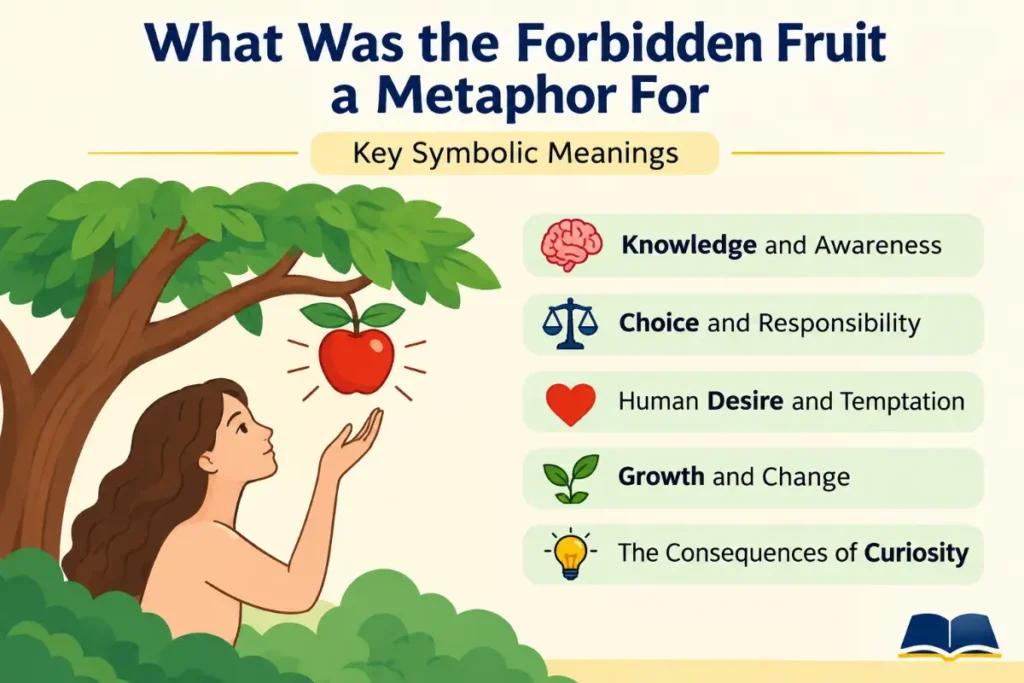
Key Symbolic Meanings
The symbolism of the forbidden fruit has been discussed for thousands of years because it speaks to experiences that remain familiar today.
The story reflects struggles that people still face, including the tension between trust and doubt, obedience and independence, wisdom and pride.
Many scholars summarize its symbolism in these ways.
- Freedom comes with responsibility.
- Every choice has consequences.
- Temptation often appears attractive before its cost becomes visible.
- Trust is tested through actions, not intentions.
- Moral decisions shape relationships with others and with God.
- Human curiosity can lead to wisdom, but it can also lead to harmful choices when it ignores moral boundaries.
These themes help explain why the story continues to resonate across cultures and generations.
Featured Bible Verses
Several passages form the foundation for understanding this topic.
- Genesis 2:16–17 introduces God’s command concerning the tree of the knowledge of good and evil.
- Genesis 3:1–7 describes the serpent’s temptation and Adam and Eve’s decision to eat the fruit.
- Genesis 3:8–24 explains the consequences of their disobedience, including exile from the Garden of Eden.
- Romans 5:12–19 reflects on Adam’s disobedience and its significance in Christian theology.
- 1 Corinthians 15:21–22 contrasts Adam’s actions with the hope of redemption through Christ.
Together, these passages show that the story is about far more than a piece of fruit. They present themes of choice, responsibility, sin, judgment, and redemption that continue throughout the rest of the Bible.
Is The Forbidden Fruit An Apple
Ask almost anyone to picture the Garden of Eden, and they will probably imagine Adam and Eve holding an apple. That image is deeply rooted in Western culture, but it does not come from the biblical text.
Genesis never identifies the fruit by name. It simply calls it the fruit of the tree of the knowledge of good and evil. Because no specific fruit is mentioned, scholars have proposed several possibilities over the centuries. These include figs, grapes, pomegranates, citrons, and even symbolic interpretations that do not point to any literal fruit at all.
So why did the apple become so famous?
One reason involves language. In Latin, the word malum can mean both apple and evil, depending on its form and context. This linguistic connection influenced medieval writers and artists. As paintings and illustrations spread across Europe, the apple gradually became the most recognizable symbol of the Eden story.
Renaissance artists further reinforced this image. Their paintings reached millions of people over time, shaping public imagination more than the biblical account itself.
Today, many Bible readers are surprised to learn that Scripture never calls the forbidden fruit an apple.
What Happened After Adam And Eve Ate The Fruit
The consequences began immediately. According to Genesis, Adam and Eve did not gain magical powers or become gods. Instead, they experienced a profound change in their awareness and relationship with God.
Several events followed in sequence.
- They realized they were naked and felt shame for the first time.
- They sewed fig leaves together to cover themselves.
- They hid when they heard God walking in the garden.
- God confronted them about their actions.
- Adam blamed Eve, and Eve blamed the serpent.
- God pronounced consequences for the serpent, the woman, and the man.
- They were expelled from the Garden of Eden.
- Cherubim and a flaming sword guarded the entrance to prevent access to the tree of life.
The story illustrates that disobedience affected more than one moment. It altered humanity’s relationship with God, with one another, and with creation itself.
Many theologians view this account as the beginning of humanity’s moral struggle. It explains why the Bible later emphasizes repentance, forgiveness, and redemption.
Interpretations In Judaism
Jewish interpretation often focuses on human responsibility, moral choice, and the importance of obeying God’s commandments.
Unlike some later Christian traditions, Jewish scholars have not always viewed the story primarily through the doctrine of original sin. Instead, many emphasize that Adam and Eve exercised free will and accepted responsibility for their choices.
Rabbinic literature also offers different opinions about the identity of the fruit. Various rabbis suggested possibilities such as:
- Fig.
- Grape.
- Wheat in a symbolic sense.
- Citron.
These interpretations are presented as thoughtful reflections rather than definitive conclusions.
Another important idea in Judaism is that the story teaches people how to live wisely within the boundaries established by God. The focus remains on moral growth, accountability, and faithful living instead of curiosity about the fruit itself.
The idea becomes easier to understand when you look at simple metaphors for children, where an ordinary object or image represents a deeper idea.
Interpretations In Christianity
Christian traditions generally agree that the forbidden fruit symbolizes humanity’s first act of disobedience against God. From this event, many theological themes develop throughout the rest of Scripture.
Common Christian interpretations include:
- The entrance of sin into human experience.
- Separation between humanity and God.
- The need for redemption.
- The importance of faith and obedience.
- God’s plan for restoration through Jesus Christ.
Different Christian denominations explain these themes in different ways, but they share the understanding that the story reaches far beyond one historical event. It establishes the foundation for many teachings found throughout the New Testament.
The Apostle Paul reflects on Adam’s disobedience in Romans and First Corinthians, comparing Adam’s actions with Christ’s work of redemption. This connection explains why the Garden of Eden remains central to Christian theology.
What Was The Forbidden Fruit In Islam
Islam also includes the story of Adam and his wife in the Quran, but there are notable differences from the biblical account.
The Quran does not identify the fruit by name. Like the Bible, it simply refers to a forbidden tree. Because the specific fruit is never mentioned, Islamic scholars generally avoid making definitive claims about its identity.
The emphasis falls on obedience to Allah, human weakness, temptation, and repentance.
Several important themes stand out.
- Satan tempted Adam and his wife.
- They disobeyed God’s command.
- They recognized their mistake.
- They sincerely repented.
- Allah accepted their repentance.
Unlike some Christian interpretations, Islam does not teach that humanity inherits Adam’s sin. Instead, every person is responsible for his or her own actions before God.
Although the details differ, all three Abrahamic faiths present the story as a lesson about obedience, temptation, and human responsibility.
Historical Origins Of The Apple Tradition
The connection between the forbidden fruit and the apple developed gradually over many centuries. It did not begin in Genesis itself. Instead, it emerged through language, art, and cultural storytelling.
Several historical factors contributed to this association.
- The Latin word malum created a linguistic link between apple and evil.
- Medieval artists frequently painted the fruit as an apple because audiences recognized it easily.
- European literature repeated the image until it became familiar across generations.
- Religious artwork displayed in churches reinforced the visual tradition.
- Later books, poems, and children’s stories continued using apples instead of an unnamed fruit.
By the Renaissance, the apple had become the dominant artistic symbol, even though biblical scholars continued to note that Scripture never identifies the fruit.
This illustrates how cultural traditions sometimes become more widely known than the original source.
Common Misunderstandings
The story of the forbidden fruit has inspired countless books, paintings, films, and discussions. Along the way, several misconceptions have become surprisingly common.
Here are some of the biggest misunderstandings.
The Fruit Was Definitely An Apple
The Bible never says this. The apple comes from later artistic and cultural traditions rather than the biblical text.
The Fruit Had Magical Powers
Nothing in Genesis suggests the fruit contained supernatural properties. The significance lies in God’s command and humanity’s response.
Knowledge Means Intelligence
The phrase knowledge of good and evil is widely understood as referring to moral awareness and moral responsibility rather than increased intelligence or academic knowledge.
The Story Is Only About Food
The fruit itself is not the main focus. The narrative centers on trust, obedience, temptation, freedom, and the consequences of human choices.
Every Tradition Explains The Story The Same Way
Judaism, Christianity, and Islam all preserve the account in different forms and emphasize different theological themes. Recognizing those differences leads to a richer understanding of the story.
Modern Cultural Influence
Few biblical stories have influenced culture as deeply as the account of the forbidden fruit.
Its symbolism appears in literature, films, television, advertising, psychology, philosophy, and everyday conversation. Even people with little religious background recognize expressions such as forbidden fruit, which often describe something attractive simply because it is prohibited.
Modern writers use the phrase to explore ideas such as:
- Temptation.
- Curiosity.
- Personal freedom.
- Moral conflict.
- Hidden desire.
- Risk and consequence.
The image also appears in paintings, sculptures, novels, music, and popular media. While many creative works take artistic liberties, they continue to draw on the same timeless themes first introduced in Genesis.
The lasting influence of the story shows that its power extends far beyond religion. It speaks to universal questions about human nature, choices, and the consequences that follow our decisions.
Related Symbols And Biblical Themes
The forbidden fruit is only one symbol in the Garden of Eden account. Reading it alongside the other images in Genesis provides a deeper understanding of the story’s message.
Here are some of the most important related symbols.
- The Tree of Life. This tree represents eternal life and ongoing fellowship with God. After Adam and Eve left Eden, access to it was blocked.
- The Tree of the Knowledge of Good and Evil. This tree symbolizes the choice between trusting God’s authority and relying on human judgment.
- The Serpent. In Genesis, the serpent becomes the tempter who encourages doubt and disobedience. Later biblical passages associate the serpent with Satan.
- The Garden of Eden. The garden represents God’s provision, peace, and perfect relationship with humanity before sin entered the world.
- Fig Leaves. Adam and Eve used fig leaves to cover themselves after realizing they were naked. They symbolize human attempts to deal with guilt and shame through personal effort.
- Cherubim and the Flaming Sword. These images represent God’s holiness and the separation that resulted from disobedience.
Together, these symbols create a unified picture. The story is not simply about one tree or one piece of fruit. It is about humanity’s relationship with God, the gift of free will, and the consequences that follow moral choices.
Just as the forbidden fruit can represent ideas such as temptation, knowledge, or disobedience, familiar metaphor examples can show how a simple image can carry a much deeper meaning.
Expert Biblical And Linguistic Insight
One reason this story continues to inspire discussion is that the biblical text leaves several details intentionally unspecified. Genesis never names the fruit, never describes its taste, and never explains its physical appearance. That absence shifts the reader’s attention away from the fruit itself and toward the decision that Adam and Eve made.
From a linguistic perspective, the Hebrew text emphasizes obedience and moral responsibility rather than curiosity about the fruit’s identity. The phrase knowledge of good and evil has been understood by many scholars as an expression describing moral discernment and accountability instead of simply gaining information.
Biblical scholars also encourage readers to distinguish between the text itself and later traditions. The image of an apple became popular through art and literature, but it should not be confused with what Genesis actually says. Careful interpretation begins with the original passage before considering later cultural influences.
Another important observation is that this narrative functions on more than one level. It tells a story, introduces foundational theological themes, and uses symbolism to explore questions about freedom, temptation, trust, and human responsibility. That layered approach helps explain why the account continues to be studied by theologians, historians, literary scholars, and readers around the world.
Frequently Asked Questions
What was the forbidden fruit a metaphor for?
Most biblical scholars understand the forbidden fruit as a metaphor for human free will, temptation, moral responsibility, and the decision to obey or disobey God. The emphasis is on the choice itself rather than the physical fruit.
What is the forbidden fruit in the Bible?
The Bible describes it only as the fruit of the tree of the knowledge of good and evil. Scripture never identifies the fruit by name, which is why scholars have proposed different possibilities throughout history.
Is the forbidden fruit an apple?
No. The Bible never says the fruit was an apple. That idea developed centuries later through Latin wordplay, medieval art, and European cultural traditions. Although the apple became the most familiar image, it is not supported by the text of Genesis.
Why was the forbidden fruit forbidden?
According to Genesis, God established one clear boundary in the Garden of Eden. Many theologians interpret this command as a test of trust and obedience that demonstrated humanity’s ability to make meaningful moral choices.
What did the forbidden fruit do?
The fruit itself is not described as possessing magical power. After Adam and Eve ate it, they became aware of their nakedness, experienced shame, and faced the consequences of disobeying God’s command. The change resulted from their choice rather than from the fruit’s physical properties.
What was the forbidden fruit in Islam?
The Quran mentions a forbidden tree but does not identify the fruit. Islamic teachings focus on temptation, disobedience, repentance, and God’s mercy instead of the specific type of fruit.
What Bible verse talks about the forbidden fruit?
The main passages appear in Genesis 2:16–17, where God gives the command, and Genesis 3, which records the temptation, the act of disobedience, and the consequences that followed.
Why does the story still matter today?
The account continues to resonate because it explores timeless questions about freedom, responsibility, trust, temptation, and the consequences of human decisions. Those themes remain relevant across cultures, beliefs, and generations.
Conclusion
The question of What Was the Forbidden Fruit a Metaphor For leads to a much deeper discussion than the identity of a piece of fruit. The biblical narrative places its emphasis on human choice, trust in God, and the responsibilities that come with free will.
Genesis never identifies the fruit as an apple, and it does not suggest that the fruit possessed magical qualities. Instead, the story centers on a single command, a deliberate decision, and the lasting consequences that followed. Over time, this account became one of the Bible’s most enduring symbols because it reflects struggles that people continue to experience today.
Jewish, Christian, and Islamic traditions approach the story from different perspectives, yet they all recognize its importance as a lesson about obedience, temptation, and accountability. Looking beyond popular myths and returning to the biblical text provides a clearer understanding of its message.
The lasting influence of the Garden of Eden shows that the forbidden fruit represents far more than an ancient event. It continues to encourage thoughtful reflection on how people make choices, respond to temptation, and understand the relationship between freedom and responsibility.