The pegasus meaning is rooted in Greek mythology where Pegasus is a divine winged horse associated with freedom, flight, inspiration, and heroic adventure. He is best known as the magnificent horse born from the blood of Medusa after the hero Perseus defeated her. Over time, Pegasus became much more than a mythological creature. The image of a winged horse now represents imagination, artistic inspiration, ambition, freedom, and the ability to rise above ordinary limits.
If you have seen the name Pegasus in a book, game, tattoo, text message, brand name, sports product, or mythology lesson, the meaning can change slightly with the context. In mythology, Pegasus is a specific legendary creature. In everyday language, the name can symbolize creativity and freedom. In astronomy, Pegasus is a constellation. In modern culture, it also appears in entertainment, technology, business, sports, and popular symbolism.
This guide explains the story behind Pegasus, how to pronounce the name, what it means in English, what it represents symbolically, and how people use the word in different contexts. It also covers Pegasus in the Bible, Chinese, slang, texting, sports, mythology, and popular culture.
Quick Answer: Pegasus is the famous winged horse from Greek mythology. He is traditionally described as the offspring of Medusa and Poseidon and became closely connected with the hero Bellerophon. Today, Pegasus commonly symbolizes freedom, imagination, inspiration, ambition, and the power to overcome limitations.
What Does Pegasus Mean
Pegasus is a proper name from Greek mythology. It refers specifically to the immortal winged horse known in Greek as Pegasos.
The familiar image is easy to recognize. Picture a powerful white horse with enormous wings stretching from its shoulders as it rises above the ground. That image has become one of the most recognizable symbols in mythology.
Pegasus is not simply a horse that happens to have wings. In the ancient stories, he belongs to the supernatural world and is connected with gods, heroes, springs, poetry, and divine inspiration.
One of the most famous traditions says that Pegasus sprang from the body of Medusa after Perseus cut off her head. Ancient sources connect Pegasus with Poseidon as his father. The story therefore places the creature within the complicated family relationships of Greek mythology.
The name is also associated with springs. Ancient writers connected Pegasus with the Greek word pegai, meaning springs or sources of water. One famous myth says that Pegasus struck the ground with his hoof and caused the spring called Hippocrene to appear on Mount Helicon.
That connection gives Pegasus a deeper symbolic meaning. He is not only a creature of flight. He is also associated with water, creativity, poetry, and the sudden arrival of inspiration.
Pegasus Meaning In English
In English, Pegasus usually means the legendary winged horse of Greek mythology.
The word is normally capitalized because it is a proper name when referring to the mythological creature.
For example:
- Pegasus appears in several stories from Greek mythology.
- The artist painted Pegasus flying above the mountains.
- The hero rode Pegasus into battle.
The word can also be used more broadly as a symbol.
Someone might describe a fictional character as a Pegasus to suggest that the character is graceful, free, imaginative, or capable of extraordinary things. In poetry and creative writing, Pegasus can represent artistic inspiration or the imagination taking flight.
The meaning therefore depends on context, but the central image remains the same: a winged horse that rises beyond ordinary limitations.
The Story Of Pegasus In Greek Mythology
The most famous origin story begins with Medusa, one of the Gorgons.
According to ancient Greek traditions, Medusa was the only mortal Gorgon. When Perseus killed her by cutting off her head, Pegasus emerged from her body along with Chrysaor. Ancient sources including Hesiod and later mythographers preserve versions of this story.
This unusual birth makes Pegasus different from ordinary mythological horses. He enters the world through a dramatic supernatural event connected to one of the most famous heroes and monsters in Greek mythology.
Perseus was not Pegasus’s permanent rider in the best known traditions. Another hero, Bellerophon, became strongly associated with the winged horse.
Bellerophon needed to defeat the Chimera, a terrifying creature described as having features of several animals. Pegasus gave him the ability to attack from the air and helped him overcome the monster. Ancient sources describe Bellerophon riding Pegasus during this heroic adventure.
The partnership between the hero and the winged horse helped shape Pegasus’s later image as a symbol of heroic courage, adventure, and extraordinary ability.
What Does Pegasus Symbolize
Pegasus has accumulated several symbolic meanings over thousands of years. Some come directly from ancient mythology, while others developed through literature, art, and modern popular culture.
The most common associations include:
- Freedom because wings allow Pegasus to escape the limits of the ground.
- Imagination because the creature belongs to a world beyond ordinary reality.
- Inspiration because Pegasus became connected with the springs associated with the Muses and poetry.
- Ambition because flight suggests reaching beyond ordinary boundaries.
- Courage because Pegasus is connected with heroic adventures.
- Transformation because his extraordinary birth follows the death of Medusa.
- Creativity because the winged horse became associated with artistic and poetic inspiration.
- Independence because a flying horse represents movement without ordinary physical restrictions.
This explains why Pegasus appears so often in tattoos, logos, fantasy artwork, books, games, jewelry, and motivational imagery.
Pegasus As A Symbol Of Freedom
Freedom is probably one of the easiest meanings to understand. A normal horse runs across the ground. Pegasus can leave the ground entirely.
That simple visual difference creates a powerful metaphor. A winged horse can travel above mountains, cross barriers, and move through the sky without being restricted by roads or walls.
For that reason, Pegasus is often used to represent a person who wants independence or refuses to be limited by conventional expectations.
A tattoo featuring Pegasus might symbolize personal freedom. A fictional character riding Pegasus might represent someone breaking away from an old life. An illustration of Pegasus flying into an open sky can suggest liberation, adventure, or a new beginning.
If you’re exploring the symbolism of purple roses, their color is often associated with enchantment, admiration, mystery, and elegance.
Pegasus As A Symbol Of Imagination
Pegasus also has a strong connection with imagination. The creature itself is impossible in the ordinary physical world. A horse with wings belongs to mythology and fantasy rather than everyday reality. That makes Pegasus an effective symbol for creative thinking.
Writers, artists, musicians, and designers may use Pegasus imagery to suggest that imagination can carry the mind beyond ordinary boundaries. The idea fits especially well with creative work because Pegasus became connected with the spring Hippocrene on Mount Helicon, a place associated with the Muses. Ancient traditions linked that spring with Pegasus’s hoof strike.
In this sense, Pegasus can represent the moment when an idea suddenly appears. It is the image of imagination taking flight.
Pegasus And Inspiration
The connection between Pegasus and inspiration is particularly important in literature and art.
The spring Hippocrene was associated with the Muses, the goddesses connected with poetry, music, and the arts. Ancient and later traditions therefore helped turn Pegasus into an emblem of creative inspiration.
This is why you may see Pegasus used in the names of publishing companies, writing programs, literary organizations, creative projects, and educational institutions.
The symbolism makes sense. A writer needs an idea before a story can begin. Pegasus represents that idea arriving with energy and freedom.
Pegasus Meaning In Text
If someone uses Pegasus in a text message or online conversation, the meaning depends heavily on the surrounding message.
Unlike common internet abbreviations, Pegasus is not a standard texting abbreviation. It normally refers to the mythical winged horse or uses that creature as a symbol.
For example:
I wish I had a Pegasus right now.
This could be a playful way of saying that someone wishes they could fly away from a situation.
Someone might also text:
That horse looks like Pegasus.
Here the person is simply comparing a horse or fantasy image to the famous winged creature.
In creative conversations, Pegasus may represent freedom, dreams, imagination, or fantasy. The word does not have one universally accepted slang definition in texting.
Pegasus Meaning In Slang
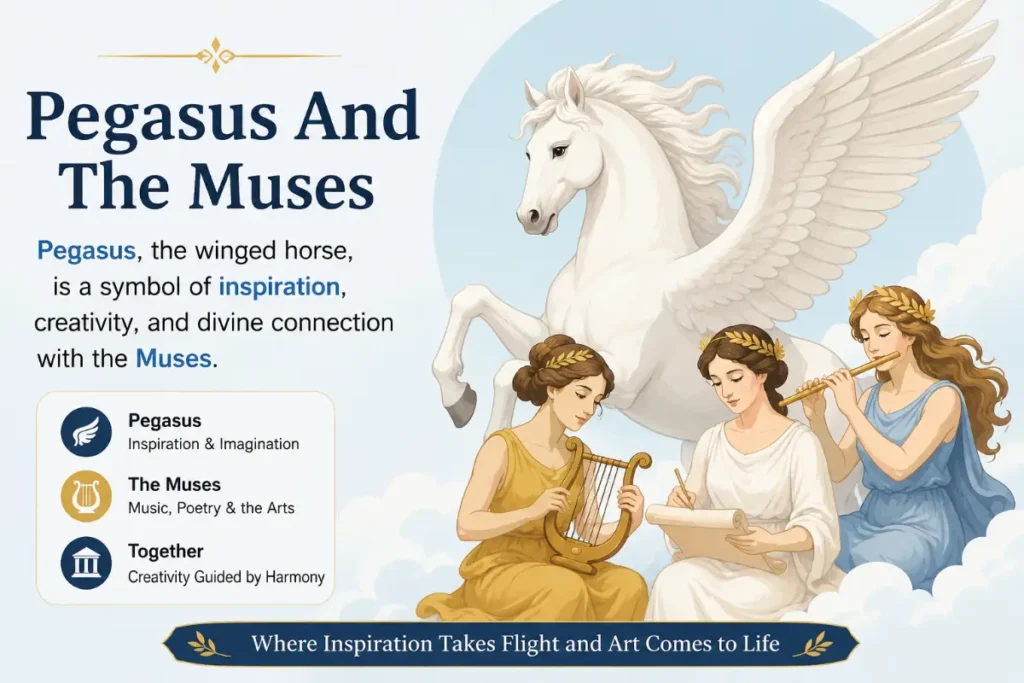
Pegasus is not a widely established slang word in standard American English.
You may find people using it informally as a metaphor for something extraordinary, beautiful, fast, powerful, or imaginative. However, that usage is creative rather than a fixed slang definition recognized across English speaking communities.
This distinction matters because online dictionaries and social media posts can sometimes make a rare personal usage look like an established meaning.
If someone calls a person a Pegasus, they may be praising that person’s imagination, independence, beauty, or unusual abilities. The exact meaning comes from context.
So if you encounter Pegasus in a slang-heavy conversation, do not automatically assume it has one secret definition. Look at the sentence around it.
Pegasus Meaning In The Bible
Pegasus does not appear as a named creature in the Bible.
The winged horse belongs to Greek mythology, not biblical tradition.
This is an important distinction because Pegasus sometimes appears in online discussions about biblical creatures, angels, or supernatural horses. The resemblance between certain biblical imagery and winged mythical creatures can create confusion, but that does not make Pegasus a biblical figure.
The Bible contains passages involving horses, visions, angels, symbolic creatures, and extraordinary events. However, the specific mythological figure Pegasus is not part of biblical scripture.
So the simple answer is:
Pegasus is Greek mythology, not a biblical character.
Pegasus Meaning In Chinese
There is more than one way to represent Pegasus in Chinese depending on the context.
In modern Chinese discussions of Greek mythology, Pegasus may be transliterated as 珀伽索斯. You may also encounter descriptive expressions involving a flying horse or winged horse.
Chinese culture also has its own long tradition of magical and legendary horses. One famous example is the 天马, often translated as Heavenly Horse or celestial horse. This is not automatically the same mythological character as the Greek Pegasus.
That distinction is useful when translating mythology. A translator may choose a descriptive phrase that communicates the image of a winged horse, while a proper name may be transliterated to preserve the original mythological identity.
So when someone searches for the meaning of Pegasus in Chinese, the best translation depends on the context and the specific translation goal.
How To Pronounce Pegasus
The standard English pronunciation is commonly given as:
PEG uh sus
A common pronunciation is represented in IPA as:
/ˈpɛɡəsəs/
The word has three syllables:
Peg uh sus
The stress falls on the first syllable.
The beginning sounds like peg, followed by two lighter syllables.
A common mistake is trying to pronounce the word as if it were a modern English compound. It is a classical mythological name that entered English through Greek and Latin traditions, so its pronunciation is best learned as a single established word.
What Does The Name Pegasus Mean
The exact ancient etymology of Pegasos has been discussed by scholars, but the name has long been associated in ancient sources with springs and water.
Hesiod connected Pegasus with springs, and later traditions explicitly connected the name with the Greek concept of springs. The myth of Pegasus creating Hippocrene with his hoof reinforced this association.
This is one reason the name has a richer background than simply meaning winged horse.
When people casually define Pegasus, they usually describe the creature rather than the deeper history of the name. The popular definition is therefore straightforward:
Pegasus means the legendary winged horse of Greek mythology.
The symbolic associations of flight, inspiration, and freedom developed around that mythological figure.
Pegasus And Bellerophon
Bellerophon is one of the most important characters connected with Pegasus.
According to Greek mythology, Bellerophon rode Pegasus while fighting the Chimera. The winged horse gave him a major advantage because he could attack from above rather than face the monster entirely from the ground. Ancient mythological sources describe this heroic partnership.
The story is often remembered as a classic example of a hero and supernatural companion working together.
However, the story also contains a warning about pride.
After his successes, Bellerophon became overly ambitious and attempted to reach Olympus. The story traditionally ends badly for him, showing that extraordinary power does not make a human being equal to the gods.
This gives Pegasus another layer of meaning. The creature can represent ambition and achievement, but the larger story reminds readers that ambition without humility can become dangerous.
Pegasus And Medusa
Pegasus’s connection with Medusa is central to his mythology.
When Perseus beheaded Medusa, Pegasus emerged from her body. Ancient sources preserve this connection, although details differ across traditions.
The image is striking because Pegasus represents beauty, movement, and flight while Medusa is usually remembered for her terrifying appearance and deadly gaze.
Their connection has therefore inspired modern interpretations about transformation and unexpected creation.
Something extraordinary emerges from something frightening.
That idea has become especially attractive in modern storytelling. Writers may use Pegasus to symbolize hope or creativity emerging from hardship, even though that interpretation is a modern symbolic reading rather than the sole meaning of the original myth.
If you’re wondering what “about face” means, the expression generally describes a sudden change in direction, attitude, or decision.
Pegasus And The Muses
Pegasus is closely associated with the Muses, especially through the spring Hippocrene.
According to ancient traditions, Pegasus struck Mount Helicon with his hoof and caused the spring to appear. Hippocrene became associated with the Muses and poetic inspiration.
This relationship explains why Pegasus is so strongly connected with writers and artists today.
The image works beautifully as a metaphor. The horse moves through the air while the spring provides water. Water becomes a source of creative thought, and the winged horse becomes the force that releases it.
That is why Pegasus is not merely a fantasy animal. In literary symbolism, he can stand for the imagination itself.
Pegasus In Literature
Pegasus has appeared in classical literature and continued into later European literary traditions.
Ancient Greek writers connected Pegasus with heroic stories, springs, and divine or supernatural events. Roman writers also preserved and developed the mythology. Ovid, for example, described the fountain associated with Pegasus and the Muses.
Later writers transformed the creature into an even broader symbol of poetry and imagination.
The expression ride Pegasus can therefore carry a figurative meaning in creative writing. It may suggest entering a world of imagination, allowing ideas to move freely, or escaping ordinary limitations.
Pegasus In Modern Culture
Today, Pegasus appears far beyond classical mythology.
You can find the name in:
- Fantasy novels and films.
- Video games.
- Children’s books.
- Tattoos and artwork.
- Company and product names.
- Sports branding.
- Astronomy.
- Fashion and jewelry.
- Educational programs.
- Technology and software projects.
The reason for its popularity is obvious. The image is visually powerful and the symbolism is flexible.
A brand can use Pegasus to suggest speed or freedom. A technology company might use it to suggest innovation. A sports product might use it to suggest movement and performance. A fantasy writer can use the creature almost literally.
Pegasus Meaning In Sports
In sports, Pegasus is often used to communicate speed, movement, strength, freedom, and performance.
A well known modern example is Nike’s Pegasus running shoe line. The name uses the mythological association with movement and flight to create an image of a fast and energetic running experience.
The sports usage does not create a new mythological definition. Instead, it borrows the existing symbolism.
That is common in branding. Companies choose names from mythology because a familiar figure can communicate an entire group of ideas without needing a long explanation.
Pegasus already suggests speed and elevation. That makes it a natural name for products associated with running and athletic movement.
Pegasus In Astronomy
Pegasus is also the name of a constellation.
The constellation Pegasus is located in the northern sky and is traditionally represented as the winged horse from Greek mythology.
This is why astronomy articles may use the word in a completely different context from mythology.
For example:
Pegasus is visible in the night sky during certain times of year.
Here Pegasus does not mean an actual winged horse. It refers to the constellation named after the mythological creature.
The connection between mythology and astronomy is not unusual. Many constellations carry names from Greek and Roman mythology.
Is Pegasus An Acronym
Pegasus is not an acronym in its traditional mythological meaning.
It is a proper name associated with the Greek mythological winged horse.
However, modern organizations, technologies, projects, and systems may independently use PEGASUS as an acronym or stylized name. In those cases, the meaning depends on the specific organization or product.
This is an important distinction.
If you see Pegasus in a mythology book, it refers to the winged horse.
If you see PEGASUS written in all capital letters in a technical document, it may represent an unrelated acronym or project name.
Capitalization and context can therefore help you determine what the writer means.
Pegasus Meaning In A Dream
People sometimes search for the meaning of seeing Pegasus in a dream.
Dream symbolism does not have one scientifically established interpretation. Still, in popular symbolic traditions, a winged horse may represent freedom, ambition, imagination, adventure, or a desire to escape restrictions.
For example, someone dreaming about flying on Pegasus might personally associate the image with independence or a new opportunity.
Another person might connect it with creativity.
The important point is that dream interpretation is subjective. A symbolic dictionary cannot tell you exactly what a dream means for one individual.
The mythology gives Pegasus a set of cultural associations, but personal experience determines how those associations feel.
Pegasus As A Tattoo Symbol
Pegasus is a popular tattoo subject because the image combines strength with freedom.
A person might choose a Pegasus tattoo to represent:
- Personal independence.
- A major life transformation.
- Creative identity.
- Love of mythology.
- Ambition.
- Adventure.
- Imagination.
- Overcoming limitations.
The design can also change the message.
A Pegasus flying upward can emphasize freedom and ambition. A calm Pegasus can suggest peace and imagination. A powerful warrior riding Pegasus can emphasize courage and determination. The symbol is flexible enough to carry personal meaning without losing its mythological identity.
For a lighter expression of disagreement, the meaning of “tiff” refers to a brief, usually minor argument or quarrel.
Common Misunderstandings About Pegasus
Several misconceptions appear repeatedly online.
Pegasus Is Not A Biblical Creature
Pegasus belongs to Greek mythology. The Bible does not identify Pegasus as one of its creatures.
Pegasus Is Not Just Any Flying Horse
A fictional winged horse can be called a Pegasus informally, but the mythological Pegasus is a specific figure.
Pegasus Is Not The Same As Every Heavenly Horse
Many cultures have stories about supernatural horses. They should not automatically be treated as versions of the Greek Pegasus.
Pegasus Is Not A Standard Slang Word
People may use the name creatively, but there is no single widely accepted slang definition that applies to every conversation.
Pegasus Is Not Originally A Modern Fantasy Invention
The creature comes from ancient Greek mythology and appears in ancient literary traditions long before modern fantasy fiction.
Pegasus Vs A Generic Winged Horse
The difference is simple.
Pegasus is the name of a particular mythological creature.
Winged horse is a general description.
For example, a fantasy game might contain hundreds of winged horses. Only a character specifically identified as Pegasus is the mythological figure.
However, modern English sometimes uses pegasus as a common noun for any winged horse in fantasy contexts. Writers may do this for convenience, but the original proper name refers to the famous creature from Greek mythology.
What Pegasus Represents In Modern Writing
Modern writers can use Pegasus in several ways without retelling the original myth.
A character might say:
I feel like I finally found my Pegasus.
That could represent freedom, inspiration, or a force that helps the character move forward.
A writer might describe an idea as:
The idea arrived like Pegasus breaking through the clouds.
Here Pegasus becomes a metaphor for sudden creative inspiration.
A motivational writer might use Pegasus to represent breaking free from limitations.
These uses work because the cultural meaning of Pegasus is already familiar to many readers.
How To Use Pegasus In A Sentence
Here are natural examples from different contexts:
- Pegasus is one of the most famous creatures in Greek mythology.
- The artist painted Pegasus flying above Mount Olympus.
- The story follows a young hero who discovers Pegasus.
- Pegasus is often used as a symbol of freedom.
- The constellation Pegasus can be seen in the night sky.
- The logo uses Pegasus to represent speed and ambition.
- The writer compared her imagination to Pegasus taking flight.
- Bellerophon is closely associated with Pegasus in Greek mythology.
- The children imagined themselves riding Pegasus through the clouds.
- The Pegasus image has remained popular in fantasy art for centuries.
These examples show how the word can move naturally between mythology, symbolism, literature, astronomy, and modern culture.
Why Pegasus Remains So Popular
Pegasus has survived because the central image is almost impossible to forget.
A horse is already associated with speed, strength, travel, and freedom. Add wings, and the meaning expands immediately.
The creature can cross the boundary between earth and sky. That makes Pegasus an unusually effective symbol for human ideas that are difficult to represent directly.
Freedom is difficult to draw.
Imagination is difficult to photograph.
Ambition is difficult to visualize.
A winged horse can represent all three in one image.
That is the real strength of mythological symbolism. A single familiar figure can carry an enormous amount of meaning.
Final Takeaway
Pegasus is the legendary winged horse of Greek mythology, traditionally connected with Medusa, Poseidon, Perseus, Bellerophon, and the spring Hippocrene. The creature became associated with heroic adventure and later developed powerful symbolic connections with freedom, creativity, imagination, inspiration, ambition, and transformation.
In modern English, the name can appear in mythology, literature, fantasy, astronomy, sports, branding, tattoos, games, and everyday creative language. Its meaning changes slightly with the setting, but the central idea remains remarkably consistent: Pegasus represents the power to rise beyond ordinary limits.
If you encounter the word in a text or conversation, first look at the context. In mythology, it means the famous winged horse. In symbolism, it often suggests freedom or imagination. In astronomy, it names a constellation. In sports or branding, it may borrow the ideas of speed, movement, and flight.
The enduring appeal of Pegasus comes from one simple image: a horse that does not have to stay on the ground.