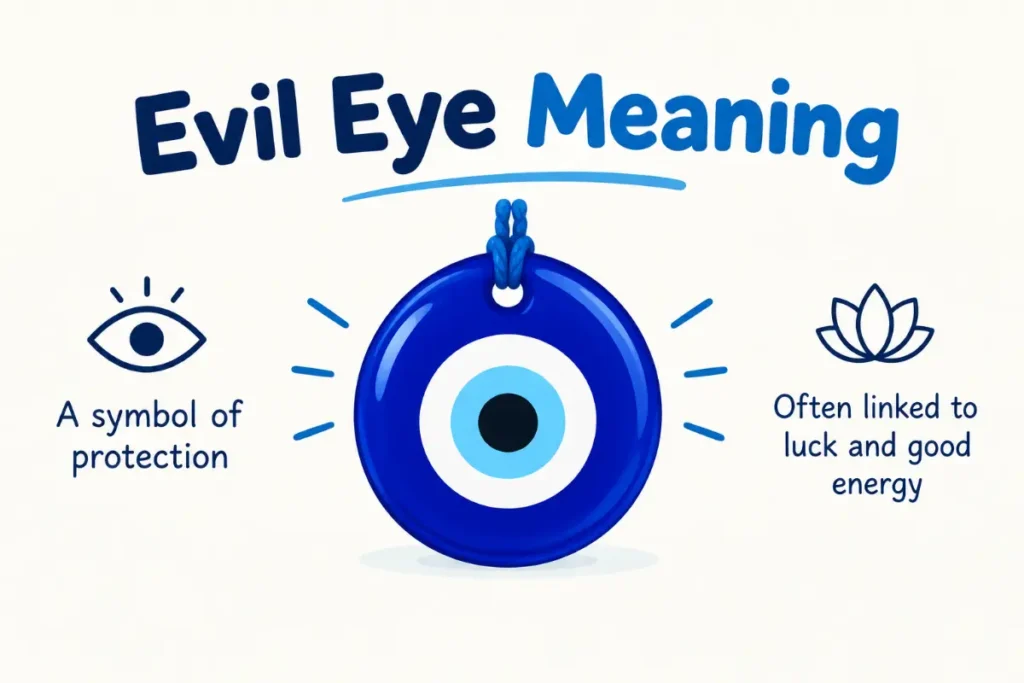
The evil eye meaning refers to the belief that a person can bring misfortune, jealousy, or harm to someone else through an envious or resentful look. Across many cultures, people have used protective symbols, jewelry, prayers, and traditional practices to guard against this perceived negative influence. The evil eye is especially recognizable as a blue eye shaped charm, often worn as a necklace, bracelet, ring, or home decoration.
Although the evil eye may look like a simple accessory, its history goes back thousands of years. Communities across the Mediterranean, the Middle East, North Africa, South Asia, and other regions have developed their own interpretations of the belief. Some people view it as a serious spiritual concern, while others appreciate the symbol as a cultural tradition or a meaningful piece of jewelry.
In the United States, evil eye bracelets, necklaces, and decorative charms have become familiar in fashion, home decor, and gift giving. People wear them for different reasons, including personal protection, cultural connection, spiritual beliefs, or simple appreciation of their appearance. Understanding the symbol helps explain why it continues to attract attention across generations and cultures.
Quick Answer
The evil eye is a traditional belief that envy or a harmful gaze can bring bad luck, illness, or misfortune. Its familiar eye shaped charm is believed by many people to protect against this negative influence. The symbol has roots in several ancient cultures and remains popular today as jewelry, home decor, and a spiritual or cultural reminder of protection.
What Is the Evil Eye
The evil eye is a belief found in numerous cultural traditions. According to this belief, a person may unintentionally or intentionally cause harm through envy, excessive admiration, or a hostile gaze. The supposed harm can take different forms, from everyday setbacks and family difficulties to illness or financial problems, depending on the tradition.
The belief does not always suggest that someone deliberately wishes to hurt another person. In some communities, even praise or admiration can be considered risky if it comes with envy or lacks a protective blessing. For example, a person might compliment a child while also offering a prayer or a traditional expression intended to prevent harm.
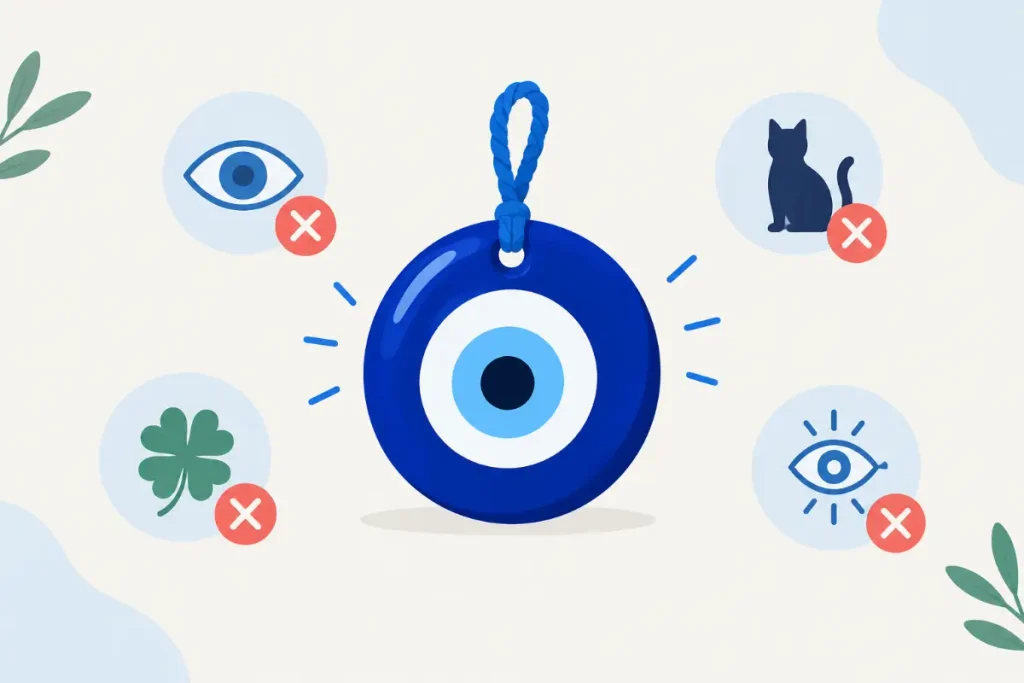
The term also refers to the protective object commonly associated with the belief. This object often features a circular eye design with a dark center, a light ring, and a blue outer area. It is known by different names in different regions, including nazar in Turkish and related cultural contexts.
It is important to distinguish the traditional belief from scientifically established facts. There is no reliable scientific evidence that a person’s gaze can transmit supernatural harm or cause misfortune through envy. However, the belief itself has genuine historical, cultural, and personal significance for many people.
The History of the Evil Eye
The evil eye tradition is ancient, with roots in several societies around the Mediterranean and surrounding regions. Beliefs about harmful gazes appeared in ancient Greek and Roman traditions, as well as in societies of the ancient Near East. People used protective objects, gestures, and rituals to guard against the harm they believed envy could cause.
In ancient Greece, the concept was associated with envy and the potentially harmful power of a person’s gaze. Greek traditions included protective gestures and objects intended to prevent misfortune. The belief also appeared in Roman society, where people used charms and other forms of protection against perceived supernatural threats.
Similar ideas developed across the Middle East and North Africa. In these regions, protective amulets, spoken blessings, and religious practices became part of how some communities responded to envy and misfortune. Over time, the belief traveled through migration, trade, family traditions, and cultural exchange.
In Turkey, the blue eye charm known as the nazar boncuğu became a widely recognized protective symbol. Blue glass charms are commonly displayed in homes, businesses, vehicles, and jewelry. Although designs vary, the familiar circular eye remains one of the most recognizable visual representations of the tradition.
The symbol also has a long presence in parts of South Asia, where people have developed their own customs for warding off the evil eye. These practices differ by region, religion, family, and community. Some involve protective marks, prayers, amulets, or traditional gestures rather than the blue glass eye commonly seen in Western jewelry stores.
Today, the symbol appears around the world. People encounter it in cultural celebrations, religious and spiritual settings, fashion collections, travel souvenirs, and online shopping. Its modern popularity reflects both its long history and its ability to carry different meanings for different people.
What Does the Evil Eye Symbolize
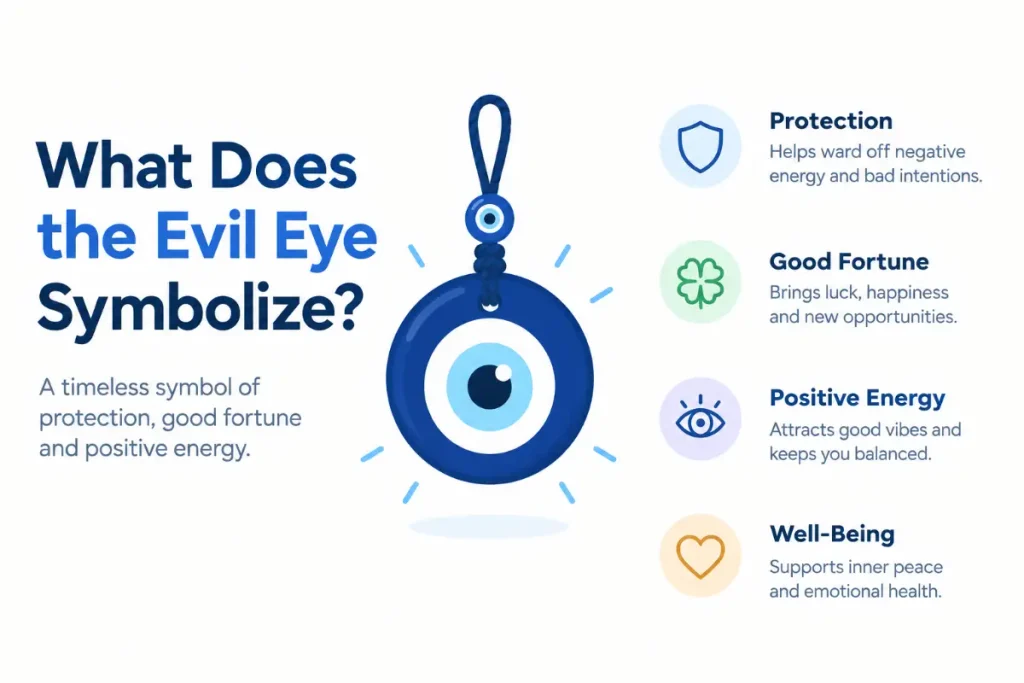
The evil eye symbol is most commonly associated with protection against envy, negativity, and misfortune. For believers, wearing or displaying the charm can serve as a reminder to stay protected from harmful intentions or unwanted spiritual influence. For others, it represents cultural heritage, personal strength, or a connection to family traditions.
Protection is the central meaning attached to the symbol. Many people believe the eye charm can help guard the wearer against the negative effects of jealousy or a harmful gaze. The charm is often placed near an entrance, worn on the body, or given as a gift to someone starting a new chapter in life.
The symbol can also represent awareness of envy. In traditions where the evil eye is taken seriously, people may be careful about displaying wealth, achievements, or family happiness too openly. This does not mean that every person who follows the tradition avoids sharing good news. Instead, the custom reflects a broader concern about how admiration, jealousy, and social relationships can affect a person’s well being.
For people who do not hold spiritual beliefs about the charm, it can still carry personal meaning. Someone may wear an evil eye necklace because it reminds them of a grandparent, a trip abroad, or a cultural background. Another person may simply enjoy its distinctive design.
What Does the Blue Evil Eye Mean
The blue evil eye is the version most commonly recognized in jewelry and home decor. It often features a dark central circle, a white ring, and a blue outer ring. Many traditional designs use glass, although modern versions can be made from metal, ceramic, plastic, gemstones, or other materials.
Blue is frequently associated with the traditional protective charm, especially in Turkish and Mediterranean settings. The color is sometimes connected with the sky, water, calmness, or protection. These associations vary by tradition, so there is no single universal explanation for every blue evil eye design.
Some people believe the blue charm reflects or deflects harmful energy back toward its source. Others understand it as a general protective symbol rather than an object with a specific supernatural mechanism. These interpretations belong to cultural and spiritual belief systems rather than established scientific explanations.
The blue eye is also popular because it is visually distinctive. Its simple circles make it easy to recognize in bracelets, necklaces, earrings, keychains, and wall decorations. For many Americans, the blue charm combines an attractive design with a traditional meaning of protection and good fortune.
Different Evil Eye Colors and Their Meanings
Although blue is the best known color, evil eye jewelry and decorations come in many shades. Different sellers and cultural traditions associate these colors with particular intentions. Their meanings are not standardized, and a color that symbolizes one quality in one setting may have a different interpretation elsewhere.
| Color | Common modern association |
|---|---|
| Blue | Protection, peace, and good fortune |
| Light blue | Calmness, harmony, and communication |
| Dark blue | Strength, confidence, and stability |
| White | Purity, clarity, and fresh beginnings |
| Green | Growth, hope, and personal development |
| Red | Courage, energy, and passion |
| Black | Strength, resilience, and protection |
| Pink | Love, kindness, and emotional balance |
| Purple | Wisdom, creativity, and spiritual growth |
| Yellow | Happiness, optimism, and vitality |
These color meanings are common interpretations found in contemporary spiritual and decorative contexts, not universal rules shared by every culture. A blue charm does not automatically carry more protective power than a green or red one. People can choose a color based on personal preference, family tradition, or the meaning they find most appealing.
When purchasing an evil eye accessory, it helps to understand that retailers may use color symbolism as part of their product descriptions. Those descriptions can be useful for choosing a meaningful gift, but they should not be treated as proof that one color produces a particular result.
What Does an Evil Eye Bracelet Mean
An evil eye bracelet is a piece of jewelry that carries the traditional eye symbol. People who believe in its protective role may wear it to guard against envy, negative intentions, or misfortune. Others wear it because of its cultural significance, attractive appearance, or personal symbolism.
Bracelets are popular because they keep the charm visible and easy to wear. Designs range from simple blue glass beads on a cord to gold bracelets with small eye shaped pendants. Some combine the eye with other symbols, including hearts, stars, crosses, or gemstones.
There is no universal rule about which wrist should hold an evil eye bracelet. Some sellers and spiritual traditions recommend a particular side based on ideas about receiving or directing energy. These recommendations differ, and wearing the bracelet on the opposite wrist does not establish that someone has done anything wrong.
An evil eye bracelet can also make a thoughtful gift. People give these accessories for birthdays, graduations, weddings, new jobs, travel, and other important occasions. The gesture may communicate a wish for safety, happiness, success, or protection, even when the recipient does not follow the underlying belief.
What Does an Evil Eye Necklace Mean
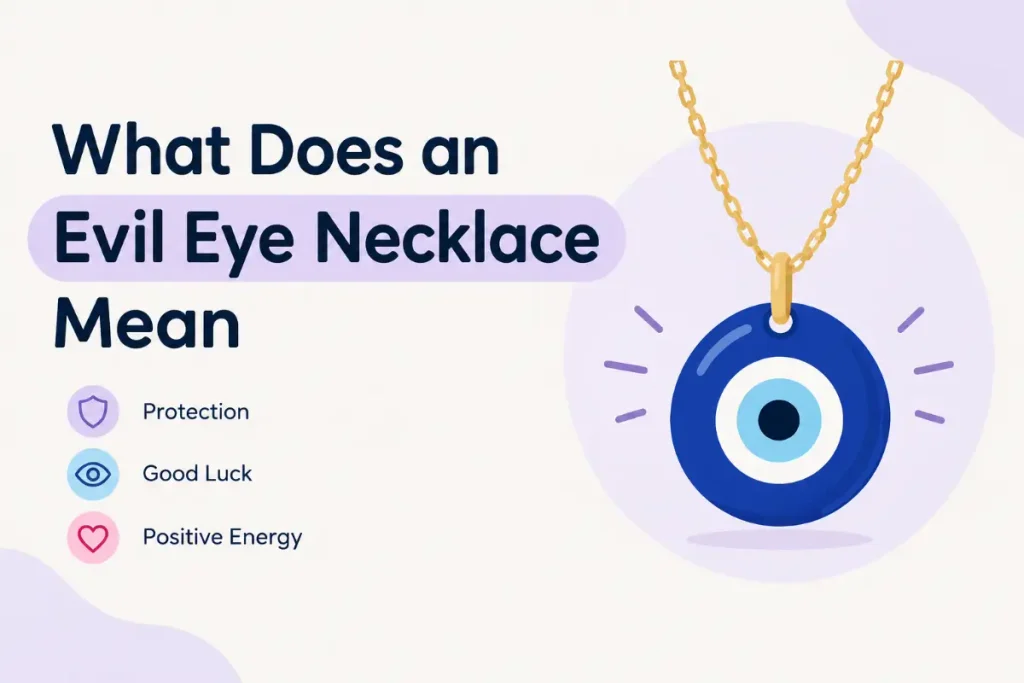
An evil eye necklace carries much the same symbolism as a bracelet. It is often worn as a personal reminder of protection against envy and negativity. The pendant may feature the traditional blue eye, a small glass bead, or a more elaborate design with precious metals and stones.
Some people prefer necklaces because they keep the symbol close to the chest. Others choose them because the design complements everyday outfits. The meaning depends primarily on the wearer’s beliefs and intentions, not on the length of the chain or the value of the materials.
An evil eye necklace can be worn alone or layered with other jewelry. It is common to see minimalist versions in everyday fashion as well as decorative pendants intended for special occasions. For someone with a cultural connection to the tradition, the necklace may also serve as a visible expression of identity and heritage.
What Does It Mean When an Evil Eye Breaks
Some traditions interpret a broken evil eye charm as a sign that it has absorbed or deflected negative energy. Within this belief, the broken object may be seen as having completed its protective role. People who follow this interpretation sometimes replace the charm with a new one.
Other people see a broken charm as an ordinary result of wear, impact, weak materials, or a damaged fastening. Glass beads and delicate pendants can break during daily activities, especially when they are dropped or pulled. A broken charm does not provide reliable evidence that someone has directed envy or harmful intentions toward the owner.
There is no scientifically established method for determining that a broken evil eye object has absorbed negative energy. If the event feels meaningful to you, you can choose to replace the charm as part of your personal tradition. You can also dispose of the damaged piece safely without assigning it a supernatural explanation.
How People Use the Evil Eye Today
The evil eye has moved beyond traditional amulets into many parts of modern life. Its familiar design appears in personal accessories, household decorations, fashion, art, and gifts. People use it in different ways based on their beliefs, cultural backgrounds, and aesthetic preferences.
Jewelry and Personal Accessories
Bracelets, necklaces, rings, earrings, and anklets are among the most common ways people wear the symbol. Some choose understated designs that fit daily outfits, while others prefer larger charms that make a statement. The symbol can serve as a reminder of personal values, family connections, or a wish for protection.
Home Decorations
People often hang evil eye charms near doors, windows, or other visible areas of the home. In traditions that use the symbol for protection, these placements are intended to guard the household against envy or misfortune. Decorative versions also appear in wall art, ceramic pieces, ornaments, and glass hangings.
Gifts for Important Occasions
An evil eye charm can communicate care and goodwill when given to another person. It may be chosen for a new home, a new baby, a wedding, a graduation, or an upcoming trip. The giver may intend the gift as a traditional form of protection or simply as a meaningful wish for happiness and safety.
Fashion and Personal Expression
Many designers incorporate the eye motif into contemporary jewelry and clothing. Some people wear it as a fashion accessory without believing it has supernatural effects. Others appreciate the way it combines a recognizable design with a long cultural history.
Spiritual and Cultural Practices
In some communities, the symbol remains part of broader practices involving prayers, blessings, amulets, or family customs. Its role may be closely connected with local religious or cultural beliefs. The specific practice matters because the evil eye does not have one identical meaning across every tradition.
Is the Evil Eye Religious
The evil eye is not exclusive to one religion. It appears in a variety of cultural and religious settings, including traditions associated with Islam, Christianity, Judaism, and other belief systems. However, the role of the evil eye and the acceptability of protective charms differ significantly among religious communities and individual believers.
In some Muslim communities, the evil eye is understood as a real spiritual concern, and people may use prayers or religious expressions for protection. Some Christians and Jewish communities also have traditions related to envy, harmful gazes, blessings, and protective practices. These traditions are not identical, and religious teachings about amulets can differ even within the same faith.
Some religious authorities discourage reliance on charms or objects believed to provide supernatural protection. Others distinguish between using an object as a cultural reminder and treating it as an independent source of spiritual power. People who want guidance consistent with their faith can consult a trusted religious leader.
It is inaccurate to assume that everyone who wears an evil eye necklace follows a particular religion. Some people wear it for cultural reasons, while others choose it for fashion or personal symbolism. The object alone does not establish someone’s religious beliefs.
Is the Evil Eye Good or Bad
The answer depends on which part of the tradition you mean. The evil eye itself usually refers to the feared harmful gaze or the misfortune associated with envy. The eye shaped charm, by contrast, is generally used as a protective symbol intended to guard against that harm.
For believers, the charm can represent safety, reassurance, and protection. For people who approach it culturally or aesthetically, it may represent heritage, good wishes, or personal style. Its meaning is not automatically negative simply because the phrase contains the word evil.
There is also no scientific evidence that owning, wearing, or displaying the symbol causes harm or guarantees good fortune. People can appreciate the tradition while recognizing the difference between cultural belief and proven cause and effect.
Can Anyone Wear an Evil Eye Symbol
In many contemporary settings, people from different backgrounds wear evil eye jewelry. Some have a direct cultural or family connection to the tradition, while others encounter it through travel, fashion, or friendships. Personal reasons for wearing the symbol vary widely.
Still, it is helpful to approach the design with cultural awareness. The evil eye has a history that extends beyond current fashion trends, and some people regard it as a meaningful spiritual object rather than a decorative motif. Learning about its origins and respecting the way communities use it can help prevent careless assumptions.
If you choose to wear an evil eye bracelet or necklace, you can decide what it means to you. You may value its history, connect it with a family tradition, or simply like the design. You do not need to claim a particular spiritual belief to appreciate its cultural significance.
Common Misconceptions About the Evil Eye
Several misconceptions arise because the symbol appears in so many different cultures and modern products. Understanding the differences can help you discuss the tradition accurately.
Misconception one: The evil eye belongs to only one culture. The belief appears in multiple regions and has developed through different historical traditions. No single modern community represents every version of it.
Misconception two: Every blue eye charm has exactly the same meaning. Blue is widely associated with the traditional protective symbol, but interpretations vary. The wearer’s beliefs and cultural context help determine its personal significance.
Misconception three: A broken charm proves someone is jealous. Some traditions interpret a broken object as having fulfilled its protective purpose. However, physical damage can occur for ordinary reasons, and a broken charm cannot establish another person’s intentions.
Misconception four: Everyone who wears the symbol believes in supernatural protection. Many people wear it for cultural, decorative, or personal reasons. A jewelry choice does not reveal someone’s complete belief system.
Misconception five: The evil eye is scientifically proven to cause or prevent harm. The belief has historical and cultural importance, but there is no reliable scientific evidence that the gaze described in the tradition causes supernatural misfortune or that a charm prevents it.
Frequently Asked Questions
What is the evil eye meaning in simple words
The evil eye refers to a traditional belief that envy or a harmful gaze can cause misfortune. The familiar eye shaped charm is used by many people as a symbol of protection against that perceived harm.
What does an evil eye bracelet mean
An evil eye bracelet commonly symbolizes protection against jealousy, negativity, and misfortune. Some people wear it for spiritual reasons, while others appreciate its cultural meaning or design.
What does the blue evil eye protect you from
In traditions that use the charm, the blue eye is believed to protect against envy, harmful attention, or negative spiritual influence. This is a cultural and spiritual belief, not a scientifically demonstrated protective effect.
What does it mean if someone gives you an evil eye bracelet
The gift often expresses a wish for protection, safety, happiness, or good fortune. Its exact meaning depends on the giver’s intentions and the cultural tradition behind the gift.
Which wrist should you wear an evil eye bracelet on
There is no universal rule. Some modern spiritual interpretations recommend the left wrist, while others allow either side. You can follow your personal or family tradition without assuming that one wrist is correct for everyone.
Is it bad luck to buy an evil eye for yourself
There is no universal cultural rule that buying the charm for yourself brings bad luck. Some people prefer receiving it as a gift, while others purchase their own jewelry. These preferences depend on personal beliefs and local customs.
What should you do if your evil eye charm breaks
You can replace it if that fits your tradition or simply dispose of the damaged item safely. Some people interpret the break as a sign that the charm has fulfilled its purpose, but ordinary wear and accidental damage are also common explanations.
Is the evil eye a symbol of protection or jealousy
The phrase usually refers to the harmful gaze associated with envy, while the eye shaped charm generally represents protection against it. The two meanings are related, but they are not the same.
Final Thoughts
The evil eye is an ancient cultural symbol with meanings that continue to evolve. Its traditional role centers on the belief that envy or a harmful gaze can bring misfortune, while the familiar eye shaped charm represents protection against that perceived influence. Across different communities, the symbol has become part of jewelry, household decoration, spiritual customs, and meaningful gift giving.
For people in the United States, the evil eye can be a way to explore cultural traditions, express personal style, or connect with a family heritage. Its meaning depends on the person wearing it and the tradition they follow. Understanding its history and respecting its different interpretations allows you to appreciate the symbol without confusing spiritual beliefs with scientific evidence.