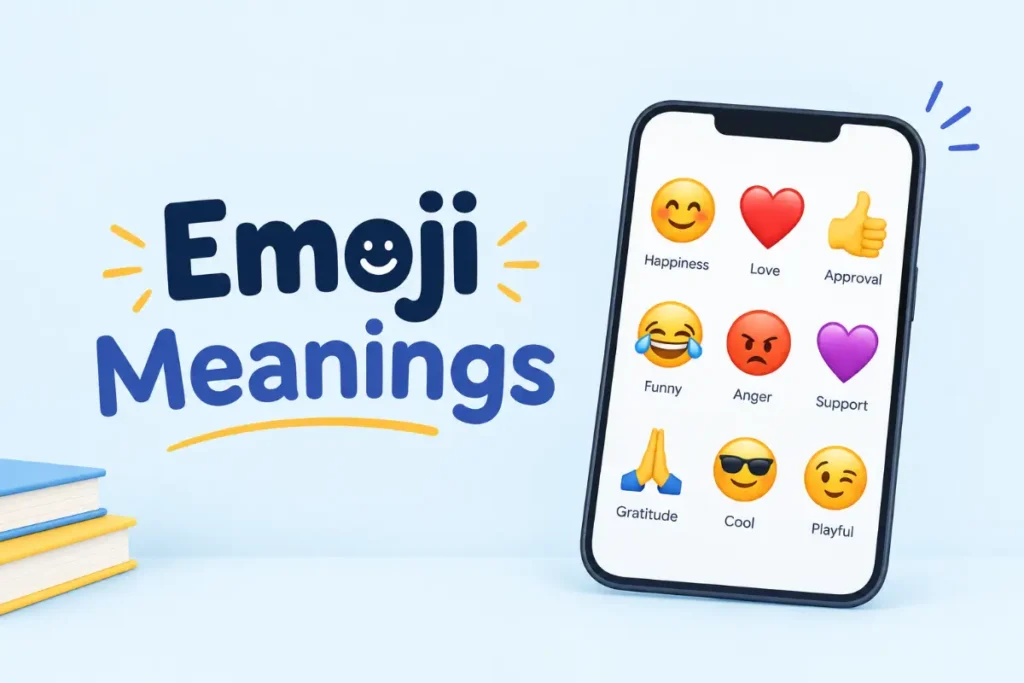
Emojis can make a text message feel warm, funny, romantic, sarcastic, or even confusing. A simple smiley face can show happiness, politeness, or awkwardness, depending on who sends it and how it appears in a conversation. Heart emojis can express love, friendship, or appreciation, while certain hand gestures can communicate support, celebration, or disagreement. Understanding emoji meanings helps you read these messages more accurately and choose the right symbols when texting.
Emojis are a big part of everyday communication in the United States. People use them in text messages, WhatsApp chats, Instagram comments, dating apps, work conversations, and social media posts. However, the same emoji can mean different things to different people. A smiling face may feel friendly to one person but seem passive aggressive to another, especially during a serious conversation.
This guide explains popular emoji symbols, heart colors, hand gestures, and facial expressions in simple American English. You will also learn about WhatsApp emoji meanings, confusing pairs such as ☺ and 😊, the affectionate 🥰 emoji, and the possible meaning of 🍒 when a guy sends it. Because context matters, each explanation includes common interpretations rather than treating every emoji as having one fixed meaning.
Quick Answer
Emoji meanings explain the feelings, ideas, reactions, or messages people communicate through small digital symbols. A smiling face usually expresses happiness or friendliness, a red heart often represents love, and folded hands may express gratitude or prayer. The exact meaning depends on the emoji, the conversation, the relationship between the people, and the sender’s personal style.
What Are Emojis and Why Do Their Meanings Matter?
Emojis are small digital pictures used to express emotions, objects, activities, ideas, and reactions. They can add meaning to written messages by showing how a person feels or how they want a sentence to sound. For example, “That is great!” sounds positive on its own, but adding 🎉 can make the message feel more celebratory.
Emojis also help people communicate tone. Written messages lack facial expressions, gestures, and voice changes, so a small symbol can make the intended meaning clearer. A laughing face can show that a comment is playful, while a heart can add warmth to a message that might otherwise sound brief.
However, emojis do not always prevent misunderstandings. People have different communication habits, cultural backgrounds, and ideas about which symbols feel appropriate. An emoji that seems friendly to one person might look sarcastic or overly familiar to someone else.
Why People Use Emojis in Text Messages
People use emojis for several practical reasons.
1. To express emotions. Smiling faces, crying faces, and hearts help communicate feelings quickly.
2. To clarify tone. A laughing emoji can indicate that a message is meant as a joke rather than a serious criticism.
3. To show affection. Hearts, kisses, and affectionate faces can make messages feel more personal.
4. To react without writing a full reply. A thumbs up, clapping hands, or laughing face can communicate agreement or appreciation.
5. To add personality. Emojis can make social media captions, group chats, and everyday messages feel more expressive.
The key is to use them in ways that fit the conversation. A casual emoji may work well with friends but feel out of place in a formal email or a serious professional discussion.
Common Emoji Meanings Explained
The following interpretations are common in everyday texting, but individual habits and context can change their meaning.
Smiling Face Emojis
Smiling faces are among the most frequently used emojis, but their expressions are not interchangeable. A slight smile may feel calm or polite, while a broad grin can communicate excitement. Choosing the right face helps you express the tone you want.
| Emoji | Common meaning | Example in texting |
|---|---|---|
| 😀 | Happiness, friendliness, excitement | “I got the job 😀” |
| 😃 | Cheerfulness and enthusiasm | “Can’t wait to see you 😃” |
| 😄 | Genuine happiness or laughter | “That made my day 😄” |
| 😊 | Warmth, kindness, or gentle happiness | “Thanks for helping me 😊” |
| 🙂 | Mild happiness, politeness, or restrained emotion | “Okay, sounds good 🙂” |
| ☺️ | Gentle happiness, sweetness, or warmth | “That was really nice ☺️” |
| 😁 | A big grin, excitement, or playful confidence | “I finally finished it 😁” |
| 😌 | Relief, peace, or contentment | “Everything worked out 😌” |
The meaning of a smile can change with the conversation. For example, “Sure 🙂” might be a perfectly friendly response from one person, but another person might use it to sound distant or subtly annoyed. Do not assume a negative meaning without considering the sender’s usual texting style.
Laughing and Crying Emojis
Laughing and crying faces help communicate strong reactions. Some indicate genuine sadness, while others represent laughter so intense that it feels overwhelming.
| Emoji | Common meaning | Example in texting |
|---|---|---|
| 😂 | Laughing hard or finding something hilarious | “That video is too funny 😂” |
| 🤣 | Intense laughter or rolling with laughter | “I cannot stop laughing 🤣” |
| 😭 | Crying, intense emotion, or exaggerated laughter | “This ending broke me 😭” |
| 🥹 | Being touched, emotional, or holding back tears | “You remembered my birthday 🥹” |
| 🥲 | Smiling through sadness or mixed feelings | “I miss those days 🥲” |
| 😢 | Sadness or disappointment | “I am sorry that happened 😢” |
| 🥳 | Celebration and excitement | “We passed the exam 🥳” |
The crying face 😭 deserves special attention because it often has a playful meaning online. Someone might send it after hearing a funny story, seeing a cute animal, or receiving an affectionate message. The surrounding words usually make the intended emotion clearer.
Heart Eyes and Affectionate Faces
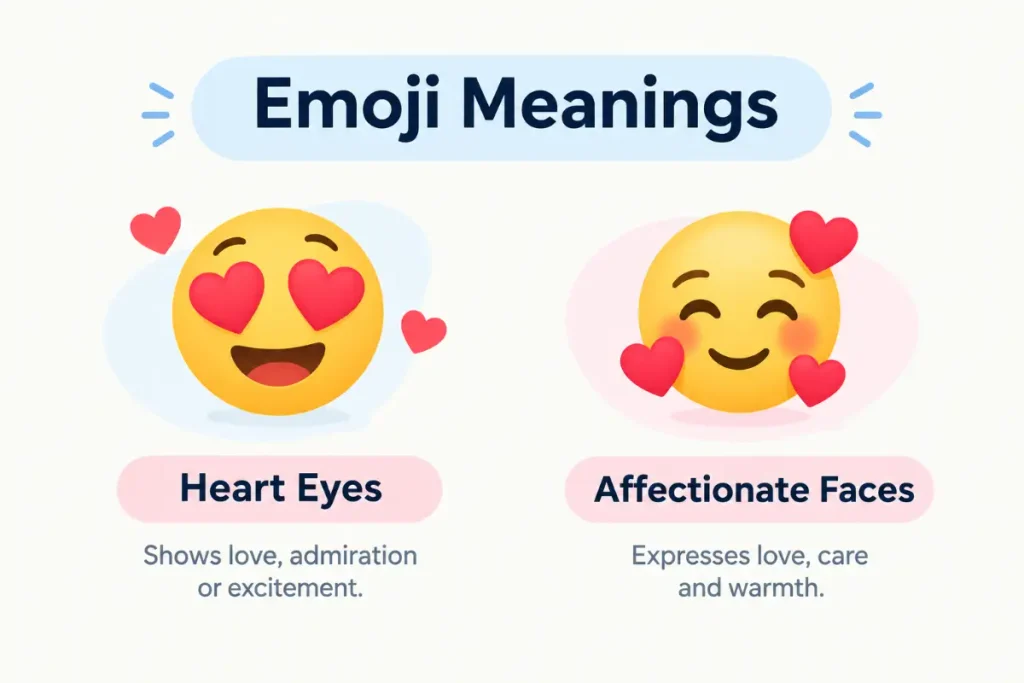
Affectionate emojis can communicate love, admiration, gratitude, or excitement. Their meaning depends on the relationship and the situation.
| Emoji | Common meaning |
|---|---|
| 😍 | Strong admiration, attraction, or love |
| 🥰 | Feeling loved, affectionate, or deeply fond |
| 😘 | Sending a kiss or expressing affection |
| 😚 | A gentle kiss or sweet affection |
| 😗 | A simple kiss or playful expression |
| 😙 | A cheerful kiss or friendly affection |
| 😋 | Enjoying food, being playful, or teasing |
| 🫶 | Love, support, appreciation, or a heart gesture |
These faces can appear in romantic conversations, family chats, and friendships. A friend who sends 🥰 might be expressing appreciation, while a romantic partner might use the same symbol to communicate tenderness. One emoji alone cannot establish romantic interest.
WhatsApp Emoji Meanings
WhatsApp emojis work much like emojis in other messaging apps. People use them in private chats, group conversations, status updates, and reactions to express feelings or respond quickly. Still, their interpretation can depend on the sender’s age, habits, and relationship with the recipient.
Common Emojis Used on WhatsApp
| Emoji | Common meaning on WhatsApp |
|---|---|
| 👍 | Agreement, approval, or acknowledgment |
| ❤️ | Love, affection, or strong appreciation |
| 😂 | Something is funny |
| 🙏 | Thanks, prayer, or a request |
| 🤗 | A hug, comfort, or warmth |
| 🔥 | Something impressive, exciting, or attractive |
| 💯 | Complete agreement or strong approval |
| 👀 | Interest, curiosity, or paying attention |
| 🥰 | Affection, love, or feeling touched |
| 🙄 | Annoyance, disbelief, or sarcasm |
A thumbs up can mean “I agree,” “I understand,” or simply “I saw your message.” In some conversations, it may seem abrupt, particularly if the sender usually writes longer replies. That does not automatically mean the person is angry.
The eyes emoji 👀 is another example of context changing meaning. It may show curiosity about news, signal that someone has noticed something interesting, or playfully suggest that the sender is waiting for more information.
What Does 🤗 Mean on WhatsApp?
The 🤗 emoji commonly represents a hug, warmth, support, or affection. Its smiling face and open hands suggest someone welcoming or embracing another person.
People might send it after hearing difficult news, receiving a kind message, or saying goodbye to a friend. For example, “I hope things get better soon 🤗” communicates comfort and emotional support.
It can also express friendliness without romantic intent. A family member, close friend, or partner might use it to show care. The surrounding conversation helps determine whether the gesture feels casual, comforting, or affectionate.
Can the Same Emoji Mean Different Things on WhatsApp?
Yes. WhatsApp does not assign a separate universal meaning to every emoji based on the app itself. People bring their own communication habits to the platform, so an emoji can carry different emotional tones in different conversations.
For example, ❤️ may represent romantic love between partners, appreciation between friends, or support for a family member. Similarly, 🙏 may mean “thank you,” “please,” or prayer, depending on the message.
The safest approach is to interpret an emoji alongside the words, the relationship, and the situation. If the meaning matters and remains unclear, asking the sender is more reliable than guessing.
What Does 🤗 Mean in Emoji Texting?
The 🤗 emoji is commonly known as the hugging face. It shows a smiling face with open hands and is often used to express a hug, comfort, friendliness, or emotional support.
When Someone Sends 🤗
The emoji may communicate different messages in everyday conversations.
1. Comfort. “I am sorry you are going through this 🤗” offers emotional support.
2. Affection. “Miss you so much 🤗” expresses warmth and closeness.
3. Friendliness. “It was great catching up 🤗” adds a welcoming tone.
4. Encouragement. “You have got this 🤗” communicates support and reassurance.
5. Gratitude. “Thank you for always being there 🤗” shows appreciation.
Does 🤗 Mean Someone Likes You?
It can express affection, but it does not automatically indicate romantic attraction. A person may use it because they are naturally warm and expressive, or because they want to comfort a friend.
If someone regularly sends affectionate messages, asks to spend time with you, and shows consistent interest, those behaviors provide more context than a single emoji. Look at the overall interaction rather than treating one symbol as proof of romantic feelings.
What Does 🥰 Mean in Texting?
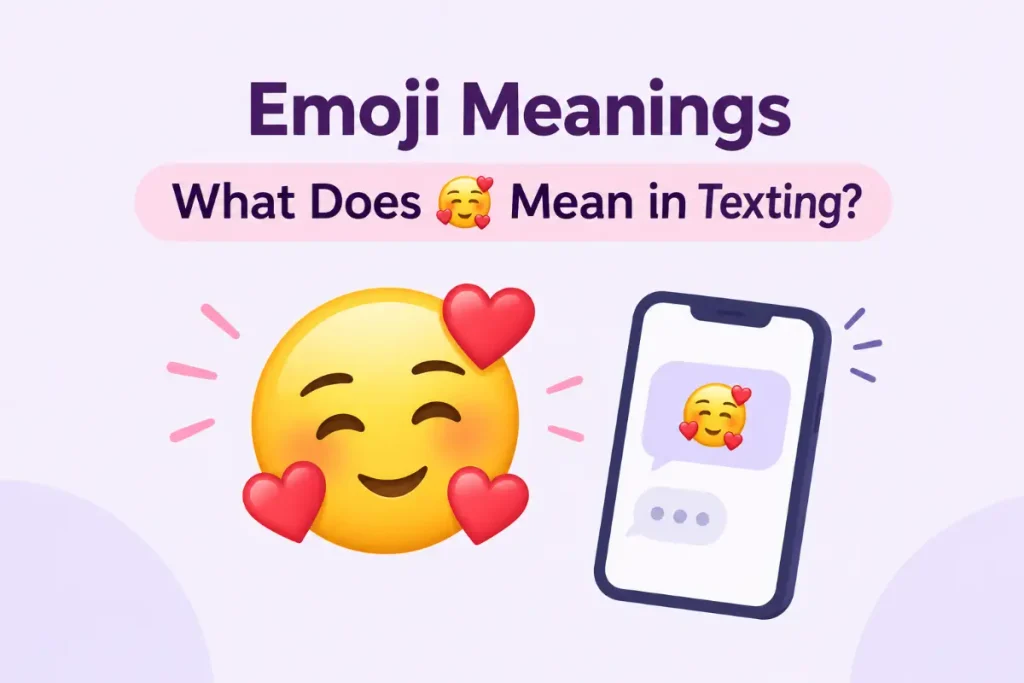
The 🥰 emoji, often called the smiling face with hearts, expresses affection, warmth, love, or the feeling of being touched by something sweet. It features a smiling face surrounded by hearts, making it more openly affectionate than a standard smile.
The meaning of emoji 🥰 depends on the person sending it and the message around it. It can express romantic love, appreciation, happiness, or a feeling of being cared for.
What Does 🥰 Mean From a Guy?
When a guy sends 🥰, he may be showing affection, appreciating something you said, or expressing romantic interest. For example, if you compliment him and he replies, “That means a lot to me 🥰,” he may feel touched by your words.
If he sends it after you say you miss him, it might communicate that he feels the same way. However, some people use affectionate emojis freely with friends and family, so it is not definite proof that he has romantic feelings.
Pay attention to his overall behavior. Consistent attention, thoughtful messages, genuine interest in your life, and efforts to spend time together provide more useful clues than an emoji alone.
What Does 🥰🥰🥰 Mean?
Sending three 🥰 emojis usually adds emphasis to the affectionate message. It can suggest extra excitement, strong appreciation, or an especially warm emotional reaction.
For example, someone might respond with “You are the sweetest 🥰🥰🥰” to show that your gesture made them happy. A romantic partner might use three hearts surrounded by a smiling face to express extra affection.
Still, repeating an emoji does not have a precise, universally agreed meaning. Some people simply enjoy using several emojis to make their messages more expressive.
What Is the Difference Between ☺ and 😊?
The ☺ and 😊 emojis both communicate positive feelings, but they can create slightly different impressions. Their appearance also varies across devices and platforms.
| Emoji | Typical impression | Example |
|---|---|---|
| ☺️ | Gentle, sweet, calm, or slightly old fashioned | “It was lovely meeting you ☺️” |
| 😊 | Warm, friendly, cheerful, or appreciative | “Thanks for checking in 😊” |
The ☺️ emoji often feels subtle and soft. It can suit a polite thank you, a sweet comment, or a gentle expression of happiness. Some people also use it to create a slightly shy or sentimental tone.
The 😊 emoji generally looks more like a conventional smiling face. People often use it to express friendliness, gratitude, reassurance, or happiness in everyday conversations.
Neither emoji has a fixed emotional intensity. Some people use them interchangeably, while others give each a distinct personal meaning. The sender’s normal texting habits and the message itself are more important than the small visual difference.
Emoji Meanings for Hearts
Heart emojis are among the most versatile symbols in digital communication. They can express romantic love, friendship, support, gratitude, admiration, or a shared interest. Although different colors have common associations, people do not always follow the same informal rules.
What Different Heart Colors Mean
Heart colors can carry personal or cultural associations. These are common interpretations, not strict definitions.
| Emoji | Common interpretation |
|---|---|
| ❤️ Red heart | Romantic love, deep affection, or strong appreciation |
| 🩷 Pink heart | Sweetness, tenderness, affection, or gentle love |
| 🧡 Orange heart | Warmth, care, friendship, or encouragement |
| 💛 Yellow heart | Happiness, friendship, positivity, or joy |
| 💚 Green heart | Nature, growth, support, or an interest in environmental causes |
| 💙 Blue heart | Trust, loyalty, calmness, or friendship |
| 💜 Purple heart | Affection, admiration, compassion, or support |
| 🤎 Brown heart | Warmth, comfort, connection, or earthy themes |
| 🖤 Black heart | Dark humor, grief, an alternative aesthetic, or deep affection |
| 🤍 White heart | Peace, sincerity, support, or remembrance |
What Does a Red Heart Mean?
The ❤️ emoji is widely used to express love and affection. Romantic partners may use it to show devotion, while friends and relatives may send it to communicate care and appreciation.
For example, “I love you ❤️” expresses affection directly. A friend might reply with the same heart after receiving a thoughtful message or celebrating a personal achievement.
What Does a Yellow Heart Mean?
The 💛 emoji commonly represents friendship, happiness, warmth, and positive energy. It can be a good choice when someone wants to show affection without making the message feel strongly romantic.
However, a yellow heart does not rule out romantic feelings. Its meaning depends on the people involved and how they normally communicate.
What Does a Black Heart Mean?
The 🖤 emoji can represent grief, dark humor, an alternative style, or a particular kind of affection. Some people use it in fashion related posts or messages that have a darker aesthetic.
It does not automatically indicate sadness or negativity. In some friendships and romantic relationships, it is simply the heart color the people involved prefer.
Can Heart Emojis Reveal Someone’s Feelings?
Heart emojis can provide clues about emotional tone, but they cannot reliably reveal someone’s intentions by themselves. A red heart may suggest affection, while a yellow heart may feel friendly, but individual habits vary widely.
Consider the words, the relationship, and the broader conversation before drawing conclusions. A consistent pattern of thoughtful communication usually tells you more than the color of a single heart.
Hand Emoji Meanings
Hand emojis communicate gestures that people commonly use in face to face conversations. They can express agreement, gratitude, celebration, affection, or encouragement. Their meanings may also vary across cultures and social settings.
| Emoji | Common meaning |
|---|---|
| 👍 | Approval, agreement, or acknowledgment |
| 👎 | Disapproval or disagreement |
| 👏 | Applause, praise, or celebration |
| 🙏 | Gratitude, prayer, or a polite request |
| 👋 | Hello, goodbye, or a friendly greeting |
| 🤝 | Agreement, cooperation, or a deal |
| ✌️ | Peace, victory, or a casual pose |
| 🤞 | Hope, luck, or wishing for a good outcome |
| 🫶 | Love, appreciation, or support |
| 💪 | Strength, confidence, or determination |
| 🤘 | Rock music, excitement, or a playful gesture |
| 👌 | Approval or a sign that something is fine |
What Does 🙏 Mean in Texting?
The 🙏 emoji is commonly used to express thanks, prayer, hope, or a polite request. Someone might send “Thank you so much 🙏” to show sincere appreciation, or “Please let everything work out 🙏” to express hope.
Although people sometimes interpret it as a high five, the folded hands are commonly associated with prayer or gratitude. The intended meaning depends on the message.
What Does 🫶 Mean?
The 🫶 emoji represents a heart made with hands. It often communicates love, support, appreciation, or emotional connection.
Friends might use it to show encouragement, while romantic partners may use it to express affection. It can also appear in social media comments when someone wants to show admiration for a creator, performer, or public figure.
What Does 👍 Mean From Someone?
A thumbs up usually signals agreement, approval, or acknowledgment. It can mean “Sounds good,” “I understand,” or “Thanks for letting me know.”
However, a short thumbs up may feel dismissive in a conversation where someone expects a thoughtful reply. The sender might simply be busy or prefer brief messages, so it is best to consider the full situation.
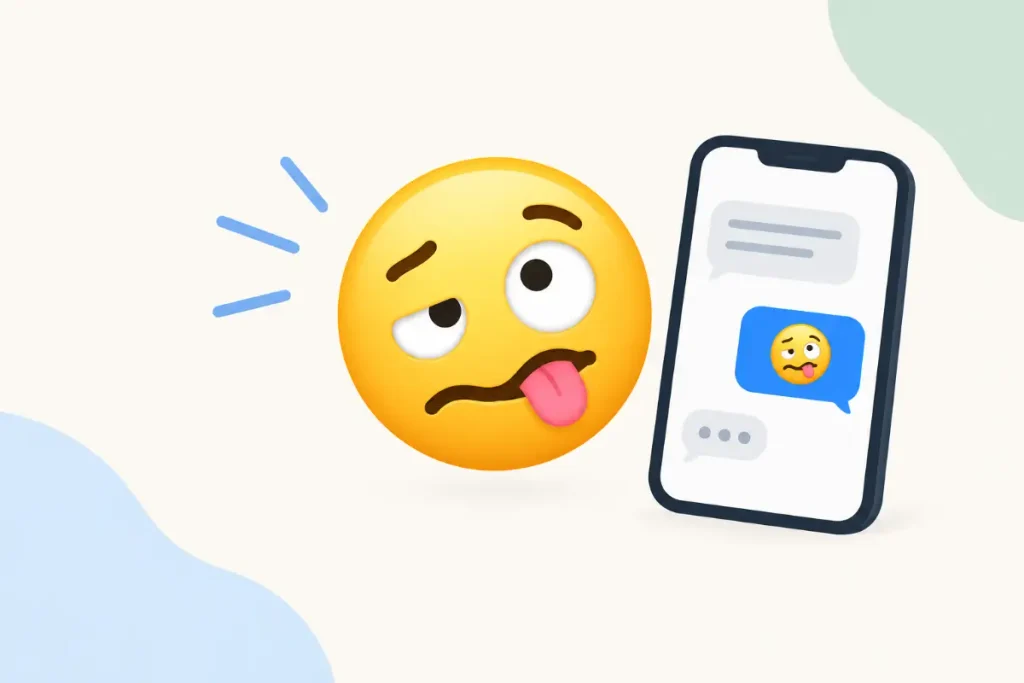
What Does 🥴 Mean in Texting?
The 🥴 emoji is commonly called the woozy face. It features an uneven expression and eyes that appear unfocused, creating an impression of dizziness, confusion, discomfort, or being overwhelmed.
People use it in several ways. Someone might send it after a long day to show exhaustion, use it to react to an awkward situation, or add it to a playful message about feeling flustered.
For example, “I stayed up until 3 a.m. studying 🥴” suggests tiredness or feeling worn out. In a flirtatious conversation, the same emoji might communicate that someone feels shy, overwhelmed, or unable to handle a compliment.
The emoji can also refer to feeling physically unwell or intoxicated, but the symbol alone does not establish what caused the feeling. Read the surrounding message before deciding what the sender means.
What Does 🍒 Mean From a Guy?
The 🍒 emoji represents cherries, but its meaning can extend beyond fruit. In texting and social media, it may refer to sweetness, summer, food, a playful mood, or an aesthetic the sender enjoys.
In some conversations, cherries can carry flirtatious or sexual associations. The meaning depends on the words accompanying the emoji and the relationship between the people involved.
For example, a guy who sends 🍒 alongside a picture of dessert may simply be talking about food. If he includes it in a clearly flirtatious conversation, it may have a suggestive meaning.
Do not assume that the emoji is a romantic signal on its own. Look at the wider conversation, and ask directly if you need clarification.
How to Search Emoji Meaning
Finding an emoji’s meaning is straightforward when you know the symbol or can copy it from a message. However, finding its official name and understanding how people use it in conversation are two different tasks.
1. Copy and search the emoji. Paste the symbol into a search engine with a phrase such as “meaning of 🥴 emoji.”
2. Search by the emoji’s name. If you know the name, search for terms such as “smiling face with hearts meaning” or “wooziest face emoji meaning.”
3. Check the context. Consider the words around the emoji, the relationship, and the type of conversation.
4. Compare common interpretations. Look at how the symbol is used in different situations rather than relying on one explanation.
5. Ask the sender if necessary. If the emoji affects an important conversation, a simple question is more reliable than guessing.
For example, searching “WhatsApp emoji meanings” can help you understand common interpretations of symbols used in chats. If you want to know what a specific person intended, however, their message and communication style matter more than a general definition.
Frequently Asked Questions
Do emojis have universal meanings?
No. Many emojis have widely recognized meanings, but their interpretation can vary by culture, age group, platform, and personal habits. Context helps determine the message a person intends to communicate.
Can emojis change the meaning of a text?
Yes. Emojis can make a message seem warmer, more playful, more affectionate, or more sarcastic. A simple sentence can communicate a different emotional tone when a smiling face, heart, or eye roll is added.
What is the most commonly used emoji?
Usage rankings change over time and depend on the platform and the dataset being measured. Smiling faces, hearts, and laughing emojis are familiar examples of widely used symbols, but there is no single ranking that applies to every messaging service and audience.
What is the difference between an emoji and an emoticon?
An emoji is a small digital symbol or picture, such as 😊 or ❤️. An emoticon is a character combination that resembles a face or expression, such as 🙂 or :-(. Both can communicate emotion in written messages.
Can someone use emojis without having romantic feelings?
Yes. People use hearts, affectionate faces, and kissing emojis with friends, relatives, and romantic partners. One symbol does not prove attraction, so consider the relationship and the person’s overall behavior.
Why do emojis look different on different phones?
Different operating systems and platforms may display their own artwork for the same standardized emoji character. The general concept usually remains recognizable, but the design and expression can look slightly different.
Conclusion
Emojis make digital communication more expressive by adding emotion, tone, and personality to written messages. A smile can communicate friendliness, a heart can show affection, and a hand gesture can express thanks or agreement. Yet the same symbol can carry different meanings depending on the conversation and the people involved.
Understanding emoji meanings helps you interpret messages more thoughtfully and choose symbols that match your intentions. Pay attention to the sender’s words, relationship with you, and usual texting style instead of relying on a single emoji to reveal someone’s feelings. When a message remains unclear, asking a simple question is often the best way to avoid misunderstanding.