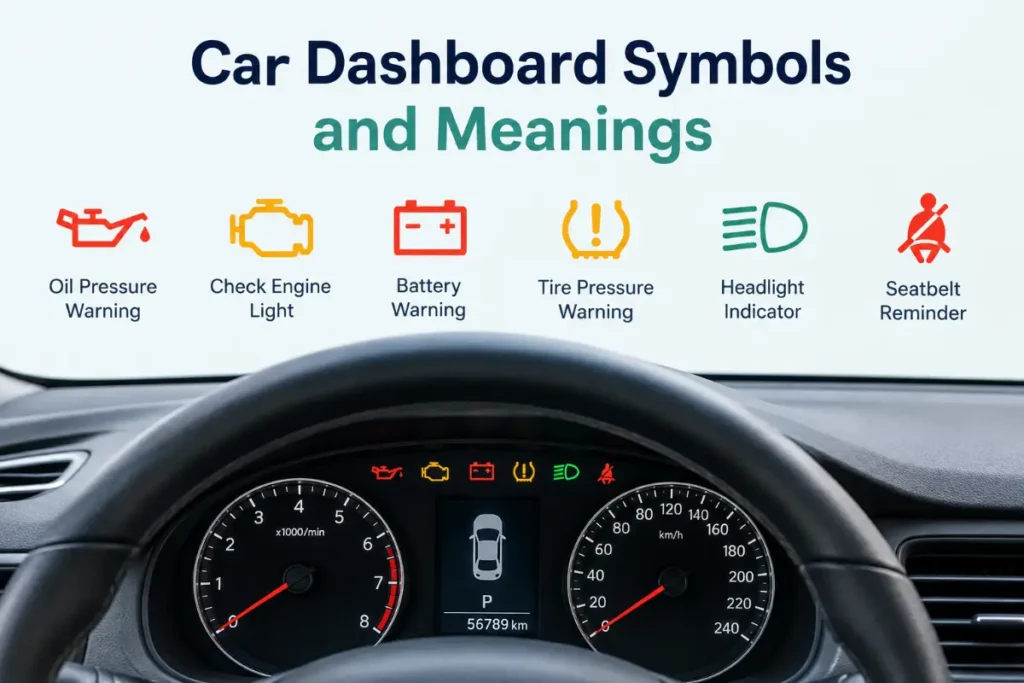
Your car’s dashboard helps you understand what is happening under the hood, from engine performance and tire pressure to fuel levels and safety systems. Some symbols provide simple reminders, such as when to refuel or replace an oil filter. Others warn you about problems that need immediate attention. Knowing what each light means can help you make safer decisions, avoid costly repairs, and recognize when it is time to visit a mechanic.
Understanding car dashboard symbols and meanings is especially important because not every warning light signals the same level of danger. A green indicator usually tells you that a feature is active, while an amber or yellow light often signals a problem that needs attention. A red warning light can indicate a serious issue that requires you to stop as soon as it is safe. However, colors and meanings can vary by vehicle, so your owner’s manual remains the best source for your specific model.
Modern vehicles also use symbols for advanced driver assistance systems, hybrid powertrains, electric vehicle batteries, and tire monitoring. The exact icons can differ between manufacturers such as Toyota, Nissan, and Hyundai.
This guide explains common dashboard warning lights, their names, what causes them to appear, and what drivers should do next. It also covers manufacturer specific indicators and answers common questions about the most important dashboard symbols.
Quick Answer
Car dashboard symbols tell you about your vehicle’s condition, active features, and possible problems. Red warning lights often require immediate attention, amber or yellow lights usually indicate a fault or service need, and green or blue lights commonly show that a feature is operating. Always check your owner’s manual because symbols and recommended actions vary by vehicle.
What Dashboard Warning Light Colors Mean
The color of a dashboard light gives you an important first clue about its urgency. Although manufacturers may use colors differently for certain features, the following guide works for many vehicles sold in the United States.
| Light color | Common meaning | What to do |
|---|---|---|
| Red | Serious warning or immediate safety concern | Stop safely when the warning indicates a critical problem |
| Amber or yellow | Fault, maintenance need, or caution | Check the manual and arrange service as needed |
| Green | A feature is active | Usually continue driving normally if no other warning appears |
| Blue | A feature is active, often high beam headlights | Check the indicator and use the feature appropriately |
| White or gray | System information or feature status | Read the message and follow the vehicle’s instructions |
Color alone does not tell the entire story. A flashing check engine light, for example, can indicate a more urgent problem than a steady light. Likewise, a red seat belt symbol may simply remind you to buckle up, while a red oil pressure warning can indicate a risk of severe engine damage.
Some warning lights briefly illuminate when you start the engine. This is often part of the dashboard’s self check. If a light remains on after startup, flashes unexpectedly, or appears while driving, consult your owner’s manual for the correct response.
18 Common Car Dashboard Symbols and Their Meanings
The following list covers 18 dashboard indicators that many drivers encounter. Their exact appearance and recommended response can vary by make, model, and year, so use your owner’s manual to confirm the meaning for your vehicle.
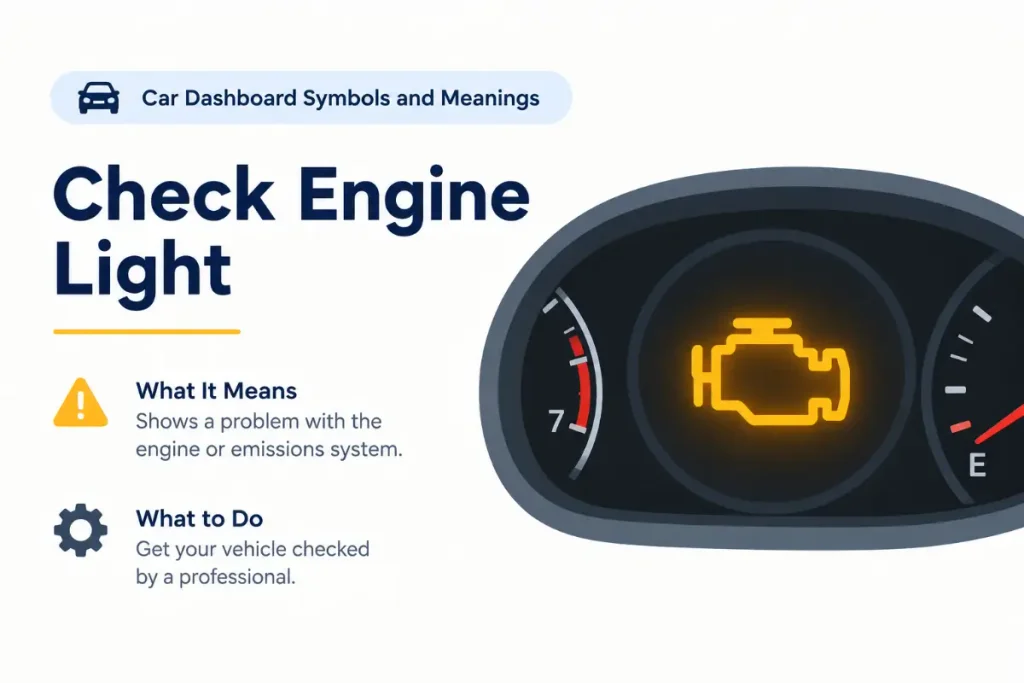
1. Check Engine Light
Typical color: Amber or yellow.
The check engine light usually looks like the outline of an engine. It indicates that the vehicle’s engine management or emissions system has detected a problem. Common causes include a loose gas cap, a faulty oxygen sensor, a misfiring engine, or an issue with the catalytic converter.
A steady light generally means you should arrange a diagnostic check soon, particularly if the car feels normal. If the light flashes, reduce engine load and pull over safely if necessary. A flashing light can indicate a misfire that may damage the catalytic converter. Stop driving and seek professional assistance if the engine runs roughly, loses power, or shows other serious symptoms.
2. Engine Oil Pressure Warning
Typical color: Red.
This symbol looks like an oil can with a drop falling from its spout. It warns that engine oil pressure may be too low to lubricate the engine properly. Low oil levels, an oil pump problem, or an internal engine fault can trigger it.
If this warning appears while driving, pull over safely and shut off the engine as soon as possible. Check the oil level after parking on level ground and allowing the engine to cool as directed by the owner’s manual. Adding oil may help if the level is low, but the warning requires further attention if it remains illuminated. Do not continue driving with a persistent oil pressure warning.
3. Engine Temperature Warning
Typical color: Red or blue.
The temperature symbol usually shows a thermometer above wavy lines. A red light often means the engine is overheating, while a blue light in many vehicles indicates that the engine is still cold.
If the temperature warning turns red, safely pull over and turn off the engine. Allow it to cool before checking the coolant level according to the owner’s manual. Never remove a hot radiator cap because pressurized coolant can cause severe burns. If the warning persists, arrange professional assistance rather than continuing to drive.
4. Battery or Charging System Warning
Typical color: Red.
This symbol resembles a car battery with plus and minus signs. It usually indicates a problem with the charging system rather than simply a weak battery.
Possible causes include a failing alternator, a damaged drive belt, loose electrical connections, or a battery problem. The vehicle may continue running briefly, but electrical systems can eventually lose power. Turn off unnecessary electrical accessories and head to a safe stopping place. If the warning stays on, have the vehicle checked promptly.
5. Brake System Warning
Typical color: Red.
The brake warning light often appears as an exclamation point inside a circle, sometimes with parentheses around it. It can indicate that the parking brake is engaged, the brake fluid is low, or the braking system has a fault.
First, check that the parking brake is fully released. If the light remains on, check the owner’s manual and arrange an immediate safety assessment. A low brake fluid level or other brake system problem can affect stopping ability. If the brake pedal feels soft, sinks unusually low, or the vehicle does not stop normally, pull over safely and arrange a tow.
6. Tire Pressure Monitoring System
Typical color: Amber or yellow.
The tire pressure warning looks like a flat tire cross section with an exclamation point inside. It indicates that one or more tires may be significantly underinflated.
Check the tire pressures when the tires are cold and inflate them to the pressure listed on the driver’s door jamb label, not the maximum pressure printed on the tire sidewall. Inspect the tires for visible damage. A light that flashes and then stays on can indicate a monitoring system fault rather than a simple pressure problem. Correct tire pressure improves handling, tire life, and fuel economy.
7. Anti Lock Braking System Warning
Typical color: Amber or yellow.
The ABS warning light typically shows the letters “ABS” inside a circle. It indicates a problem with the anti lock braking system, which helps prevent the wheels from locking during hard braking.
If only the ABS light is on, conventional braking may still work, but the anti lock function may be unavailable. Drive cautiously and have the system inspected promptly. If the red brake warning light also appears, or braking performance changes, stop safely and seek assistance.
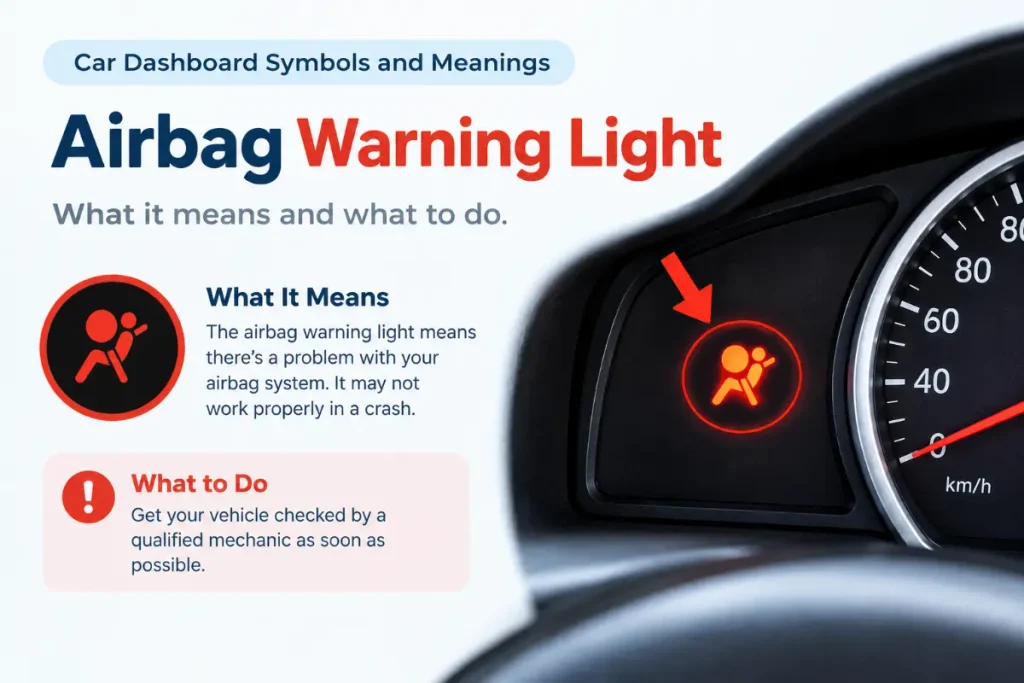
8. Airbag Warning Light
Typical color: Red or amber.
This symbol often shows a seated person with a circle in front of them. It indicates a potential fault in the airbag or supplemental restraint system.
A warning may mean that airbags or seat belt pretensioners will not operate as designed during a crash. The cause could involve a sensor, wiring, or another restraint system component. Arrange a professional inspection as soon as possible. Avoid tampering with airbag wiring because these systems contain safety components that require specialized handling.
9. Seat Belt Reminder
Typical color: Red.
The seat belt symbol shows a seated person wearing a belt. It reminds the driver or a passenger to fasten their seat belt. Many vehicles also use an audible alert, and some detect unbuckled rear passengers.
Buckle every occupied seat before driving. If the warning stays on after everyone is properly secured, check for an unbuckled rear seat belt or an object triggering a passenger seat sensor. Consult the manual if the light continues to appear unexpectedly.
10. Low Fuel Warning
Typical color: Amber or yellow.
The fuel warning usually looks like a gas pump. It indicates that the remaining fuel has reached a low threshold. The distance you can travel before running out depends on the vehicle, driving conditions, and fuel consumption.
Refuel as soon as practical rather than relying on an estimated remaining range. Running out of fuel can leave you stranded and may cause problems for some fuel systems. The small arrow beside the fuel pump icon, when present, often indicates which side of the vehicle has the fuel door.
11. Low Windshield Washer Fluid
Typical color: Amber or yellow.
This symbol often resembles a windshield with water spraying across it. It indicates that the windshield washer fluid reservoir is running low.
Refill the reservoir with appropriate washer fluid. This is usually a maintenance reminder rather than a serious mechanical warning, but clean windshield glass is important for visibility. In cold climates, use fluid rated for freezing temperatures.
12. Traction Control Indicator
Typical color: Amber or yellow.
The traction control symbol commonly shows a car with wavy lines beneath its tires. When it flashes, the system may be actively reducing wheel spin on slippery or loose surfaces.
If the light stays on continuously, the traction control system may have been switched off or detected a fault. Check the dashboard message and owner’s manual. Drive carefully in rain, snow, or on loose gravel, especially if the system is unavailable.
13. Electronic Stability Control Warning
Typical color: Amber or yellow.
This symbol can look similar to the traction control icon, showing a vehicle with skid marks. Electronic stability control helps maintain the vehicle’s intended direction when it detects a loss of control.
A flashing indicator often means the system is actively intervening. A steady light may indicate a fault or that the feature has been disabled. Avoid abrupt steering and acceleration if the system is unavailable, and have the vehicle inspected as needed.
14. Glow Plug Indicator
Typical color: Amber or yellow.
The glow plug symbol looks like a small coil or spring. It is found mainly in diesel vehicles and indicates that the engine’s glow plugs are heating the combustion chambers to help with cold starting.
When the light appears before starting the engine, wait for it to go out if the owner’s manual instructs you to do so. If it flashes or stays on after the engine starts, the vehicle may have a glow plug or engine management fault. Follow the manufacturer’s guidance and arrange service if needed.
15. Power Steering Warning
Typical color: Red or amber.
The power steering symbol often shows a steering wheel beside an exclamation point. It indicates a problem with the power steering system, which helps the driver turn the wheels with less effort.
You may notice that the steering wheel becomes unusually heavy or difficult to turn. Reduce speed, avoid sudden maneuvers, and stop safely if steering control is affected. Because steering assistance may be reduced or lost, arrange professional help instead of continuing a difficult drive.
16. Diesel Particulate Filter Warning
Typical color: Amber or yellow.
The diesel particulate filter, or DPF, warning usually appears in diesel vehicles. Its symbol may resemble a rectangular filter with dots or small exhaust lines. It indicates that soot has accumulated in the filter and that regeneration may be needed.
Some vehicles can clean the filter automatically during suitable driving conditions. Others require a specific regeneration procedure described in the owner’s manual. Do not ignore the warning, especially if it flashes or appears alongside reduced engine power. Seek professional service if the recommended procedure does not clear it.
17. Lane Departure Warning
Typical color: Green, amber, or white.
This symbol often shows a car between lane markings. Depending on the vehicle, it may indicate that lane departure assistance is active, that lane markings have been detected, or that the system is unavailable.
If the system warns you about drifting, check your position and steer back into your lane when safe. Lane assistance is designed to support attentive driving, not replace it. Keep your eyes on the road and your hands ready to steer.
18. High Beam Headlight Indicator
Typical color: Blue.
The high beam indicator looks like a headlight with several straight horizontal lines extending outward. It tells you that the vehicle’s high beam headlights are on.
High beams improve visibility on dark roads without nearby traffic, but they can dazzle oncoming drivers and drivers ahead of you. Switch to low beams when approaching other vehicles or following another car closely. If the indicator appears unexpectedly, check the headlight controls.
Car Dashboard Symbols With Names and Meanings by Brand
Although many dashboard lights share similar designs, manufacturers may use different icons, colors, and messages. The owner’s manual for your exact model and year is the most reliable reference when a symbol is unfamiliar.
Toyota Car Dashboard Symbols and Meanings
Toyota vehicles use many familiar warning lights, including the check engine, oil pressure, battery, tire pressure, ABS, and airbag indicators. Newer models may also display hybrid system warnings, driver assistance alerts, and messages related to the vehicle’s electronic parking brake.
Toyota hybrid vehicles can show a warning related to the hybrid system, which may require prompt attention. Some models also use an EV mode indicator to show that electric driving mode is selected or available under suitable conditions. An indicator showing that a feature is active is different from a warning that the system has failed.
If a red master warning light appears with a message on the multi information display, read the message carefully and follow the instructions. Toyota symbols vary across models such as the Corolla, Camry, RAV4, Prius, and Highlander, so do not assume every model uses identical indicators.
Nissan Car Dashboard Symbols and Meanings
Nissan vehicles use standard warning lights for engine problems, oil pressure, charging, tire pressure, braking, and airbags. Depending on the model, drivers may also see indicators for Nissan’s Intelligent Key system, driver assistance features, or the vehicle’s advanced safety systems.
A Nissan master warning light may appear alongside a message that explains the issue. Some models also have a slip indicator related to traction control and vehicle stability. If it flashes briefly on a slippery road, the system may be working as intended. If it remains on, check the display and owner’s manual for further guidance.
For Nissan models such as the Altima, Sentra, Rogue, Pathfinder, and Frontier, use the correct model year manual to identify unfamiliar icons. The same general symbol can have different operating details depending on the vehicle’s equipment.
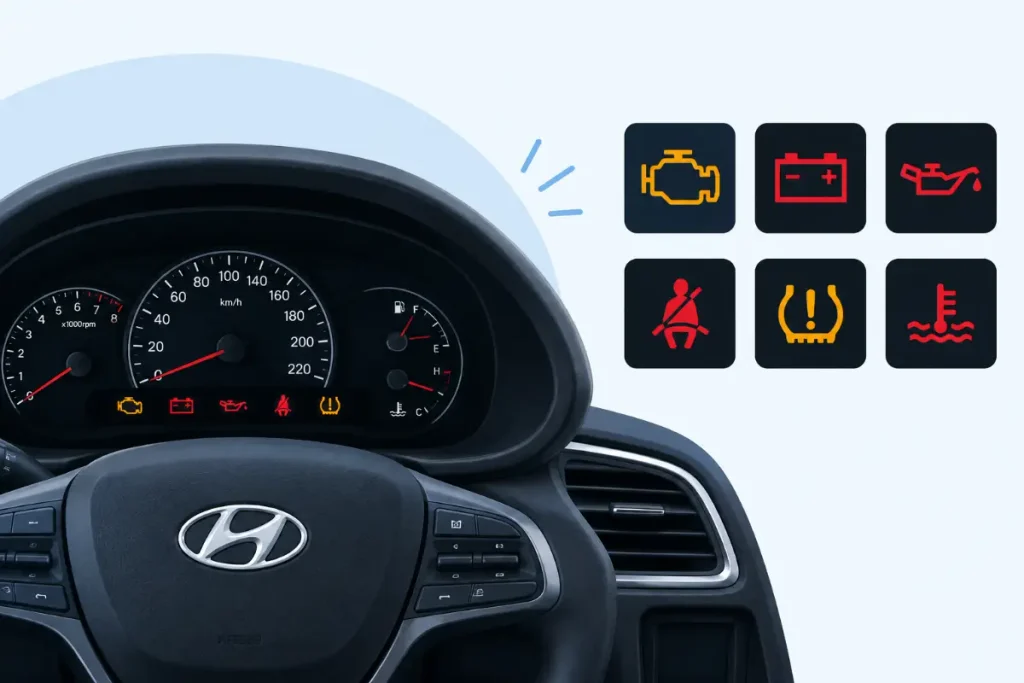
Car Dashboard Symbols and Meanings Hyundai
Hyundai vehicles commonly display check engine, tire pressure, brake, battery, oil pressure, and ABS warnings. Depending on the model and trim, additional indicators may cover lane keeping assistance, forward collision avoidance, driver attention warnings, and other SmartSense safety features.
Some Hyundai vehicles also have a ready indicator for hybrid or electric powertrains. A ready light generally means the vehicle is ready to drive, even if the engine is silent. This is especially important in electric and hybrid vehicles, which may not make the familiar sound of a running gasoline engine.
If a Hyundai warning appears with a dashboard message, read both the symbol and the text. Models such as the Elantra, Sonata, Tucson, Santa Fe, and IONIQ series may differ in their available features and warning displays.
Why Model Year Matters
A symbol can look familiar but represent a feature that operates differently across vehicle generations. Older cars may have fewer electronic driver assistance indicators, while newer vehicles can display warnings for cameras, radar sensors, lane assistance, and automated braking systems.
When searching for car dashboard signs and names with pictures, include your vehicle’s make, model, and year. A manual for a 2018 model may not explain every symbol found in a 2026 version of the same vehicle. For safety related warnings, rely on the vehicle’s own manual rather than a generic symbol chart alone.
What to Do When a Dashboard Warning Light Appears
Knowing the symbol is only the first step. Your next action should depend on the warning’s color, whether it flashes, and how the vehicle behaves.
1. Check for immediate danger. If you see a red oil pressure warning, an overheating warning, or a brake warning accompanied by abnormal braking, find a safe place to stop. Turn off the engine when the warning calls for it.
2. Read the dashboard message. Many modern vehicles display additional information that helps explain the warning. A message such as “Low Tire Pressure” gives you more useful information than the icon alone.
3. Look for changes in vehicle performance. Unusual noises, smoke, burning smells, loss of power, or difficult steering can indicate a serious problem. Do not continue driving if the vehicle appears unsafe.
4. Check simple issues when safe. You may be able to release the parking brake, refill washer fluid, or check tire pressure. Never open a hot cooling system or inspect moving engine components.
5. Consult the owner’s manual. Follow the instructions for your specific model. If a warning remains on, arrange a diagnostic check or roadside assistance as appropriate.
6. Do not ignore flashing warnings. A flashing check engine light can indicate an engine misfire that may cause expensive damage. Other flashing indicators can mean that a safety system is actively working, so check the manual to understand the difference.
What Is the Most Serious Warning Light in a Car?
There is no single warning light that is always the most serious. However, the red engine oil pressure warning is among the most urgent because continued engine operation with insufficient oil pressure can cause severe damage in a short time.
An engine overheating warning can also indicate an immediate risk of damage. A red brake system warning may signal a problem that affects your ability to stop safely. In addition, a flashing check engine light can indicate a misfire that requires prompt attention.
The safest response depends on the specific warning and the vehicle’s behavior. If you see a critical warning, pull over in a safe location, switch off the engine when appropriate, and consult the owner’s manual. If you are unsure how serious the problem is, contact roadside assistance rather than risking further damage or an unsafe drive.
Frequently Asked Questions
What are the 18 common symbols on a car dashboard?
Eighteen common dashboard indicators include the check engine light, oil pressure warning, engine temperature warning, battery warning, brake warning, tire pressure warning, ABS light, airbag warning, seat belt reminder, low fuel warning, washer fluid warning, traction control indicator, stability control warning, glow plug indicator, power steering warning, diesel particulate filter warning, lane departure indicator, and high beam indicator. Not every vehicle has all 18.
What do all the symbols on my dash mean?
Dashboard symbols communicate warnings, maintenance needs, and the status of vehicle features. Common icons relate to the engine, brakes, tires, battery, airbags, headlights, and driver assistance systems. The exact meaning depends on your car’s make, model, year, and equipment. Your owner’s manual is the best source for identifying every symbol installed in your vehicle.
What do the symbols on my car dashboard mean?
The symbols indicate the condition of vehicle systems or show that a feature is active. Red and amber lights commonly indicate warnings, while green and blue lights often show that a feature is operating. Some indicators may flash during normal operation, while others signal a fault. Check the symbol’s color, flashing pattern, accompanying message, and instructions in the owner’s manual.
What is the most serious warning light in a car?
The red oil pressure warning is among the most serious because low oil pressure can quickly damage the engine. A red brake warning or engine overheating warning can also indicate a dangerous problem. A flashing check engine light deserves prompt attention, particularly if the engine runs roughly or loses power. Stop safely and follow the vehicle manufacturer’s instructions.
Why is my check engine light on?
The check engine light can appear because of a loose gas cap, a faulty sensor, an emissions system problem, or an engine misfire. A steady light generally calls for a diagnostic check soon. A flashing light is more urgent because it can indicate a misfire that may damage the catalytic converter. If the vehicle runs poorly, stop safely and seek professional help.
Can I drive with an amber dashboard warning light?
Sometimes, but the warning’s meaning matters more than its color alone. A steady tire pressure warning may allow you to drive carefully to a safe place to check the tires, provided there is no visible damage or handling problem. Other amber warnings can indicate faults in important safety systems. Read the manual and arrange service as recommended.
Why do dashboard lights come on when I start my car?
Many dashboard lights illuminate briefly during startup as part of the vehicle’s self check. They should normally go out once the relevant systems pass their checks or the engine starts. If a warning remains on, flashes unexpectedly, or appears while driving, consult the owner’s manual for the appropriate action.
Where can I find car dashboard symbols with names and meanings?
Start with your owner’s manual, which identifies the warning lights and indicators for your exact vehicle. You can also consult the manufacturer’s official owner information resources. When searching for a symbol guide, include the make, model, and model year to avoid confusing your car’s indicators with those of another vehicle.
Are dashboard symbols the same in every car?
No. Many basic warning lights are similar across manufacturers, but icons, colors, and operating instructions can differ. Toyota, Nissan, Hyundai, and other brands may use different indicators for hybrid systems, driver assistance features, and electronic controls. Always confirm unfamiliar symbols using the manual for your particular vehicle.
Conclusion
Understanding car dashboard symbols and meanings helps you recognize warnings, maintain your vehicle, and make safer decisions on the road. Some lights simply show that a feature is active, while others signal a maintenance need or a problem that requires immediate attention. Learning the difference can help you respond calmly instead of guessing.
Pay close attention to red warnings, flashing check engine lights, and any indicator accompanied by unusual vehicle behavior. For manufacturer specific symbols, use the owner’s manual for your exact make, model, and year. Knowing what your dashboard is telling you can help prevent avoidable damage, support safer driving, and make routine vehicle maintenance easier.