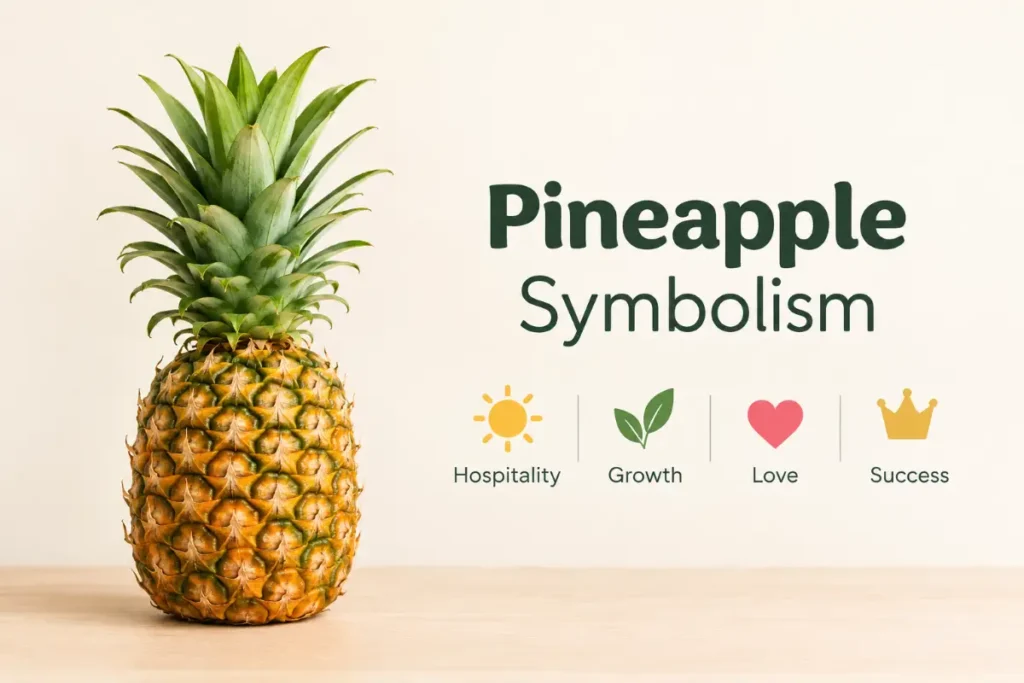
Pineapples are more than tropical fruits. They have become familiar symbols of hospitality, friendship, prosperity, warmth, and welcome. You may see them on front doors, in home decorations, on clothing, or at celebrations. Their meaning can change depending on the situation, the culture, and the person using the symbol.
Understanding pineapple symbolism helps explain why this fruit appears in spiritual conversations, romantic relationships, fertility communities, and everyday American life. Some people connect pineapples with abundance and positive energy, while others associate them with love, resilience, and generosity. An upside down pineapple can have a very different meaning from an upright one, especially in certain adult social settings.
The fruit also has an interesting history. Centuries ago, pineapples were rare and expensive in parts of Europe and North America. Serving one to guests could demonstrate wealth and generosity, helping establish its lasting connection with hospitality and social status. Today, pineapple designs remain popular in home decor, gifts, and celebrations.
This guide explores the spiritual, biblical, romantic, historical, and modern meanings of pineapples. It also explains their associations with IVF and infertility, helping you distinguish cultural traditions and personal beliefs from established facts.
Quick Answer
Pineapples commonly symbolize hospitality, friendship, prosperity, abundance, and warmth. Spiritually, some people associate them with gratitude, resilience, and positive energy. In relationships, they can represent affection and generosity. An upside down pineapple is sometimes associated with swinging, while fertility communities may use pineapple imagery to represent hope and support during IVF.
The Main Meanings of a Pineapple
Pineapples carry several positive associations, but their most familiar meanings relate to welcoming others, sharing life’s blessings, and building meaningful relationships. The setting often determines which interpretation makes the most sense.
Hospitality and Welcome
Hospitality is one of the best known meanings associated with pineapples. The fruit represents an open door, a friendly home, and the desire to make visitors feel comfortable. A pineapple displayed near an entrance or placed on a dining table can communicate warmth and friendliness.
Historically, pineapples became symbols of hospitality because they were expensive and difficult to obtain in cooler climates. Wealthy hosts sometimes displayed them during gatherings to show generosity and impress their guests. Over time, the fruit became a popular decorative motif in homes, hotels, and public buildings.
Today, an upright pineapple on a front door or porch often serves as a welcoming decoration. It can express a simple message: guests are welcome here. The same idea appears in kitchen accessories, guest room decorations, and housewarming gifts.
Wealth and Prosperity
A pineapple can symbolize prosperity, financial success, and abundance because of its historical connection to luxury. When the fruit was difficult to grow and transport, owning one demonstrated that a household could afford something special.
Modern pineapple decorations often preserve this association. People may use pineapple designs on tableware, decorative trays, clothing, or accessories as expressions of abundance and an appreciation for life’s comforts.
The symbol can also serve as a personal reminder to work toward financial stability and share success with others. It does not guarantee wealth or good fortune, but it can represent the hope for a comfortable life filled with opportunities.
Friendship and Generosity
Pineapples are also associated with friendship because they represent welcome and sharing. Offering fresh pineapple, serving it at a party, or giving a pineapple themed gift can be a cheerful way to show appreciation.
The fruit often appears at summer gatherings, family celebrations, and tropical themed parties. Its bright color and sweet flavor make it a natural fit for occasions centered on connection and enjoyment.
As a symbolic gift, a pineapple can communicate that someone values a friendship and wants to keep the relationship positive. It can also represent the simple idea that generosity does not have to involve expensive gifts. Small acts of kindness often mean the most.
Warmth and Happiness
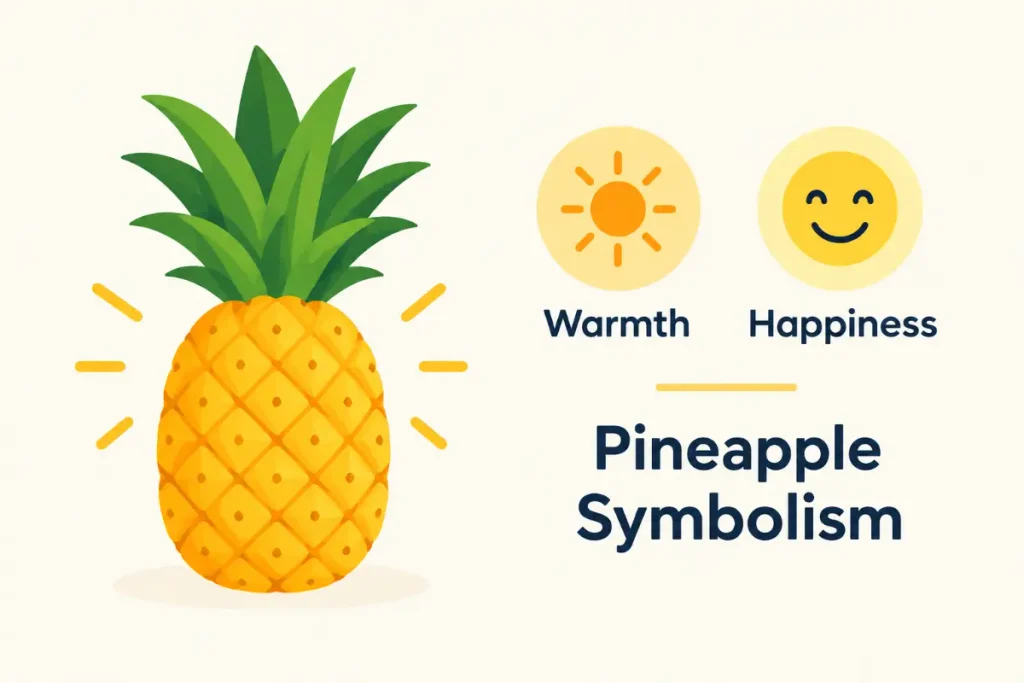
The pineapple’s golden color and tropical appearance often bring to mind sunshine, summer vacations, beaches, and cheerful gatherings. For this reason, people may connect it with optimism, happiness, and a relaxed approach to life.
This association is especially common in tropical home decor, beach houses, summer parties, and colorful accessories. A pineapple design might express a love of warm weather or a playful decorating style rather than a deeper symbolic belief.
Personal experiences can also shape its meaning. Someone might associate a pineapple with a favorite vacation, a family recipe, or a happy childhood memory. Those experiences can make the fruit meaningful in ways that go beyond traditional symbolism.
The Spiritual Meaning of Pineapples
In spiritual interpretations, pineapples often represent abundance, gratitude, resilience, and openness to life’s blessings. These meanings come from personal beliefs and symbolic associations rather than a universal spiritual rule. For many people, the fruit offers a simple way to reflect on their values, relationships, and hopes for the future.
Abundance and Positive Energy
A pineapple’s golden flesh and many joined sections can remind people of abundance. Some interpret the fruit as a symbol of blessings, opportunities, and the importance of recognizing what they already have.
People who enjoy meditation, journaling, or personal reflection might keep a pineapple image in their living space as a reminder to appreciate everyday blessings. Its bright appearance can also represent optimism and the desire to create a positive environment.
In this sense, the fruit can encourage people to nurture supportive relationships, welcome new experiences, and approach challenges with hope. However, there is no scientific evidence that displaying a pineapple attracts money or changes a person’s energy. Its spiritual significance depends on the meaning someone chooses to give it.
Resilience and Personal Growth
A pineapple has a tough outer skin and a crown of pointed leaves. Some people interpret these features as symbols of strength, resilience, and personal growth. The fruit can remind us that someone may appear strong on the outside while carrying challenges that others cannot see.
Its structure also offers a useful metaphor for personal development. Small experiences, lessons, and decisions combine to shape who we become. Difficult periods can teach patience, strengthen boundaries, and help people understand what matters most.
This interpretation may feel meaningful during major life changes, such as starting a new career, moving to another city, rebuilding confidence, or recovering from disappointment. A pineapple can serve as a personal reminder to remain kind while developing the strength to handle life’s difficulties.
Gratitude and Generosity
Another spiritual interpretation connects pineapples with gratitude and generosity. Their association with hospitality makes them fitting symbols for appreciating what we have and sharing our blessings with others.
Abundance does not always mean money or possessions. It can also include meaningful friendships, supportive family members, opportunities to learn, and the ability to help someone in need.
A pineapple displayed in a home or given as a gift can represent this broader understanding of abundance. Its meaning comes from the intention behind the gesture rather than any special power in the fruit itself.
What Does It Mean When You Keep Seeing Pineapples?
Repeatedly noticing pineapples on signs, clothing, advertisements, or decorations may feel significant, especially during a period of change. Some spiritual traditions encourage people to reflect on repeated patterns and consider how those patterns relate to their current experiences.
You might ask yourself if you have been neglecting friendships, hoping for greater stability, or looking for a fresh start. Perhaps the symbol reminds you to welcome others, appreciate your progress, or make more room for happiness.
You can use these moments for personal reflection without assuming that every sighting is a supernatural message. Sometimes, we simply notice something more often after it has caught our attention. The meaning can still be valuable if it encourages a positive choice.
Pineapple Symbolism in the Bible
Pineapples do not have an established symbolic meaning in the Bible, and the fruit is not specifically mentioned in biblical texts. The pineapple originated in South America, while the Bible’s historical settings were primarily in the ancient Near East and the Mediterranean region.
However, Christians may connect pineapple imagery with biblical themes such as hospitality, gratitude, generosity, and abundance. These are personal devotional associations rather than direct biblical teachings about the fruit.
Hospitality and Welcoming Others
Hospitality is an important theme in the Bible. Romans 12:13 encourages believers to practice hospitality, while Hebrews 13:2 emphasizes welcoming strangers.
Because pineapples are widely associated with welcoming guests, a Christian household might use a pineapple decoration as a reminder to treat visitors with kindness. The image can represent an open home, a generous spirit, and a willingness to help others feel comfortable.
This connection is symbolic. The Bible does not instruct Christians to display pineapples, and the fruit itself is not a recognized biblical sign of faith.
Gratitude and God’s Blessings
Some Christians may interpret a pineapple as a reminder to give thanks for food, family, friendship, and other blessings. This connects with the broader biblical emphasis on gratitude and caring for others.
For example, a pineapple centerpiece at a family meal might prompt people to appreciate their time together and remember those who need support. The fruit does not have a specific scriptural meaning, but the intention behind displaying it can reflect a person’s faith.
Is a Pineapple a Sign From God?
There is no biblical basis for claiming that seeing a pineapple automatically means God is sending a particular message. Christians may find personal meaning in everyday objects, but personal interpretations should not be confused with explicit Scripture.
If a pineapple reminds you to practice generosity, welcome others, or express gratitude, you can use that association as a positive reflection of your beliefs. You do not need to treat it as a guaranteed divine sign for it to have personal value.
Upside Down Pineapple Symbolism
An upside down pineapple has a modern social meaning that differs from the traditional association with hospitality. In some American social settings, it is recognized as a symbol connected to swinging, a lifestyle in which consenting adults in relationships may explore sexual experiences with other adults.
This interpretation has become more visible through social media, online discussions, cruise vacations, and popular culture. However, an inverted pineapple does not automatically reveal someone’s relationship preferences or intentions.
What Does an Upside Down Pineapple Mean?
In certain contexts, an upside down pineapple can signal an interest in swinging or serve as a playful reference to that lifestyle. People may use the image on clothing, accessories, or other items to communicate an association with the community.
The meaning depends heavily on context. A pineapple printed upside down on a shirt might be a joke, a fashion choice, or a reference to an online trend. It is not reliable evidence of someone’s private life.
The symbol is also not a substitute for direct communication. Seeing an upside down pineapple does not establish consent or mean someone wants romantic or sexual attention.

Upside Down Pineapple on a Cruise
Pineapple imagery sometimes appears in discussions about cruise ship culture. Some travelers associate an upside down pineapple on a cabin door or an accessory with swinging.
However, cruise ships also feature pineapple designs as ordinary decorations, and many passengers may be unaware of the alternative interpretation. You should not assume that a person or couple is interested in swinging based on a decoration alone.
If you encounter the symbol while traveling, consider the surrounding context rather than jumping to conclusions. Respectful communication and clear consent are essential in every social situation.
Upright Versus Upside Down Pineapple
| Pineapple symbol | Common interpretation |
|---|---|
| Upright pineapple | Hospitality, friendship, welcome, and prosperity |
| Upside down pineapple | Sometimes associated with swinging in modern social settings |
| Pineapple on a front door | A decorative sign of welcome |
| Pineapple given as a gift | Appreciation, friendship, celebration, or housewarming wishes |
| Pineapple in tropical decor | Warmth, relaxation, summer, and a cheerful atmosphere |
These meanings are common interpretations, not universal rules. The same image can mean different things depending on the person, location, and situation.
Pineapple Symbolism in Love and Relationships
Pineapples can represent affection, warmth, generosity, and the desire to make someone feel welcome. Their connection with hospitality makes them a natural fit for relationships built on trust, care, and shared experiences.
Love and Romantic Connection
In romantic settings, a pineapple may symbolize a warm relationship and the willingness to share life’s pleasures with another person. A pineapple themed gift can communicate thoughtfulness, playfulness, or appreciation.
For example, a couple might choose tropical decorations for an anniversary party or exchange pineapple accessories because they share happy memories of a vacation. The fruit does not have one universal romantic meaning, so personal context matters.
The connection to love is often less about passion and more about creating a relationship in which both people feel valued, supported, and welcome.
Pineapple Symbolism in Marriage
Pineapple decorations can suit weddings, engagement parties, anniversaries, and housewarming celebrations. They may represent hospitality toward guests, a joyful home, and a couple’s hope for a generous life together.
A pineapple centerpiece or wedding favor can also communicate abundance and celebration. Couples who enjoy tropical themes may choose it simply because it adds color and personality to their event.
There is no universal wedding tradition that requires pineapples to symbolize marriage. Their meaning depends on the couple’s preferences and the message they want their celebration to convey.
What Does a Pineapple Mean in Girl Code?
The phrase “girl code” usually refers to informal social expectations among women, such as supporting friends, respecting boundaries, and treating one another with loyalty. Pineapples do not have one widely established meaning in girl code.
Depending on the conversation, a pineapple may be an inside joke, a reference to a social media trend, or a symbol of friendliness. In some adult social circles, an upside down pineapple can carry the swinging association discussed earlier.
It is important not to assume that a woman is communicating a romantic or sexual message simply because she wears pineapple jewelry or posts a pineapple image. Ask for clarification if the meaning genuinely matters.
Pineapple Symbolism and IVF
For some people experiencing infertility or undergoing in vitro fertilization (IVF), the pineapple has become a symbol of hope, solidarity, and emotional support.
This association is especially visible in online fertility communities, where people share personal experiences, encouragement, and stories about treatment. Pineapple themed clothing, jewelry, artwork, and social media images may help people feel connected to others who understand their journey.
Why Is the Pineapple Associated With IVF?
The pineapple has become a recognizable symbol in some fertility communities, partly because of online discussions about the fruit and its core. Some people associate pineapple imagery with hope for embryo implantation or a positive pregnancy outcome.
This is a cultural association rather than an established medical symbol. The popularity of pineapple imagery does not mean the fruit has been proven to improve IVF success.
People may still find emotional comfort in the symbol. Fertility treatment can involve uncertainty, difficult decisions, waiting periods, and intense feelings. A small object that represents hope can become personally meaningful during that experience.
Pineapple Symbolism and Infertility
For people facing infertility, a pineapple may represent perseverance, hope, and the wish to build a family. It can also serve as a way to express support for someone undergoing treatment without requiring them to explain every detail of their experience.
A pineapple necklace, greeting card, or small gift might communicate care and encouragement. However, it is important to consider the recipient’s feelings. Some people welcome fertility related symbols, while others may find pregnancy reminders painful during a difficult period.
The most thoughtful approach is to offer support without making assumptions about someone’s treatment, prognosis, or plans for having children.
Does Eating Pineapple Help With IVF?
There is no strong clinical evidence that eating pineapple, including its core, improves embryo implantation or increases IVF success rates. Pineapples contain bromelain, an enzyme found in the fruit and stem, but that fact does not establish a fertility benefit.
Pineapple can be part of a balanced diet for many people, but it should not replace medical advice or prescribed fertility treatment. Anyone considering concentrated bromelain supplements during fertility treatment should discuss them with a healthcare professional.
The symbolic connection between pineapples and IVF can offer emotional encouragement, but it should not be confused with a proven medical treatment.
Pineapple as a Symbol of Wealth
The pineapple’s connection to wealth has a clear historical background. Originally cultivated in South America, the fruit was introduced to Europe during early exploration of the Americas. Growing it in cooler European climates required expensive heated greenhouses, while importing it over long distances was costly and difficult.
During the 17th and 18th centuries, pineapples became luxury items among wealthy Europeans. They were displayed at elaborate gatherings and sometimes rented for special occasions because they were so expensive. The fruit eventually became a recognizable decorative symbol of status and prosperity.
Why Pineapples Represent Abundance
A pineapple is visually distinctive, with a golden body and a leafy crown. Its appearance, sweetness, and historical value have all contributed to its association with abundance.
In modern decor, the fruit can suggest a comfortable home, generosity, and an appreciation for life’s pleasures. Some people also use it as a personal reminder to pursue financial goals and share their success with loved ones.
Still, the pineapple is a symbol, not a guarantee of wealth. Its significance comes from its cultural history and the meaning people attach to it.
Pineapple Decorations in American Homes
Pineapple designs appear in American home decor, including door knockers, welcome signs, lamps, kitchen accessories, and textiles. They are especially suitable for people who want their homes to feel friendly and inviting.
A pineapple at the entrance may express a desire to welcome visitors. In a dining room, it can suggest hospitality and shared meals. As a housewarming gift, it can communicate wishes for happiness and prosperity in a new home.
There is also a more complicated side to this history. The pineapple’s rise as a luxury symbol was tied to colonial trade and the exploitation of enslaved people in the Caribbean. Understanding that background provides a fuller picture of how the fruit became fashionable in Europe and North America.
How to Use Pineapple Symbolism in Everyday Life
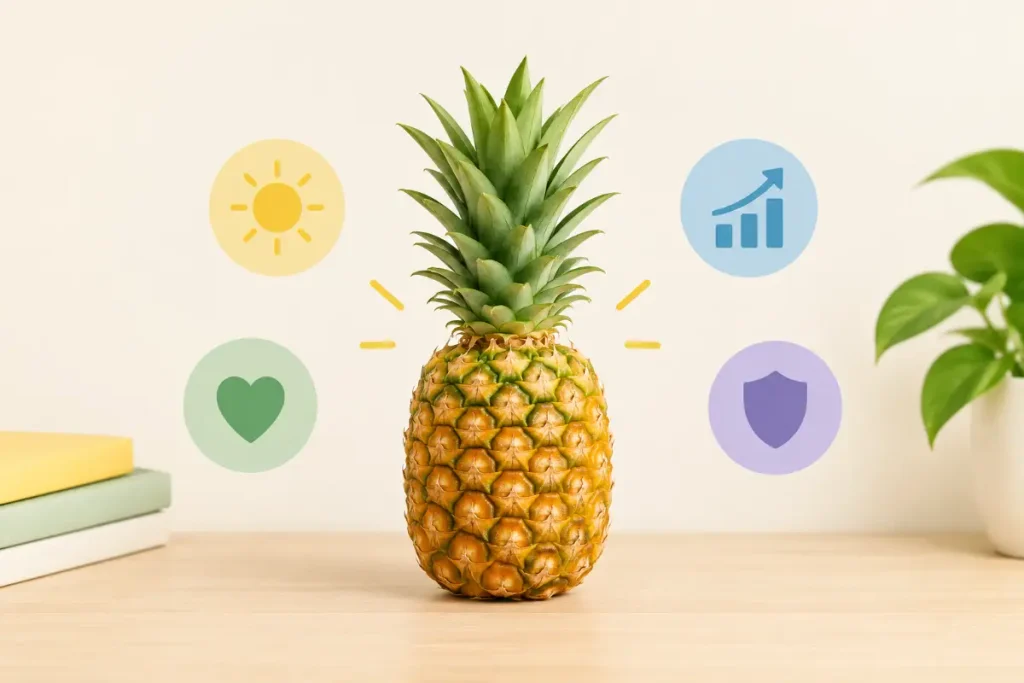
You do not need to follow a particular spiritual tradition to appreciate what pineapples represent. You can choose a meaning that reflects your values, relationships, or personal goals.
1. Create a welcoming home. Place a pineapple ornament near your front entrance or use pineapple themed tableware when entertaining guests.
2. Celebrate friendship. Give a pineapple themed gift to a friend as a lighthearted way to express appreciation and connection.
3. Encourage personal growth. Use a pineapple image in a journal as a reminder to stay resilient and remain open to new opportunities.
4. Practice gratitude. Include pineapple decorations at a family gathering as a reminder to appreciate the people and experiences that bring joy to your life.
5. Support someone experiencing infertility. Offer a thoughtful card or gift if you know the recipient finds the pineapple association comforting. Avoid suggesting that the fruit can improve fertility outcomes.
6. Add meaning to romantic celebrations. Incorporate pineapple decorations into an anniversary dinner or tropical themed event to express warmth and shared happiness.
The most important consideration is the intention behind the symbol. A pineapple can be a decorative object, a thoughtful gift, a cultural reference, or a personal reminder. Its meaning does not have to be the same for everyone.
Frequently Asked Questions
What is the most common meaning of a pineapple?
The most common meaning is hospitality. Pineapples are widely associated with welcoming guests, friendship, generosity, and a warm home. They can also symbolize prosperity and abundance because of their historical status as luxury fruits.
What does a pineapple mean spiritually?
Spiritually, some people associate pineapples with abundance, gratitude, resilience, optimism, and positive energy. These interpretations are personal or cultural beliefs rather than universal spiritual rules.
What does an upside down pineapple symbolize?
An upside down pineapple is sometimes associated with swinging in modern American social settings. However, it can also be a decoration or an ordinary fashion choice. It is not proof of someone’s relationship preferences or consent.
Is the pineapple mentioned in the Bible?
No. The pineapple is not specifically mentioned in the Bible. Christians may associate it with biblical themes such as hospitality, generosity, and gratitude, but these are personal symbolic interpretations rather than direct biblical teachings.
Why is the pineapple associated with IVF?
Pineapple imagery has become popular in some fertility communities as a symbol of hope, encouragement, and solidarity during IVF and infertility treatment. The association is cultural, and there is no strong clinical evidence that eating pineapple improves implantation or IVF success.
Does a pineapple symbolize wealth?
Yes, in many decorative and cultural traditions. Its historical rarity and high cost made it a sign of wealth and social status in Europe. Today, it can represent prosperity, abundance, and generosity.
What does a pineapple mean in love?
A pineapple can symbolize affection, warmth, generosity, and a welcoming relationship. Its exact meaning depends on the people involved and the context in which it appears.
What does a pineapple on a front door mean?
A pineapple on a front door commonly represents hospitality and welcome. It can be a decorative way to communicate that guests are welcome, although some people choose the design simply because they like its appearance.
Conclusion
Pineapples carry a range of meanings, from traditional hospitality and friendship to modern associations with prosperity, romance, spirituality, and fertility support. Their history explains why they became recognizable symbols in home decor and American social culture, while personal experiences continue to shape their meaning today.
Ultimately, pineapple symbolism depends on context. An upright pineapple may suggest a welcoming home, an upside down version may reference a modern social trend, and a pineapple shared in a fertility community may represent hope. Understanding these differences helps you appreciate the symbol without assuming that every pineapple carries a hidden message.