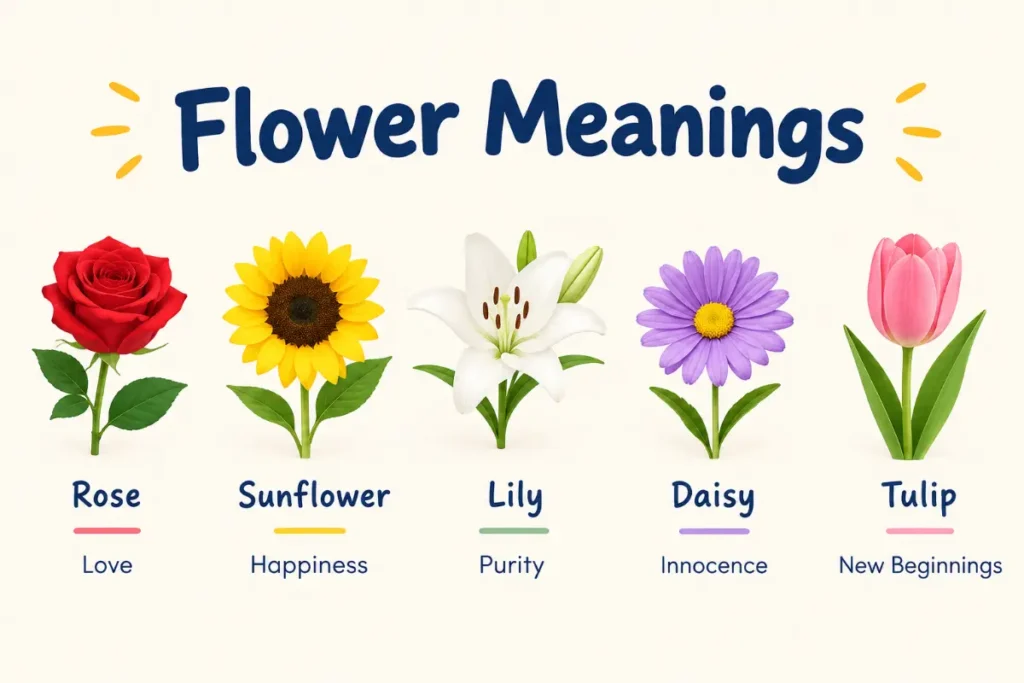
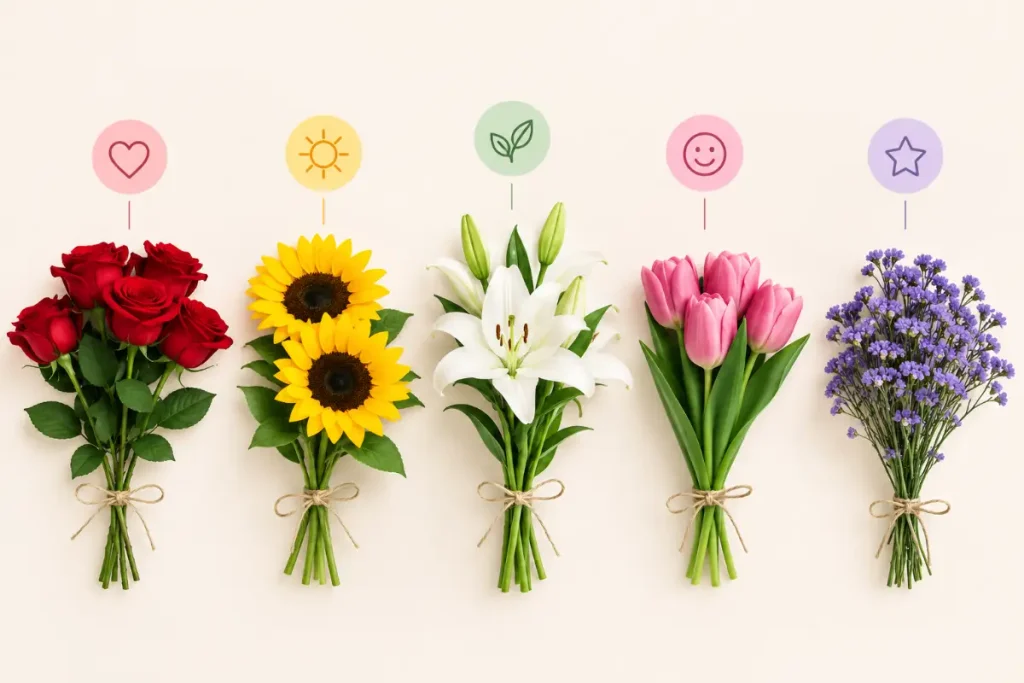
Flowers can express feelings that are sometimes difficult to put into words. A red rose may communicate romantic love, a sunflower can represent happiness, and a white lily often symbolizes peace or remembrance. From birthdays and weddings to funerals and everyday gestures, flowers help people share emotions, celebrate important moments, and honor meaningful relationships.
Understanding flower meanings can help you choose the right bloom for a gift, a special occasion, or even your garden. Each flower has its own history, cultural associations, and traditional symbolism. Color also matters because the same type of flower can communicate different feelings depending on its shade. A red carnation, for example, may represent deep affection, while a white carnation is often associated with purity and remembrance.
Flower symbolism is not universal. Meanings can vary across cultures, religions, historical periods, and personal experiences. A flower that represents celebration in one setting may carry a more solemn meaning in another. The intention behind the gift and the relationship between the people involved can be just as important as the bloom itself.
This guide explores popular flowers and their symbolic meanings, explains how flower colors influence their messages, and offers practical tips for choosing blooms for birthdays, weddings, anniversaries, sympathy gifts, and other occasions.
What Do Flowers Symbolize?
Flowers commonly symbolize love, friendship, happiness, gratitude, hope, beauty, renewal, and remembrance. Their meanings often come from traditional stories, cultural practices, religious associations, and the natural qualities people notice in them.
For example, flowers that bloom in spring are frequently associated with fresh starts and new beginnings. Fragrant blooms may represent romance or affection, while flowers that return year after year can symbolize resilience and lasting connections.
In the United States, people often choose flowers based on the occasion and the message they want to communicate. Roses are popular for romantic gestures, sunflowers suit cheerful celebrations, and lilies frequently appear in sympathy arrangements. These are common conventions rather than strict rules, so personal preference still matters.
Popular Flower Meanings at a Glance
The following table covers some of the most recognizable flowers and their traditional associations.
| Flower | Common meaning | Often given for |
|---|---|---|
| Rose | Love, passion, appreciation | Anniversaries and romantic occasions |
| Sunflower | Happiness, loyalty, optimism | Birthdays and congratulations |
| Lily | Purity, renewal, remembrance | Weddings and memorials |
| Tulip | Love, comfort, new beginnings | Spring celebrations and anniversaries |
| Daisy | Innocence, simplicity, cheerfulness | Birthdays and friendly gifts |
| Carnation | Affection, admiration, remembrance | Mother’s Day and memorials |
| Orchid | Elegance, admiration, strength | Milestones and special gifts |
| Peony | Romance, prosperity, good fortune | Weddings and anniversaries |
| Lavender | Calm, devotion, serenity | Thank you gifts and relaxation themed arrangements |
| Chrysanthemum | Loyalty, longevity, remembrance | Celebrations and sympathy arrangements |
| Daffodil | Renewal, hope, new beginnings | Spring celebrations and encouragement |
| Hydrangea | Gratitude, heartfelt emotion, abundance | Thank you gifts and celebrations |
These associations provide a helpful starting point, but they do not determine the meaning of every bouquet. The color, cultural setting, and personal connection between the giver and recipient can change the message.
Rose Meanings and Symbolism
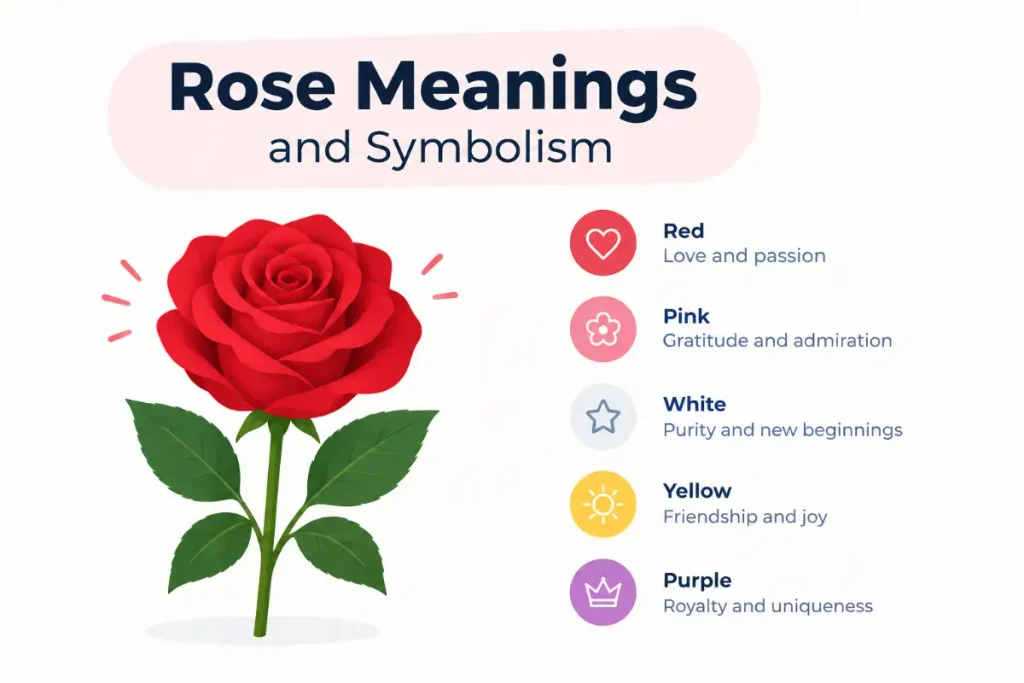
Red roses represent romantic love, while other colors communicate different emotions.
Roses are among the most recognizable symbolic flowers in American culture. They appear in romantic bouquets, wedding arrangements, Valentine’s Day gifts, and celebrations of important relationships. Although roses are strongly associated with love, their colors can communicate appreciation, friendship, gratitude, or new beginnings.
Red Roses
Red roses traditionally symbolize romantic love, passion, and deep affection. They are a popular choice for Valentine’s Day, anniversaries, and other occasions when someone wants to express strong romantic feelings. A bouquet of red roses can communicate devotion without requiring a long explanation.
White Roses
White roses are often associated with purity, sincerity, peace, and new beginnings. They are common in wedding arrangements because they complement themes of commitment and fresh starts. They may also appear in memorial arrangements as expressions of respect and remembrance.
Yellow Roses
Yellow roses commonly symbolize friendship, happiness, and warmth. Their bright color makes them suitable for birthdays, congratulations, and thoughtful gestures between friends. They can express appreciation without carrying the strongly romantic message often associated with red roses.
Pink Roses
Pink roses are associated with admiration, gratitude, gentleness, and appreciation. Light pink shades often communicate sweetness or grace, while deeper pink shades can express stronger appreciation. They work well for Mother’s Day, thank you gifts, and celebrations of personal achievements.
Orange Roses
Orange roses can represent enthusiasm, excitement, attraction, and admiration. Their bold color makes them suitable for celebrating milestones or expressing energetic affection. They can also communicate encouragement when someone is beginning an exciting new chapter.
Sunflower Meanings
Sunflowers are commonly associated with optimism, loyalty, warmth, and happiness.
Sunflowers stand out because of their large golden petals and bright appearance. Their resemblance to the sun has helped establish their association with positivity, energy, and hope. In everyday gifting, they are often chosen to brighten someone’s day or celebrate a happy occasion.
Happiness and Optimism
Sunflowers can symbolize a cheerful outlook and the ability to find joy in ordinary moments. Their sunny appearance makes them popular for birthdays, graduation celebrations, and congratulations bouquets. Giving sunflowers can be a simple way to encourage someone who needs a little positivity.
Loyalty and Lasting Affection
Sunflowers are also associated with loyalty and devotion. Their strong stems and striking presence can serve as a reminder of dependable relationships and lasting support. They can make thoughtful gifts for friends, family members, or romantic partners who appreciate bright, informal arrangements.
Hope and Strength
Sunflowers can represent resilience because they grow tall and produce large blooms. For some people, they symbolize the determination to keep moving forward through difficult circumstances. A sunflower bouquet can communicate encouragement during a personal transition or recovery from disappointment.
Lily Meanings
Lilies often symbolize purity, renewal, dignity, and remembrance.
Lilies have a long history in religious art, ceremonies, and floral traditions. Their elegant shape and distinctive petals make them popular for weddings, formal events, and memorial services. Different lily varieties and colors can carry different associations.
White Lilies
White lilies are commonly associated with purity, peace, and innocence. They frequently appear in weddings and sympathy arrangements. In Christian art, white lilies have also been used to represent purity and are sometimes associated with the Virgin Mary.
Stargazer Lilies
Stargazer lilies are known for their dramatic appearance and strong fragrance. They are often associated with ambition, admiration, and prosperity. Their vibrant pink and white petals make them suitable for celebratory bouquets and special gifts.
Orange Lilies
Orange lilies can symbolize confidence, energy, and enthusiasm. Their vivid color creates a bold statement in floral arrangements and can communicate encouragement or excitement. They are a fitting choice for celebrations that call for a lively, colorful bouquet.
Tulip Meanings
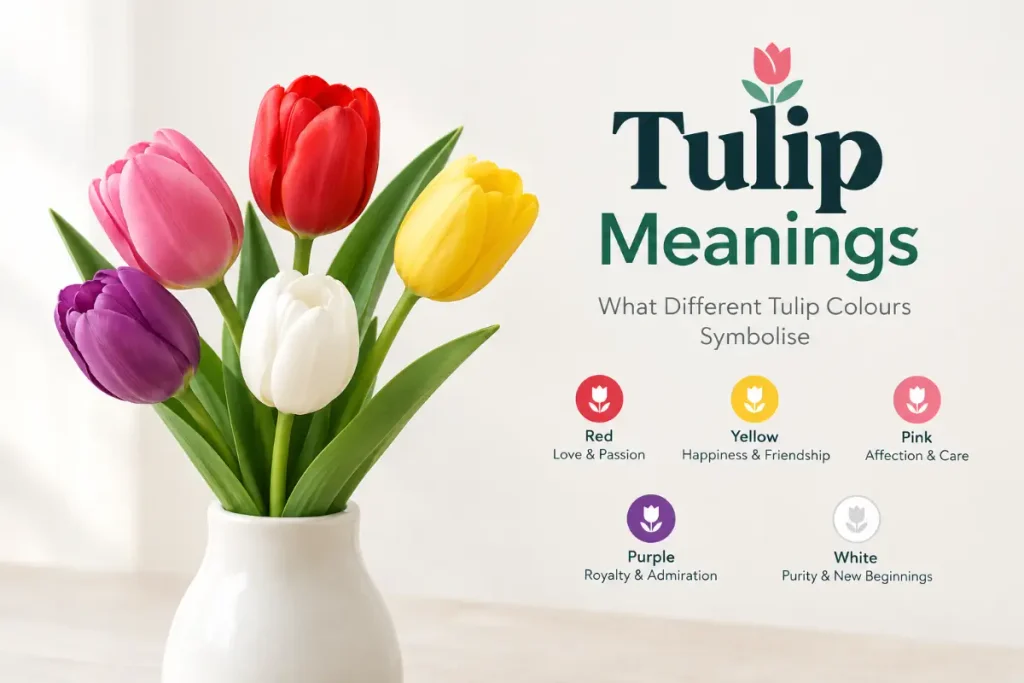
Tulips are popular spring flowers associated with love, comfort, renewal, and fresh beginnings. Their simple shape and wide range of colors make them suitable for many occasions, from casual gifts to romantic celebrations.
Red Tulips
Red tulips are traditionally associated with true love and romantic affection. They offer a slightly different look from roses while communicating a similar message of love. They can be especially appealing for anniversaries or thoughtful gestures between partners.
Yellow Tulips
Yellow tulips are often linked with cheerfulness, hope, and friendship. Their bright appearance makes them a natural choice for spring bouquets, birthdays, and gifts intended to lift someone’s spirits.
Purple Tulips
Purple tulips are associated with elegance, admiration, and royalty. They can add a refined touch to formal arrangements or communicate respect for someone you admire. Their rich color also works well for milestone celebrations.
White Tulips
White tulips commonly represent forgiveness, sincerity, and fresh starts. They may be appropriate after a misunderstanding or as a gesture of peace and goodwill. Their understated appearance also suits weddings and minimalist floral arrangements.
Daisy Meanings
Daisies are commonly associated with innocence, simplicity, cheerfulness, and new beginnings. Their open petals and bright centers give them a friendly appearance, making them popular in casual bouquets and garden arrangements.
White daisies are often linked with purity and innocence, while colorful varieties can communicate happiness and playfulness. They are suitable for birthdays, congratulations, and gifts for friends who appreciate simple, natural beauty.
Daisies can also represent the optimism that comes with starting something new. A bouquet of daisies may be a thoughtful choice for someone beginning a new job, moving into a new home, or celebrating a fresh chapter in life.
Carnation Meanings
Carnations have a long history in floral gifting and are especially popular for Mother’s Day in the United States. Their ruffled petals, wide color range, and long-lasting blooms make them practical choices for both simple bouquets and elaborate arrangements.
Red carnations often symbolize admiration and deep affection. Pink carnations are commonly associated with gratitude and a mother’s love, while white carnations can represent purity, remembrance, or good fortune. Yellow carnations may communicate disappointment or rejection in some traditional interpretations, although many modern arrangements use them simply for their cheerful color.
Because carnations are available in many shades and tend to last well after cutting, they work for birthdays, family celebrations, memorials, and appreciation gifts. The recipient’s preferences should guide the final choice.
Orchid Meanings
Orchids are associated with elegance, beauty, admiration, and strength. Their unusual shapes and graceful appearance have made them popular gifts for birthdays, anniversaries, professional milestones, and housewarmings.
Purple orchids are often linked with royalty, admiration, and respect. White orchids can represent elegance, purity, and sincerity, while pink orchids are commonly associated with affection and grace.
Orchids can also symbolize resilience because many varieties thrive with appropriate care despite their delicate appearance. A potted orchid can be a thoughtful gift for someone who enjoys plants and wants a long-lasting reminder of a special occasion.
Peony Meanings
Peonies are often associated with romance, prosperity, happiness, and good fortune. Their full, layered blooms make them especially popular in wedding bouquets and spring floral arrangements.
In Chinese cultural traditions, peonies have strong associations with prosperity, honor, and good fortune. In other settings, they may represent a happy relationship, affection, or a life filled with comfort and abundance.
Pink peonies are frequently chosen for romantic celebrations, while white varieties can suggest sincerity and elegance. Red peonies may carry associations with honor, prosperity, and passionate love. Because peonies are seasonal in many parts of the United States, they are particularly popular for spring weddings and special events.
Lavender Meanings
Lavender is commonly associated with calm, serenity, devotion, and grace. Its soft purple flowers and recognizable fragrance make it popular in gardens, home decor, and gifts intended to encourage relaxation.
Lavender can symbolize peace and a desire for emotional balance. A small bouquet may be a thoughtful gift for someone who appreciates gardening or enjoys creating a quiet, comfortable home.
Purple shades also connect lavender with elegance and admiration. Although lavender is sometimes described as having spiritual or healing qualities, symbolic meanings should be distinguished from medical claims. Its fragrance may be relaxing for some people, but it should not be treated as a replacement for professional care.
Chrysanthemum Meanings
Chrysanthemums, often called mums, are associated with loyalty, longevity, joy, and remembrance. Their full blooms and wide range of colors make them popular in American gardens and fall decorations.
Red chrysanthemums can represent love and affection, while yellow varieties are often associated with happiness and optimism. White chrysanthemums may symbolize honesty, purity, or remembrance, depending on the cultural setting.
It is important to consider local customs when giving chrysanthemums. In some European cultures, white chrysanthemums are strongly associated with funerals and mourning. In other countries, chrysanthemums are celebrated as symbols of longevity, happiness, or honor. The same flower can therefore communicate very different messages across cultures.
Daffodil Meanings
Daffodils are widely associated with renewal, hope, optimism, and new beginnings. Their bright yellow or white blooms often appear as winter ends and spring approaches, making them natural symbols of fresh starts.
A bunch of daffodils can be a thoughtful gift for someone starting a new job, moving to a new home, or recovering from a difficult period. They can also communicate encouragement and remind someone that circumstances can change for the better.
Daffodils are particularly popular in spring gardens across the United States. Their seasonal appearance reinforces their connection with growth, renewed energy, and the arrival of warmer days.
Hydrangea Meanings
Hydrangeas are known for their large clusters of flowers and their ability to create dramatic arrangements. They are often associated with gratitude, heartfelt emotion, abundance, and appreciation.
Blue hydrangeas can symbolize understanding, apology, or calm, while pink varieties are commonly associated with romance and heartfelt feelings. White hydrangeas may represent grace, sincerity, or abundance, depending on the tradition.
Hydrangeas are popular in wedding decorations, garden designs, and thank you bouquets. Their full appearance makes them useful for arrangements intended to feel generous and celebratory. However, some traditional interpretations connect hydrangeas with boastfulness or emotional distance, so their meaning is not always entirely positive.
How Flower Colors Change Their Meanings
Color plays an important role in floral symbolism. Even when two flowers belong to the same species, their shades can create different associations. Understanding these common color conventions can help you choose a bouquet that better communicates your intentions.
| Flower color | Common symbolic meanings | Suitable occasions |
|---|---|---|
| Red | Romantic love, passion, courage | Anniversaries and romantic celebrations |
| Pink | Affection, gratitude, admiration | Mother’s Day and thank you gifts |
| White | Peace, purity, sincerity, remembrance | Weddings and memorials |
| Yellow | Friendship, happiness, optimism | Birthdays and congratulations |
| Orange | Energy, enthusiasm, confidence | Celebrations and achievements |
| Purple | Elegance, admiration, dignity | Milestones and formal gifts |
| Blue | Calm, trust, serenity | Appreciation gifts and peaceful arrangements |
| Green | Renewal, growth, harmony | New beginnings and housewarmings |
These color associations are common in Western floral traditions, but they are not universal. Cultural customs and individual experiences can influence how people interpret a particular shade.
For example, white flowers may represent purity and new beginnings at an American wedding, while certain white blooms may be strongly associated with mourning in another culture. If you are giving flowers to someone from a different cultural background, considering their customs can help you avoid an unintended message.
Choosing Flowers for Different Occasions
The best flowers for an occasion are those that reflect the relationship, the event, and the feelings you want to express. Traditional meanings can help you narrow your choices, but the recipient’s preferences matter just as much.
Birthdays and Celebrations
Sunflowers, daisies, tulips, and colorful mixed bouquets are popular choices for birthdays. They communicate happiness, friendship, and celebration without requiring a specific romantic meaning.
For milestone birthdays or professional achievements, orchids can express admiration and elegance. Bright seasonal arrangements are also suitable for graduations, promotions, and other moments of accomplishment.
Weddings and Anniversaries
Roses, peonies, lilies, and tulips are popular for weddings and romantic celebrations. Red roses can communicate passion, white roses can suggest sincerity, and peonies can represent prosperity and a happy future.
For anniversaries, choose flowers that reflect the relationship. A favorite flower may carry more personal significance than one selected only for its traditional meaning. A bouquet that recalls a wedding day, first date, or shared memory can be especially meaningful.
Mother’s Day and Family Gifts
Carnations, roses, tulips, and hydrangeas can be thoughtful Mother’s Day gifts. Pink carnations are often associated with a mother’s love, while pink roses and tulips can express affection and appreciation.
You can also choose flowers based on a family member’s favorite colors or gardening interests. A living plant may be a better choice than cut flowers for someone who enjoys caring for a garden.
Sympathy and Memorial Services
White lilies, white roses, and chrysanthemums are often used in American sympathy arrangements. They can communicate peace, respect, remembrance, and support during a difficult time.
However, personal and religious customs should guide your choice. Some families prefer colorful arrangements that celebrate a loved one’s life, while others favor understated white flowers. A sincere message of sympathy can be just as important as the flowers themselves.
Apologies and Reconciliation
White tulips, pink roses, or a recipient’s favorite flowers may be appropriate when you want to express sincerity and rebuild a connection. White tulips are sometimes associated with forgiveness and fresh starts, while pink roses can communicate appreciation and care.
Flowers alone cannot resolve a disagreement, but they can accompany a genuine apology. Choose a gesture that reflects your intentions, and make sure your words and actions support the message.
Encouragement and New Beginnings
Daffodils, sunflowers, and tulips are good options for someone entering a new chapter in life. Their associations with hope, happiness, and renewal make them suitable for a new job, graduation, relocation, or recovery from a difficult experience.
A simple bouquet can communicate encouragement without putting pressure on the recipient to feel better immediately. Sometimes, the most meaningful message is simply that you are thinking of them.
How to Choose the Right Flowers
Choosing flowers becomes easier when you consider three things: the occasion, the recipient, and the message you want to share. You do not need to memorize every traditional association to select a thoughtful bouquet.
First, think about the relationship. Red roses may be a natural choice for a romantic partner, while sunflowers or yellow roses may suit a close friend. For a family celebration, consider the recipient’s favorite flowers or colors rather than relying entirely on traditional symbolism.
Next, consider the setting. Large, colorful arrangements may suit celebrations, while smaller bouquets can feel more personal for everyday gifts. For sympathy occasions, choose blooms that reflect the family’s preferences and cultural customs.
Finally, remember that personal meaning matters. A flower someone received from a loved one years ago may hold more emotional significance than a bloom traditionally associated with a particular feeling. A thoughtful choice often says more than an expensive arrangement.
Frequently Asked Questions
What are the most common flower meanings?
The most common associations include love, friendship, happiness, gratitude, hope, purity, and remembrance. Roses are often linked with love, sunflowers with happiness, daisies with innocence, and lilies with peace or renewal. Meanings can change based on color, culture, and occasion.
Which flower symbolizes love?
Red roses are among the most widely recognized symbols of romantic love. Red tulips can also represent true love, while pink roses often communicate admiration and affection. The best choice depends on the message you want to share and the recipient’s preferences.
Which flowers symbolize friendship?
Yellow roses, sunflowers, and daisies are commonly associated with friendship and happiness. They are popular gifts for birthdays, celebrations, and thoughtful gestures between friends. Their cheerful appearance makes them suitable when you want to show appreciation without suggesting romantic interest.
Which flower represents new beginnings?
Daffodils and tulips are commonly associated with renewal and fresh starts. Their spring blooming season reinforces their connection with growth and optimism. They can make thoughtful gifts for graduations, new jobs, housewarmings, and other life transitions.
What do different flower colors mean?
Red commonly represents love and passion, pink suggests affection and gratitude, white can symbolize purity or remembrance, and yellow often represents friendship and happiness. Purple is frequently associated with admiration and elegance, while orange can communicate enthusiasm. These meanings vary across cultures and individual traditions.
Do flowers have spiritual meanings?
Many cultures and spiritual traditions associate flowers with renewal, devotion, purity, hope, or the cycle of life. Their meanings may appear in religious art, ceremonies, and personal rituals. However, no single interpretation applies to every culture or belief system.
Conclusion
Flowers help people express emotions, celebrate relationships, and mark important moments in life. Roses can communicate love, sunflowers can brighten someone’s day, and daffodils can represent the hope that comes with a fresh start. Even a simple bouquet can carry a meaningful message when chosen with care.
Understanding flower meanings gives you a useful starting point when selecting blooms for birthdays, weddings, anniversaries, sympathy gifts, or everyday gestures. Still, traditional symbolism is only part of the story. Cultural customs, flower colors, personal memories, and the relationship between the giver and recipient all influence how a bouquet is understood.
Ultimately, the best flower is one that reflects your intention and makes the recipient feel appreciated. You can follow traditional meanings, choose a favorite bloom, or combine different flowers to create a message that feels personal and sincere.