Your car uses dashboard lights to communicate important information about its condition. Understanding car light meanings helps you recognize which lights indicate normal operation and which warn you about problems that need attention. Some signals simply show that a feature is working, while others alert you to potential safety risks or mechanical issues. Knowing what these lights mean can help you make safer driving decisions, avoid unnecessary repairs, and address serious problems before they become more expensive.
Understanding car light meanings is especially important when a warning appears while you are driving. A green or blue indicator usually provides information about an active feature, while an amber or yellow light often signals a problem that needs checking. A red warning generally indicates a more urgent issue, although the exact meaning depends on the symbol and your vehicle.
For example, a red oil pressure warning may require you to stop the engine as soon as it is safe to do so. Meanwhile, a yellow tire pressure light usually means you should check your tires promptly. These warnings are not interchangeable, so learning to recognize them can help you respond correctly.
This guide explains common dashboard warning lights, their colors, what causes them to appear, and what you should do next. It also covers headlights, turn signals, brake lights, and other exterior vehicle lights so you can understand the signals your car uses both inside and outside the cabin.
Quick Answer
Dashboard lights communicate your car’s status and warn you about potential problems. Green and blue lights generally indicate that a feature is active, amber and yellow lights often signal a fault or maintenance need, and red lights usually indicate a serious warning. However, always identify the specific symbol and follow your owner’s manual because colors and meanings vary by vehicle.
Understanding Dashboard Light Colors
Before identifying individual symbols, learn what the main dashboard colors generally indicate. This simple distinction helps you decide how quickly to respond when a light appears.
| Light color | General meaning | What to do |
|---|---|---|
| Red | Potentially serious warning or immediate safety concern | Stop safely if the warning indicates an urgent problem |
| Amber or yellow | Fault, caution, or maintenance issue | Check the symbol and arrange inspection as needed |
| Green | A feature is active or operating | Usually continue driving normally |
| Blue | Often indicates high beam headlights or another active feature | Check that the feature is appropriate for current conditions |
| White | Informational message or feature status on some vehicles | Read the message and consult the owner’s manual if needed |
These color conventions are general guidelines, not universal rules. Some vehicles use different colors or display messages alongside symbols. In addition, a light that briefly appears when you start the engine may simply be part of the dashboard’s self-test.
Red Dashboard Lights
Red dashboard lights usually deserve immediate attention because they can indicate a serious mechanical problem or a safety issue. Common examples include the engine oil pressure warning, engine overheating warning, brake system warning, and certain battery charging warnings.
When a red warning appears, check the symbol and any accompanying message. If it indicates low oil pressure, overheating, or a brake system problem, pull over as soon as it is safe and follow the vehicle’s instructions. Continuing to drive can damage the engine or compromise safety.
However, not every red light means you must stop immediately. A seat belt reminder or parking brake indicator may also appear in red. The specific symbol and the circumstances determine the correct response.
Yellow or Amber Dashboard Lights
Yellow and amber lights generally indicate that a system needs attention. They may warn about engine emissions, tire pressure, traction control, anti lock braking, or scheduled maintenance.
These warnings do not always require you to stop immediately. Nevertheless, you should not ignore them. For instance, a steady check engine light may allow you to drive cautiously to a repair shop, while a flashing check engine light can indicate a serious engine misfire that may damage the catalytic converter.
The best approach is to identify the warning, read the owner’s manual, and arrange service according to the level of risk.
Green and Blue Dashboard Lights
Green and blue indicators generally tell you that a feature is active rather than warning you about a fault. Examples include turn signals, exterior lighting indicators, cruise control status, and high beam headlights.
These lights help you understand what your car is doing. A blue high beam indicator, for example, reminds you that your brighter headlights are on. You should switch to low beams when approaching other drivers or following another vehicle closely.
Green indicators usually need no action unless the feature is operating unexpectedly. Even so, understanding them helps you use your vehicle’s systems correctly.
Common Dashboard Warning Lights and Their Meanings
Different dashboard symbols monitor different parts of your vehicle. Some track engine performance, while others monitor braking, tires, electrical systems, and driver assistance features. The following explanations cover many of the most common lights found in cars sold in the United States.
Check Engine Light
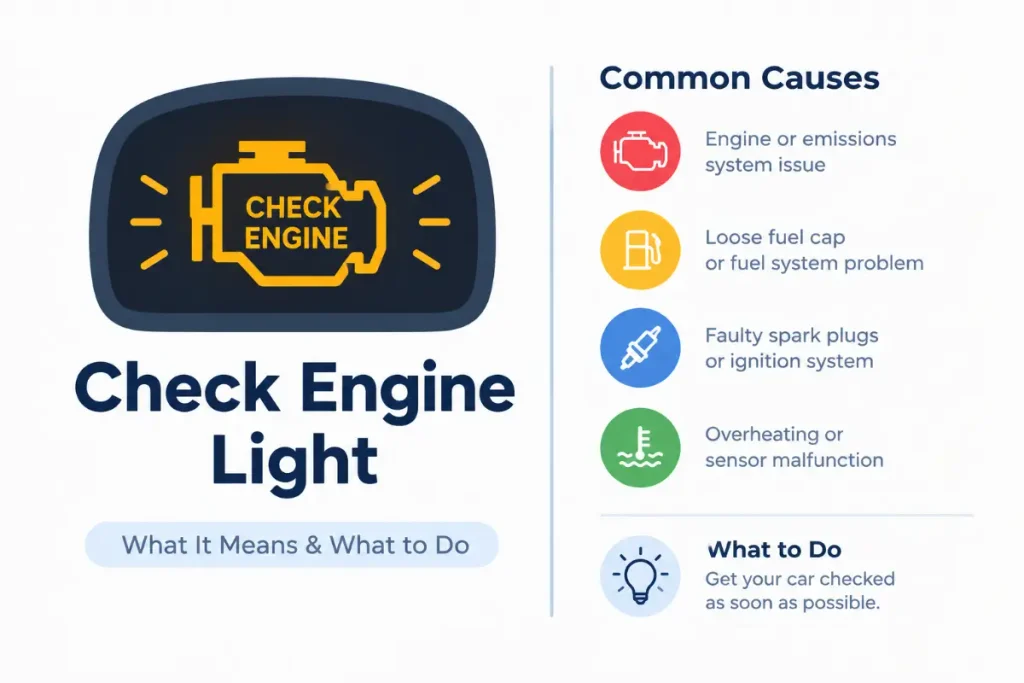
Symbol: An outline of an engine, usually amber or yellow.
The check engine light indicates that the engine control system has detected a problem. The cause may be relatively simple, such as a loose gas cap on a vehicle that uses one, or more serious, such as a faulty oxygen sensor, ignition problem, or emissions system malfunction.
If the light stays on steadily and the engine runs normally, check the gas cap if your vehicle has one and arrange a diagnostic inspection. However, if the light flashes, the engine shakes, or the car loses power, reduce the load on the engine and stop driving when safe. A flashing light often indicates a misfire that can damage the catalytic converter.
You usually need a diagnostic scan to identify the exact cause. The symbol alone cannot tell you which part has failed.
Engine Oil Pressure Warning
Symbol: A red oil can, sometimes with a drop coming from its spout.
The oil pressure warning indicates that the engine may not have enough oil pressure to lubricate its moving parts properly. Low pressure can result from low oil levels, a leak, a failing oil pump, or another mechanical problem.
If this light appears while driving, pull over safely and turn off the engine as soon as possible. Continuing to run the engine with low oil pressure can cause severe damage in a short time.
After the engine is off and the vehicle is parked safely, allow it to cool as needed and check the oil level according to the owner’s manual. Add the specified oil if the level is low, provided there is no obvious serious leak. If the warning remains on, do not continue driving. Arrange professional assistance.
Remember that the oil pressure warning is different from an oil change reminder. One can indicate an urgent lubrication problem, while the other typically signals scheduled maintenance.
Engine Temperature Warning
Symbol: A thermometer over wavy lines, or a temperature gauge in the red zone.
This warning indicates that the engine may be overheating. Possible causes include low coolant, a cooling system leak, a faulty thermostat, a damaged radiator, or a malfunctioning cooling fan.
If the temperature warning appears, turn off the air conditioning and pull over somewhere safe. Switch off the engine if it is overheating, then follow the instructions in your owner’s manual. Do not open a hot radiator or coolant reservoir cap because pressurized coolant can cause severe burns.
Once the engine has cooled, you may be able to check the coolant level if the manual provides a safe procedure. If the coolant is low, a leak is visible, or the warning returns, seek professional help rather than continuing to drive.
Battery or Charging System Light
Symbol: A red battery outline with plus and minus signs.
The battery warning often indicates a problem with the charging system rather than simply a weak battery. Possible causes include a failing alternator, a damaged belt, a wiring fault, or a battery connection problem.
If the light appears while driving, your vehicle may be relying on the remaining battery charge. Eventually, electrical systems can stop working, and the engine may stall.
Turn off unnecessary electrical accessories if it is safe to do so, and head to a safe stopping place or roadside assistance service. Avoid a long drive to a repair shop because the vehicle may lose electrical power before you arrive.
Brake System Warning Light
Symbol: A red circle with an exclamation mark or the letter P inside parentheses.
A red brake warning light may indicate that the parking brake is engaged. If the parking brake is fully released and the light stays on, the vehicle may have low brake fluid or another brake system problem.
First, confirm that the parking brake is completely released. If the warning remains on, check your owner’s manual for the correct next steps. A brake warning accompanied by a soft pedal, reduced braking ability, or unusual noises requires immediate attention.
Do not continue driving if you suspect the brakes are not working properly. Have the vehicle inspected or towed to a repair facility.
Anti Lock Braking System Light
Symbol: The letters ABS inside a circle, often with curved brackets.
The ABS warning indicates a problem with the anti lock braking system. ABS helps prevent the wheels from locking during hard braking, allowing the driver to maintain better steering control.
If the ABS light stays on, conventional braking may still work, but the anti lock function may be unavailable. Drive cautiously and have the system inspected promptly.
If the red brake warning also appears, or you notice a change in braking performance, stop safely and seek assistance. The combination can indicate a more serious braking problem.
Tire Pressure Warning Light
Symbol: A yellow horseshoe shaped outline with an exclamation mark inside.
The tire pressure monitoring system, often called TPMS, warns you when one or more tires have significantly low pressure. Cold weather, a puncture, or a slow leak can trigger the warning.
Check the pressure in all tires with a reliable gauge and inflate them to the recommended cold pressure listed on the driver’s door jamb label. Do not use the maximum pressure printed on the tire sidewall as the normal target.
If a tire looks flat, the car pulls to one side, or you hear unusual noises, stop somewhere safe and inspect the situation. A severely underinflated tire can overheat or fail. If the warning flashes before staying illuminated, some vehicles use that pattern to indicate a TPMS malfunction.
Traction Control Light
Symbol: A car with wavy lines beneath it.
The traction control indicator often flashes when the system detects wheel slip and works to restore traction. You may see it on wet roads, loose gravel, snow, or slippery surfaces.
A flashing light during slippery conditions is generally normal. Reduce acceleration and drive smoothly to help maintain control.
If the light stays on continuously, the system may be switched off or may have a fault. Check the dashboard message and owner’s manual. Traction control and electronic stability control features can improve control, so arrange an inspection if a warning persists unexpectedly.
Airbag Warning Light
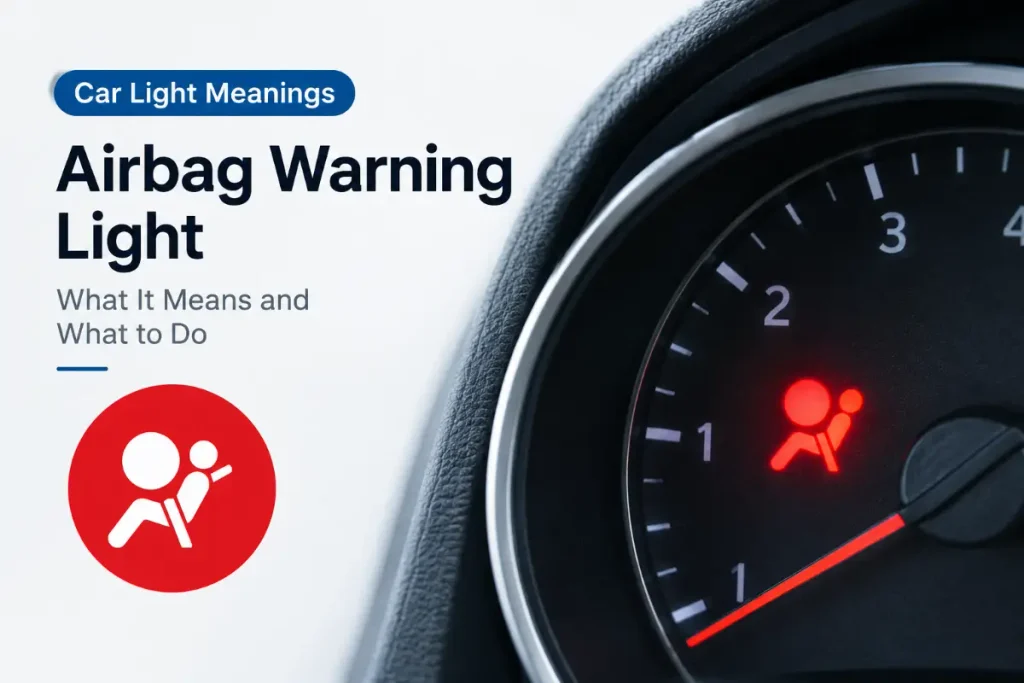
Symbol: A seated person with a circle in front of them.
The airbag warning indicates a potential problem with the supplemental restraint system. This system may include airbags, seat belt pretensioners, sensors, and related electronics.
If the warning remains on after startup, some safety features may not work correctly during a crash. Arrange an inspection as soon as possible.
Do not attempt to repair airbag wiring or components yourself unless you have the required training and follow the manufacturer’s procedures. These systems contain components that can deploy unexpectedly if handled incorrectly.
Seat Belt Reminder
Symbol: A seated person wearing a seat belt.
The seat belt reminder alerts you when the driver or a passenger has not fastened a seat belt. Many vehicles also sound a chime.
Fasten your seat belt before moving the vehicle, and ask passengers to do the same. If the warning continues despite properly fastened belts, a seat occupancy sensor, buckle switch, or related component may need inspection.
Some vehicles also display passenger airbag status indicators. Read the accompanying label carefully because an airbag status light is different from a seat belt reminder.
Low Fuel Warning Light
Symbol: A fuel pump, usually amber or yellow.
The low fuel warning indicates that the fuel level has reached a reserve threshold. The remaining driving distance varies with the vehicle, road conditions, traffic, and driving habits.
Refuel as soon as practical instead of relying on a displayed distance estimate. Running out of fuel can leave you stranded, and repeatedly running a fuel tank very low may place additional strain on certain fuel system components.
If the light appears shortly after refueling, check the fuel gauge and consult the owner’s manual. A faulty fuel level sensor may sometimes cause an inaccurate reading.
Power Steering Warning Light
Symbol: A steering wheel, sometimes with an exclamation mark.
The power steering warning indicates that the steering assistance system may have a problem. Depending on the vehicle, the system may use electric or hydraulic assistance.
If steering becomes unusually heavy, slow down and pull over safely. Avoid continuing to drive if you cannot steer the vehicle reliably.
A warning without noticeable steering changes still deserves attention. Check the manual for your vehicle’s specific instructions and arrange service promptly.
Maintenance Reminder Light
Symbol: Varies by vehicle and may appear as a wrench or service message.
A maintenance reminder usually indicates that scheduled service is due. It may relate to an oil change, routine inspection, or another service interval.
Unlike an oil pressure warning, a routine maintenance reminder does not automatically mean the engine is in immediate danger. However, follow the recommended service schedule to help keep the vehicle reliable.
Always read the full dashboard message because some manufacturers use a wrench symbol for maintenance, while others use it to indicate a powertrain or electronic control problem.
Dashboard Light Meanings for Headlights and Exterior Lights
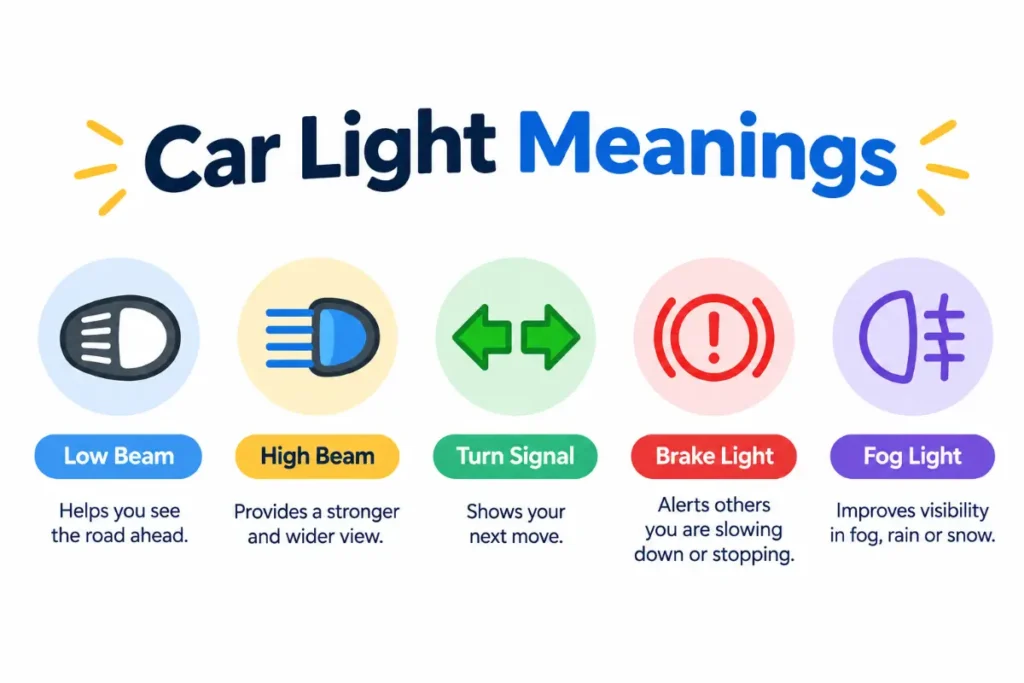
Dashboard indicators do more than warn you about mechanical problems. They also show which exterior lights are operating, helping you see the road and make your intentions clear to other drivers.
Headlight Indicator
The headlight indicator shows that your headlights or a related lighting function is active. The exact symbol varies by vehicle, but it often resembles a headlamp with short lines extending outward.
Some cars display separate indicators for low beams, automatic headlights, and other lighting settings. If your vehicle has automatic headlights, the system may turn them on based on outside light conditions.
Even when the indicator shows that your headlights are active, check that the lights are working correctly. A burned out bulb, electrical fault, or damaged lens can reduce visibility without producing an obvious dashboard warning.
High Beam Indicator
The high beam indicator is usually blue and resembles a headlamp with straight lines extending outward. It tells you that your brighter headlights are switched on.
High beams help you see farther on dark roads with little traffic. However, they can temporarily blind approaching drivers or drivers ahead of you. Switch to low beams when approaching oncoming traffic and when following another vehicle closely.
If your car has automatic high beams, confirm that the system responds appropriately to traffic and road conditions. You remain responsible for using headlights safely.
Turn Signal Indicator
Green arrows on the dashboard show that the left or right turn signal is operating. The arrows usually flash in time with the exterior signal lights.
If an indicator flashes faster than usual, a turn signal bulb may have failed, although some vehicles use different signaling behavior with LED lighting or electronic faults. Check the exterior lights when safe and replace or repair faulty components promptly.
Turn signals help other drivers anticipate your actions. Activate them before turning or changing lanes, and cancel them after completing the maneuver if your vehicle does not do so automatically.
Fog Light Indicator
Fog light indicators show that the front or rear fog lights are active. Their symbols often resemble a headlamp with horizontal lines and a wavy mark.
Front fog lights can improve visibility close to the road in fog or other conditions that reduce visibility. Rear fog lights, where fitted, make your vehicle easier to see from behind in dense fog.
Use these lights only in appropriate conditions. Rear fog lights can be excessively bright in clear weather and may distract drivers behind you.
Daytime Running Lights
Daytime running lights, or DRLs, help other drivers notice your vehicle during daylight. They often switch on automatically when the engine starts or the vehicle enters its ready state.
DRLs are not necessarily a replacement for full headlights at night. On some vehicles, the rear lights may not illuminate when only the daytime running lights are active.
When visibility drops, switch on the proper headlights rather than relying on daytime running lights alone. This helps other drivers see both the front and rear of your vehicle.
Other Dashboard Indicators You Should Know
Modern vehicles include many additional indicators for driver assistance, comfort features, and specialized equipment. Understanding them helps you distinguish normal operation from a problem.
Cruise Control Indicator
A green or white cruise control symbol generally indicates that cruise control is active or ready to use. The exact color and meaning depend on the vehicle.
If the indicator shows that cruise control is set, your car may maintain the selected speed without continuous accelerator input. Adaptive cruise control may also adjust speed to maintain a gap from the vehicle ahead.
Remain attentive while using either system. Cruise control does not replace safe driving or eliminate the need to brake when conditions change.
Lane Departure Warning Indicator
A lane departure warning symbol may show lane markings around a vehicle. Depending on the system, it can indicate that lane assistance is active, unavailable, or warning you about drifting.
Some systems use a flashing indicator or steering wheel vibration when the car approaches a lane boundary without a turn signal. Others provide steering assistance to help keep the vehicle within its lane.
Road markings, weather, and camera visibility can affect performance. Keep your attention on the road and follow the dashboard message if the system becomes unavailable.
Blind Spot Monitoring Indicator
Blind spot monitoring often uses small warning lights in the side mirrors or near the dashboard. These indicators alert you when a vehicle enters an area that may be difficult to see in your mirrors.
Some systems flash or sound an alert if you activate a turn signal while another vehicle occupies the monitored area. However, the system may not detect every vehicle, cyclist, or fast approaching road user.
Always check your mirrors and blind spots before changing lanes. Treat the warning as extra assistance rather than a replacement for looking around.
Low Washer Fluid Warning
This indicator often resembles a windshield with spray marks. It tells you that the windshield washer fluid level is low.
Refill the reservoir with suitable washer fluid to help maintain a clear windshield. In cold climates, use a product rated for the expected temperatures to reduce the risk of freezing.
If the light remains on after refilling, the level sensor or wiring may need inspection.
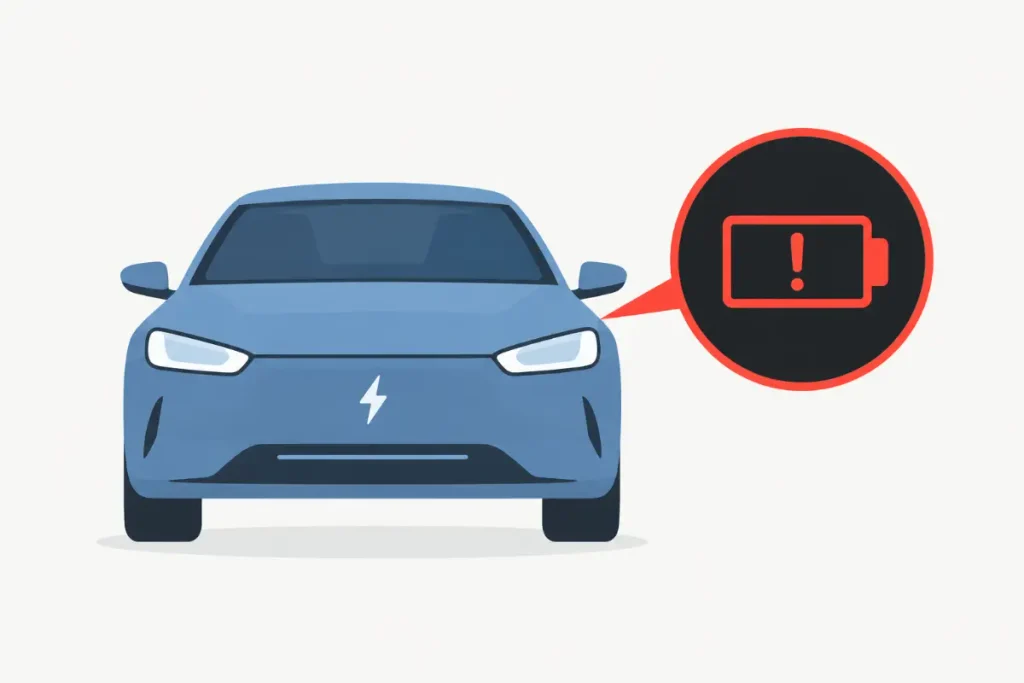
Electric Vehicle Battery Warning
Electric vehicles and hybrids may display several battery related indicators. Some show the remaining charge, while others warn about a fault in the high voltage battery or electrical system.
A low state of charge generally means you should plan to recharge or refuel, depending on the vehicle. A red high voltage system warning, unusual heat, smoke, or an accompanying stop message requires a more cautious response.
Follow the manufacturer’s instructions and avoid touching orange high voltage cables or damaged electrical components. If you suspect a battery safety issue, move away from the vehicle when necessary and contact emergency services or qualified assistance.
What to Do When a Dashboard Warning Light Appears
Knowing what a symbol means is only the first step. You also need to decide how to respond. The right action depends on the warning, the vehicle’s behavior, and any message displayed alongside the light.
1. Check the color and symbol. Red warnings often require immediate attention, while amber warnings usually indicate a fault or caution. Identify the exact symbol instead of relying on color alone.
2. Read the dashboard message. Some vehicles explain the problem in plain language. Messages such as “Engine Overheated” or “Low Oil Pressure” provide more specific guidance than a symbol by itself.
3. Pay attention to how the car behaves. Smoke, unusual noises, burning smells, loss of power, overheating, or changes in braking or steering can indicate a serious problem.
4. Stop safely when necessary. If the warning indicates low oil pressure, overheating, or a serious brake problem, pull over as soon as you can do so safely. Turn off the engine when the warning requires it.
5. Consult the owner’s manual. Manufacturers may use similar symbols for different functions. Your manual provides the instructions that apply to your specific make and model.
6. Arrange a professional inspection. If a warning persists, returns repeatedly, or indicates a system fault, have the vehicle checked. A diagnostic scan may help identify the underlying cause.
Never assume that a warning is harmless simply because the vehicle still drives normally. Some mechanical problems develop before you notice obvious changes in performance.
Frequently Asked Questions
What do the different car dashboard light colors mean?
Red generally signals a serious warning, while yellow or amber usually indicates a fault or caution. Green and blue commonly show that a feature is active. However, the exact meaning depends on the symbol and your vehicle’s design.
Which dashboard warning lights mean you should stop driving?
Warnings for low engine oil pressure, engine overheating, and serious brake system problems can require you to stop immediately when it is safe. Flashing check engine lights accompanied by rough running or loss of power also require prompt action. Follow the owner’s manual and pull over safely when the warning indicates a serious problem.
What does a yellow engine light mean?
A yellow check engine light means the engine control system has detected a problem. It may involve the emissions system, sensors, ignition, or another component. A steady light often allows cautious travel to a repair shop if the car runs normally, but a flashing light can indicate a more urgent engine problem.
Why do dashboard lights turn on when I start my car?
Many dashboard lights briefly illuminate when you start the engine because the vehicle checks its warning systems. They should usually turn off after the system completes its startup checks. If a warning remains illuminated or appears while driving, consult the owner’s manual to determine what it means.
What does a flashing tire pressure light mean?
On many vehicles, a tire pressure light that flashes for a short time and then stays on indicates a problem with the tire pressure monitoring system. A steady light commonly indicates low tire pressure. Check your vehicle’s manual because the warning pattern varies by manufacturer.
How can I identify an unfamiliar dashboard symbol?
Check the owner’s manual first because it identifies the symbols used in your vehicle. You can also consult the manufacturer’s official vehicle information or ask a qualified mechanic. If the symbol appears with a serious warning message, unusual vehicle behavior, or a red indicator, prioritize safety before continuing to drive.
Conclusion
Understanding car light meanings helps you recognize the difference between normal vehicle operation, routine maintenance reminders, and potentially dangerous mechanical problems. Green and blue indicators commonly show that a feature is active, while amber and red warnings can signal issues that need attention. However, the symbol itself and your vehicle’s instructions should always guide your response.
When a warning appears, identify the symbol, read any accompanying message, and pay attention to changes in vehicle performance. Stop safely if the warning indicates a serious problem, and arrange an inspection when needed. By learning these dashboard signals and checking your owner’s manual, you can make informed decisions, protect your vehicle, and drive with greater confidence.