If you have ever typed blankie or blanky into a search engine, chances are you were trying to figure out which spelling is correct. You may have seen parents use one version on social media, online stores sell products using another, and discussions on Reddit use both. That makes the answer feel more confusing than it needs to be.
The good news is that both spellings are accepted in everyday English. They refer to the same thing, a small blanket that often brings comfort to babies, toddlers, and even some adults. The difference comes down to spelling preference, branding, and personal habit rather than meaning.
This guide explains the difference in simple language. You will learn which spelling appears more often, how dictionaries and native speakers use each one, where the words came from, how to pronounce them correctly, and when one spelling may fit your audience better than the other. Along the way, you will also see practical examples, expert writing tips, and common mistakes to avoid.
Quick Definition
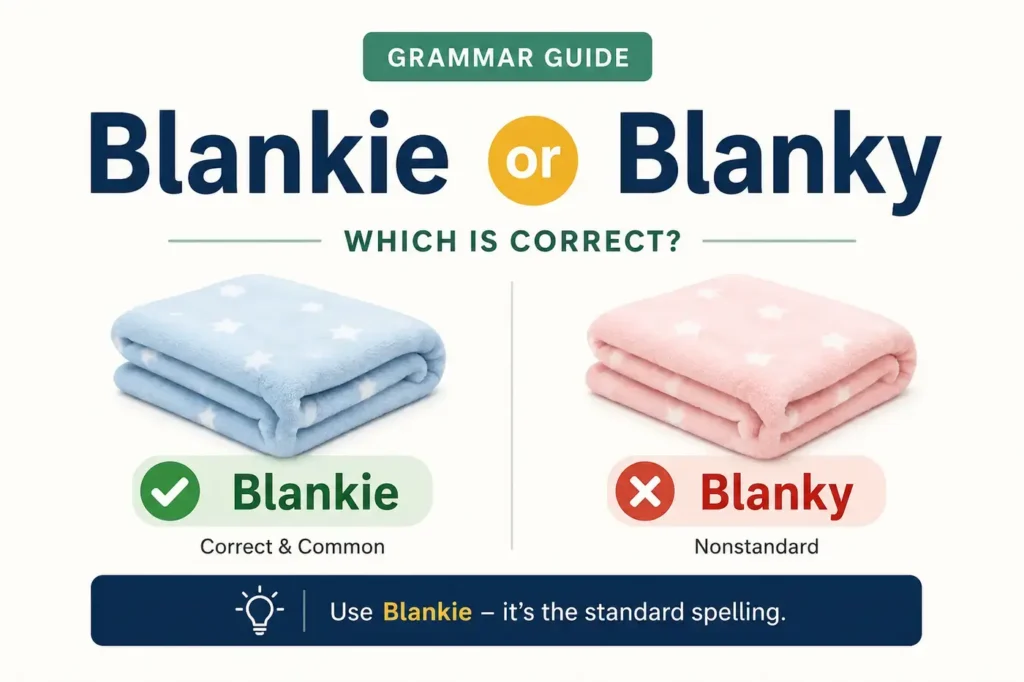
Both blankie and blanky are informal words for a small blanket, usually one that provides comfort or emotional security. While blankie is the more common spelling in modern English, especially in parenting communities and product names, blanky is also used by some families and writers. The meaning stays exactly the same.
Quick Answer
If you only need a quick answer, here it is.
- Blankie is the spelling most people recognize today.
- Blanky is less common but still considered acceptable in informal writing.
- Both words describe a comforting blanket, often given to babies or young children.
- Neither spelling changes the meaning of the word.
- Choose one spelling and use it consistently throughout your writing.
If your audience is mainly parents, caregivers, or general readers, blankie will usually feel more familiar.
Just as pet names can have nonstandard spellings, understanding the difference between brite and bright can help you choose the correct form in everyday writing.
Comparison Table
| Feature | Blankie | Blanky |
|---|---|---|
| Part of speech | Noun | Noun |
| Meaning | A small comforting blanket | A small comforting blanket |
| Origin | Informal form of blanket | Informal form of blanket |
| Correct form | Widely accepted informal spelling | Accepted informal variant |
| Formality | Informal | Informal |
| Common contexts | Parenting, family conversations, baby products | Family conversations, personal use |
| Usage frequency | More common | Less common |
| Pronunciation | Same as blanky | Same as blankie |
| Example | The baby would not sleep without her blankie. | He carried his blanky everywhere. |
Understanding The Two Spellings
Although these words look slightly different, they describe the same object. Both developed as affectionate nicknames for a blanket, much like words such as doggie, kitty, or tummy became everyday terms through family conversations.
The biggest difference is popularity. Over time, blankie became the spelling that appears more often in parenting blogs, children’s books, online discussions, and product descriptions. Blanky continues to appear, but it is much less common in published writing.
That does not mean one word is wrong. Language changes naturally, and affectionate family words often develop more than one accepted spelling.
What Does Blankie Mean
A blankie is a small blanket that provides comfort, warmth, or emotional reassurance. Parents often give one to babies and toddlers, who may carry it during naps, bedtime, travel, or unfamiliar situations.
For many children, a favorite blanket becomes much more than ordinary bedding. It becomes a source of comfort during stressful moments and helps them feel safe while adjusting to new experiences.
You will commonly see this spelling in situations like these.
- Parenting blogs discussing sleep routines.
- Baby product descriptions.
- Children’s books.
- Online parenting forums.
- Social media posts shared by families.
The word is closely connected with the idea of a security blanket, a familiar object that helps children feel calm and secure.
What Does Blanky Mean
Blanky has the same definition as blankie. It simply represents a different spelling preference that some families have used for generations.
Many adults continue using the spelling they grew up hearing at home. Since these words developed through spoken language instead of formal grammar rules, it is not surprising that multiple spellings exist.
You may still find blanky in places such as:
- Personal blogs.
- Family stories.
- Social media posts.
- Handmade gift listings.
- Everyday conversations.
Although it appears less often than blankie, native English speakers immediately understand its meaning.
Key Differences Between The Two Spellings
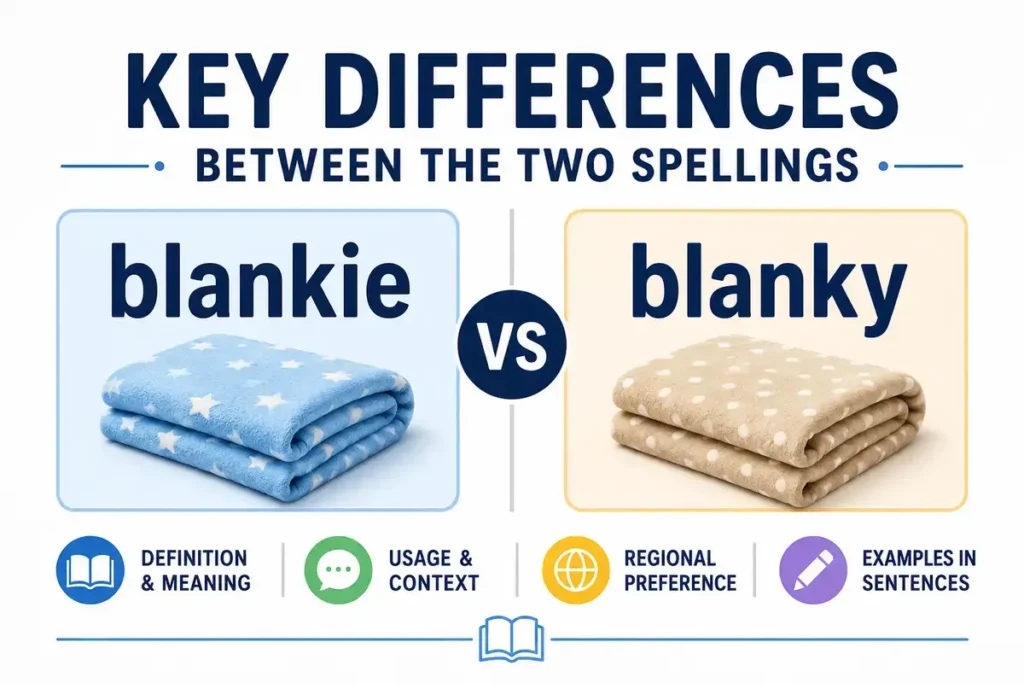
Since both words refer to the same comforting blanket, the differences are surprisingly small. Most people choose one spelling based on familiarity rather than grammar.
Here are the main distinctions.
| Feature | Blankie | Blanky |
|---|---|---|
| Meaning | Same | Same |
| Pronunciation | Same | Same |
| Grammar | Same | Same |
| Formality | Informal | Informal |
| Popularity | Higher | Lower |
| Common online usage | More frequent | Less frequent |
A simple way to think about it is this.
- Blankie is the spelling you are most likely to see in parenting articles, online stores, and discussions.
- Blanky feels more personal because it often reflects family tradition or individual preference.
- Both words sound identical when spoken.
Which Spelling Should You Use
Since both spellings are understood, the better choice depends on your audience rather than strict grammar rules.
If you are writing for a broad audience, blankie is usually the safer option because it appears more frequently in published content. Readers are more likely to recognize it immediately, which helps your writing feel natural and familiar.
You may still choose blanky if it reflects the language used by your family, your brand, or your intended audience. In creative writing, dialogue, and personal stories, authenticity often matters more than following the most common spelling.
A good editing habit is to stay consistent.
- Pick one spelling before you begin writing.
- Use the same spelling throughout the article or document.
- Avoid switching between the two forms unless you are explaining the difference.
Consistency helps readers focus on your message instead of noticing changes in spelling.
Pronunciation Guide
One reason people are surprised to learn both spellings are acceptable is that they sound exactly alike.
Blankie
IPA pronunciation.
/ˈblæŋki/
Syllable breakdown.
Blan kie
Blanky
IPA pronunciation.
/ˈblæŋki/
Syllable breakdown.
Blan ky
The ending is pronounced the same in everyday speech, so native speakers usually cannot tell which spelling someone prefers without seeing it written.
When saying either word aloud, place the stress on the first syllable. The second syllable is short and unstressed, creating the familiar sound many parents naturally use when speaking with young children.
Expert Language Insight
Words such as blankie, doggie, kitty, and tummy belong to a group of affectionate everyday expressions that developed naturally through family speech. Because they were passed from one generation to another in conversation rather than through formal writing, alternative spellings are common.
Professional editors generally recommend using the spelling your audience expects. For parenting articles, baby products, and educational content, blankie is often the preferred choice because it appears more frequently in published material. In personal writing, however, there is nothing unusual about using blanky if that is the form your family has always used.
The important point is not deciding which spelling sounds better. It is choosing one version and using it consistently so your writing feels polished and easy to read.
Examples Using Both Spellings
Seeing words in context is one of the easiest ways to understand how they are used. Since both spellings have the same meaning, the examples below focus on natural, everyday situations instead of forcing one version over the other.
Blankie Examples
The spelling blankie appears more often in parenting articles, baby product descriptions, and online conversations.
- Emma refuses to sleep without her favorite blankie.
- The toddler carried his blankie everywhere he went.
- Grandma knitted a soft blankie for the new baby.
- We packed the blankie before leaving for our road trip.
- The daycare teacher found the child’s missing blankie.
- My niece hugs her blankie whenever she feels tired.
- The old blankie has been washed so many times that it feels extra soft.
- Every bedtime story ends with a warm blanket and a cozy blankie.
- The baby smiled as soon as she found her blankie in the crib.
- Even after starting school, he still kept his blankie on his bed.
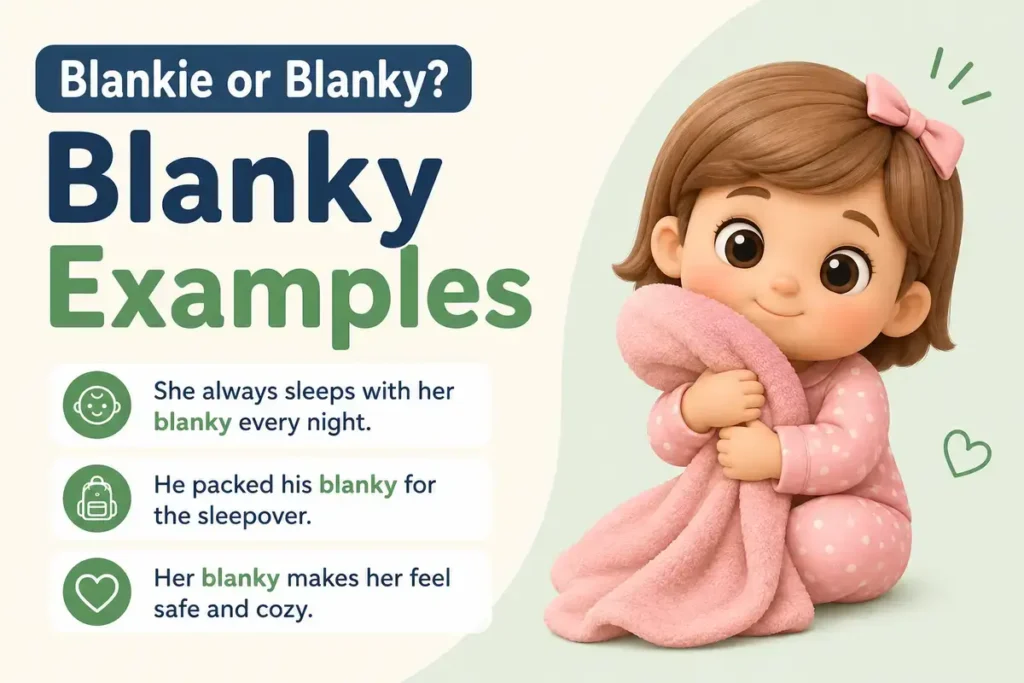
Blanky Examples
Although blanky is less common, many families still use it naturally in conversation.
- Lily never leaves home without her blanky.
- Dad found the blanky under the couch.
- The puppy curled up beside the child’s blanky.
- She asked for her blanky before taking a nap.
- His favorite blanky has a small blue star pattern.
- The old blanky has been part of the family for years.
- We almost forgot to pack the blanky for vacation.
- My cousin still laughs about the blanky she loved as a child.
- The little boy reached for his blanky when he heard thunder.
- The handmade blanky became a treasured family keepsake.
These examples show that the spelling changes, but the meaning and tone remain the same.
If you enjoy learning about confusing word pairs, you’ll also find common spelling mix-ups like nosey and nosy useful for improving your writing.
Common Mistakes People Make
Most confusion comes from searching for a single correct spelling. Since both forms exist, people often assume one must be wrong. In reality, the choice is much more flexible.
Here are the mistakes people make most often.
Assuming Only One Spelling Is Correct
Many writers believe blankie is the only acceptable form because it appears more often online.
That is not true.
Blanky is also used by native speakers, especially in personal and family settings.
Mixing Both Spellings
Switching between spellings in the same article can distract readers.
A better approach is simple.
- Decide which spelling matches your audience.
- Use that spelling throughout the article.
- Mention the alternative only when explaining the difference.
Treating The Word As Formal English
Both words are informal.
In professional writing, medical documents, or academic papers, writers usually use blanket or security blanket instead of either nickname.
Assuming The Word Is Only For Babies
Although babies and toddlers use comfort blankets most often, older children and even adults may keep a favorite blanket because it carries emotional value or childhood memories.
The word describes the object, not the age of the person using it.
Etymology And Word Origin
The words blankie and blanky both come from blanket, a word that entered English centuries ago through Old French.
As families began creating affectionate names for familiar objects, blanket naturally became blankie and blanky in everyday speech. This pattern appears throughout English.
Examples include:
- Dog becomes doggie.
- Cat becomes kitty.
- Horse becomes horsey.
- Belly becomes tummy.
- Blanket becomes blankie.
These forms are examples of affectionate or diminutive words. They create a warmer, friendlier tone and are especially common when adults speak with young children.
Unlike formal vocabulary, affectionate family words rarely follow strict spelling rules. That is one reason both blankie and blanky continue to exist today.
Regional Usage
Unlike spelling differences such as color and colour, there is no official regional rule for these words.
Instead, usage depends more on family tradition, popular culture, and personal preference.
American English
In the United States, blankie appears far more often in parenting websites, online stores, children’s books, and discussions among parents.
The term is commonly used when talking about a baby’s favorite comfort blanket or bedtime routine.
British English
British English does not rely on either nickname as frequently. Many people simply say blanket or comfort blanket.
When an affectionate nickname is used, both spellings can appear, although blankie is generally easier to find in published content.
Australian English
Australian families also use affectionate words with children, but blankie appears more often than blanky in online parenting communities.
Many parents simply use the nickname that feels natural within their family.
Canadian English
Canadian English follows a similar pattern.
Because Canadian media includes influences from both American and British English, you may encounter either spelling. Even so, blankie tends to appear more often in parenting articles and product listings.
Across all English speaking countries, the meaning stays exactly the same.
Grammar Rules
Although these words are informal, they still follow standard English grammar.
Part Of Speech
Both blankie and blanky are nouns.
Examples include:
- The blankie is on the bed.
- His blanky needs washing.
Singular And Plural Forms
The regular plural forms are:
- Blankies.
- Blankys.
In practice, blankies appears much more often because the singular spelling is also more common.
Examples include:
- The store sells handmade blankies.
- Several children brought their favorite comfort blankets to daycare.
Possessive Forms
Both spellings form possessives in the usual way.
Examples include:
- The blankie’s corner is worn from years of use.
- The blanky’s fabric feels incredibly soft.
Common Sentence Patterns
These words naturally appear with expressions such as:
- Favorite blankie.
- Baby blankie.
- Soft blanket.
- Security blanket.
- Bedtime routine.
- Comfort item.
These combinations sound natural because they reflect how parents and caregivers actually speak.
Real Life Usage
The word is closely connected with childhood comfort, but it also appears in many other situations.
Daily Conversation
Parents often use affectionate language at home.
Examples include:
- Do not forget your blankie before we leave.
- Is your favorite blanket in the car?
- She cannot sleep without her comfort blanket.
Blankie For Baby
Many new parents search for the perfect comfort blanket before their baby’s first birthday.
A soft, washable blanket often becomes part of the bedtime routine and helps children feel secure during naps, travel, or unfamiliar situations. That emotional connection explains why many families keep these blankets for years.
Security Blanket
A security blanket is more than ordinary bedding. It is a familiar object that helps children manage stress, separation, or new experiences.
Child development experts often describe these comfort objects as a normal part of emotional growth. Many children naturally outgrow the habit as they become more independent.
Blankie Reddit Discussions
Reddit conversations show that many adults still remember their childhood comfort blankets with surprising detail.
People often share stories about favorite colors, family traditions, and the memories attached to a well loved blanket. These discussions highlight that the emotional meaning usually matters much more than the spelling.
Blankie Yarn
Crafters frequently search for blankie yarn when making soft baby blankets or handmade gifts.
These yarns are designed to feel gentle against sensitive skin and are commonly used for baby blankets, nursery gifts, and keepsake projects. Many handmade creations become treasured family memories that last for years.
The popularity of handmade blankets also explains why the word appears regularly in crafting communities, knitting groups, and crochet tutorials.
Similar spelling questions arise with plural nouns too, such as why journeys is the correct spelling and why the alternative form is considered incorrect.
Related Words And Commonly Confused Terms
People searching for this topic often come across several similar words. Some describe the same object, while others have a slightly different meaning. Knowing the difference helps you choose the most natural word for your audience.
Here are some closely related terms.
| Word | Meaning | Common Use |
|---|---|---|
| Blanket | A general covering used for warmth | Everyday and formal writing |
| Comfort blanket | A blanket that provides emotional comfort | Parenting and child development |
| Security blanket | A comfort object that helps a child feel safe | Psychology and parenting |
| Baby blanket | A blanket designed for infants | Parenting and baby products |
| Lovey | A small comfort item, often a blanket with a stuffed animal attached | Parenting |
| Swaddle blanket | A blanket used to wrap newborn babies | Infant care |
| Throw blanket | A decorative blanket for home use | Home décor |
These terms are not interchangeable in every situation. For example, a swaddle blanket has a specific purpose during infancy, while a security blanket refers to the emotional role the blanket plays rather than its size or design.
Expert Language Insight
As an editor, the first question is never which spelling looks nicer. The real question is which version your readers are most likely to expect.
In published parenting content, blankie is usually the better choice because it appears more often in books, blogs, baby product descriptions, and online discussions. That familiarity helps readers recognize the word immediately without stopping to think about the spelling.
At the same time, blanky is not incorrect. It survives because family language is deeply personal. Many affectionate words develop naturally inside households, and those spellings often stay with people into adulthood. That is why you may see one family use blankie while another has always said blanky.
When editing an article, consistency matters much more than personal preference.
Keep these guidelines in mind.
- Use blankie if you are writing for a broad audience.
- Use blanky if it reflects your family’s language or your brand voice.
- Do not switch between the two spellings unless you are explaining the difference.
- If you are writing in a formal or academic setting, use blanket or security blanket instead of either nickname.
Following these simple practices makes your writing clearer, more consistent, and easier for readers to trust.
Frequently Asked Questions
How do you spell blankie?
The most common spelling is blankie, especially in parenting articles, online stores, and baby product descriptions. Blanky is also an accepted informal spelling, but it appears less often in published writing.
Is blankie a real word?
Yes. Although it is informal, blankie is a real English word used to describe a small comfort blanket. It is especially common when talking about babies, toddlers, and childhood bedtime routines.
Is blanky wrong?
No. Blanky is not wrong. It is simply a less common spelling of the same affectionate word. Many families continue to use it because that is how they have always said and written it.
What is the difference between a blankie and a security blanket?
A blankie usually refers to the blanket itself, while a security blanket describes the emotional role it plays. A favorite blanket becomes a security blanket when it helps a child feel calm, safe, or comforted during stressful situations.
Why do children become attached to a comfort blanket?
Many children develop emotional attachments to familiar objects during early childhood. A favorite blanket provides comfort during naps, bedtime, travel, or changes in routine. Child development specialists generally consider this a normal stage of emotional growth.
Do adults still keep their childhood blankets?
Yes. Some adults keep a childhood blanket because of its sentimental value rather than using it for comfort. It often becomes a treasured family keepsake that reminds them of childhood memories and loved ones.
Why do people search for blankie on Reddit?
Reddit discussions often focus on personal experiences instead of dictionary definitions. People share childhood memories, ask about favorite comfort blankets, compare family traditions, and discuss the emotional connection many children develop with these special blankets.
What is blankie yarn used for?
Blankie yarn is a soft yarn commonly used for knitting or crocheting baby blankets, comfort blankets, and nursery gifts. It is designed to feel gentle against delicate skin while creating warm and cozy handmade blankets.
Conclusion
Choosing between blankie and blanky is much simpler than it first appears. Both spellings describe the same comforting blanket, and both are understood by native English speakers. The biggest difference is usage. Blankie appears more often in modern parenting content, product descriptions, and online discussions, while blanky continues to be used by many families as a familiar nickname.
Neither spelling changes the meaning, pronunciation, or emotional connection behind the word. Instead of searching for a single correct answer, think about your audience and the style of writing you want to create. If you are writing for a broad audience, blankie will usually feel more familiar. If blanky is part of your family’s tradition or matches your brand voice, it is still a perfectly natural choice.
No matter which spelling you prefer, the word represents something far more meaningful than a simple blanket. For many children, it becomes a trusted companion that offers comfort, reassurance, and a sense of security during everyday life. That emotional connection is what has kept both spellings alive for generations.