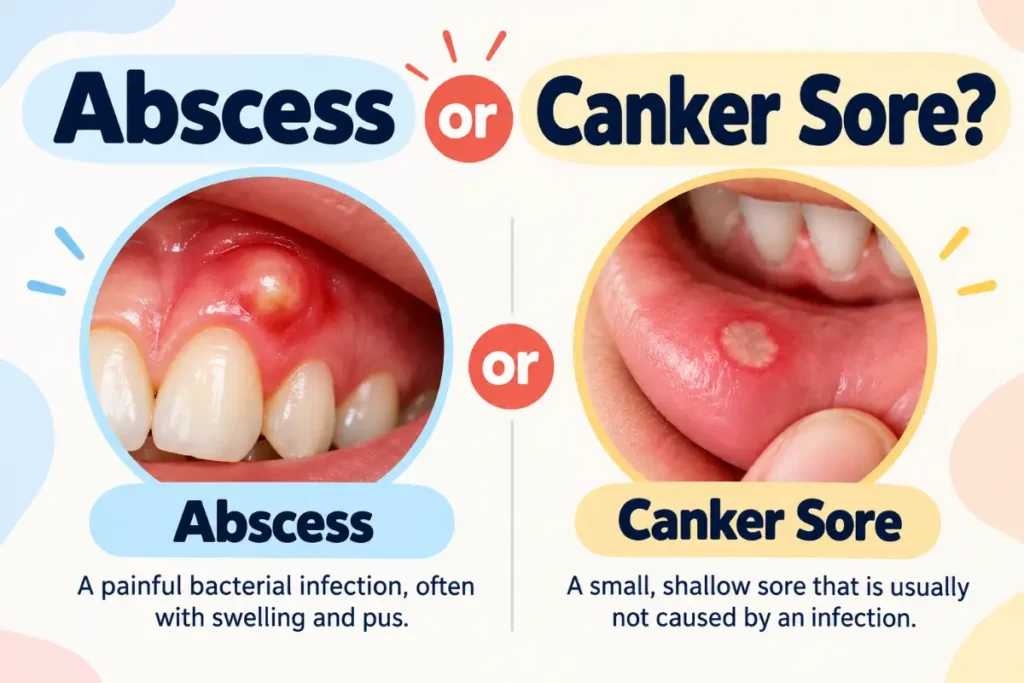
An abscess and a canker sore can both cause pain inside or around the mouth, but they are not the same condition. An abscess is a pocket of pus caused by an infection. A canker sore is a small, shallow ulcer that develops on the soft tissues inside the mouth. The two can look similar at first, especially when a painful spot appears on the gums, cheek, or tongue. However, their causes, symptoms, treatments, and risks are quite different.
The most important distinction is that a dental or gum abscess involves an infection that may spread if left untreated, while a typical canker sore is not contagious and usually heals on its own. Location also matters. A painful bump near a tooth may point to an abscess, while a round sore with a pale center and red border on the inner cheek or lip is more consistent with a canker sore.
This guide explains how to tell them apart, what causes each condition, which treatments can help, and when mouth pain needs prompt dental or medical care.
Quick Answer
An abscess is a pocket of pus caused by a bacterial infection, often near a tooth or in the gums. A canker sore is a small, noncontagious ulcer inside the mouth. Abscesses usually need professional dental treatment, while canker sores generally heal on their own within one to two weeks.
What an Abscess Means
An abscess is a collection of pus that forms when the body responds to an infection. Pus contains bacteria, damaged cells, immune cells, and fluid. In the mouth, an abscess often develops in the tissues around a tooth or near its root. It can also form in the gums or other nearby areas.
A dental abscess usually develops when bacteria enter a tooth or the surrounding gum tissue. The infection can create pressure as pus collects in the affected area. This pressure often causes pain, swelling, and tenderness. Unlike a canker sore, an abscess is an infection that needs professional attention.
Common Types of Dental Abscesses
Dentists generally describe dental abscesses according to where the infection starts. The location helps determine the cause and the treatment.
1. Periapical abscess. This type forms near the tip of a tooth’s root. It often develops after bacteria enter the inner part of the tooth through deep decay, a crack, or an injury. The infection can spread from the tooth’s pulp toward the surrounding bone.
2. Periodontal abscess. This type develops in the gum tissue around a tooth. Gum disease, trapped food, or bacteria in a deep gum pocket can contribute to the infection. The gum may become swollen and painful, sometimes forming a raised bump.
3. Gingival abscess. This type affects the gum tissue itself. It may develop when a foreign object, such as a small piece of food, becomes trapped in the gum and causes an infection.
A gum abscess may look like a small pimple or boil. Sometimes, it develops an opening through which pus drains. However, drainage does not mean the infection has disappeared. The source of the infection still needs dental treatment.

What Does an Abscess Look Like
A dental abscess may appear as a red, swollen bump on the gum near a tooth. It can look like a pimple, blister, or small boil. The area may feel tender when you touch it with your tongue, and the nearby gum may look inflamed.
However, not every abscess creates a visible bump. An infection near a tooth root can develop beneath the gum or inside the jawbone. You may notice a deep toothache or pressure before you see anything unusual in your mouth. Therefore, the absence of a visible lump does not rule out an abscess.
Other signs can include:
- A swollen area near a tooth.
- Persistent or throbbing tooth pain.
- Pain when biting or chewing.
- Sensitivity to hot or cold food and drinks.
- A bad taste caused by draining pus.
- Unpleasant breath.
- Swelling in the cheek or jaw.
- Fever or swollen lymph nodes.
An abscess can also cause a tooth to feel loose or raised when you bite down. These symptoms deserve attention, particularly when they appear together.
What a Canker Sore Means
A canker sore is a small, shallow ulcer that develops on the soft tissues inside the mouth. Its medical name is an aphthous ulcer. It commonly appears on the inner cheeks, inner lips, tongue, or soft palate. Some sores also develop near the base of the gums.
Most canker sores have a white, yellow, or grayish center surrounded by a red border. They may look like tiny craters or round open spots. Even though they are usually small, they can hurt quite a bit, especially when you eat, drink, brush your teeth, or talk.
Unlike a dental abscess, a typical canker sore is not a pocket of pus. It is not caused by a bacterial infection, and it cannot spread from one person to another. Most minor canker sores heal without treatment in about one to two weeks.
Types of Canker Sores
Canker sores generally fall into three categories. Their size, number, pain level, and healing time can vary.
1. Minor canker sores. These are the most common type. They are usually small, shallow, and less than a centimeter wide. Most heal within one to two weeks without leaving scars.
2. Major canker sores. These sores are larger and deeper. They can cause significant pain and may take several weeks or longer to heal. Some may leave scars.
3. Herpetiform canker sores. Despite the name, these sores are not caused by the herpes virus. They appear as clusters of many tiny ulcers that may join together into a larger sore. They are less common than minor canker sores.
The name of the third type can cause confusion because it sounds related to herpes. However, herpetiform canker sores and herpes related cold sores are different conditions.
What Does a Canker Sore Look Like
A typical canker sore looks like a round or oval ulcer with a pale center and a red outer edge. It usually forms on the soft tissue inside the mouth rather than on the outer surface of the lips. You may feel burning or tingling before the sore becomes visible.
Canker sores can appear alone or in small groups. They often develop in places that move or rub against food and teeth, which explains why eating can make them uncomfortable. Sour foods, spicy meals, and rough snacks may irritate the open area.
Common signs include:
- A small white, yellow, or gray sore.
- A red border around the sore.
- Burning or tingling before it appears.
- Pain when eating or drinking.
- Discomfort while brushing or talking.
- One sore or several small ulcers.
- No pus filled gum bump or tooth infection.
A canker sore usually does not cause facial swelling, fever, or a persistent throbbing toothache. If you have those symptoms, do not assume that the problem is an ordinary mouth ulcer.
Abscess or Canker Sore Comparison
The easiest way to understand the difference is to compare the cause, appearance, location, symptoms, and treatment. Both conditions can cause mouth pain, but they behave differently.
| Feature | Abscess | Canker sore |
|---|---|---|
| What it is | A pocket of pus caused by infection | A shallow ulcer inside the mouth |
| Main cause | Bacterial infection | Inflammation and irritation with several possible triggers |
| Typical appearance | Red swollen bump or gum boil | Round ulcer with a pale center and red border |
| Common location | Near a tooth root or in gum tissue | Inner cheeks, lips, tongue, or soft palate |
| Pain | Often throbbing, deep, or pressure related | Often stinging or burning when touched |
| Tooth sensitivity | Common with a tooth abscess | Not a typical feature |
| Pus | May collect or drain | Does not contain a pocket of pus |
| Fever | Possible, especially with spreading infection | Not typical |
| Contagious | The abscess itself is not spread through casual contact | Not contagious |
| Healing | Needs professional treatment | Usually heals on its own |
| Typical recovery | Depends on dental treatment and infection | Minor sores usually heal in one to two weeks |
| Main treatment | Dental drainage and treatment of the source | Pain relief and protection while healing |
The most useful clue is the type of pain. A deep, throbbing ache around a tooth, especially with swelling, can point to an abscess. A small open sore that stings when food touches it is more consistent with a canker sore. Still, appearance alone cannot confirm a diagnosis.
The Main Differences Explained
Cause and Development
An abscess develops because bacteria infect tissue. For example, bacteria may enter a tooth through a deep cavity or crack and reach the pulp inside. They can also collect in a deep gum pocket. As the body responds to the infection, pus may build up and create a painful swollen area.
A canker sore develops differently. It is an ulcer in the lining of the mouth, and experts do not identify one single cause for every case. Minor injuries, irritation, stress, certain foods, family tendency, and nutritional deficiencies may contribute. Some people develop them repeatedly without finding one clear trigger.
Location
Location is one of the most helpful clues when comparing these conditions. An abscess often appears near a tooth or along the gumline. The infection may also sit deeper beneath the gum, so the painful area may not be easy to see.
A canker sore usually appears on soft, movable tissue. Common places include the inside of the cheeks and lips, the tongue, and the soft palate. It can also occur near the base of the gums. A sore on the outer lip is less typical of a canker sore and may have another cause.
Type of Pain
An abscess can cause intense, constant, or throbbing pain. The pain may spread toward the jaw, ear, cheek, or neck. Biting down can make it worse, and hot or cold temperatures may trigger discomfort if the tooth is involved.
A canker sore usually causes localized pain at the surface of the mouth. It may burn when you eat acidic food or rub the sore with your tongue. The pain can be sharp, but it usually does not feel like a deep toothache. This difference can help you describe your symptoms to a dentist.
Swelling and Other Symptoms
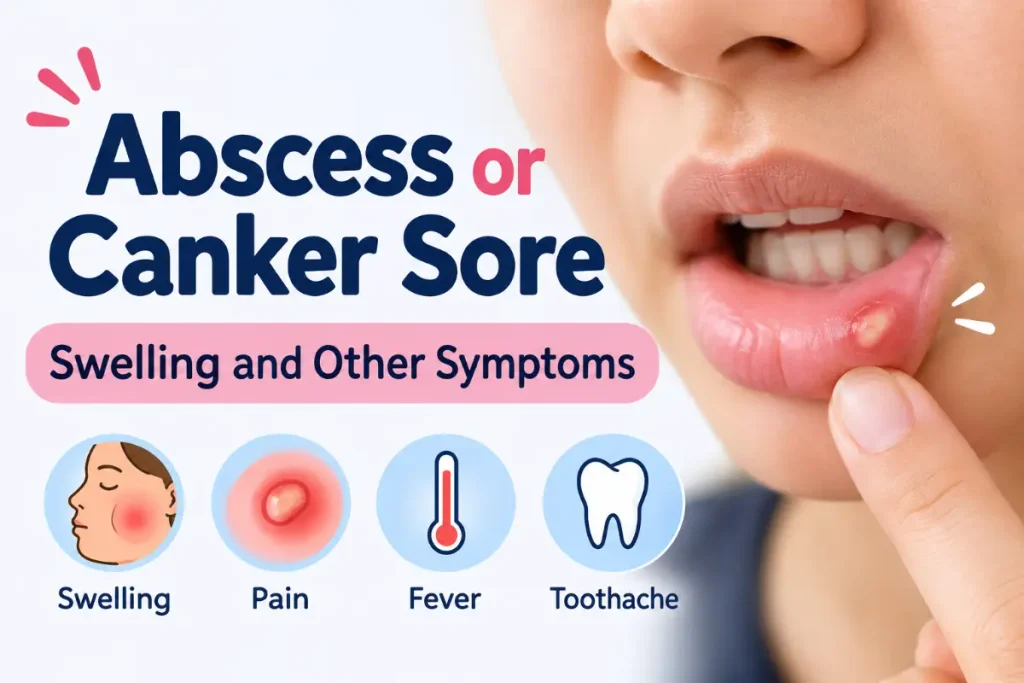
A dental abscess may cause swelling in the gums, jaw, or face. You may also notice a bad taste, unpleasant breath, fever, or swollen lymph nodes. These symptoms can suggest that the infection is affecting more than the surface of the mouth.
A typical canker sore usually stays limited to the ulcer itself. It can make eating and drinking uncomfortable, but it does not normally cause facial swelling or fever. If you have a mouth ulcer along with fever, a rash, swollen glands, or other unusual symptoms, arrange a medical evaluation.
Healing Time
Most minor canker sores heal within one to two weeks. The pain often improves before the ulcer completely disappears. Larger sores can take longer and may need medical treatment.
An abscess does not reliably heal on its own. It may drain and temporarily feel better, but the infection can remain. A dentist must identify and treat the source to prevent further damage or spread.
How to Tell Which Condition You May Have
You cannot diagnose every mouth sore by looking at it. However, a few questions can help you recognize clues and decide what kind of care to seek. Pay attention to the sore’s location, appearance, pain, and any symptoms elsewhere in your mouth or body.
Check the Location First
Start by noticing exactly where the painful area appears.
- Near a tooth or along the gumline: A red, swollen bump near a tooth may indicate a gum abscess. A toothache with pressure or sensitivity may point to an infection deeper inside the tooth.
- Inside the cheek or lip: A small, shallow ulcer in this area is more consistent with a canker sore.
- On or under the tongue: Canker sores can develop in these areas, although other conditions can also cause tongue sores.
- On the outer lip: This is not the usual location for a canker sore. A cold sore or another skin condition may be responsible.
Location offers a useful clue, but it does not provide a definite diagnosis. For example, a canker sore can occur near the base of the gums, so not every sore close to a tooth is an abscess.
Look at the Shape and Surface
Next, consider what the spot looks like. A canker sore usually has a shallow, open center. Its white or yellow appearance comes from the surface of the ulcer, not from a collection of pus.
An abscess often looks more like a raised, swollen bump. The gum around it may appear red, and the bump may resemble a pimple. Sometimes, pus drains from a small opening. However, an abscess can remain hidden beneath the gum, so you may not see a bump at all.
Pay Attention to the Pain
The way the pain feels can help you explain the problem to a dental professional. An abscess often causes pressure, throbbing, or a deep ache. The pain may become worse when you chew or touch the affected tooth.
A canker sore usually hurts when something rubs against the open area. Orange juice, tomatoes, spicy foods, and salty snacks can make the stinging worse. The pain generally stays close to the sore rather than spreading into the jaw or ear.
Watch for Signs of Infection
Fever, facial swelling, and swollen lymph nodes are important warning signs. They can occur with a dental infection, especially when it spreads beyond the original area. A typical canker sore does not usually cause these symptoms.
If you have a painful gum bump, toothache, fever, or facial swelling, contact a dentist promptly. Do not wait for the area to burst or drain. If you have trouble breathing or swallowing, seek emergency medical care immediately.
What Causes a Dental Abscess
A dental abscess forms when bacteria enter and infect the tissues around a tooth or in the gums. Several dental problems can create an opening or a place where bacteria collect. Understanding these causes can help you recognize risk factors and protect your oral health.
Tooth Decay
Untreated tooth decay is a common cause of an abscess near a tooth root. As a cavity gets deeper, bacteria can reach the soft pulp inside the tooth. The pulp contains nerves and blood vessels, and infection in this area can spread toward the root.
A small cavity may not cause serious pain at first. However, deeper decay can lead to sensitivity, toothache, and eventually an abscess. Regular dental checkups help identify cavities before they become more complicated.
Cracked or Damaged Teeth
A crack, chip, or other injury can give bacteria a way into the inner part of a tooth. Sometimes, the damage is easy to see. In other cases, a small crack may be difficult to notice without a dental examination.
A tooth can also become infected after an injury that damages the pulp. Even if the tooth looks normal from the outside, persistent pain after an accident deserves a dental check.
Gum Disease
Gum disease can create deep spaces between the teeth and gums. Bacteria may collect in these pockets and lead to an infection. When pus builds up in the gum tissue, a periodontal abscess can develop.
Swollen or bleeding gums, persistent bad breath, and loose teeth can be signs of gum disease. Treating gum problems early may reduce the risk of further infection.
Other Risk Factors
Some habits and health conditions can make dental infections more likely. They do not guarantee that an abscess will develop, but they can increase risk.
- Poor brushing and flossing habits.
- Untreated cavities or gum disease.
- Smoking or tobacco use.
- Dry mouth, which reduces the protective effect of saliva.
- A weakened immune system.
- Delaying dental care after a tooth injury.
Good oral hygiene helps, but it cannot prevent every dental abscess. If you notice persistent tooth pain or a swollen gum, arrange a dental examination even if you brush and floss regularly.
What Causes Canker Sores
Canker sores do not develop from the same bacterial infection that causes a dental abscess. Their exact cause is not fully understood, and several factors may contribute. Some people get one occasionally, while others experience repeated outbreaks.
Minor Mouth Injuries
A small injury inside the mouth can trigger a canker sore in some people. Common examples include accidentally biting your cheek, brushing too hard, or irritating the tissue with dental appliances. A sharp tooth edge or poorly fitting dental device may also rub against the lining of the mouth.
Not every mouth injury becomes an ulcer. However, if you often develop sores in the same place, ask your dentist to check for a source of repeated irritation.
Stress and Hormonal Changes
Some people notice canker sores during periods of emotional stress or physical strain. Hormonal changes may also be associated with outbreaks in certain individuals. These patterns vary, so stress should not be treated as the only possible explanation.
If sores appear repeatedly, keep track of when they develop and what was happening at the time. This record may help you and your healthcare provider identify possible triggers.
Food Sensitivity and Irritation
Certain foods can irritate the mouth or trigger symptoms in people who are prone to canker sores. Common examples include:
- Citrus fruits and juices.
- Tomatoes and tomato based foods.
- Spicy meals.
- Salty or crunchy snacks.
- Foods that cause a noticeable burning sensation.
These foods do not cause canker sores in everyone. However, avoiding a food that repeatedly irritates your mouth may make an outbreak easier to manage.
Nutritional Deficiencies
Low levels of certain nutrients may be linked to recurring mouth ulcers. These include vitamin B12, folate, iron, and zinc. A healthcare professional may recommend testing if you frequently develop sores or have other symptoms that suggest a deficiency.
Do not start taking high dose supplements simply because you have a canker sore. A clinician can help determine if you have a deficiency and recommend an appropriate amount.
Treatment for an Abscess
A dental abscess needs professional treatment because the infection must be controlled and its source addressed. Home remedies may temporarily reduce discomfort, but they cannot remove an infected tooth pulp or properly treat a deep gum infection.
Drainage
A dentist may drain the abscess to release the collected pus. This can reduce pressure and help relieve pain. The dentist will determine the safest way to drain it based on the location and severity of the infection.
Do not try to pop, squeeze, cut, or drain a gum bump yourself. Doing so can injure the tissue and may allow the infection to spread.
Root Canal Treatment
If the infection has reached the pulp inside a tooth, a root canal may help save the tooth. During this procedure, the dentist removes the infected pulp, cleans the inside of the tooth, and seals the space.
The dentist may recommend a crown afterward to protect the treated tooth. The exact treatment depends on how much damage the infection has caused.
Tooth Extraction
Sometimes, the tooth is too damaged to save. In that situation, the dentist may recommend removing it. Extraction removes the source of infection, although the dentist may also need to drain the surrounding area or provide additional care.
Antibiotics
A dentist may prescribe antibiotics when the infection has spread or when other clinical signs make them necessary. However, antibiotics alone usually do not solve the underlying dental problem. The infected tooth or gum area still needs appropriate treatment.
Do not use leftover antibiotics or take someone else’s medication. The correct treatment depends on the type and extent of infection. The American Dental Association also emphasizes dental treatment that addresses the source of the infection rather than relying on antibiotics alone in situations where definitive dental care is available.
Treatment for a Canker Sore
Most minor canker sores heal without medical treatment. The main goal is to reduce irritation and pain while the tissue repairs itself. You can often manage mild discomfort with simple changes at home.
Saltwater Rinses
A gentle saltwater rinse may help soothe an irritated mouth. Mix half a teaspoon of salt into a cup of warm water, rinse gently, and spit it out. Do not swallow the mixture.
You can repeat the rinse as needed, but stop if it causes significant irritation. Avoid rubbing salt directly onto the ulcer because doing so can make the pain worse.
Over the Counter Products
Some pharmacy products can protect the sore or temporarily reduce discomfort. Depending on the product, they may come as a gel, paste, cream, or mouth rinse. Follow the package instructions and ask a pharmacist or dentist if you are unsure which product is suitable.
A healthcare professional may recommend a prescription rinse or topical medicine for severe or recurring sores. Treatment can vary depending on the size, number, and cause of the ulcers.
Choose Foods That Do Not Irritate the Sore
Food choices can make a noticeable difference while a canker sore heals. Soft, mild foods are often more comfortable than crunchy, spicy, or acidic options.
Try these choices:
- Yogurt.
- Oatmeal.
- Scrambled eggs.
- Mashed potatoes.
- Soft cooked vegetables.
- Smooth soups that are not too hot.
- Bananas and other nonacidic soft fruits.
For now, avoid chips, hard toast, citrus juice, hot sauce, and very salty snacks if they make the sore sting. Drink enough water and use a soft toothbrush to avoid further irritation.
When Prescription Treatment May Help
Large, painful, or recurring canker sores may need more than home care. A dentist or healthcare provider may recommend a prescription mouth rinse, topical corticosteroid, or another treatment. In some cases, testing may help identify a nutritional deficiency or an underlying condition.
Do not assume that every long lasting mouth ulcer is a canker sore. A sore that does not heal needs an examination so a professional can identify the cause.
When to See a Dentist or Doctor
The right time to seek care depends on the symptoms. A suspected dental abscess needs prompt dental attention because the infection can spread and damage nearby tissues. A small canker sore usually does not require an appointment, but certain symptoms deserve evaluation.
Get Prompt Dental Care for a Possible Abscess
Contact a dentist as soon as possible if you notice:
- A painful, swollen bump on your gums.
- A persistent or throbbing toothache.
- Pain when biting or chewing.
- Pus or a bad taste coming from your gums.
- Swelling around a tooth, jaw, or cheek.
- Fever along with tooth or gum pain.
Do not wait for the pain to become severe. An abscess may temporarily feel better after it drains, but the infection can remain. A dentist needs to examine the area and decide how to treat it.
Seek Emergency Care for Serious Symptoms
A spreading dental infection can become dangerous. Go to an emergency department if you have difficulty breathing or swallowing, significant facial or neck swelling, or severe swelling that affects your ability to open your mouth. Fever with facial swelling also requires urgent attention, especially if you cannot reach a dentist promptly.
Arrange an Examination for a Persistent Mouth Sore
Most minor canker sores heal within one to two weeks. However, make an appointment with a dentist or healthcare professional if a sore lasts longer than two weeks, becomes unusually large, keeps returning, or makes it difficult to eat and drink.
You should also seek advice if mouth sores appear with fever, a rash, swollen glands, or other symptoms. A persistent ulcer may have a cause other than a canker sore, so a professional examination is important.

Common Mistakes When Comparing These Conditions
People sometimes use the terms abscess, canker sore, mouth ulcer, and cold sore as if they mean the same thing. However, each term describes a different problem. Knowing the differences helps you explain your symptoms more clearly and avoid delaying appropriate care.
Mistaking Every White Spot for a Canker Sore
A white or yellow spot inside the mouth does not automatically mean you have a canker sore. The appearance may come from an ulcer, irritation, infection, or another condition. Look at the surrounding tissue and notice any additional symptoms.
Better approach: Consider the location, shape, pain, and duration. If the spot is near a tooth and comes with swelling or a toothache, arrange a dental examination.
Assuming an Abscess Will Heal After It Bursts
An abscess may release pus and reduce pressure when it drains. This can make the pain feel better temporarily, but it does not mean the infection has gone away. The infected tooth or gum tissue may still need treatment.
Better approach: Contact a dentist even if the swelling goes down after drainage.
Calling a Cold Sore a Canker Sore
Cold sores and canker sores are different. Cold sores usually appear on or around the outer lips and are caused by the herpes simplex virus. Canker sores form inside the mouth and are not contagious.
Better approach: Notice where the sore appears. A blister on the outer lip is not the typical appearance of a canker sore.
Using Home Remedies to Treat an Abscess
Saltwater rinses and other comfort measures may help some mouth discomfort, but they cannot eliminate a dental infection. Applying harsh substances or trying to drain the swelling yourself can also cause harm.
Better approach: Use home care only for temporary comfort while arranging professional dental treatment. Do not let temporary relief replace an examination.
Conclusion
The main difference between an abscess and a canker sore is the underlying problem. An abscess is a bacterial infection that creates a pocket of pus, often near a tooth or in the gums. A canker sore is a shallow, noncontagious ulcer that usually heals within one to two weeks. Although both can cause mouth pain, an abscess needs prompt dental treatment and should never be treated as an ordinary mouth ulcer.
If you notice a swollen gum bump, persistent toothache, fever, or facial swelling, contact a dentist. For a small sore inside your cheek or lip, gentle mouth care may help while it heals. If it does not improve, get it examined.