Change is one of the few experiences everyone understands yet everyone describes differently. A new job can feel exciting to one person and frightening to another. Moving to a new place can feel like freedom while also carrying a sense of loss. Growing older can bring wisdom and confidence while quietly closing doors that once seemed permanent.
That complexity makes change difficult to describe with plain language alone. Saying that something is different tells the reader very little about the emotional experience behind that difference. A metaphor for change gives that experience a shape. Instead of simply saying that life has moved in a new direction you can describe it as a river carrying you toward an unfamiliar shore or a door opening into a room you have never entered.
The best comparisons do more than make writing sound poetic. They explain something. A turning page can show that the past still matters even though a new chapter has begun. A changing season can show that transition is natural even when it feels uncomfortable. A bridge can represent the space between an old life and a new one.
This guide explores powerful metaphors for different kinds of change including personal growth career transitions relationships new beginnings difficult endings and changes in perspective. It also explains how to create original comparisons without making your writing sound forced or predictable.
Quick Definition
A metaphor for change compares transformation or transition to something familiar so an abstract experience becomes easier to picture. Common images include rivers doorways seasons roads seeds bridges and turning pages. Each comparison emphasizes something different such as movement growth uncertainty loss freedom or renewal.
Quick Answer
The strongest metaphors for change usually involve movement transformation or transition. A river represents continuous movement. A doorway represents entering something unfamiliar. A changing season represents a natural transition. A seed represents growth. A turning page represents a new chapter. A bridge represents the space between the past and the future. The right choice depends on the kind of change being described.
Writers often use images that capture sadness to make difficult emotions feel more vivid and relatable, especially when describing how change can bring a sense of loss.
Why Change Is Hard To Describe
Change is rarely just one thing. It can involve excitement fear grief relief uncertainty and hope at the same time. That is why a simple statement such as “Everything is changing” often feels incomplete.
Imagine someone leaving a job after ten years. They may be excited about the opportunity ahead but still miss the people they worked with. They may feel proud of their decision while worrying about the future. They may know the change is necessary and still wish they could keep some part of the old life.
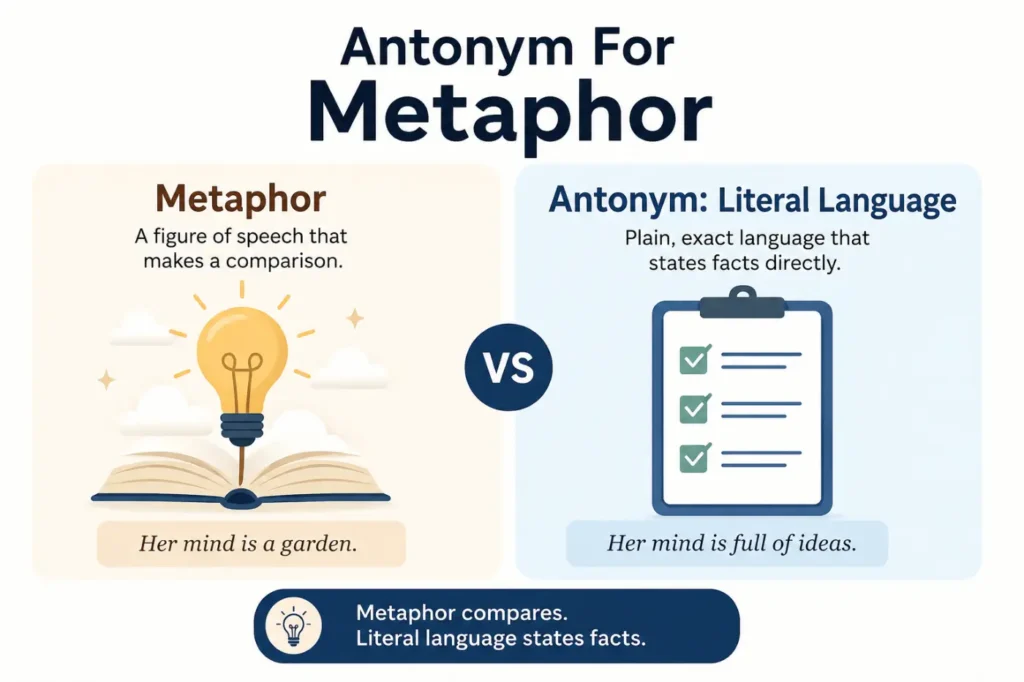
Literal language can describe the event. Figurative language can describe the experience.
Consider the difference between saying that someone has entered a new stage of life and saying that they are standing at the edge of a familiar forest with an unknown road ahead. The second image communicates uncertainty without needing to explain every emotion separately.
That is why metaphors work so well for abstract ideas. They connect an invisible experience to something physical and familiar.
Change becomes a river because rivers move. It becomes a doorway because doors separate one space from another. It becomes a season because seasons arrive and pass. It becomes a seed because growth often begins before anyone can see it.
The comparison works because the two things share a meaningful quality.
The Most Useful Images For Change
Some images naturally lend themselves to transformation because they already contain movement or development. However the most effective image depends on what you want the reader to notice.
Change As A Doorway
A doorway represents one of the clearest forms of transition. On one side is something familiar. On the other side is something that has not yet been experienced.
You could write:
“Change was a door opening into a room I had never seen.”
The image communicates opportunity and uncertainty at the same time. An open door can feel inviting but stepping through it still requires courage.
This comparison works especially well for career changes new relationships moving to another city or starting a different stage of life. It also suggests that transition involves action. The door may be open but someone still has to walk through it.
A doorway can also represent an opportunity that was not expected. In that case the image becomes more dynamic because the person is not simply moving forward according to an established plan. They are discovering a possibility they did not know existed.
Change As A River
A river is useful when you want to emphasize movement that continues regardless of personal preference.
“Life became a river that carried me beyond the places I thought I would stay forever.”
The strength of this image comes from its sense of direction. A river does not remain still simply because someone wishes to stay in the same place. It moves around rocks and bends through unfamiliar landscapes.
That makes it useful for describing changes that happen gradually. A person may not notice the shift at first. Then one day they look back and realize that the landscape around them has completely changed.
The river can also represent uncertainty. You may know where the water is coming from without knowing every turn it will take.
Change As A New Season
Seasons provide a natural way to describe transitions because they remind us that life contains cycles.
“I had entered a new season before I was ready for the weather.”
This image works particularly well because it does not claim that change is always positive. A new season can bring beauty and discomfort at the same time.
Spring can represent renewal. Summer can suggest expansion. Autumn can represent maturity or letting go. Winter can suggest stillness or hardship.
The important idea is that no season lasts forever. That makes this metaphor especially useful when writing about difficult periods. A hard season may feel permanent while you are living through it but the image itself carries the possibility of transition.
Change As A Turning Page
A book provides an excellent image for personal history.
“Turning the page did not erase the previous chapter. It simply meant I could no longer live inside it.”
This metaphor is especially powerful for people who struggle with the idea that moving forward means forgetting the past.
A new chapter does not destroy the previous one. It builds on it.
That makes the image useful for graduation leaving home ending a relationship changing careers recovering from failure or beginning a new phase after a difficult experience.
The metaphor also suggests that the future has not been written yet. The next page is open.
Change As A Seed
A seed represents transformation that begins quietly.
“Change was a seed breaking through the soil after months of growth that nobody could see.”
This image works well for personal development because important changes often begin internally. A person may spend months learning new skills questioning old beliefs or building confidence before anyone else notices a visible difference.
The seed also reminds us that growth can be uncomfortable. Breaking through the soil is not effortless. Development often requires pressure patience and persistence.
Metaphors For Personal Growth
Personal growth is usually gradual rather than dramatic. People rarely wake up one morning as completely different versions of themselves. More often they change through experiences decisions failures relationships lessons and repeated effort.
A tree growing new branches is useful because the tree remains recognizable while becoming larger and more complex. This makes it a good image for developing new skills or discovering new parts of your identity.
A house being renovated offers another perspective. Renovation does not require destroying everything that already exists. Some parts remain while other areas are repaired updated or redesigned. This can represent personal growth without suggesting that your former self was worthless.
A path becoming clearer with every step captures another important aspect of growth. You may not understand your direction at the beginning. Sometimes clarity comes only after you begin moving.
Similarly a camera lens coming into focus can represent changing perspective. The world itself has not necessarily changed. Your ability to see it clearly has.
These images are useful because they treat growth as development rather than replacement. You are not necessarily becoming a completely different person. You may be becoming a clearer or stronger version of yourself.
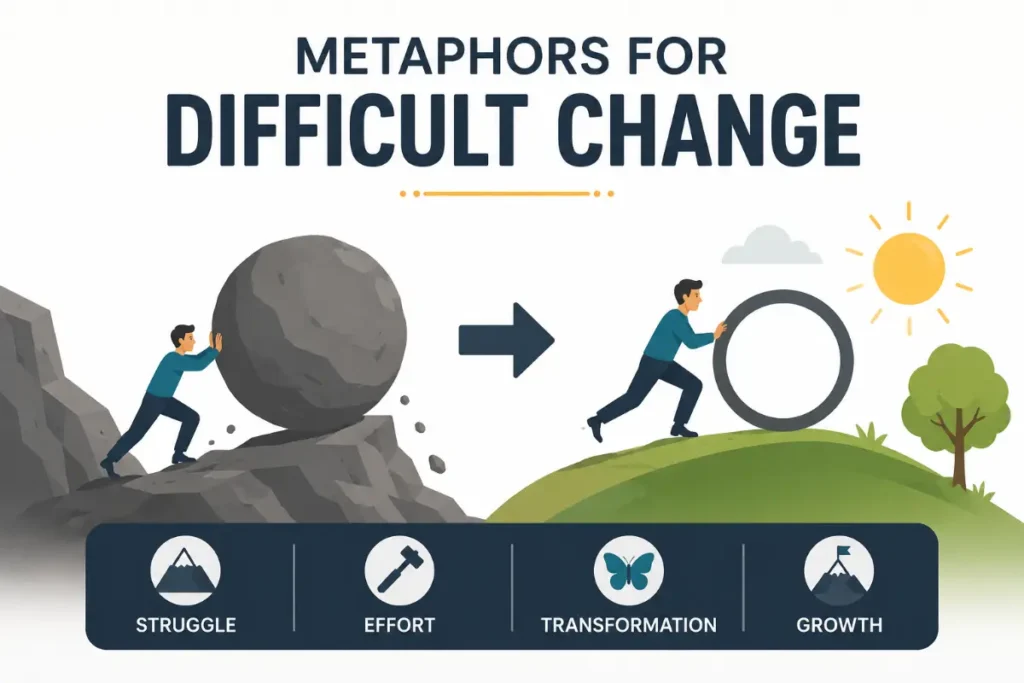
Metaphors For Difficult Change
Not every transition feels like an opportunity. Sometimes change means losing something familiar before you know what will replace it.
A house being emptied can represent leaving behind a life that once felt permanent. The rooms remain but the objects that made them familiar are gone.
A bridge disappearing behind you can represent a transition that makes returning to the old situation impossible. This image is particularly useful when someone has made a decision that permanently changes their direction.
A familiar road becoming unfamiliar captures another kind of discomfort. You may still be moving forward but the landmarks that once gave you confidence are gone.
A shoreline disappearing behind a boat communicates emotional distance. The old life has not necessarily been erased but it becomes harder to reach with every passing mile.
These metaphors work because they acknowledge something that overly positive writing often ignores. Change can be necessary and painful at the same time.
Metaphors For Positive Change
When transformation brings freedom or opportunity the imagery can become lighter without becoming unrealistic.
A window opening after a long winter suggests a fresh opportunity after a difficult period. The important detail is that the window was closed before. The new possibility feels meaningful because of what came before it.
A bird leaving its nest represents independence. The bird is leaving safety but gaining the ability to explore the wider world.
A locked gate opening suggests access to an opportunity that was previously unavailable.
A path appearing through the trees represents direction becoming clearer after uncertainty.
A room filling with sunlight can represent a new perspective. Nothing about the room has necessarily changed but the same space now feels different because the light has changed how everything appears.
These comparisons work best when the writing gives them context. A sunrise can feel predictable on its own. A sunrise after a character finally makes a difficult decision can carry much more meaning.
Metaphors For Sudden Change
Some changes happen slowly while others arrive in a single moment. When the transformation is sudden the metaphor should contain movement or disruption.
A light switch turning on represents an immediate change in awareness. Something that was unclear suddenly becomes visible.
A train switching tracks represents an unexpected change in direction. The destination may change even though the train keeps moving.
A door suddenly blowing open suggests an unexpected event that creates a new possibility.
A lightning strike can represent a sudden realization or life altering moment.
A glass breaking represents a moment after which things cannot return to exactly the way they were.
These images are useful because they create a strong before and after. The reader can immediately sense that something significant happened.
Metaphors For Gradual Change
Slow transformation requires quieter imagery.
A river shaping a canyon is a strong example. The river does not reshape the landscape in one dramatic moment. It does so through persistence.
A tree adding rings over time represents accumulated experience. Each ring becomes part of the tree’s history.
A sunrise gradually brightening the horizon represents hope or understanding developing slowly.
A path becoming worn through repeated footsteps represents habits and behaviors formed through repetition.
A house being rebuilt one room at a time represents recovery and reconstruction after a difficult period.
These comparisons remind the reader that major transformation does not always arrive with a dramatic event. Sometimes hundreds of small changes eventually produce a completely different result.
Metaphors For Change In Relationships
Relationships can change without ending. People can become closer drift apart rebuild trust or discover that their lives are moving in different directions.
A river dividing into two branches represents people who begin from the same place but eventually follow different paths. It can describe a relationship that changes naturally rather than through one dramatic conflict.
A rope becoming loose one strand at a time communicates gradual weakening. The connection does not disappear overnight. It becomes less secure through repeated small changes.
A garden moving through different seasons presents relationships as living things that develop over time. A healthy garden requires attention and conditions change as the seasons pass.
A bridge under repair represents a relationship that has been damaged but may still be rebuilt. The image leaves room for effort and possibility without pretending that repair happens instantly.
A photograph fading in sunlight offers a quieter image. It can represent memories becoming less vivid or a relationship slowly losing its former intensity.
The best choice depends on the story. A river suggests separation. A garden suggests development. A bridge suggests repair. A fading photograph suggests distance.
Metaphors For Career Change
Career changes often involve identity as well as practical decisions. A job is not simply a source of income. It can become part of how people understand themselves.
A train switching tracks works well for a change in professional direction. The train continues moving but follows a different route.
A compass pointing somewhere new represents changing ambitions or discovering a different purpose.
A map being redrawn captures a career path that no longer looks the way it did at the beginning.
A particularly strong image is a ladder leaning against a different wall. It represents the realization that working harder is not always the answer. Sometimes the destination itself needs to change.
That metaphor can be useful for someone who has achieved professional success but realizes that the success is taking them somewhere they no longer want to go.
Metaphors For Changing Perspective
Some of the most important changes happen internally. A person may learn something new or experience something that changes the way they understand the world.
A window being cleaned represents seeing something that was already there but previously appeared unclear.
A camera lens coming into focus suggests greater clarity.
A map revealing a new route represents discovering another way to approach a problem.
A room viewed from another angle suggests that the facts have not changed but the interpretation has.
A new pair of glasses can represent a new perspective. The world remains the same while the way you see it becomes sharper.
These comparisons work especially well in essays and reflective writing because they focus on intellectual and emotional development rather than physical events.
Metaphors For Letting Go
Letting go can be one of the hardest parts of transition because moving forward often means accepting that something familiar cannot come with you.
An open hand releasing a bird captures the idea of giving up control. The bird can represent a person a relationship a dream or an old version of yourself. Opening the hand creates freedom but also uncertainty because the next direction cannot be completely controlled.
A boat leaving the dock creates a different feeling. The dock represents safety and familiarity while the open water represents uncertainty. This image works well for leaving a familiar home job relationship or stage of life.
A falling leaf gives the idea a quieter quality. The leaf does not fight the changing season. It becomes part of a process that has already begun. This makes the image useful for accepting the natural end of a chapter.
A kite string being released combines freedom with uncertainty. Once the string is released the kite can move more freely but its direction becomes harder to control. That tension makes the image useful for situations where letting go feels both liberating and frightening.
Metaphors For New Beginnings
New beginnings often contain excitement and uncertainty at the same time.
A blank page represents possibility because nothing has been written yet. It is simple but effective for starting a new project or stage of life.
A first step onto a bridge represents commitment. You have left the old side but have not yet reached the new one.
A fresh canvas suggests creative freedom. It works particularly well for artistic projects or rebuilding one’s identity.
A new road after a crossroads represents a deliberate choice. The person has reached a point where continuing along the old route is no longer the only possibility.
A doorway filled with morning light combines uncertainty with hope. You cannot see everything beyond the doorway but there is enough light to encourage you to move forward.
Even during major transitions, family as a source of stability can provide the emotional support and sense of belonging people need while adapting to change.
Metaphors For Change In Nature
Nature provides some of the most intuitive imagery for transformation because change is built into natural processes.
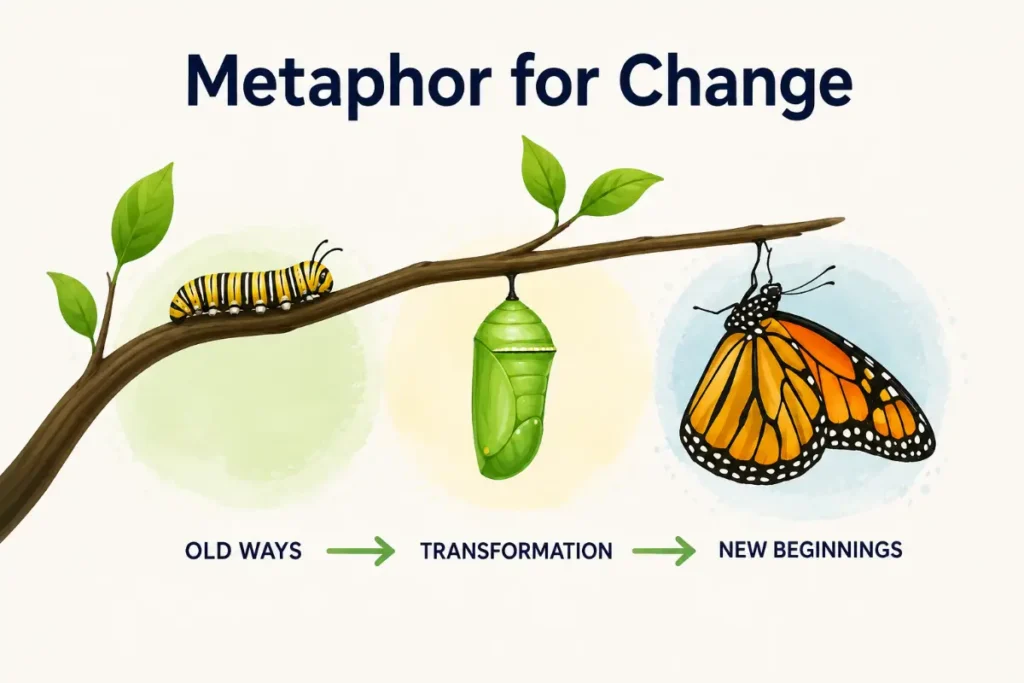
- A caterpillar becoming a butterfly represents dramatic transformation.
- A seed becoming a tree represents gradual development.
- A river changing course represents adaptation.
- A mountain weathering over centuries represents slow transformation.
- A forest recovering after a fire represents renewal.
- A tide moving in and out represents cycles.
- A leaf changing color represents a visible transition from one stage to another.
These images can be powerful but familiar natural metaphors should be handled thoughtfully. The butterfly is so common that it can sometimes feel predictable. A less obvious image such as a river slowly changing its banks may feel fresher while still being easy to understand.
Originality does not require an image nobody has ever used. It often comes from giving a familiar image a specific detail that connects it to the subject.
Metaphors For Change In Society
Change also happens on a collective level. Communities cultures institutions and generations constantly evolve.
- A tide rising along a shoreline can represent a movement gaining influence. The image communicates gradual pressure rather than one sudden event.
- A wall developing cracks can represent an established system beginning to weaken.
- A door opening in a previously closed building can represent greater access or opportunity.
- A new road being built through an old landscape can represent modernization and the tension between tradition and development.
- A relay race can represent one generation passing responsibility to another.
These images can work well in speeches essays journalism and social commentary because they turn abstract historical processes into recognizable physical events.
How To Create Your Own Metaphor
Creating an original comparison becomes much easier when you start with the emotional quality of the change rather than trying to find an impressive object.
First ask what the change actually does. Is something moving forward. Is something disappearing. Is something growing. Is something breaking. Is something becoming clearer. Is something being replaced. Is something being left behind.
Then find something in the physical world that behaves in a similar way.
- If the change involves gradual development a tree adding rings might work.
- If it involves sudden disruption lightning or breaking glass might work.
- If it involves uncertainty a bridge or unfamiliar road might work.
- If it involves leaving the past behind a boat leaving a dock might work.
- If it involves a new perspective a camera lens coming into focus might work.
The key is to compare behavior rather than appearance. That is what makes a metaphor feel meaningful instead of random.
How To Avoid Weak Metaphors
A weak metaphor usually fails because it does not add enough information. “Change is something different” does not give the reader anything useful. A stronger comparison would be:
“Change was a river that kept moving even when I wanted to remain on the same shore.”
Now the image communicates movement resistance and the emotional difficulty of leaving something familiar.
Another common problem is mixing too many unrelated images. If change becomes a river in one sentence a storm in the next and a butterfly immediately afterward the reader has no central image to follow.
Choose one comparison and develop it. If you begin with a river you can use the current to represent momentum. The riverbank can represent stability. Rapids can represent difficult periods. A new shoreline can represent an unfamiliar future.
A developed metaphor feels intentional because the images belong to the same world.
How To Use Metaphors In Essays
Metaphors can strengthen essays when they clarify an idea rather than simply decorate the writing.
Suppose you are writing about adapting to a new culture. You might describe the experience as navigating a city where every familiar street sign has been replaced. That comparison communicates uncertainty and disorientation without requiring several paragraphs of abstract explanation.
However academic writing still needs evidence. A metaphor should support an argument rather than replace facts examples or research. Use figurative language to introduce or clarify an idea and then provide concrete evidence that develops it.
How To Use Metaphors In Speeches
Speeches benefit from memorable images because listeners cannot reread a sentence.
A speaker might say:
“Change is not always a wall in front of us. Sometimes it is a bridge we have not yet learned to cross.”
The audience receives a simple visual idea while also hearing a larger argument about adaptation and courage. For speeches about leadership education personal growth business or community development a clear metaphor can turn an abstract message into something listeners remember.
Keep spoken comparisons simple. A complicated image that requires several explanations can lose its effect before the audience has time to process it.
How To Use Metaphors In Poetry
Poetry gives figurative language more freedom because imagery rhythm sound and ambiguity can work together. A poem about change might revolve around an empty house.
The furniture disappears. Pictures leave pale marks on the walls. Rooms that once felt crowded become strangely large. At the end the writer places an old key on the windowsill.
The poem never needs to announce that the speaker is experiencing a major transition. The images communicate the emotional truth.
This is one reason extended metaphors can be so effective in poetry. The comparison becomes part of the structure rather than a decoration added to a single sentence.
Metaphor Versus Simile
A metaphor directly connects two things.
“Change is a river.”
A simile makes the comparison explicit.
“Change is like a river.”
Both forms can work well but they create slightly different effects.
A metaphor usually feels more direct. It invites the reader to accept the comparison as part of the description. A simile creates more distance. The phrase like signals that the writer is making a comparison.
For poetry and creative writing a direct metaphor can create stronger imagery. For everyday communication a simile can sometimes sound more natural.
The choice depends on the voice of the writing and the effect you want to create.
Metaphor Versus Symbolism
Metaphor and symbolism often appear together but they are not the same thing.
- A metaphor creates a comparison to explain or illuminate an idea.
- A symbol represents a broader meaning within a particular context.
For example a door can be a metaphor for transition when entering a new room is compared with entering a new stage of life.
The same door can become a symbol throughout a story. If a locked door appears repeatedly whenever a character faces an important decision it may gradually take on symbolic meaning.
Understanding the difference helps writers use figurative language more deliberately.
How Writers Show Change Instead Of Telling
One of the strongest writing techniques is showing an emotional experience through action and imagery instead of simply naming it.
Telling says:
“She had changed.”
Showing might say:
“She walked into the old café and realized she no longer remembered why she used to sit in the corner.”
The second sentence gives the reader evidence of change. Another example would be:
“The neighborhood had changed.”
That statement is direct but vague.
A more vivid version might describe the empty shop becoming a bakery the old trees being replaced by younger ones and a familiar street now filled with unfamiliar signs.
The reader experiences the transformation instead of being told that it happened. Metaphor can strengthen this approach because it lets physical changes represent internal ones.
When change feels uncertain, exploring ways anxiety feels overwhelming can help explain why even positive transitions sometimes create fear, tension, or hesitation.
Expert Language Insight
The strongest figurative language is precise. It does not simply make a sentence sound impressive. It tells the reader something that ordinary language would struggle to communicate.
- If the change is gradual use an image that develops slowly.
- If it is sudden use an image that shifts quickly.
- If it involves loss choose an image that leaves room for grief.
- If it represents growth choose something that develops over time.
- If it involves uncertainty choose an image that contains an unknown destination.
This principle prevents one of the most common problems in creative writing. Writers sometimes choose a metaphor because it sounds beautiful rather than because it accurately represents the subject.
Accuracy matters more than decoration. There is also no rule saying that every metaphor must be completely original. Familiar images can still work when they are developed with specific details.
- A storm becomes more interesting when it arrives on an otherwise clear morning.
- A river becomes more personal when it carries someone away from a place they once expected to call home.
- A doorway becomes more meaningful when the person standing before it knows they cannot return to the room behind them.
The originality comes from the relationship between the image and the story. Another useful editorial principle is to avoid explaining a metaphor after you have already made it clear. If the image communicates the idea effectively then trust the reader to understand it.
One strong image developed naturally will usually have more impact than several unrelated comparisons competing for attention.
Frequently Asked Questions
What is a good metaphor for change?
A river is one of the most useful images because it represents continuous movement. A doorway works well for transition into something unfamiliar. A seed represents growth while a turning page represents a new chapter. A changing season can communicate natural transition. The best choice depends on the emotional meaning behind the change rather than simply choosing the most familiar comparison.
What is a metaphor for positive change?
Positive transformation can be compared to a sunrise after darkness a window opening a bird leaving its nest or a locked gate opening. These images communicate hope freedom opportunity and growth. A seed breaking through soil can also work when the change represents personal development that required patience before becoming visible.
What is a metaphor for sudden change?
Sudden transformation can be compared to lightning a train switching tracks a door blowing open glass breaking or a light suddenly turning on. These images create a strong contrast between the moment before and the moment after. They work especially well for unexpected decisions sudden realizations major opportunities and life events that immediately alter someone’s direction.
What is a metaphor for personal growth?
Personal growth can be compared to a tree developing new branches a seed becoming a plant a house being renovated or a camera lens coming into focus. These comparisons suggest that growth happens through development rather than replacement. They also allow writers to show that a person can become different while still remaining connected to the person they were before.
What is a metaphor for changing your life?
Changing your life can be represented as turning onto a new road stepping through a doorway switching train tracks leaving a familiar shoreline or beginning a new chapter. These images emphasize direction and choice. They also suggest that the past remains part of the journey even after someone decides to move toward a different future.
What is a metaphor for adapting to change?
Adapting can be described as learning to sail unfamiliar waters adjusting the sails of a boat finding a new path through a forest or rebuilding a house one room at a time. These comparisons emphasize flexibility and learning. The environment may change but the person develops new ways to navigate it rather than remaining fixed in the old situation.
What is a metaphor for change in a relationship?
A relationship can be compared to a river dividing into two branches a rope becoming loose a garden moving through different seasons or a bridge being repaired. Each image creates a different meaning. A river can suggest separation. A rope can suggest weakening connection. A garden can suggest development while a bridge can suggest the possibility of rebuilding trust.
Why are metaphors useful when writing about change?
Metaphors make abstract experiences easier to visualize. Change can involve several emotions at once and literal language does not always capture that complexity. A carefully chosen comparison gives the reader something concrete to picture while communicating a deeper emotional idea. This makes the writing more memorable and helps readers connect with experiences they may not have personally experienced.
Final Thoughts
Change rarely arrives in one simple form. Sometimes it feels like an open door. Sometimes it feels like a door closing behind you. It can be a river carrying you forward a road disappearing behind you a seed breaking through hard soil or a familiar room suddenly arranged in an unfamiliar way.
That is why strong figurative language does not pretend that transformation is always positive or always painful. Change can bring several emotions into the same moment. Hope can exist beside fear. Relief can sit beside grief. Excitement can share space with uncertainty.
When choosing an image start with the emotional truth you want to communicate. Then find something in the physical world that behaves in a similar way. If the change is gradual choose something that develops slowly. If it is sudden choose something that shifts quickly. If it involves loss choose an image that leaves room for grief. If it represents growth choose something that develops over time.