If you have searched for grately vs greatly, you are probably wondering if both words are correct or if one is simply a spelling mistake. It is a common point of confusion because the two words look almost identical and sound very similar when spoken quickly. Many people accidentally type grately in emails, essays, social media posts, and professional documents without realizing it.
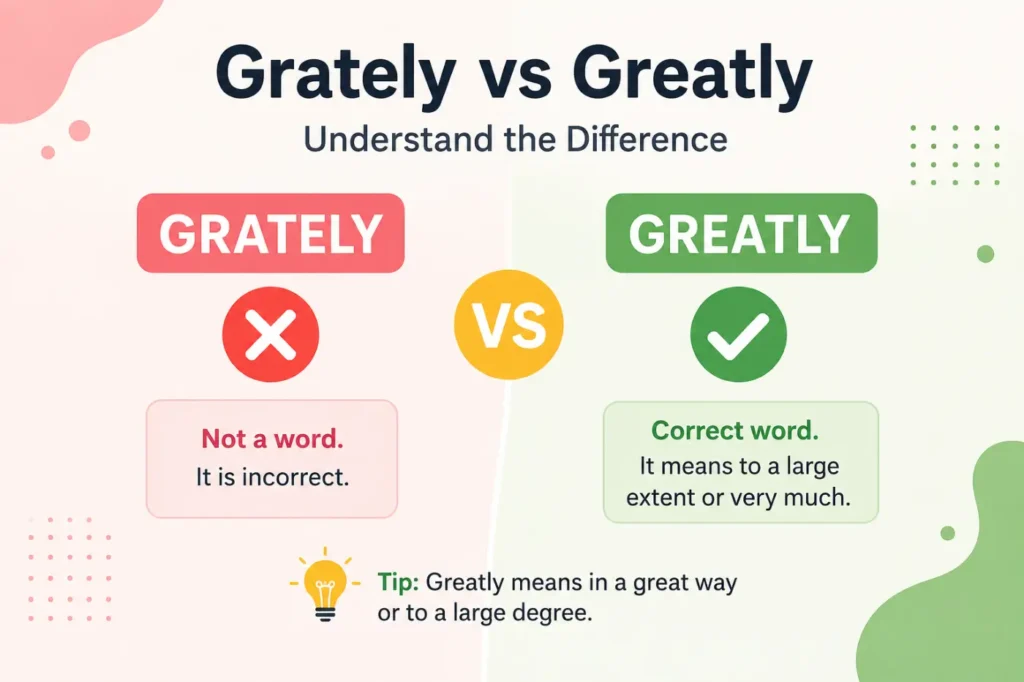
The answer is straightforward. Greatly is the correct English word. It is recognized by dictionaries, grammar guides, and style manuals, and it is widely used in both spoken and written English. Grately is not a standard English word. In nearly every case, it is a misspelling of greatly.
This confusion often happens because of typing errors, autocorrect issues, or the similarity between words such as grate, grateful, and great. Once you understand how greatly is formed and how it functions in a sentence, the mistake becomes much easier to avoid.
This guide explains the difference in clear, practical language. You will learn the meaning of each term, correct pronunciation, grammar rules, usage examples, common mistakes, and expert editing tips so you can write with confidence.
Quick Definition
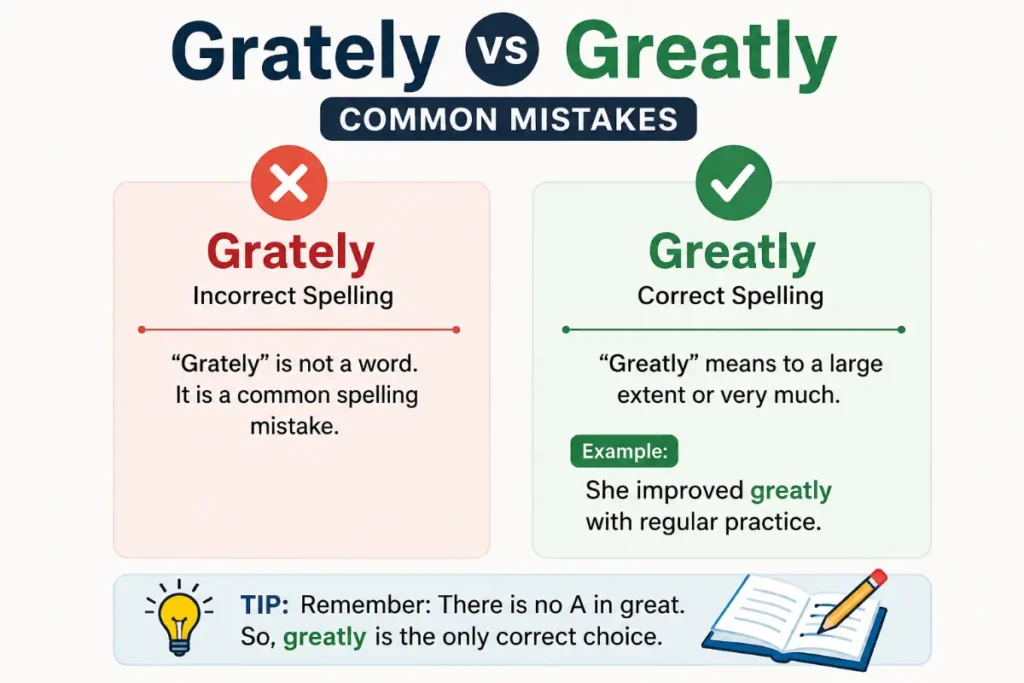
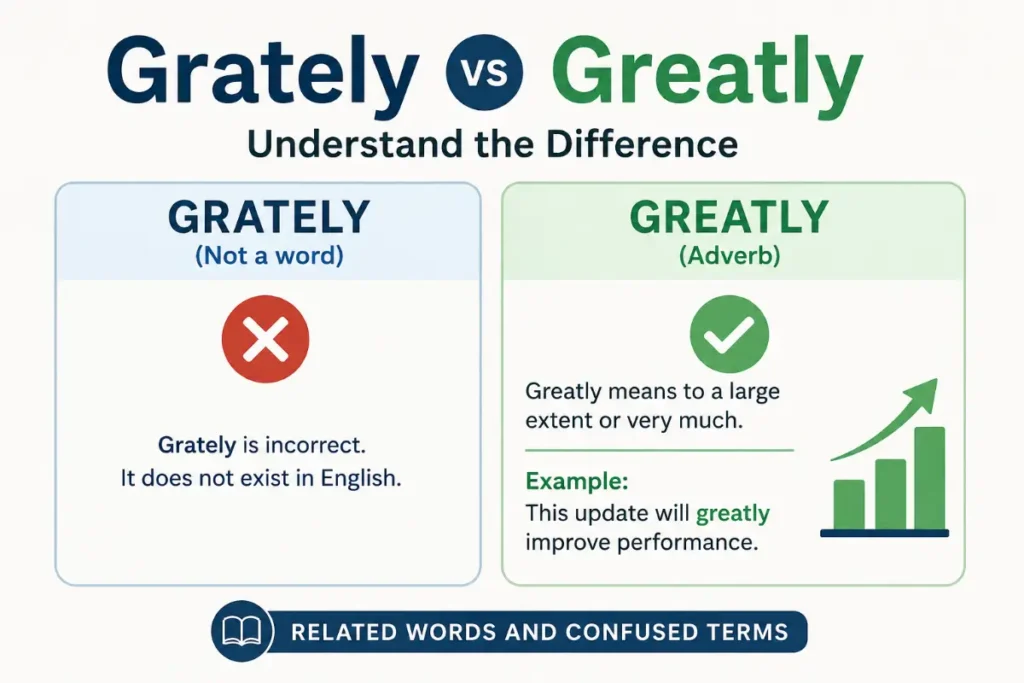
Greatly is the correct adverb that means to a large extent or by a significant amount. Grately is not a recognized English word and is almost always a misspelling of greatly. For formal, academic, professional, and everyday writing, always use greatly unless you are quoting someone else’s spelling error.
Paying attention to small spelling differences matters, just as understanding the correct spelling of plaque can help you avoid another commonly confused word pair.
Quick Answer
If you only need the short answer, remember these points.
- Greatly is the correct spelling.
- Grately is a spelling mistake.
- Use greatly in all standard English writing.
- If you see grately, it should almost always be corrected to greatly.
Comparison Table
| Feature | Greatly | Grately |
|---|---|---|
| Part of speech | Adverb | Not a standard English word |
| Correct spelling | Yes | No |
| Meaning | To a large extent or considerably | None in standard English |
| Origin | Derived from the adjective great plus the suffix ly | Typographical error based on greatly |
| Formality | Standard in all writing | Incorrect in formal writing |
| Common contexts | Conversation business academic and creative writing | Typing mistakes online |
| Usage frequency | Very common | Rare and usually accidental |
| Dictionary status | Recognized by major dictionaries | Not recognized as a standard word |
| Example | Your support greatly improved the project. | Your support grately improved the project. Incorrect |
Meaning Of Both Terms
Although the spellings differ by only one letter, they do not have equal standing in English.
What Does Greatly Mean
Greatly is an adverb that means to a very large degree, considerably, or significantly. It describes the extent or intensity of an action, feeling, or result.
You will often see it in situations involving appreciation, improvement, influence, or importance.
Common examples include:
- Greatly appreciated.
- Greatly improved.
- Greatly reduced.
- Greatly increased.
- Greatly admired.
- Greatly respected.
- Greatly benefited.
Because it expresses degree, the word naturally modifies verbs, adjectives, and sometimes past participles.
What Does Grately Mean
Grately is not an accepted English word. It has no dictionary definition and no established grammatical function.
Most uses of grately happen because someone accidentally replaces the second e with an a while typing. The mistake is especially common because people are familiar with words like grate, grateful, and gratitude, which begin with the same letters.
Professional editors treat grately as a spelling error and replace it with greatly unless they are quoting original text exactly.
Key Differences
Understanding the difference is easier than many people expect because only one spelling belongs to standard English.
Here are the main distinctions.
- Greatly is the correct adverb.
- Grately is a misspelling.
- Greatly appears in dictionaries and grammar references.
- Grately does not have an accepted definition.
- Native speakers expect greatly in professional, academic, and everyday writing.
Another important difference is credibility. Small spelling mistakes can affect how readers view your writing. Using the correct form makes your work look more polished and trustworthy, especially in resumes, business emails, reports, and published content.
Which Spelling Is Correct
The correct spelling is greatly. Every major English dictionary, grammar guide, and editorial style manual recognizes greatly as the standard form. It is appropriate in academic writing, business communication, journalism, creative writing, and everyday conversation.
The spelling grately should generally be corrected because it is not considered an accepted English word. You might occasionally see it in social media posts, online comments, or discussion forums, but those examples reflect typing mistakes rather than correct usage.
A simple editing tip can help you remember the correct form. Think of the adjective great first. Then add the suffix ly. Great + ly = greatly If the base word is spelled correctly, the finished adverb will also be correct.
Pronunciation Guide
Pronunciation is another reason people confuse these spellings. Since grately is usually intended to represent greatly, both are typically spoken the same way.
IPA Pronunciation
Greatly
/ˈɡreɪt.li/
Syllable Breakdown
Great ly
The first syllable receives the primary stress.
Common Pronunciation Mistakes
Most pronunciation errors happen among English learners rather than native speakers.
Common mistakes include:
- Dropping the t sound completely.
- Stressing the second syllable instead of the first.
- Pronouncing the word as three syllables instead of two.
Listening to native speakers will help you hear the natural rhythm of the word. Even when the t sound becomes softer in fast speech, standard spelling does not change.
How To Remember The Correct Spelling
Many people make this mistake because they type quickly or confuse greatly with words such as grateful or gratitude. These simple memory tips make the correct spelling much easier to remember.
- Start with the word great. If the base word is correct, adding ly creates greatly.
- Remember that greatly describes degree. It tells you how much something happens or changes.
- If you can replace the word with significantly, considerably, or substantially, greatly is probably the correct choice.
- Proofread phrases such as greatly appreciated, greatly improved, and greatly increased, since they appear frequently in professional writing.
Another useful habit is reading your sentence aloud. Hearing the sentence often helps you notice spelling mistakes that your eyes skip during silent reading.
Grately vs Greatly Examples In Sentences
The easiest way to understand the correct spelling is to see it used in natural sentences. The first set shows proper usage, while the second demonstrates common mistakes that editors correct.
Examples Using Greatly
These sentences use the correct adverb in everyday English.
- Your feedback greatly improved the final presentation.
- We greatly appreciate your continued support.
- The new software greatly reduced processing time.
- She was greatly respected by her colleagues.
- The renovation greatly increased the home’s value.
- His advice greatly influenced my decision.
- The charity was greatly helped by community donations.
- The weather greatly affected our travel plans.
- I was greatly surprised by the announcement.
- The team’s performance greatly exceeded expectations.
These examples reflect how native speakers naturally use the word in conversation, business writing, and formal communication.
Examples Using Grately
The following sentences contain the common spelling mistake.
- Your help was grately appreciated.
- The update grately improved performance.
- We grately value your feedback.
- She was grately admired by her students.
- The changes grately reduced costs.
- His efforts were grately rewarded.
- The company grately benefited from the partnership.
- The new policy grately simplified the process.
- The coach grately motivated the team.
- Everyone was grately impressed with the results.
In each example above, grately should be corrected to greatly.
Common Mistakes
This spelling error is more common than many people realize. Fortunately, once you understand why it happens, it becomes much easier to avoid.
Mixing Great With Grateful
Many writers accidentally type grately because they frequently use words such as grateful, gratitude, and gratefully. Those words begin with grat, while greatly comes from the adjective great.
Keeping the base word in mind prevents this confusion.
Typing Too Quickly
Fast typing is another major cause of the mistake. The fingers often skip or replace letters without the writer noticing.
This is why proofreading remains important, even when spell check is enabled.
Trusting Autocorrect Too Much
Spell check catches many mistakes, but it is not perfect. Some writing tools overlook unusual errors or fail to suggest the best correction.
Reading your work one final time is still one of the most reliable editing habits.
Assuming It Is An Alternative Spelling
Unlike words such as color and colour, grately is not a regional variation.
There is only one accepted spelling in standard English.
Copying Informal Online Writing
You may notice the incorrect spelling in comments, forums, or social media posts. That does not make it correct.
Internet usage often reflects typing mistakes rather than accepted grammar.
Etymology And Word Origin
The word greatly developed from the adjective great, which has existed in English for more than a thousand years.
The adjective comes from Old English grēat, meaning large, important, powerful, or significant. As English evolved, the suffix ly was added to create an adverb describing the degree of an action or condition.
This pattern appears throughout English.
Examples include:
- Quick becomes quickly.
- Careful becomes carefully.
- Happy becomes happily.
- Great becomes greatly.
The incorrect spelling does not share this historical development. Instead, it emerged through typing mistakes and confusion with words beginning with grat, such as grateful and gratitude.
Choosing the right word is essential, especially when describing someone who doesn’t respond in medical, technical, or everyday situations.
Regional Usage
Unlike some English words, this spelling remains the same across major English speaking countries.
American English
American English consistently uses greatly in newspapers, business communication, education, and everyday conversation.
The incorrect spelling appears only as an accidental typo.
British English
British English follows exactly the same rule.
Dictionaries, publishers, and universities all recognize greatly as the only correct spelling.
Australian English
Australian writers also use greatly in formal and informal communication.
There is no accepted regional variation.
Canadian English
Canadian English follows the same convention.
Although Canada sometimes combines British and American spelling preferences, this word remains unchanged.
No matter where your audience lives, the standard spelling stays the same.
Grammar Rules
Understanding how the word functions grammatically makes it easier to use correctly.
Part Of Speech
Greatly is an adverb.
Its job is to modify verbs, adjectives, or past participles by showing degree or intensity.
Examples include:
- The decision greatly affected the outcome.
- We greatly appreciate your patience.
- She was greatly admired.
Sentence Placement
The word usually appears before the main verb or before a past participle. Examples include:
- They greatly enjoyed the event.
- The community greatly benefited from the project.
- Your comments are greatly appreciated.
This placement sounds natural because it emphasizes the strength of the action or feeling.
Common Word Combinations
Native speakers frequently use the word in fixed expressions. Some of the most common include:
- Greatly appreciated.
- Greatly valued.
- Greatly respected.
- Greatly admired.
- Greatly improved.
- Greatly increased.
- Greatly reduced.
- Greatly influenced.
- Greatly benefited.
- Greatly exceeded.
Learning these combinations helps your writing sound more natural and fluent.
Real Life Usage Examples
The word appears in almost every type of writing because it communicates degree in a clear and concise way.
Daily Conversation
People often use it to express appreciation or emphasize strong feelings. Examples include:
- I greatly appreciate your help.
- We greatly enjoyed the concert.
- Your advice greatly helped me.
Academic Writing
Researchers use the word to describe measurable changes, significant effects, and important findings. Examples include:
- The new method greatly improved accuracy.
- Environmental conditions greatly influenced the results.
- Student participation greatly increased after the program began.
Professional Communication
Business writing frequently includes this adverb because it sounds polite and professional without being exaggerated. Common examples include:
- Your cooperation is greatly appreciated.
- We greatly value your partnership.
- Customer feedback greatly influenced our decision.
Literature And Media
Authors and journalists use the word to highlight the importance or impact of events, actions, and emotions. Examples include:
- The discovery greatly changed scientific understanding.
- Her speech greatly inspired the audience.
- The decision greatly affected the local community.
Greatly Appreciated
One of the most common expressions in English is greatly appreciated. It appears in:
- Thank you emails.
- Customer service messages.
- Business letters.
- Volunteer organizations.
- Professional requests.
This phrase communicates sincere gratitude while maintaining a respectful and polished tone.
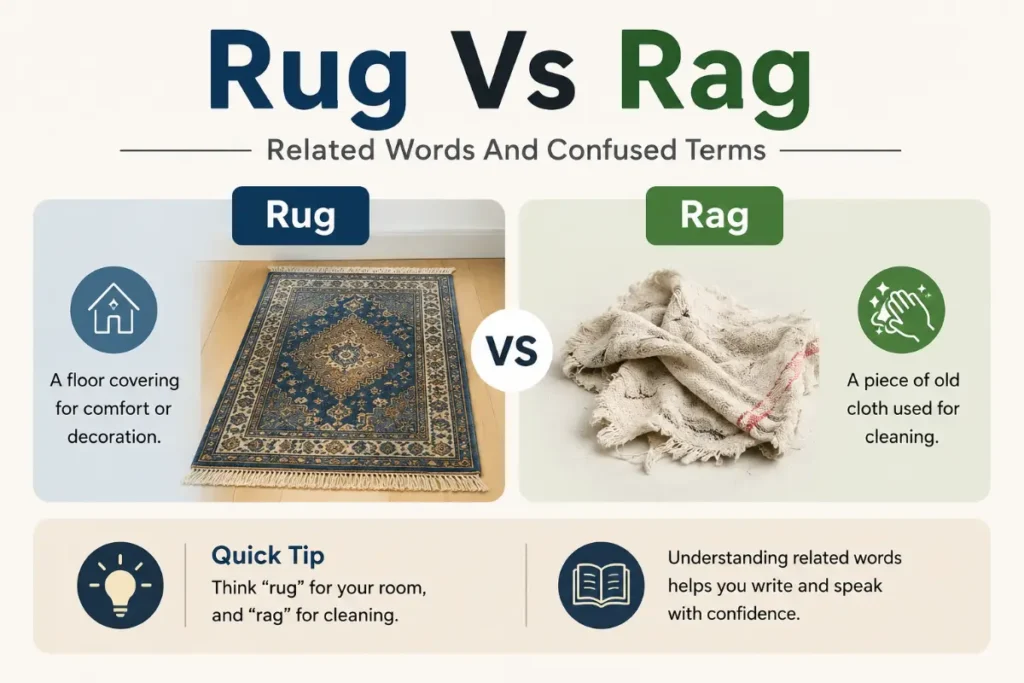
Related Words And Confused Terms
People who search for this topic often confuse greatly with other words that have similar spellings or meanings. Understanding the differences will help you avoid common writing errors and expand your vocabulary.
Here are some closely related words.
| Word | Meaning | Standard English |
|---|---|---|
| Greatly | To a large extent or significantly | Yes |
| Great | Large important or excellent | Yes |
| Grateful | Feeling thankful | Yes |
| Gratefully | In a thankful manner | Yes |
| Gratitude | A feeling of thankfulness | Yes |
| Grate | To shred food or a metal framework | Yes |
| Grately | Misspelling of greatly | No |
If you want to avoid repeating greatly, these synonyms often work well, depending on the sentence.
- Significantly.
- Considerably.
- Substantially.
- Remarkably.
- Immensely.
- Profoundly.
- Highly.
- Exceptionally.
Always choose a synonym that matches the meaning of your sentence. Some words emphasize quantity, while others express emotional intensity or importance.
Grately vs Greatly Expert Language Insight
One reason experienced editors notice grately immediately is that it breaks a common English word formation pattern. The adverb comes directly from the adjective great, so adding ly creates the correct form.
Many spelling mistakes happen because writers think about pronunciation instead of word structure. In this case, looking at the base word is much more reliable than relying on sound alone.
Native speakers almost always write greatly in business emails, academic papers, books, news articles, and everyday communication. The incorrect spelling usually appears because of fast typing, not because people believe it is a legitimate alternative.
When editing your own work, pay extra attention to common phrases such as greatly appreciated, greatly improved, greatly respected, and greatly influenced. These expressions appear frequently, making them easy to type quickly without noticing a small spelling mistake.
A simple proofreading habit can prevent the error.
- Find the base word.
- Check its spelling.
- Add the correct suffix.
- Read the sentence one final time before publishing or sending it.
Frequently Asked Questions
Is grately a real word?
No. Grately is not recognized as a standard English word. In almost every situation, it is a misspelling of greatly, which is the correct adverb.
Is greatly the correct spelling?
Yes. Greatly is the accepted spelling in dictionaries, grammar guides, style manuals, and professional writing. It should be used in formal, academic, and everyday communication.
Why do people type grately?
Most people type grately by accident because they confuse it with words such as grateful, gratitude, or gratefully. Fast typing and overlooked proofreading also contribute to the mistake.
What does greatly mean?
Greatly means to a large extent, considerably, or significantly. It is used to emphasize the degree of an action, change, feeling, or result.
What is a synonym for greatly?
Several words can replace greatly, depending on the context. Common choices include significantly, considerably, substantially, immensely, remarkably, and profoundly. Choose the one that best matches the meaning of your sentence.
Is greatly appreciated grammatically correct?
Yes. Greatly appreciated is a standard English expression used to show sincere gratitude. It appears frequently in professional emails, customer service messages, formal letters, and polite requests.
Does British English use grately?
No. British English uses greatly, just like American, Australian, and Canadian English. The spelling grately is not accepted as a regional variation.
Why do search engines show results for grately?
Search engines recognize that many users accidentally type grately when they mean greatly. As a result, they often display articles that explain the spelling mistake and guide users to the correct word.
If you enjoy exploring similar vocabulary mix-ups, you’ll also find common household word differences surprisingly useful for improving your everyday English.
Conclusion
The answer is clear. Greatly is the correct spelling and the only form accepted in standard English. It means to a large extent, considerably, or significantly, and it is widely used in conversation, business writing, academic work, journalism, and literature.
The spelling grately does not have an accepted meaning in modern English. In nearly every case, it is simply a typing or spelling mistake. If you notice it while proofreading, replace it with greatly before publishing or sending your work.
A useful way to remember the correct form is to start with the adjective great. Once you add the suffix ly, you naturally arrive at the correct adverb. This simple approach removes the guesswork and helps you avoid one of the most common spelling errors.
In the grately vs greatly comparison, the correct choice is always greatly. Remember that grately is a spelling mistake, while greatly is the standard English adverb used in everyday, academic, and professional writing. Choosing the correct spelling will make your writing clearer, more accurate, and more credible.