Work rarely feels the same every day. Sometimes it’s a well-oiled machine, other times it’s a circus with too many acts and not enough hands. These everyday experiences make work a rich subject for metaphors, helping writers express everything from motivation and teamwork to pressure and exhaustion.
Explore 40 metaphors for work, including what each one means and how to use it in a sentence. You’ll find comparisons that capture different workplace experiences, from a peaceful, productive day to the feeling of being completely overwhelmed.
Whether you’re writing an essay, telling a workplace story, or looking for more expressive language, these examples can help you find the right words. You’ll also discover practical writing tips and alternatives to tired, overused expressions. For more ideas, visit our metaphor examples by topic.
What Is a Metaphor for Work?
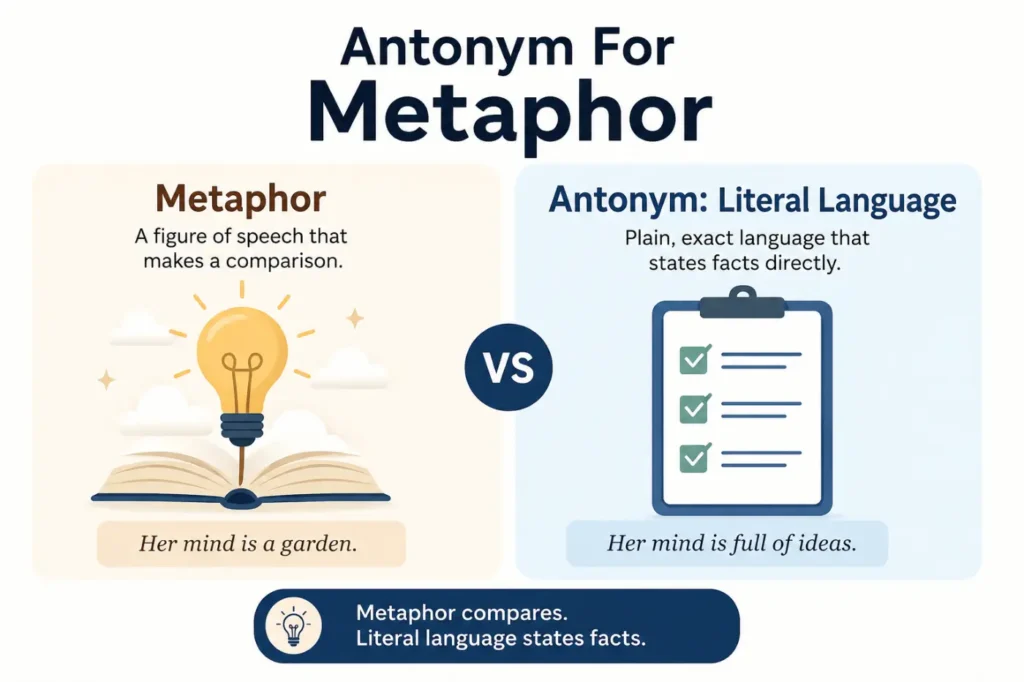
A metaphor for work describes a job, a task or a workplace as something else, without using “like” or “as.” “He has a boring job” states a fact. “His job was a treadmill” shows him moving all day and getting nowhere. The comparison is not literal. It borrows the qualities of the image, such as repetition, teamwork, weight or craft, to show what work feels like.
We use work metaphors in daily speech without noticing: the daily grind, the rat race, wearing many hats, climbing the ladder, a well-oiled machine, burning the midnight oil. Because they are so familiar, most of us stop hearing them. Writers who notice them can choose fresher ones, or use the familiar ones on purpose.
Why Do We Use Metaphors for Work?
Work is a big and complicated part of life. It includes tasks, people, pressure, pay, pride and exhaustion. A single word like “job” cannot hold all of that. Metaphors let writers choose which side to show: the grind, the teamwork, the craft or the cost.
Work metaphors also show how people feel about their jobs. Someone who calls their office a beehive probably feels part of a lively team. Someone who calls it a cage probably feels trapped. The image tells readers what the words alone might not say.
Work as Machines and Treadmills
These images show work as repetitive, mechanical and tiring.
- My job is a treadmill. I keep moving but never seem to get anywhere.
- She was a cog in a vast machine. A small part of a much bigger system.
- The office was a factory of emails. Constant production with no pause.
- Monday was a gear grinding into motion. The week began with effort.
- The daily grind wore him down like a millstone. Repetitive work slowly exhausted him.
Work as Beehives and Teams
These images show work as a shared effort with many roles.
- The office was a beehive. Everyone was busy and buzzing toward a shared goal.
- The team was an orchestra, and the manager held the baton. Many roles working in harmony.
- The restaurant kitchen was a ballet of knives and steam. Fast, coordinated and full of skill.
- Our project was a relay race, passing the baton each day. Work handed from one person to the next.
- The company was an ant colony. Many small workers building something large.
Work as Mountains and Burdens
These images show the weight of tasks and deadlines.
- My to-do list is a hydra. Every task I finish, two more appear.
- The inbox was a mountain with no summit. The messages never ended.
- She was juggling flaming torches. Many urgent tasks at once, each one risky to drop.
- Deadlines were a tide coming in. Pressure rose steadily.
- He carried the project on his back like a pack of bricks. A heavy responsibility that he carried alone.
Work as Ladders, Paths and Careers
These images show a career as a route with obstacles and goals.
- Her career was a winding trail with no signs. The direction was unclear.
- The promotion was a door that kept sliding shut. It stayed just out of reach.
- The glass ceiling was a roof she could see through but not break. A limit that was visible but hard to cross.
- Each job was a stepping stone across a wide river. Every role moved her closer to her goal.
- The corporate world was a jungle, and he learned to read the trees. A competitive place that needed careful navigation.
Work as Craft, Passion and Calling
Not all work feels like a grind. These images show pride, skill and purpose.
- Her work was a lit forge. Passion that heated and shaped everything she made.
- The code was a carefully woven tapestry. Fine detail and patience in every line.
- Teaching was planting seeds she might never see bloom. Work with long-term impact.
- For him, carpentry was a conversation with wood. A skill built on listening and response.
- Her job was a stage, and every day was a performance. Public effort that demanded energy and focus.
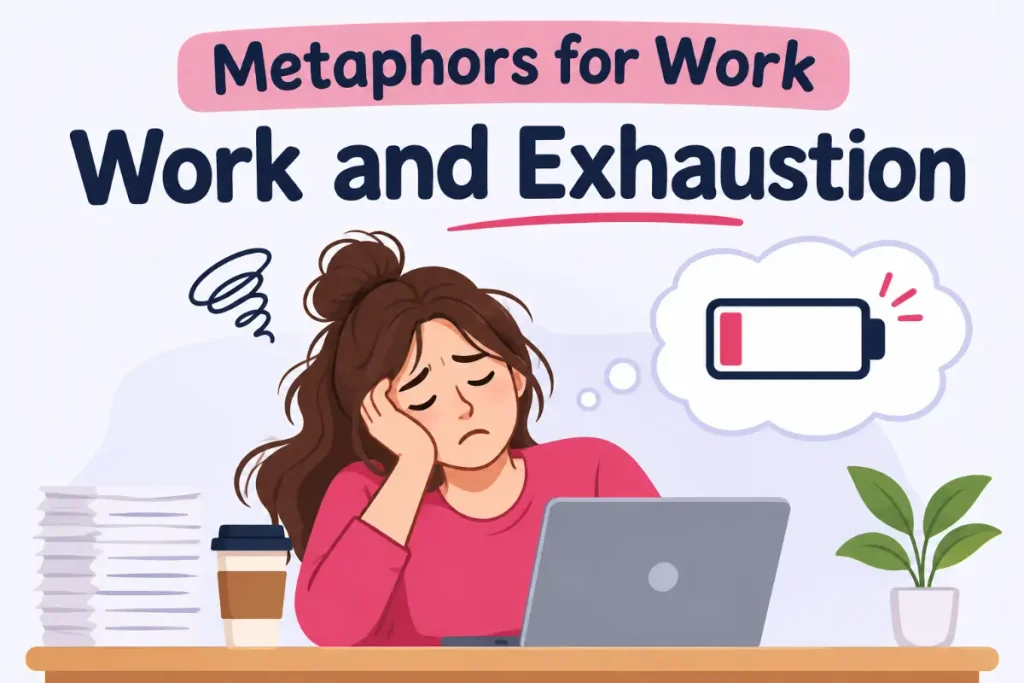
Work and Exhaustion
These images show tiredness, stress and burnout.
- He was a candle burning at both ends. Using up his energy too fast.
- She was running on fumes. Nearly out of energy but still moving.
- Her battery was at one percent. Almost completely drained.
- Burnout was a fire that left only ashes. Total exhaustion and loss of motivation.
- The long week was a desert with no oasis. Dry, tiring and without relief.
Work, Balance and Freedom
These images show the struggle to balance work with the rest of life.
- Work-life balance was a tightrope. Hard to keep steady.
- Remote work was a sailboat: freedom, but no one else steering. Independence that came with responsibility.
- Her schedule was a seesaw that tipped toward the office. Work outweighed everything else.
- The weekend was a harbor. A place of rest and calm.
- Time off was a deep breath between sentences. A short pause that made the next stretch easier.
Work, Money and Meaning
These images look at why we work and what it gives us.
- The high salary was golden handcuffs. Good pay that kept him stuck.
- Her job was a bridge to the life she wanted. A means to something bigger.
- Meaningful work is a compass. It gives direction beyond a paycheck.
- His dream job turned out to be a polished cage. It looked good but limited him.
- Work is the soil, and purpose is the sun. Both are needed for anything to grow.
Metaphors for Work in Sentences and Paragraphs
Here are short examples showing work metaphors in real sentences.
- By Friday afternoon, her inbox was a mountain with no summit, and she had run out of rope.
- The kitchen was a ballet of knives and steam, and every cook knew their steps.
- He had been a cog in the same machine for ten years, and he could feel his teeth wearing down.
- Teaching, she liked to say, was planting seeds she might never see bloom.
Here is a longer example that builds one image across a paragraph:
The newsroom at deadline was a beehive. Phones rang like wings, editors moved between desks with armfuls of copy, and every reporter carried a small, urgent hum. At 11:58 p.m., the last story slid into place, and the hive went quiet, as if a hundred bees had settled on the same flower.
And here is a shorter example about burnout:
By March, Dana was running on fumes. Her battery sat at one percent, and every new email was a small, cruel notification that she had no charge left.
The Workload Scale
Work comes in different strengths of pressure, and the best metaphors match them.
| Level | Type | Metaphor | What it shows |
|---|---|---|---|
| Calm | A quiet day | The office was a still pond. | Little pressure and steady pace |
| Steady | A normal day | The team was a well-oiled machine. | Smooth, regular work |
| Busy | A heavy day | The inbox was a mountain with no summit. | Lots to do |
| Stressful | A deadline rush | Deadlines were a tide coming in. | Pressure rising fast |
| Overloaded | Too much at once | She was juggling flaming torches. | Risky and exhausting |
| Burnout | Total exhaustion | Burnout was a fire that left only ashes. | Nothing left to give |
How Writers Use Work Metaphors
Work appears in stories, essays, speeches and personal writing. A few techniques help you use work metaphors well.
Match the image to the feeling. A treadmill suggests boredom, a beehive suggests teamwork, a forge suggests passion and a candle suggests exhaustion. Pick the one that matches what you want readers to feel.
Use details from the job itself. A baker might describe a hard week as dough that will not rise, a pilot as turbulence and a teacher as a classroom of seeds. Images from the character’s own trade make the writing feel real.
Show the people. Work is not just tasks. A metaphor about a team, a boss or a customer adds the human side, such as a manager who is a lighthouse or a coworker who is a rock.
Balance the grind with the good. Stories that show only the grind can feel heavy. Add images of pride, craft or friendship to show the full picture.
Use humor. Workplace humor works well with metaphors, like a to-do list that grows heads or a meeting that is a quicksand pit. A light touch helps readers connect.
Be careful with real people. In essays and posts, avoid metaphors that insult a real boss or coworker. Describe the situation, not a person’s worth.
How to Use Work Metaphors in Essays, Resumes and Speeches
In a school essay, follow three steps: find the metaphor, explain it and show its effect.
- Find it. Look for a comparison that says work is something, such as “my job is a treadmill.”
- Explain it. Say what the two things share. A treadmill keeps you moving but takes you nowhere, so the comparison shows repetitive work with no progress.
- Show the effect. Say what the reader feels, such as sympathy, frustration or recognition.
Here is a short sample paragraph:
The writer describes the factory as “a machine that eats people one shift at a time.” This metaphor suggests that the workers are used up and replaced without care. The word “eats” shows a hungry, impersonal system, which makes the reader feel anger on the workers’ behalf.
In a resume or cover letter, use metaphors sparingly. One short, clear image can make you memorable, such as “I act as a bridge between design and engineering.” Avoid long or flowery comparisons, and always back them up with real results.
In a speech, one work metaphor can set the tone. “Every job is a thread in a larger fabric” works well for a team talk. Link the image to the audience’s own role.
Work Metaphors That Have Lost Their Impact
Some expressions describe working life so often that they have become almost invisible. Phrases like “daily grind” and “rat race” are easy to understand, but they rarely give readers a fresh picture. Replacing them with more specific imagery can make your writing feel more personal and memorable.
| Overused expression | A more original way to express it |
|---|---|
| Rat race | A crowded track where everyone runs but nobody reaches the finish line. |
| Daily grind | A wheel turning through the same hours, day after day. |
| Nine to five | A clock quietly dividing life into permitted and borrowed hours. |
| Burning the midnight oil | The office lights became the last stars in an otherwise sleeping city. |
| Wearing many hats | One person juggling a dozen different roles without putting any down. |
| Swamped | Deadlines gathered like rising water, leaving barely enough room to breathe. |
A few things can make work-related metaphors less effective:
- Don’t force creativity. An unusual comparison isn’t automatically a good one. Make sure it helps readers understand the experience.
- Keep the image consistent. If you describe work as a battlefield, stay within that picture instead of suddenly comparing it to a garden.
- Show more than frustration. Work can bring pressure, but it can also offer purpose, friendship, achievement, and personal growth.
- Be thoughtful about your comparisons. Describe difficult situations without turning colleagues or employees into the target of an insult.
- Give abstract feelings some context. A metaphor should help readers recognise what is happening, not leave them guessing what you mean.
Try It Yourself: Write a Work Metaphor in Five Steps
Use these steps with any job or workday.
- Choose a moment. For example: the last hour before a big deadline.
- Decide the feeling. Is it stress, pride, boredom or teamwork?
- Pick a source. Think of machines, nature, travel, kitchens, music or sports.
- Write three versions. For example: The clock was a drumbeat. / Our desks were a hive. / The deadline was a tide at our knees.
- Choose the best one and add a detail. The deadline was a tide at our knees, and someone passed around cold coffee like buckets.
Now write a second version about a good day at work, using a forge, an orchestra or a harbor.
Frequently Asked Questions
What is a good metaphor for work?
“Work is a treadmill” is common for repetitive jobs. “The office is a beehive” works well for busy, cooperative teams. Choose the one that matches your message.
What is a metaphor for a job you do not like?
Try a treadmill, a cage, a cog in a machine or a desert with no oasis. They show repetition, limits or lack of meaning.
What is a metaphor for teamwork?
Images of coordination work best: an orchestra, a relay race, an ant colony or gears that mesh. They show many parts working toward one goal.
What is a metaphor for work burnout?
Try a candle burning at both ends, a battery at one percent, running on fumes or a fire that left only ashes. They show energy used up.
Is “rat race” a metaphor?
Yes. It compares work to a race run by rats, suggesting that people compete and hurry without getting anywhere meaningful.
Can I use metaphors in a resume or cover letter?
Yes, but sparingly. One short image, like “a bridge between teams,” can help you stand out. Always support it with real results.
What is a metaphor for a boss or manager?
Try a captain, a conductor, a lighthouse or a gardener, depending on the style. A harsh boss might be a storm cloud, while a supportive one might be a handrail.
Conclusion
Work fills a large part of life, so it deserves strong images. A treadmill, a beehive, a forge and a candle burning at both ends each show a different side of the same experience: repetition, teamwork, pride and exhaustion. The best writing about work uses the right image for the right feeling and lets the reader see the person behind the job.
When you write about work, match the metaphor to the mood, use details from the job itself and balance the grind with moments of craft or friendship. Avoid worn-out phrases when you can, aim your images at situations instead of people, and explain your metaphor in school writing. One well-chosen image can say more about a workday than a page of complaints or praise.
Related Metaphors
- For the goals that make work worthwhile, read our guide to success metaphors.
- For the setbacks that come with working life, see metaphors for failure.
- To explore what work pays for, try metaphors for money.