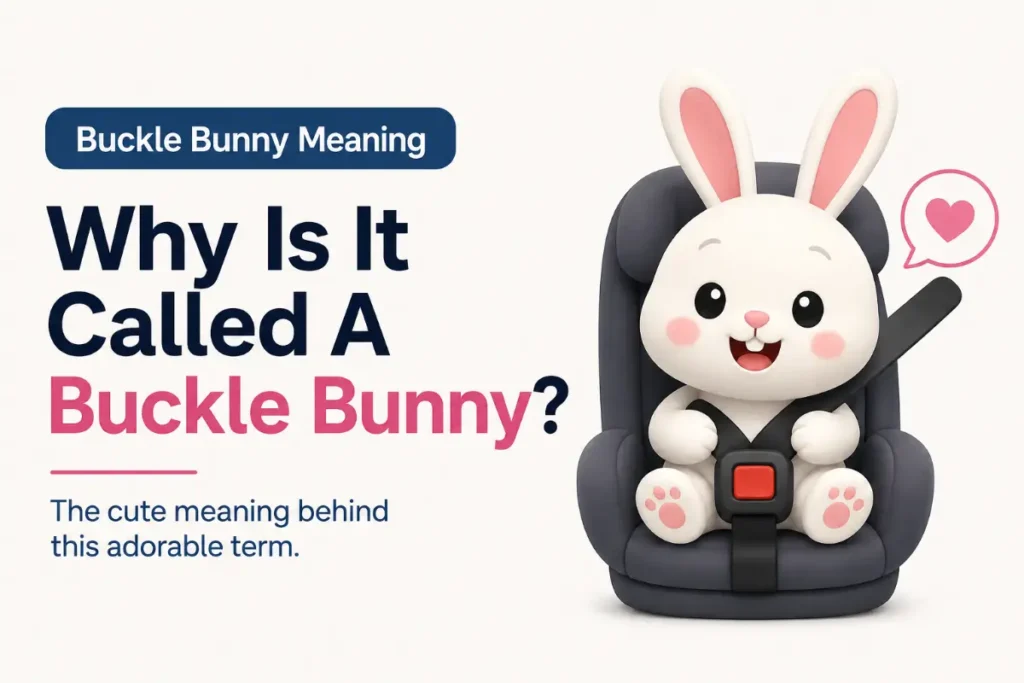
If you have spent much time around rodeos, Western culture, country music, or cowboy social media, you may have heard someone called a buckle bunny and wondered about the buckle bunny meaning. It sounds playful, but the expression carries more baggage than the two words suggest.
The term is rodeo slang for a woman who is especially interested in rodeo cowboys, traditionally with an emphasis on romantic or sexual attraction. Dictionary sources define it as a female groupie of rodeo cowboys.
However, the phrase is not always used in exactly the same way. Depending on the speaker and situation, it can sound teasing, flirtatious, dismissive, judgmental, or even self empowering. Modern Western culture has also given the term a new life through fashion, social media, and music.
So if you searched for the buckle bunny meaning, you are probably looking for more than a one line definition. You want to know where the expression came from, what it implies, what buckle bunny outfits look like, and if calling someone one is actually an insult. You may also have encountered Tanner Adell’s song Buckle Bunny and wondered how the modern use connects with the older rodeo slang.
This guide explains all of that in plain English while keeping the cultural context intact.
Quick Definition
A buckle bunny is a slang term traditionally used for a woman who is attracted to rodeo cowboys and follows or socializes around rodeo events. The phrase is connected to the decorative belt buckles awarded to successful rodeo competitors. Depending on tone and context, it can be playful, affectionate, teasing, or derogatory.
What Does Buckle Bunny Mean
At its simplest, the phrase describes a woman who is strongly interested in rodeo cowboys. The traditional stereotype focuses especially on women who are attracted to successful competitors and spend time around rodeos, rodeo bars, backstage areas, or other parts of the Western social scene.
The word buckle is the key to understanding the expression. In rodeo culture, large decorative belt buckles are associated with competition victories and status. A winning buckle can therefore act as a visible symbol of a cowboy’s success.
The word bunny has also appeared in other forms of American slang to describe a woman associated with a particular activity or subculture. Similar constructions include terms such as ski bunny. The combination gives the phrase its distinctive Western flavor.
The important point is that the term describes a social stereotype rather than a formal role in rodeo. A woman who watches rodeo, wears cowboy boots, dates a cowboy, or loves Western culture is not automatically a buckle bunny. The label traditionally implies a particular kind of romantic or sexual interest in rodeo competitors.
That distinction matters because the phrase is often thrown around too casually.
Is Buckle Bunny An Insult
Sometimes it is.
The phrase has historically carried a negative edge because it can reduce a woman to her attraction to male rodeo competitors. Some uses imply that she attends rodeos mainly to pursue cowboys rather than because she genuinely enjoys the sport or Western culture.
That is why calling someone a buckle bunny can come across as insulting.
At the same time, the word is not universally treated as an insult. Its meaning depends heavily on who says it, how it is said, and how the person being described feels about the label.
A useful way to understand the range is to look at three common situations.
- Dismissive use. Someone may use the term to suggest that a woman is only interested in rodeo because she wants to date or sleep with cowboys.
- Playful use. Friends or people within the rodeo community may use it jokingly without intending serious criticism.
- Self identifying use. Some women have adopted the phrase themselves and turned it into part of a confident Western identity.
That third use has become more visible in modern culture. D Magazine reported in 2025 on PBR wife Kaitlyn Davis embracing the label and discussing how its meaning has changed for some younger women. She described how a term once used against her became something she could use as part of her own identity.
So the safest answer is simple: it can be an insult, but it is not always intended as one. Context does most of the heavy lifting.
The playful name “Buckle Bunny” can also appear on clothing or other fan items, so understanding what “merch” means can be useful when browsing related products or content.
Why Is It Called A Buckle Bunny
The phrase is tied to the importance of championship belt buckles in rodeo culture.
Unlike many sports where winners receive medals or trophies, rodeo competitors have long been associated with large decorative buckles as prizes. These buckles can represent victories, championships, and status within the sport.
A woman described by the term was traditionally imagined as being interested in the cowboys who had those coveted buckles.
That gives the phrase a built in metaphor. The buckle represents the successful rodeo competitor while the bunny represents the person pursuing him.
Historical sources support this connection. A first person account about photographing rodeo culture in the 1980s described the term as referring to a woman looking for a winning cowboy and specifically connected the label to the belt buckle prizes that signaled rodeo victories.
The phrase therefore makes much more sense once you understand the social importance of the buckle. It is not simply a random combination of a piece of clothing and an animal.
Buckle Bunny Origin
The exact first appearance of the expression is difficult to pin down with complete certainty. Slang rarely arrives with a neat birth certificate showing the precise person, date, and location where it was invented.
What we can establish is that the expression belongs to North American rodeo and Western slang and has been used for decades to describe women associated with rodeo cowboys.
A modern slang dictionary entry defines the phrase as a woman who seeks short term sexual relationships with rodeo cowboys. The entry comes from The Routledge Dictionary of Modern American Slang and Unconventional English, showing that the expression has a documented place in American slang vocabulary rather than being a recent internet invention.
The phrase also appears in accounts of rodeo culture from the 1980s. A photographer writing about her experiences at rodeos described learning the expression as a label for a woman looking for a winning cowboy.
That history tells us something useful about slang.
The modern internet did not create the expression. Social media simply made an older piece of rodeo vocabulary much easier for people outside the rodeo world to encounter.
The Role Of The Rodeo Buckle
To understand the social meaning behind the phrase, it helps to understand what the buckle represents.
A championship rodeo buckle is not simply an ordinary belt accessory. It can function as a visible marker of achievement.
For competitors, winning one can represent:
- Skill.
- Competitive success.
- Recognition.
- Status within the rodeo community.
- A memorable achievement that can be displayed long after an event ends.
That makes the buckle an especially effective symbol in slang.
Someone who says a woman is chasing the buckle is essentially saying that she is interested in the prestige attached to successful cowboys.
The expression therefore combines romance, competition, status, and Western identity in only two words.
Buckle Bunny In Rodeo Culture
The phrase makes the most sense when viewed within the social environment surrounding rodeo.
Rodeos are sporting events, but they are also social gatherings. Competitors, families, friends, sponsors, fans, musicians, vendors, and other members of the Western community can all share the same space.
That creates a social world around the competition itself.
A person attending a rodeo might be there for completely different reasons. Someone may love bull riding. Another person may compete in barrel racing. Someone else may be there because their family has been involved in ranching for generations. Another visitor might simply enjoy the atmosphere.
The label in question narrows that broad audience down to one stereotype.
It suggests that the woman’s primary interest is the cowboys rather than the competition.
That is why the term can feel unfair when applied to someone who genuinely participates in Western culture. A woman can love rodeo and still have nothing to do with the stereotype.
Buckle Bunny Outfits
Searches for buckle bunny outfits often come from people trying to understand the visual style associated with the stereotype.
There is no official outfit.
That point is worth making because internet descriptions often turn a slang term into a rigid costume. The stereotypical look is usually built around recognizable Western fashion such as:
- Cowboy boots.
- Denim jeans or shorts.
- A Western style shirt.
- A cowboy hat.
- A statement belt and buckle.
- Rhinestones or other Western inspired accessories.
- Jewelry with turquoise or Western motifs.
- A fitted or deliberately eye catching outfit for a night out.
These pieces are not exclusive to the stereotype. They are ordinary elements of Western fashion and rodeo culture.
A woman wearing boots, jeans, a hat, and a big belt buckle is not automatically a buckle bunny.
That is an important distinction.
Fashion can signal participation in a culture without telling you anything about someone’s relationships or intentions.
Modern Western fashion has also moved far beyond the old stereotype. Some people mix traditional cowboy pieces with denim, rhinestones, fringe, vintage clothing, Y2K influences, or contemporary country fashion.
So if you are searching for outfit inspiration, it is more accurate to think in terms of Western rodeo fashion than treating the slang label as a dress code.
Is There A Specific Buckle Bunny Look
Not really.
The internet often creates visual stereotypes because they are easy to recognize and share. A particular combination of boots, denim, a cowboy hat, and a fitted shirt can quickly become associated with the term.
But real people do not dress according to slang definitions.
Someone who follows rodeo fashion may dress conservatively, casually, traditionally, or dramatically. Another person may show up in ordinary street clothes.
The term is about a social stereotype rather than a uniform.
This distinction also prevents a common mistake: judging someone’s intentions based on clothing.
Western clothing tells you what someone is wearing. It does not tell you who they are attracted to.
Buckle Bunny Slang
The phrase is clearly informal slang rather than standard formal English.
You would expect to encounter it in:
- Rodeo conversations.
- Western social circles.
- Country music culture.
- Online discussions.
- Social media.
- Informal journalism.
- Popular entertainment.
It would be inappropriate in most professional writing unless you were discussing the term itself.
The expression also carries a cultural assumption, so writers should avoid presenting it as a neutral label for every woman who attends a rodeo.
A more neutral description would be female rodeo fan, rodeo supporter, rodeo enthusiast, or simply fan.
How People Use The Phrase In A Sentence
Because the expression is slang, the surrounding sentence often reveals the speaker’s attitude.
Here are natural examples:
- He joked that the rodeo always attracted plenty of buckle bunnies.
- She hates being called a buckle bunny because she actually competes in barrel racing.
- The term was once used as an insult but has been reclaimed by some women in Western culture.
- The article explained the old rodeo slang behind the phrase.
- She wore a Western outfit but did not appreciate being labeled a buckle bunny.
These examples show why tone matters.
The same phrase can sound playful in one conversation and deeply disrespectful in another.
Buckle Bunny Vs Cowgirl
These terms are not interchangeable.
- A cowgirl can be a woman who participates in Western riding, ranching, rodeo, or other parts of cowboy culture.
- A buckle bunny is a slang label traditionally centered on attraction to rodeo cowboys.
- A woman can be both, but the words describe different things.
For example, a professional barrel racer may be deeply involved in rodeo competition. Calling her a cowgirl could describe her participation in the culture.
Calling her a buckle bunny introduces an entirely different assumption about her romantic interests.
That is why substituting one term for the other can be misleading.
Buckle Bunny Vs Rodeo Fan
A rodeo fan simply enjoys watching or supporting rodeo.
There is no romantic requirement.
Someone might attend every major event in their area, know the rules of bull riding, follow professional competitors, and still have absolutely no interest in dating anyone involved in the sport.
The slang term carries a much narrower implication.
This is one reason modern usage can be controversial. It can erase genuine fandom by assuming that a woman’s interest in the sport is really an interest in the men competing.
While “Buckle Bunny” has a cultural meaning rather than a biblical one, readers interested in symbolic numbers may also want to explore the biblical meaning of 222.
Is Buckle Bunny A Sexual Term
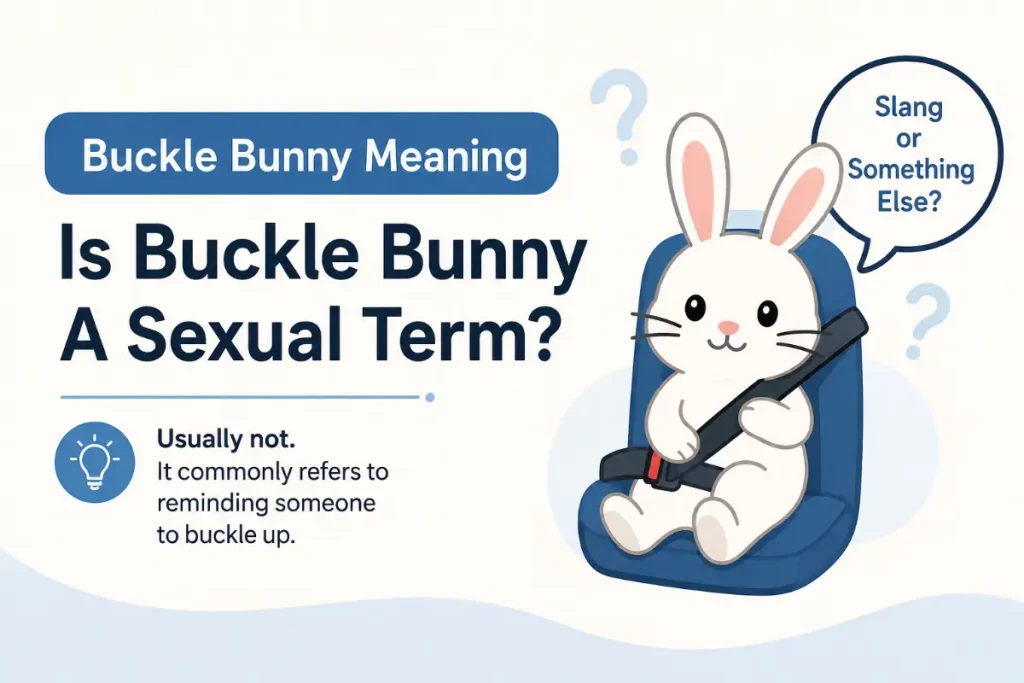
The expression can carry sexual implications.
Traditional slang definitions often describe women who seek romantic or sexual relationships with rodeo cowboys. Some informal uses are much harsher and reduce the woman almost entirely to sexual behavior.
However, the phrase does not automatically describe a specific sexual act or relationship.
It is better understood as a sexualized social label that can imply romantic or physical interest in rodeo competitors.
The degree of sexual meaning depends on context.
A person using the term jokingly may mean little more than rodeo groupie. Another speaker may intend a much more insulting meaning.
That difference is why repeating the harshest internet definitions as if they were the universal meaning would be inaccurate.
What Is A Male Buckle Bunny Called
There is no universally established male equivalent that carries exactly the same level of recognition.
The traditional expression is specifically gendered toward women.
A man who follows rodeo competitors because of romantic or sexual attraction might simply be called a groupie, rodeo groupie, or fan, depending on the context.
You may also encounter creative or joking terms online, but those should not be treated as standard vocabulary.
This is similar to many forms of slang. People sometimes invent parallel expressions that make sense locally, but that does not make them established terms.
If you are writing for a general American audience, male rodeo groupie is clearer than inventing a supposed official masculine version.
Buckle Bunny And Puck Bunny
A useful comparison is puck bunny.
A puck bunny is a slang term associated with female hockey fans who are stereotypically portrayed as being primarily interested in hockey players rather than the sport itself. The term is especially associated with Canadian hockey culture.
The structure is similar:
Puck points to hockey.
Bunny identifies the person in the slang construction.
The rodeo version substitutes buckle for puck.
This comparison helps explain how sports slang can develop parallel terms for female fans associated with players. Still, the cultural history of each expression is different, so they should not be treated as exact equivalents.
Buckle Bunny In Popular Culture
The expression has moved beyond rodeo arenas and into wider popular culture.
It has appeared in journalism, country music, fashion, social media, and entertainment.
A Los Angeles Times article from 2013 used the expression while discussing NASCAR driver Danica Patrick wearing Western clothing and explained the term as rodeo cowboy groupie slang.
That example is useful because it shows how the phrase can travel outside its original environment. Once a slang term becomes recognizable, writers can use it to evoke an entire cultural image quickly.
The term has also become part of contemporary country music culture through Tanner Adell.
Tanner Adell And Buckle Bunny
Tanner Adell released Buckle Bunny in 2023 as part of her country music work. Her official artist channel published the song’s official audio and lyric video in 2023.
The song helped push the phrase toward a younger audience that may not have grown up around rodeos.
That matters because modern artists can reshape old slang.
A term that once carried a strongly dismissive meaning can be presented differently by the person using it. Adell’s use of the phrase fits into a broader conversation about women taking ownership of Western imagery and country music identity.
The phrase has also become visible in merchandise connected with her music. Her official store currently lists items including a Buckle Bunny Picture Hoodie, Buckle Bunny State Fair Cowboy Hat, and Buckle Bunny Tour Tee.
That is a good example of how a slang term can move from a niche label into branding and fashion.
Buckle Bunny Song And Lyrics
If you searched for Buckle Bunny song or Buckle Bunny lyrics, you are most likely looking for Tanner Adell’s 2023 country song.
The official lyric video was released in July 2023, while the official audio followed in August 2023.
The song is important to the modern meaning of the phrase because it presents the term within contemporary country music rather than only as older rodeo slang.
I would avoid treating song lyrics as a dictionary definition, though. Music often plays with identity, attitude, exaggeration, humor, and cultural imagery.
A song can reclaim or reshape a word without changing its historical definition.
For the actual lyrics, use an authorized lyrics source rather than relying on random copies posted online.
Why The Meaning Has Changed
Slang changes when the people using it change.
The older version of the expression often carried a judgment about women who pursued rodeo competitors. The newer version can sometimes be playful, fashionable, or self chosen.
That does not erase the older meaning.
Instead, both meanings can exist at the same time.
This happens with slang all the time. A word may begin as an insult, become popular through entertainment, and eventually be used by members of the targeted group as a badge of identity.
The important question is not simply What does the word mean?
It is also Who is saying it and why?
That is the difference between dictionary meaning and social meaning.
Can Someone Be Proud To Be A Buckle Bunny
Yes.
Some women now use the label intentionally and positively.
The 2025 interview with Kaitlyn Davis provides a clear modern example. She described how the term had once been directed at her in a derogatory way but said she came to like it and incorporated it into her own branding.
This kind of reclamation changes the emotional force of a slang term.
If someone chooses the label for herself, it can mean confidence, affection for rodeo culture, attraction to cowboys, or simply a playful Western persona.
That does not mean everyone will interpret it positively.
A self chosen label and a label imposed by someone else can have completely different meanings.
Common Misunderstandings
Several misconceptions appear repeatedly in discussions of this phrase.
Every Rodeo Woman Is A Buckle Bunny
No.
Women can participate in rodeo as competitors, coaches, trainers, organizers, fans, photographers, journalists, family members, or spectators.
The slang label does not describe all women in the rodeo world.
Wearing Cowboy Clothes Makes Someone A Buckle Bunny
No.
Cowboy boots, hats, denim, belt buckles, fringe, and Western shirts are fashion choices. They do not establish someone’s romantic interests.
The Term Always Means Sex
Not necessarily.
Sexual implications are part of the traditional slang meaning, but actual usage ranges from teasing groupie language to a much more negative sexual stereotype.
The Term Is Always Offensive
No.
It can be offensive, but some people use it humorously or embrace it themselves.
Buckle Bunny Is A Formal Rodeo Role
No.
It is slang.
It does not describe an official position, competition, membership category, or professional title.
How To Use The Phrase Respectfully
- If you are writing about rodeo culture, context is everything.
- If you are describing someone who uses the term for herself, you can explain that clearly.
- If you are describing another person, be careful about presenting a sexual stereotype as an established fact.
Instead of writing:
She is a buckle bunny.
you could write:
She jokingly describes herself as a buckle bunny because she loves following rodeo competitors.
That sentence makes the person’s own relationship with the term clear. If you are reporting on someone else’s use of the word, attribution is equally helpful.
For example:
Fans on the rodeo circuit sometimes use the slang term buckle bunny for women who are especially interested in rodeo competitors.
This gives readers context instead of treating a culturally loaded expression as neutral vocabulary.
The Grammar Of Buckle Bunny
Grammatically, buckle bunny is a noun phrase.
The plural form is buckle bunnies. Dictionary sources list the phrase as a noun and give buckle bunnies as its plural.
Examples include:
- She called herself a buckle bunny as a joke.
- The article discusses the history of buckle bunnies in rodeo culture.
- Several fans were discussing the term after the event.
The phrase is normally written as two separate words.
When used as an adjective before another noun, it can function informally as a modifier.
For example:
buckle bunny fashion
or
buckle bunny culture
These combinations are informal and should be understood as descriptive rather than formal terminology.
If you encounter “LMS” while exploring online learning, courses, or digital communities related to the topic, knowing what LMS stands for can make the terminology easier to understand.
Pronunciation
The phrase is pronounced naturally as:
BUCK ul BUN ee
The first word is pronounced like buckle.
The second sounds like bunny.
The emphasis generally falls on the first syllable of each word.
Because the expression is ordinary English vocabulary rather than a foreign phrase, most American English speakers can pronounce it intuitively.
Is The Phrase Still Used Today
Yes.
The expression remains recognizable in rodeo and Western culture and has gained additional visibility through country music, fashion, and social media.
Its modern reach is broader than its original setting.
Tanner Adell’s music and merchandise demonstrate how the phrase now functions as part of contemporary country culture.
At the same time, older rodeo meanings have not disappeared.
That creates an interesting situation where two people can hear the same phrase and understand it differently.
One person may hear an insult.
Another may hear a playful nickname.
A third may think of a country song.
A fourth may simply think of rodeo culture.
All four interpretations can exist in modern English.
Related Western Slang
If you are learning the language of rodeo and Western culture, several related terms are worth understanding.
Cowboy generally refers to a person associated with ranching, riding, or Western culture and can also refer specifically to rodeo competitors.
Cowgirl is the corresponding term for a woman involved in Western riding or culture.
Rodeo groupie is a more neutral description of someone who follows rodeo competitors for social or romantic reasons.
Puck bunny is a similar sports slang construction associated with hockey culture.
Groupie is a broader term that can describe an enthusiastic follower who seeks close social or romantic connections with celebrities, musicians, athletes, or other public figures.
Understanding these related terms makes the social meaning easier to recognize.
Frequently Asked Questions
What Does Buckle Bunny Mean In Slang
In slang, the phrase traditionally describes a woman who is attracted to rodeo cowboys and may seek romantic or sexual relationships with them. The expression is associated with rodeo culture and the decorative belt buckles awarded to successful competitors. Its tone can range from playful to insulting, so context and the speaker’s intention matter.
Is Calling Someone A Buckle Bunny An Insult
It can be. The expression has historically been used in a judgmental way to suggest that a woman attends rodeos mainly to pursue cowboys. However, some women and members of Western culture now use the phrase playfully or positively. The safest interpretation depends on who uses it, the surrounding conversation, and the person’s relationship with the label.
Where Did The Term Buckle Bunny Come From
The expression comes from North American rodeo slang. The buckle refers to the large belt buckles associated with rodeo victories, while bunny belongs to a broader tradition of slang labels for women associated with particular activities or subcultures. The phrase has been documented in American slang and rodeo accounts for decades.
What Are Buckle Bunny Outfits
There is no official outfit. The stereotype is often associated with Western fashion such as cowboy boots, denim, cowboy hats, Western shirts, statement belt buckles, rhinestones, and other country inspired accessories. However, wearing Western clothing does not make someone a buckle bunny. Fashion describes appearance, not a person’s romantic interests.
Is Buckle Bunny A Bad Word
It can be offensive when used to stereotype or demean a woman. The phrase has a history of sexualized and dismissive usage. However, some women now use it positively or jokingly and have incorporated it into fashion, music, or personal branding. The word is therefore better described as loaded slang rather than automatically good or bad.
What Is A Male Buckle Bunny Called
There is no universally accepted male equivalent with the same established meaning. A man who follows rodeo competitors because of romantic or sexual attraction might simply be called a rodeo groupie or fan. Creative alternatives sometimes appear online, but they are not standardized terms and should not be presented as official vocabulary.
What Is The Buckle Bunny Song
Buckle Bunny is a country song by Tanner Adell released in 2023. The song helped bring the phrase to a newer audience outside traditional rodeo circles. Tanner Adell also released an official lyric video and official audio, and her official store has used the phrase in merchandise and branding.
What Does Buckle Mean In Buckle Bunny
The buckle refers to the large decorative belt buckles associated with rodeo awards and victories. These buckles can symbolize competitive achievement and status. The slang phrase uses that symbol to describe women who are stereotypically attracted to successful rodeo cowboys.
Final Takeaway
The buckle bunny expression comes from rodeo and Western slang and traditionally describes a woman who is especially attracted to rodeo cowboys. The phrase is connected to the large belt buckles awarded to successful competitors and has been used for decades in North American rodeo culture.
Its tone is more complicated than a basic dictionary definition suggests. In some situations, it is dismissive or sexualized. In others, it is playful. Some women have even reclaimed it and turned it into part of their Western identity.
The biggest mistake is assuming that every woman at a rodeo fits the label. A rodeo fan, cowgirl, competitor, or woman wearing cowboy boots does not automatically fall into the stereotype.
Language works through context. With slang especially, who says the word, why they say it, and how the person being described understands it can matter just as much as the dictionary definition.