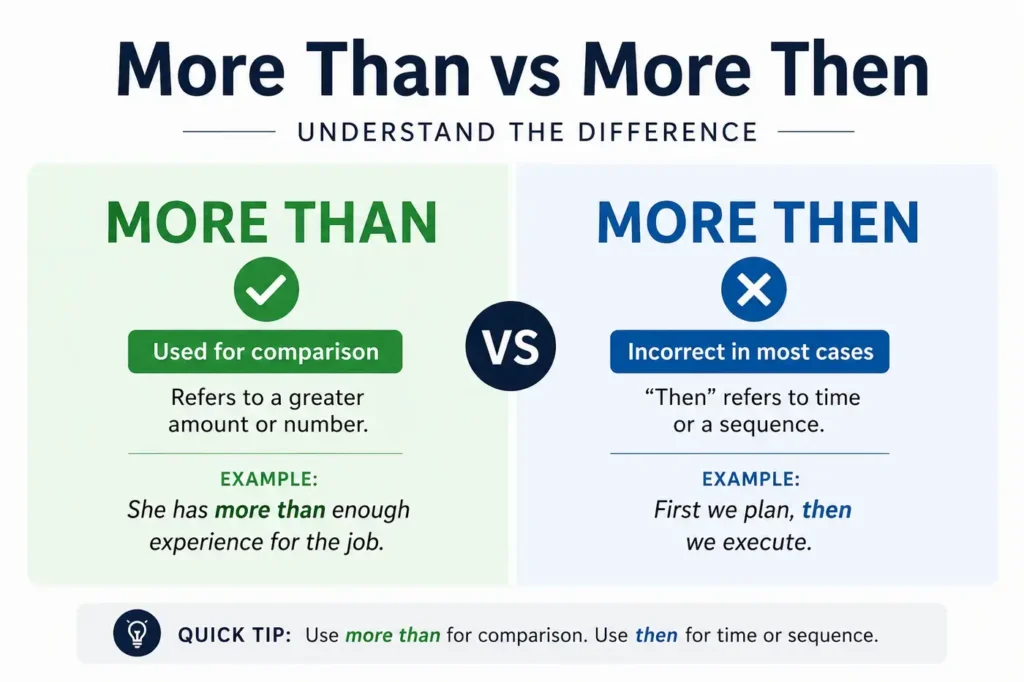
If you’ve searched for filed vs filled, you’re probably wondering if you’ve used the wrong word in an email, school assignment, legal document, or tax form. It’s an easy mistake to make because the two words look and sound similar. They also differ by only one letter. Despite that, they have completely different meanings and can’t be used interchangeably.
The confusion usually starts because both words are past tense verbs, and their pronunciation is close enough that many people mishear them in conversation. Spellcheck doesn’t always help either. Since both are correctly spelled English words, a grammar checker may not flag the mistake if the sentence is grammatically correct but semantically wrong.
The good news is that the difference is simple once you understand what each verb means. One relates to submitting, organizing, or storing documents, while the other means making something full or putting something inside a space or container.
This guide explains each word in plain English. You’ll learn the correct meaning, pronunciation, grammar, common usage, sentence examples, and practical writing tips. By the end, you’ll know exactly which word belongs in every situation and avoid one of the most common word mix ups in English.
Quick Definition
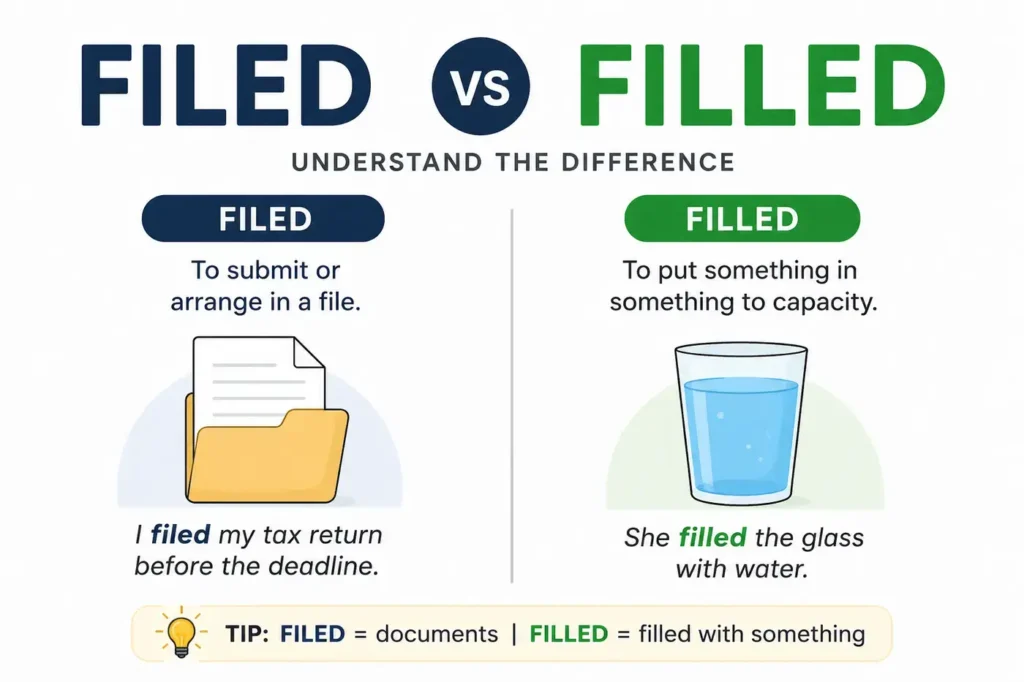
Filed is the past tense of file and means submitted, organized, or stored documents or information. Filled is the past tense of fill and means made something full or placed something into a space or container. The words have different meanings, different uses, and should never replace one another.
Quick Answer
The easiest way to remember the difference is to think about the action.
- Use filed when talking about documents, records, applications, lawsuits, taxes, or anything officially submitted or organized.
- Use filled when talking about making something full, adding a substance to a container, or occupying a space.
- If you can replace the word with submitted or organized, choose filed.
- If you can replace it with made full or packed, choose filled.
For example:
- She filed her tax return before the deadline.
- He filled the glass with water.
Writers who enjoy clearing up tricky word pairs may also want to learn why “unfazed” is correct, especially since this mistake appears surprisingly often in everyday writing.
Comparison Table
| Feature | Filed | Filled |
|---|---|---|
| Base verb | File | Fill |
| Part of speech | Past tense verb Past participle | Past tense verb Past participle |
| Meaning | Submitted stored or organized | Made full or placed something into a space |
| Origin | From file | From fill |
| Common contexts | Legal documents taxes records applications office work | Containers forms rooms emotions time spaces |
| Formality | Neutral to formal | Neutral |
| Usage frequency | Common in business legal and administrative writing | Common in everyday English |
| Example | She filed the paperwork yesterday. | She filled the bottle with water. |
Meaning Of Filed
Filed is the past tense and past participle of the verb file. It usually refers to submitting, organizing, recording, or storing documents and information. The word appears frequently in legal writing, business communication, government forms, accounting, and office work.
For example, when someone says they filed their taxes, they mean they officially submitted the required tax documents to the appropriate authority. Likewise, a lawyer may file a lawsuit, an employee may file a report, or a company may file official paperwork with a government agency.
Here are some common situations where filed is the correct choice.
- Filing tax returns.
- Filing legal documents.
- Filing insurance claims.
- Filing complaints.
- Filing reports.
- Filing patents.
- Filing employment paperwork.
- Filing court documents.
The word can also describe organizing papers into folders or storage systems instead of submitting them.
For example:
- She filed the invoices alphabetically.
- The assistant filed the employee records after updating them.
Filing Meaning
The verb file has several related meanings, but they all revolve around organizing or officially submitting information.
Depending on the context, filing can mean:
- Submitting official paperwork.
- Organizing documents for future reference.
- Creating a formal record.
- Recording information in an official system.
This explains why you’ll often hear phrases such as filing documents, filing taxes, filing a lawsuit, or filing a complaint.
Meaning Of Filled
Filled is the past tense and past participle of the verb fill. It means making something full by putting something into it or occupying an available space.
Unlike filed, this word usually describes physical objects, spaces, emotions, or quantities rather than documents.
For example:
- She filled the bottle with cold water.
- The room filled with laughter after the joke.
- They filled the basket with fresh fruit.
- His eyes filled with tears.
- The stadium quickly filled with excited fans.
Notice that each example involves adding something until a space, container, or area becomes occupied.
Filling Meaning
The word filling generally refers to the act of making something full.
Depending on the situation, it may describe:
- Filling a glass with water.
- Filling out information on a form.
- Filling empty seats in a theater.
- Filling a prescription.
- Filling a sandwich with ingredients.
- Filling a cavity at the dentist.
Although the words filing and filling look similar, they describe completely different actions.
Key Differences in Filed vs Filled
The easiest way to separate these words is by thinking about their purpose instead of their spelling. One deals with documents and official records, while the other deals with adding something to a space until it becomes full.
Here’s a side by side comparison.
| Filed | Filled |
|---|---|
| Means submitted or organized | Means made full |
| Related to documents and records | Related to containers spaces and quantities |
| Used in legal business and administrative writing | Used in everyday conversation and general writing |
| Can mean creating an official record | Can describe physical objects emotions or empty spaces |
Another helpful way to remember the difference is to ask yourself a simple question.
Are you talking about paperwork or organization?
If the answer is yes, filed is probably the right choice.
Are you talking about making something full?
If so, filled is almost certainly the correct word.
Which Word Is Correct
Neither word is more correct than the other. The correct choice depends entirely on what you’re trying to say.
Choose filed if the sentence involves:
- Official documents.
- Government paperwork.
- Tax returns.
- Court records.
- Insurance claims.
- Office files.
- Reports or applications.
Choose filled if the sentence involves:
- Bottles.
- Cups.
- Boxes.
- Rooms.
- Bags.
- Emotions.
- Empty spaces.
A quick substitution test can also help.
If submitted makes sense, use filed.
If made full makes sense, use filled.
This simple check catches most mistakes before they happen.
Pronunciation Guide
The similar pronunciation of these words is one reason people confuse them in writing. Although they don’t sound identical, the difference is subtle, especially in fast conversation.
Filed
IPA pronunciation:
/faɪld/
Syllable breakdown:
Filed
Rhymes with:
child
Filled
IPA pronunciation:
/fɪld/
Syllable breakdown:
Filled
Rhymes with:
build
The biggest pronunciation difference is the vowel sound.
- Filed begins with the long eye sound.
- Filled begins with the short ih sound.
Saying them slowly a few times helps train your ear to recognize the difference.
Filing Vs Filling Pronunciation
The same vowel difference appears in their present participle forms.
- Filing is pronounced /ˈfaɪlɪŋ/.
- Filling is pronounced /ˈfɪlɪŋ/.
Although they differ by only one sound, native speakers hear them as two completely different words. Listening carefully to the first vowel is usually enough to tell them apart.
Expert Writing Tip
Many writers don’t confuse filed and filled because they don’t know the spelling. They confuse them because they stop thinking about the verb behind the word.
Before choosing either word, identify the action.
If someone is submitting, recording, or organizing paperwork, the verb is file.
If someone is making something full, adding a substance, or occupying space, the verb is fill.
Thinking about the base verb instead of the finished sentence makes the correct choice much easier and helps prevent mistakes that spellcheck may miss.
Filed And Filled Examples In Sentences
Reading examples is one of the fastest ways to understand the difference between these two words. Instead of memorizing definitions, pay attention to the action taking place in each sentence. Ask yourself if someone is submitting or organizing something, or making something full.
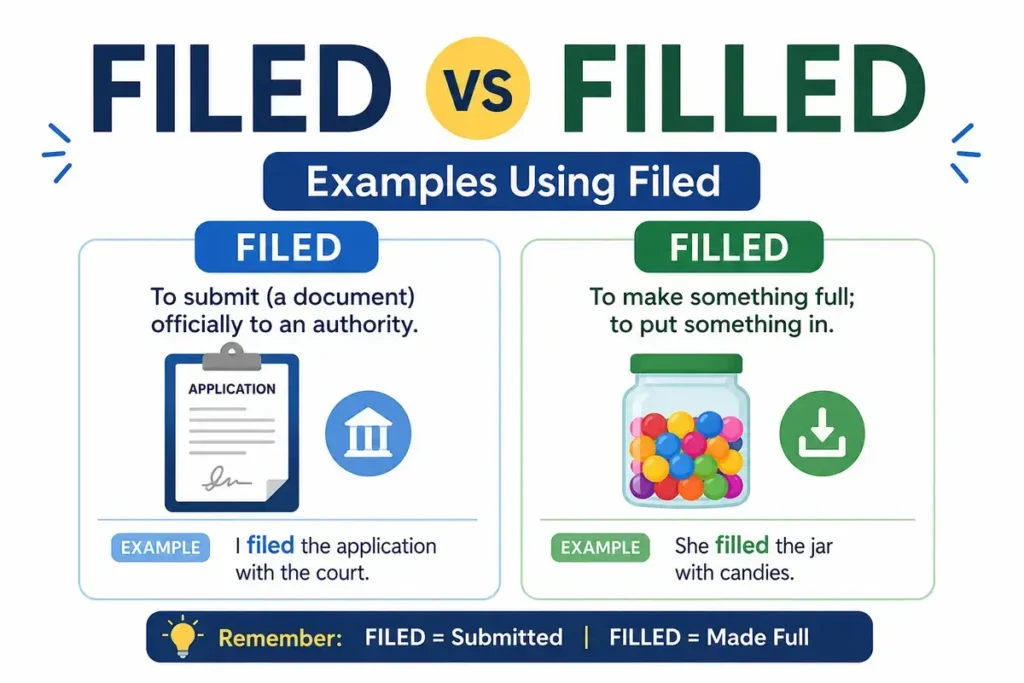
Examples Using Filed
Each sentence below uses filed correctly because it refers to submitting, recording, or organizing documents or information.
- She filed her tax return a week before the deadline.
- The attorney filed the lawsuit in federal court.
- Our accountant filed all of the business records electronically.
- He filed an insurance claim after the accident.
- The company filed a patent for its new invention.
- The assistant filed every customer document in alphabetical order.
- They filed a formal complaint with the local council.
- The reporter filed the story before the evening deadline.
- She filed the receipts in a folder for future reference.
- The employee filed the application as soon as the position opened.
Notice that every example involves paperwork, records, reports, or official information.
Examples Using Filled
The next examples use filled because they describe making something full or occupying a space.
- She filled the glass with fresh orange juice.
- The children filled the basket with apples.
- The room filled with applause after the performance.
- He filled the fuel tank before starting the trip.
- The bakery filled the shelves with fresh bread.
- They filled the swimming pool over the weekend.
- Her notebook was filled with creative ideas.
- The audience filled every seat in the theater.
- His voice was filled with excitement.
- We filled the cooler with ice before leaving.
Although both words are verbs, the situations in which they appear are completely different.
If you’re interested in other commonly confused spellings, understanding the correct spelling of dryer can help you avoid another frequent writing mistake.
Common Mistakes
These words cause problems because they’re similar in spelling and pronunciation. Most errors happen during fast typing or when writers rely on sound instead of meaning.
Here are the mistakes editors see most often.
Using Filled Instead Of Filed
This mistake appears frequently in emails and workplace communication.
Incorrect:
- I filled my tax return yesterday.
- She filled a complaint with customer service.
Correct:
- I filed my tax return yesterday.
- She filed a complaint with customer service.
Whenever the sentence involves official paperwork, legal action, reports, or records, filed is the correct choice.
Using Filed Instead Of Filled
This mistake usually happens because the writer remembers the spelling but forgets the meaning.
Incorrect:
- He filed the bottle with water.
- She filed the basket with fruit.
Correct:
- He filled the bottle with water.
- She filled the basket with fruit.
If something becomes full, filled is the word you need.
Confusing Filing With Filling
These present participle forms are also easy to mix up.
Remember the difference.
- Filing means submitting or organizing documents.
- Filling means making something full.
For example:
- Filing taxes takes time each spring.
- Filling the water tank only takes a few minutes.
Relying Only On Spellcheck
Many people assume a grammar checker will catch every mistake.
Unfortunately, that’s not always true.
Since filed and filled are both correctly spelled English words, many writing tools won’t flag them if the sentence is grammatically correct. That’s why understanding the meaning matters more than depending on software.
Confusing Tax Filing Or Filling
This question appears surprisingly often.
The correct phrase is tax filing because you’re submitting tax documents to a tax authority.
Tax filling is incorrect unless you’re literally filling something with taxes, which doesn’t make sense in normal English.
Etymology And Word Origin
Understanding where these words came from makes their meanings easier to remember.
Origin Of File
The verb file entered English several centuries ago. It developed from words connected with arranging papers, keeping records, and storing official documents in an orderly way.
As governments, courts, and businesses grew, filing became an essential administrative process. Today, the word still carries the same core idea of organizing or officially submitting information.
Origin Of Fill
The verb fill has much older roots in Germanic languages. Its original meaning was to make something full by adding material or occupying available space.
Although the word has expanded into many figurative expressions, the central idea has remained remarkably consistent for hundreds of years.
Because these verbs come from different historical roots, they developed completely separate meanings despite looking similar today.
Regional Usage
Unlike spelling pairs such as gray and grey, these words do not change between American and British English.
American English
American writers use filed when discussing taxes, court cases, applications, reports, and official paperwork. Filled refers to containers, spaces, emotions, forms, and quantities.
British English
British English follows the same distinction. Newspapers, government agencies, businesses, and schools use these words with identical meanings.
Australian English
Australian English also keeps the same definitions. You’ll see filed in legal and administrative writing, while filled appears in everyday conversation and descriptive writing.
Canadian English
Canadian English follows the same usage. There is no regional preference that changes the meaning of either word.
Because the meanings stay consistent across major English varieties, writers only need to focus on choosing the word that matches the action in the sentence.
Grammar Rules
Both words are verb forms, but they come from different base verbs and belong in different contexts.
Parts Of Speech
Both filed and filled can function as:
- The simple past tense.
- The past participle.
Examples include:
- She filed the documents yesterday.
- The documents have been filed.
- He filled the bottle yesterday.
- The bottle has been filled.
Verb Forms
| Base Verb | Simple Past | Past Participle | Present Participle |
|---|---|---|---|
| File | Filed | Filed | Filing |
| Fill | Filled | Filled | Filling |
Understanding the complete verb family makes it easier to recognize the correct form in every sentence.
Common Sentence Patterns
You’ll often see filed used with nouns such as:
- Application.
- Complaint.
- Lawsuit.
- Report.
- Tax return.
- Patent.
- Claim.
- Motion.
You’ll commonly see filled with nouns like:
- Glass.
- Cup.
- Bottle.
- Room.
- Basket.
- Tank.
- Bag.
- Form.
These word partnerships appear so often that experienced writers recognize them almost automatically.
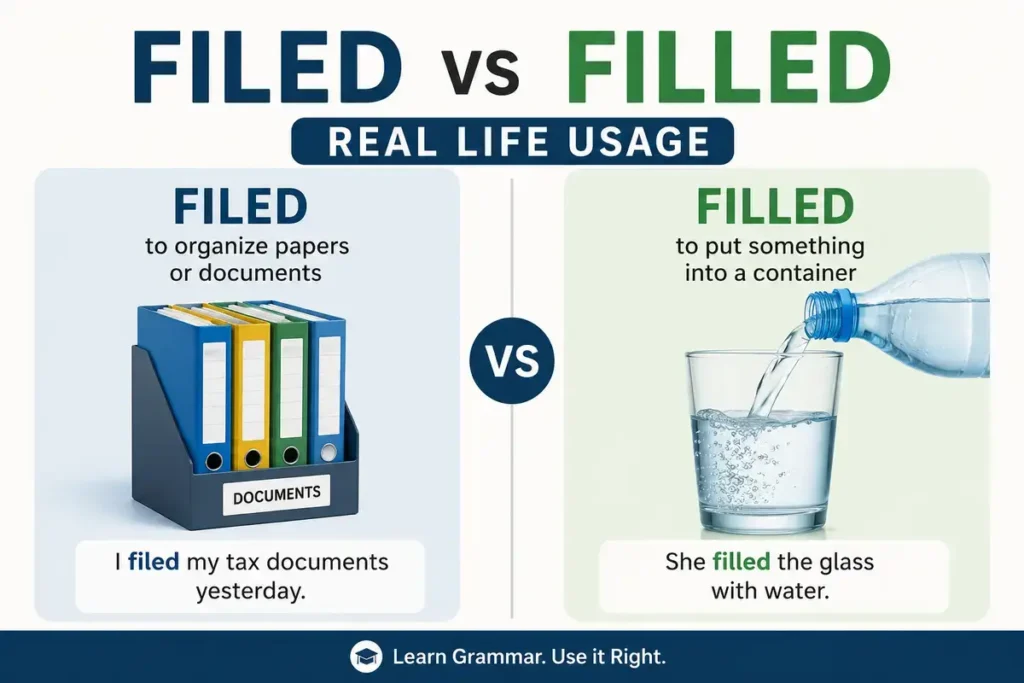
Real Life Usage
Learning grammar becomes much easier when you connect words to everyday situations.
Daily Conversation
People commonly use filled while talking about food, drinks, travel, shopping, and emotions.
Examples include:
- She filled the shopping cart.
- The restaurant quickly filled with customers.
- His heart was filled with gratitude.
Workplace Communication
Office workers use filed almost every day.
Examples include:
- Filing expense reports.
- Filing invoices.
- Filing employment records.
- Filing customer complaints.
- Filing annual tax documents.
Legal And Government Writing
Lawyers, accountants, and government agencies frequently use filed because official documents must be submitted and recorded.
Common examples include:
- Filed a lawsuit.
- Filed a motion.
- Filed bankruptcy.
- Filed taxes.
- Filed an appeal.
Academic Writing
Students may encounter both words in different contexts.
For example:
- The researcher filed the ethics application before beginning the study.
- The survey responses filled several notebooks.
Recognizing the action in the sentence makes choosing the correct word much easier than relying on spelling alone.
Related Words And Commonly Confused Terms
Once you understand the difference between these two verbs, you’ll notice several other word pairs that confuse English learners for similar reasons. Some look alike, while others sound almost identical but have completely different meanings.
Here are a few examples.
- Accept and except.
- Affect and effect.
- Advice and advise.
- Loose and lose.
- Principal and principle.
- Stationary and stationery.
- Then and than.
- Complement and compliment.
- Passed and past.
- Quiet and quite.
Like filed vs filled, these words can’t be swapped just because they sound similar. The meaning of the sentence should always guide your choice.
You may also come across these related expressions when reading or writing.
- File a report.
- File an application.
- File a lawsuit.
- File a claim.
- File taxes.
- Fill a glass.
- Fill a room.
- Fill a prescription.
- Fill a vacancy.
- Fill out a form.
Pay attention to these natural word pairings. Native speakers use them every day, so learning them as complete expressions makes them much easier to remember.
Expert Language Insight
One habit separates confident writers from everyone else. They think about the action before choosing the word.
Professional editors rarely confuse these verbs because they mentally return to the base verb first. Instead of asking, “Which spelling looks right?” they ask, “Is someone filing something or filling something?”
That small shift makes a big difference.
If the action involves submitting, organizing, or recording paperwork, the answer is always connected to file. If the action involves adding something until a space becomes full, the answer comes from fill.
This approach also helps when proofreading. Read the sentence slowly and picture the action taking place. If you can clearly imagine someone handing over documents or placing them into an organized record, filed is the natural choice. If you picture someone pouring, adding, packing, or occupying space, filled fits the sentence.
Experienced writers also pay attention to common word partnerships. Phrases like file a complaint, file taxes, and fill a glass appear so often that they become familiar over time. Reading widely and noticing these patterns is one of the fastest ways to improve your vocabulary and writing accuracy.
This is one of several common adjective spelling mistakes that can trip up even experienced writers, making it worth exploring similar examples.
Frequently Asked Questions
What is the difference between filed and filled?
The difference comes down to the action. Filed means submitted, organized, or officially recorded documents or information. Filled means made something full or put something into a space or container. Although the words look similar, they describe completely different actions.
Is it tax filing or tax filling?
The correct phrase is tax filing because you submit tax documents to a government agency. The verb file refers to officially sending or recording paperwork. Tax filling is incorrect in standard English.
Is filed the past tense of file?
Yes. Filed is both the simple past tense and the past participle of file.
Examples include:
- She filed the paperwork yesterday.
- The documents have already been filed.
Is filled the past tense of fill?
Yes. Filled is the simple past tense and the past participle of fill.
For example:
- He filled the bottle with water.
- The tank has been filled.
Why do people confuse these words?
The words differ by only one letter, and their pronunciation is similar. Since both are correctly spelled English words, spelling tools may not detect the mistake. Understanding the meaning of the sentence is the best way to choose the correct word.
Can a grammar checker identify the mistake?
Sometimes, but not always. A grammar checker can catch obvious errors, yet it may miss the mistake if both words create a grammatically correct sentence. That’s why understanding the context is more reliable than depending entirely on software.
What does filing documents mean?
Filing documents means organizing paperwork for future reference or officially submitting it to an organization, court, government office, or other authority. The exact meaning depends on the situation, but it always relates to records or administrative processes.
What is the easiest way to remember the difference?
Think about the action.
If someone is submitting, recording, or organizing paperwork, choose filed. If someone is making something full or putting something into a container or space, choose filled. That simple question helps you make the right choice almost every time.
Conclusion
Although filed vs filled look and sound similar, they have completely different meanings. Filed belongs to situations involving documents, records, applications, taxes, and other forms of official paperwork. Filled describes making something full, adding contents to a container, or occupying a space.
A simple way to avoid mistakes is to identify the action before choosing the word. If the sentence involves submitting, recording, or organizing information, use filed. If it involves adding something until a space is full, use filled. This habit is much more reliable than relying on spelling alone.
The more examples you read, the easier the difference becomes. Over time, familiar combinations like file a report, file a claim, fill a bottle, and fill a room will feel natural, making it much less likely that you’ll mix the two words up again.