War is one of the oldest subjects in human writing, and one of the hardest to describe. Facts and numbers can tell us what happened, but they rarely show what it meant to live through it. Metaphors help writers reach for that meaning: a storm that swallows everything, a wound that takes generations to heal, a night with no morning in sight.
This guide shares 40 metaphors for war, each with a plain meaning, plus example sentences, a scale from rising tension to peace, tips for writing about war with respect, and a list of overused phrases to replace. It is part of our collection of metaphor examples by topic, where you can browse every theme in one place.
A quick note: war means real suffering for people. These examples are for understanding language and for writing, and they are meant to be used with care and respect.
What Is a Metaphor for War?
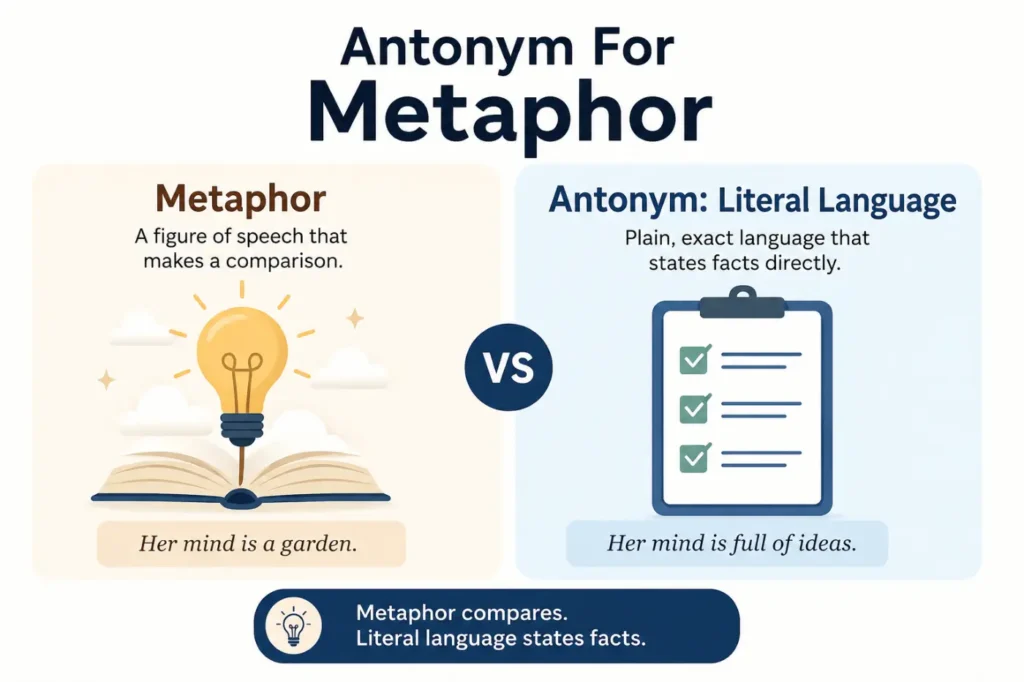
A metaphor for war describes conflict as something else, without using “like” or “as.” “The war destroyed the town” states a fact. “War is a storm that swallows everything” shows how sudden, huge and uncontrollable it can feel. The comparison is not literal. It borrows the qualities of the image, such as weather, wounds, machines or darkness, to show what war is like for the people living through it.
War metaphors also run through everyday language in surprising ways: a war of words, battle lines, fighting a cold, a price war, a campaign, a front. Many people use them without thinking. Noticing them helps writers choose carefully, and use fewer of them when the subject is serious.
Why Do We Use Metaphors for War?
War is huge, frightening and hard to understand from outside. Metaphors let writers bring it down to something a reader can picture. Storms and floods show scale and loss of control. Wounds and scars show lasting damage. Machines and chessboards show how ordinary people can be used by powerful forces.
Metaphors also help writers show feelings that facts cannot. Grief, fear, anger and hope are all part of war, and an image like a candle snuffed out or a seed in a bombed-out garden can say them in one line. Good writing about war uses these images with restraint, because the reality is already heavy.
War as Storm and Destruction
Storm and disaster images show the scale of war and how little control people have.
- War is a storm that swallows everything. It destroys homes, lives and peace.
- The conflict was a wildfire that jumped every border. It spread beyond anyone’s control.
- The sky was a hailstorm of iron. Attacks fell from above without pause.
- The war was a flood that left no high ground. Everyone was overwhelmed.
- The front line was a fault line, and the earth kept shaking. Constant instability and danger.
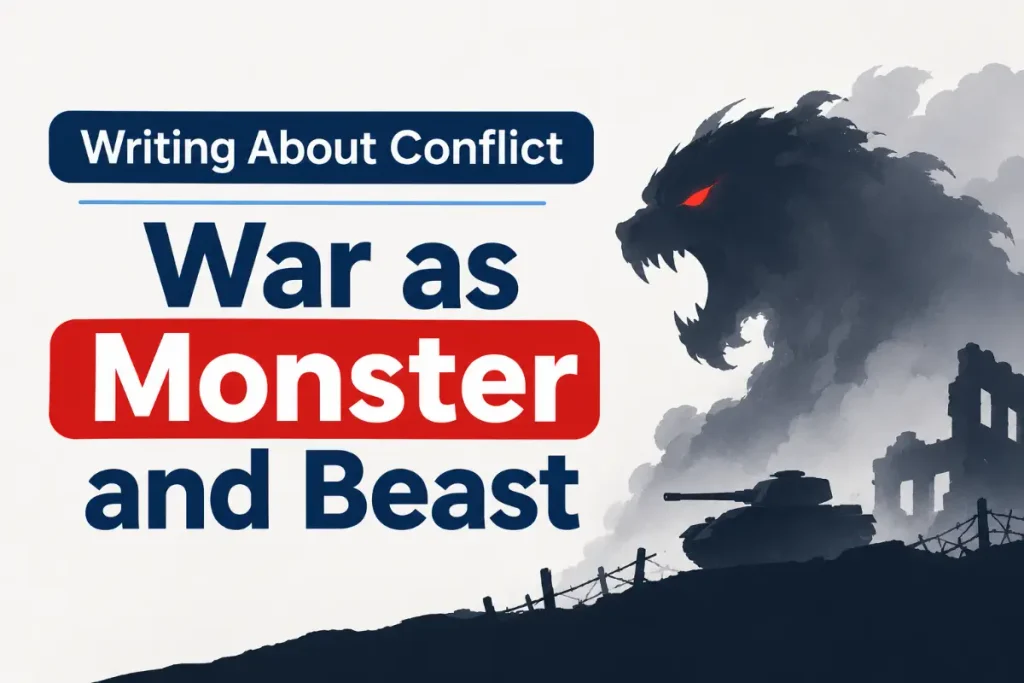
War as Monster and Beast
Monster images show war as something that consumes people.
- War is a monster that feeds on youth. It consumes the young.
- Conflict was a wolf at the door. A threat always close and waiting.
- The empire was a dragon that could not stop eating. Greed and expansion with no limit.
- Fear was the shadow war cast over every village. It touched everyone, even far from the fighting.
- Violence was a hunger that never said it was full. The destruction kept asking for more.
War as Wound and Scar
Wound images show lasting damage, long after the fighting ends.
- War is a wound that takes generations to heal. Its effects last long after the fighting ends.
- The city was a scar across the map. A permanent mark of what had happened.
- Their memories were shrapnel they could not remove. Pieces of the past stayed lodged inside them.
- Peace was a bandage over a deep wound. Healing was fragile and incomplete.
- The border was an old injury that ached in cold weather. Old conflicts flared up in hard times.
War as Machine, Game and Pawns
These images show how war can treat people as parts of a larger system.
- War is a machine that grinds up the people who feed it. It uses people up.
- Soldiers were pawns on a board they never chose. They were moved by powerful decisions.
- Diplomacy was a chess game played with real lives. Strategy had human costs.
- The arms race was a ladder where each rung was a weapon. Each side climbed higher and higher.
- The headlines were a drumbeat that kept marching. News of conflict never stopped.
War as Darkness, Smoke and Silence
These images show the mood of war: fear, loss and long waiting.
- The war was a long night with no morning in sight. It seemed endless.
- Smoke was a curtain drawn across the sky. It hid the sun and the future.
- Every empty chair at the table was a battle’s last echo. Loss lived on in ordinary homes.
- The village was a candle snuffed out. A place of life suddenly silenced.
- The silence after the shelling was a held breath. A pause full of fear.
War and Ordinary Life
These images show what war does to everyday things like school, childhood and home.
- The school was a song cut off mid-chorus. Ordinary routines stopped suddenly.
- Childhood was a garden trampled by boots. Innocence damaged by what children saw.
- Their daily life was a fragile glass carried through a crowd. Every day required care.
- Home was a house of cards after the earthquake. What once felt solid fell apart.
- Hope was a seed in a bombed-out garden. Small, stubborn and still alive.
Peace, Aftermath and Rebuilding
These images show what comes after war, and how fragile it can be.
- Peace is a garden that needs daily tending. It must be cared for to last.
- The ceasefire was thin ice over deep water. A calm that could break at any step.
- Rebuilding was stitching a torn quilt one square at a time. Slow, patient repair.
- Dawn after the war was a blank page. A chance to begin again, with the past still visible.
- Peace was the first rain after a long fire. Relief and the start of renewal.
War Metaphors in Everyday Language
War images have spread into daily life, often in lighter ways. These examples show how they work in non-war settings.
- The debate was a trench war of words. An argument dug in on both sides.
- The business rivals were generals on opposite hills. Competitors planning against each other.
- The price war was a race to the bottom of the sea. Companies cutting prices until all lost.
- Housework was a battle against dust. A playful image for a never-ending chore.
- Bedtime with a toddler was a hostage negotiation. A humorous image for hard bargaining.
Metaphors for War in Sentences and Paragraphs
Here are short examples showing war metaphors in real sentences.
- For six years the war was a long night, and the only light was the candle someone kept in the cellar window.
- When the ceasefire came, it felt like thin ice, and everyone walked across it on tiptoe.
- The conflict was a wound that would take three generations to close.
- Soldiers, one veteran wrote, were pawns on a board they never chose, yet they carried each other like family.
Here is a longer example that builds one image across a paragraph:
The war came to Marta’s village like a storm over flat country. First came the wind: rumors in the market, closed shutters, mothers calling children in early. Then came the rain, heavy and sudden, and the old stone bridge was gone by morning. When it finally passed, the streets lay washed and strange, and the people stood in their doorways, blinking, as if they had woken from a flood.
And here is a shorter example about rebuilding:
In the spring, they began to stitch the town back together. A wall here, a window there, a quilt of small repairs across a landscape that still remembered the fire.
The War and Conflict Scale
Conflict moves through stages, and the best metaphors match them.
| Level | Stage | Metaphor | What it shows |
|---|---|---|---|
| Rising | Tension and warnings | The air was a drawn bowstring. | Danger building |
| Early | Open conflict begins | The war was a wildfire that jumped every border. | Spreading fast |
| Full | Intense fighting | The sky was a hailstorm of iron. | Overwhelming force |
| Long | A war that lasts | The war was a long night with no morning in sight. | Exhaustion and waiting |
| Aftermath | After the fighting | War is a wound that takes generations to heal. | Lasting damage |
| Peace | Rebuilding | Peace is a garden that needs daily tending. | Fragile and growing |
How Writers Use War Metaphors
War appears in history, fiction, poetry, journalism and personal stories. A few techniques help you handle it well.
Respect real people. War is not just a setting. It means real suffering. Avoid images that make violence look exciting or glorious, and avoid turning victims into symbols.
Use specific, human details. A single empty chair, a school cut off mid-song or a child’s garden trampled by boots feels more true than a huge, general image. Small details carry the weight.
Match the image to the experience. A soldier, a refugee, a parent and a child each see war differently. A storm might suit someone caught in it, a machine might suit someone who feels used, and a wound might suit someone living with the aftermath.
Show more than destruction. Courage, kindness, humor and hope also exist in war. Images like a candle in a cellar or a seed in a bombed-out garden show this honestly.
Be careful with war metaphors for other things. Describing illness, politics or sports as war can be effective, but it can also hurt. Some people who are ill feel that a “battle” image makes them seem like they failed if they do not recover. Choose with care.
Keep it restrained. In serious subjects, one clear image beats many. Let the facts carry weight, and use the metaphor to deepen, not decorate.
How to Use War Metaphors in Essays and Stories
In a school essay, follow three steps: find the metaphor, explain it and show its effect.
- Find it. Look for a comparison that says war is something, such as “war is a wound that takes generations to heal.”
- Explain it. Say what the two things share. A wound causes pain, leaves a scar and takes time to heal, so the comparison shows that war damages people long after it ends.
- Show the effect. Say what the reader feels, such as sorrow, respect or a sense of lasting loss.
Here is a short sample paragraph:
The poet describes soldiers as “pawns on a board they never chose.” This metaphor suggests that ordinary people were moved by powerful forces they could not control. A pawn is a small piece that is easily sacrificed, so the comparison shows how little their lives were valued by those in charge. As a result, the reader feels anger and sympathy.
In a story or memoir, one strong war metaphor can set the tone of a chapter. Start with a human detail, add the image and let the reader draw their own conclusions.
Common War Phrases and Clichés to Avoid
Many war phrases are so familiar that readers barely notice them. Try fresher images when you can, and think about whether a war image is right at all.
| Common phrase | Fresher alternative |
|---|---|
| War zone | A street where every window had learned to flinch. |
| Battle lines | A fence of folded arms down the middle of the room. |
| Casualty | The first thing to go quiet in the house was the radio. |
| Fight fire with fire | Meet the storm with a bigger storm, and watch the house burn. |
| Declare war on | Turn every conversation into a closed gate. |
| War of words | A debate where each sentence was a stone thrown over a wall. |
Other mistakes to watch for:
- Glamorizing. Avoid heroic or exciting language that hides the cost.
- Mixing images. “War is a storm that grinds like a machine” blends two pictures. Choose one.
- Using war images for minor things in serious settings. Calling a small disagreement “a war” can feel careless around people who have lived through one.
- Overdoing it. Too many dramatic images can numb the reader.
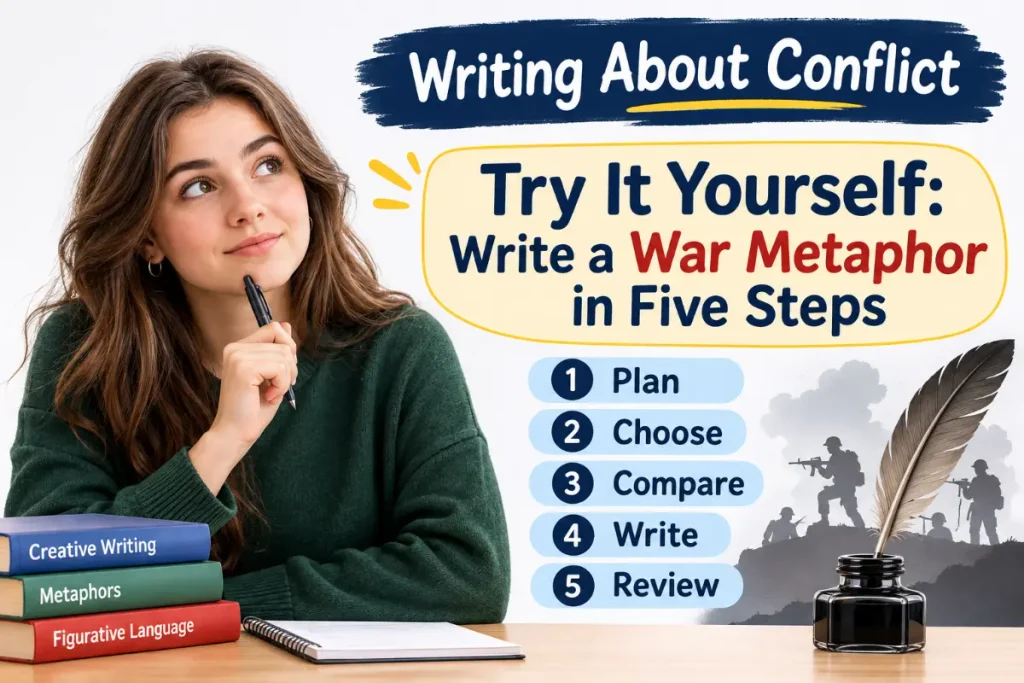
Try It Yourself: Write a War Metaphor in Five Steps
Use these steps for a story, a poem or a school assignment. Choose a historical or fictional setting, and keep it respectful.
- Choose a moment. For example: a family waiting in a cellar during the night.
- Decide the feeling. Is it fear, hope, anger or exhaustion?
- Pick a source. Think of weather, light, wounds, machines or home.
- Write three versions. For example: The night was a stone that would not roll away. / Their breathing was a small candle in the dark. / The silence was a held breath.
- Choose the best one and add a detail. The silence was a held breath, and the little one pressed his face into his mother’s sleeve.
Now write a second version about rebuilding, using a garden, a quilt or a blank page.
Frequently Asked Questions
What is a good metaphor for war?
“War is a storm that swallows everything” and “war is a wound that takes generations to heal” are popular because they show scale and lasting damage.
What is a metaphor for peace after war?
Try a garden that needs daily tending, thin ice over deep water, the first rain after a fire or a blank page. They show peace as fragile, hopeful and still growing.
Is “war of words” a metaphor?
Yes. It compares an argument to a war, suggesting that people attack and defend with language. It is a very common phrase.
Why do we use war metaphors for illness, sports and politics?
War is a familiar image of struggle, so it is easy to apply to other fights. Some writers prefer other images for illness, such as a journey or a storm, because war language can feel harsh or place blame.
What is a metaphor for the long-term effects of war?
Try a wound that takes generations to heal, shrapnel that cannot be removed, a scar on the map or an old injury that aches in cold weather. They show damage that lasts.
What is the difference between a metaphor and a simile for war?
A simile uses “like” or “as,” such as “war is like a storm.” A metaphor says “war is a storm.”
Are war metaphors appropriate for school assignments?
Yes, when handled with respect. They are common in poetry, history and literature. Use clear images, avoid glorifying violence and explain what the metaphor shows.
Conclusion
War is a subject that asks for care, and metaphors can help writers bring it close without making it small. A storm shows scale, a wound shows lasting damage, a machine shows how people can be used and a candle in a cellar shows that hope can live even in the dark. The best writing about war includes the loss and the courage, the destruction and the rebuilding.
When you write about war, use specific human details, match the image to the experience and show more than destruction. Avoid glamorizing, avoid worn-out phrases and be careful with war metaphors for other struggles. Explain your image in school work, and remember that a single honest picture can say more than a page of dramatic words.
Related Metaphors
- For the feeling that war brings with it, read fear metaphors.
- For the loss that follows, see metaphors for grief.
- For what many people hold onto, try metaphors for freedom.