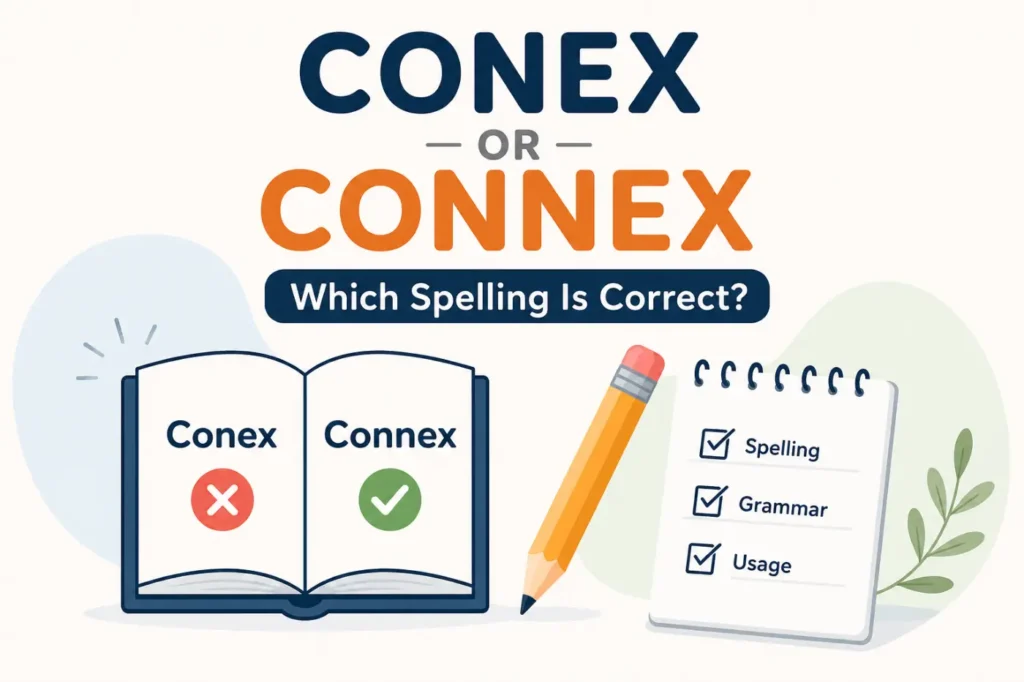
If you have ever searched conex or connex while looking for a steel storage box or shipping container you are not alone. The two spellings appear across online listings, construction sites, military discussions, and shipping conversations. That creates a simple but surprisingly persistent question. Is one spelling correct, or are both accepted?
For most people, the practical answer is conex. The word comes from the military term CONEX, short for Container Express. It became associated with standardized steel containers used to move and store supplies. Over time, people began using the word more broadly for a shipping container or steel storage container.
Connex also appears in real life, especially in company names, product branding, regional usage, and informal writing. However, it is not generally the standard spelling of the original military term. That distinction matters if you are writing an article, creating a product listing, or trying to describe a used shipping container accurately.
This guide explains the spelling, meaning, history, pronunciation, grammar, regional usage, and practical differences between the two forms. You will also learn how the term relates to shipping containers, what people mean by a conex container, how to form the plural, and how to write clear descriptions for listings and professional communication.
Quick Definition
Conex is the standard spelling of a steel cargo container originally associated with the military term CONEX, meaning Container Express. Today, people often use it to describe a shipping container or steel storage container. Connex appears as a variant spelling, brand name, or informal form, but conex is generally the safer standard choice for ordinary writing.
Similar spelling variations can be confusing, just as they are in the debate over homemade vs. home made spelling, where one form is generally preferred in modern English.
Quick Answer
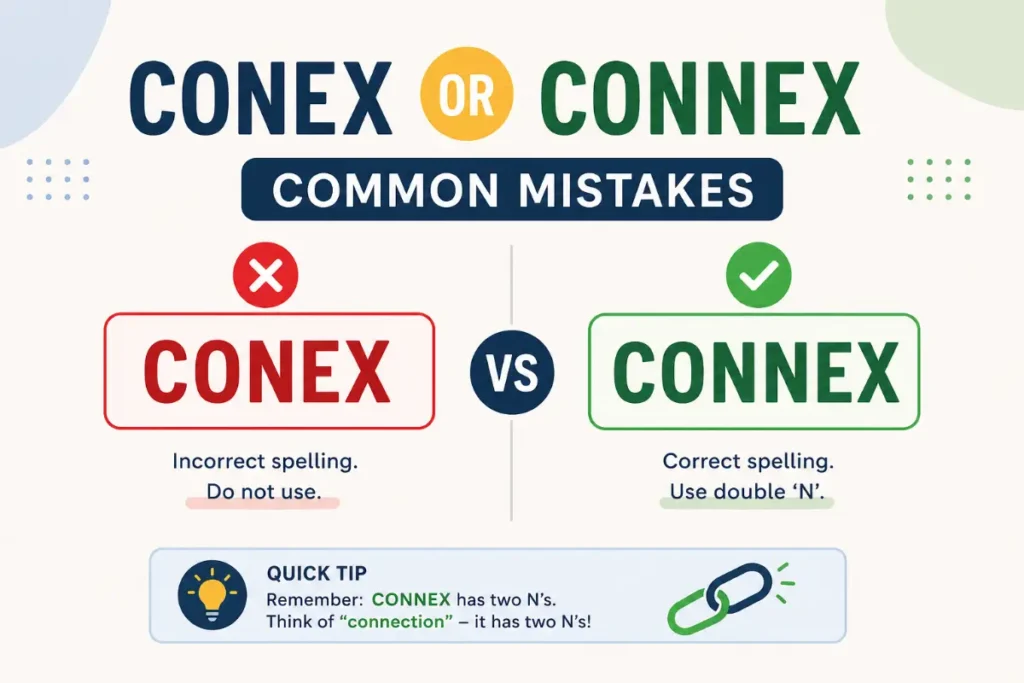
For most writing, use conex.
The word comes from CONEX, an abbreviation of Container Express, a standardized container system developed for transporting military supplies. In modern American English, people often use conex to mean a steel shipping container used for storage, transportation, construction projects, or modified structures.
Connex is also seen, but its use is more limited. It may appear in company names, product names, regional speech, or informal online listings. If you are writing a general description rather than reproducing an official name, conex is usually the better choice.
Comparison Table
| Feature | Conex | Connex |
|---|---|---|
| Standard spelling | Yes in most ordinary usage | Less standard as a generic term |
| Original connection | Container Express | Variant or alternative usage |
| Meaning | Steel cargo or shipping container | Usually the same object when used informally |
| Part of speech | Noun and noun modifier | Noun and noun modifier in informal usage |
| Formality level | Standard practical term | Informal or context dependent |
| Common contexts | Storage containers, military logistics, shipping, construction | Brand names, listings, regional usage, informal writing |
| Usage frequency | Common in American container and storage contexts | Less common as the generic spelling |
| Example | We rented a 40 foot conex for storage. | The seller listed a 40 foot connex for sale. |
| Plural | Conexes or conex containers | Connexes or connex containers |
| Best general recommendation | Use this spelling in ordinary writing | Preserve it when it is part of an official name |
The table gives the practical answer, but the history behind the term explains why people see both spellings. The original word began as a military abbreviation. As the container system became familiar outside the military, the term moved into everyday speech and gradually developed different spellings in different contexts.
Meaning Of Both Terms
The two forms are closely connected, but they do not have exactly the same status in standard usage.
What Does Conex Mean
Conex refers to a steel cargo container used to transport or store goods, equipment, and supplies. The term is strongly associated with the military and with the standardized containers that became important in military logistics.
In modern everyday usage, many people use the word more broadly. A person might call a steel shipping container a conex box, even when the container is being used for commercial storage rather than military transportation.
Common uses include:
- Storing construction equipment.
- Transporting cargo.
- Creating temporary storage space.
- Protecting tools and machinery.
- Building modified offices or workshops.
- Supporting construction site operations.
The meaning can vary slightly by context. A military historian may use the term in its historical sense. A contractor may use it to describe a steel storage box. A seller may use it in a listing for a used shipping container.
What Does Connex Mean
Connex is commonly used as an alternative spelling for the same general type of steel container. However, the spelling often depends on the source.
You may see it in:
- Informal online listings.
- Regional business language.
- Company names.
- Product branding.
- Construction and storage discussions.
In many cases, someone who writes connex means exactly what another person means by conex. The difference is spelling rather than the physical object.
Still, professional writing benefits from distinguishing a standard generic term from a proper name. If a company officially calls its product a Connex, preserve that spelling in the company or product name. If you are writing a general sentence about a steel shipping container, conex is usually the clearer choice.
Key Differences
The main difference between the two forms is not the container itself. It is the spelling history and the context in which each form appears.
Difference In Meaning
In ordinary modern usage, both forms can refer to a steel cargo container or storage container. The object does not suddenly become different because the spelling changes.
For example, a person may say:
We need a conex for the construction site.
Another person may write:
We need a connex for the construction site.
Both speakers probably mean a large steel container used for storage or transportation.
The practical meaning comes from the context. The spelling alone usually does not tell you anything about the container’s size, condition, age, or purpose.
Difference In Standard Usage
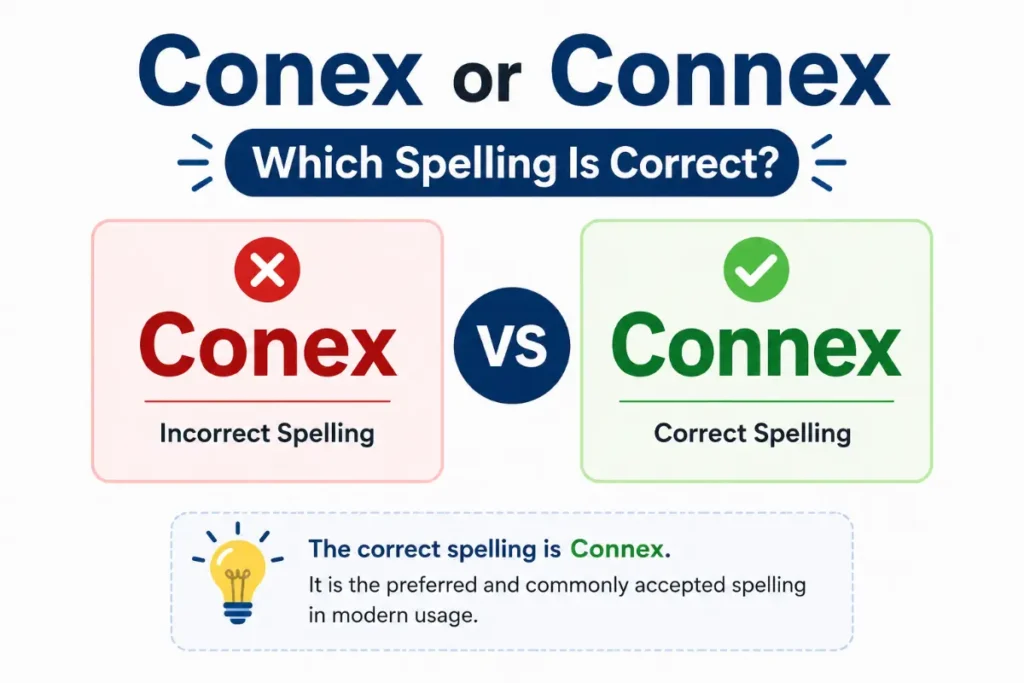
Conex has the stronger connection to the original term CONEX and is the safer generic spelling for most writing.
Connex is more likely to appear as an alternative spelling or in a specific name. That does not make every use of it meaningless. It simply means you should look at the context before deciding how to edit it.
Difference In Tone
The word conex often sounds practical and industry focused. You may hear it in construction, logistics, military, storage, and shipping conversations.
Connex can sound more informal when used as a generic term. However, the tone depends heavily on the speaker and region. A local business may use the spelling naturally and professionally as part of its identity.
Difference In Grammar
The two forms follow the same basic grammar when used as nouns.
Examples include:
- We bought a conex.
- The connex arrived yesterday.
- The company rents conex containers.
- Several connexes were delivered to the site.
The grammatical difference is not significant. The main question is which spelling fits the context.
Difference In Regional Usage
Usage can vary across regions and industries. American construction and storage conversations commonly use conex. Some businesses and local communities use connex instead.
The term is also more familiar in North American commercial and military contexts than in ordinary British English conversation. In many parts of the world, people simply say shipping container, cargo container, or storage container.
Which Spelling Is Correct
Conex is generally the best spelling for the generic term. The reason is simple. It connects directly to the original CONEX abbreviation for Container Express and is widely used to describe steel cargo and storage containers.
That said, language is shaped by real usage. Connex appears in business names, product names, online listings, and informal communication. You should not automatically change it if it is part of an official name.
Use this practical rule.
- Use conex when you are writing about a steel shipping or storage container in general.
- Keep Connex if it is part of a registered company name, product name, or official title.
- Follow the spelling used by a specific seller when quoting or identifying that seller’s product.
- Use shipping container if your audience may not understand the industry term.
For broad online content, shipping container is often the clearest phrase for general readers. You can introduce conex as a common industry term when the context calls for it.
Pronunciation Guide
Both spellings are usually pronounced the same way.
Conex
A common pronunciation is:
KON ex
IPA may vary slightly by accent, but a practical pronunciation guide is:
/ˈkɑːnɛks/
Connex
The alternative spelling is generally pronounced the same way:
KON ex
The extra n changes the written form but normally does not create a different pronunciation.
Syllable Breakdown
Both forms have two syllables.
Con ex.
The first syllable receives the main stress.
Common Pronunciation Mistakes
People sometimes pronounce the word as if it were a longer word with three syllables. That is not the usual pronunciation in American industry and construction contexts.
The easiest approach is to say it naturally as two short syllables.
How To Remember The Correct Spelling
The easiest memory trick is to connect the word to its history.
CONEX originally stood for Container Express. The spelling with one n is therefore the form most closely connected to the original abbreviation.
You can also remember the practical writing rule.
- Conex is the standard general term.
- Connex may be a variant or official name.
- Shipping container is the clearest everyday phrase for a broad audience.
Think of it this way. If you are describing the object, choose the standard generic term. If you are identifying a particular company or product, preserve the official name exactly. That small distinction helps your writing stay accurate without ignoring how people actually use the language.
Examples In Sentences
The best way to understand a specialized word is to see how people actually use it. The examples below show the standard spelling in different situations, followed by examples using the alternative form.
Examples Using Conex
- The contractor rented a 40 foot conex to store tools at the construction site.
- We need a weather resistant conex for the farm equipment.
- The company delivered a used conex box to the warehouse.
- The military used conex containers to transport supplies and equipment.
- The buyer asked about the conex size before arranging delivery.
- A modified conex can become a workshop, office, or temporary storage room.
- The seller inspected the conex before listing it for sale.
- The construction crew kept spare materials inside the conex.
- The shipping company moved the conex across the country by truck.
- The owner converted an old conex into a secure storage unit.
These sentences reflect the way the term commonly appears in construction, logistics, storage, military, and commercial conversations.
Examples Using Connex
The alternative spelling appears in similar contexts, especially in informal writing and names.
- The company advertised a 20 foot Connex for sale.
- The contractor ordered a Connex for the new job site.
- The storage business added several Connex units to its inventory.
- The buyer asked if the Connex had a functioning lock system.
- The local supplier delivered a Connex to the farm.
- The listing described the Connex as wind and water resistant.
- The construction team used the Connex to store tools overnight.
- The customer compared different Connex sizes before buying one.
- The company used Connex containers for temporary storage.
- The seller included delivery details in the Connex listing.
In ordinary professional writing, many editors would use conex or shipping container instead. If Connex is part of a specific business or product name, however, the original spelling should remain unchanged.
Common Mistakes
The confusion surrounding this term creates several predictable mistakes.
Treating Both Spellings As Identical In Every Context
The two forms can refer to the same type of container, but that does not mean they have exactly the same status in writing.
A generic description should normally use conex. A proper name should preserve its official spelling.
Assuming The Extra N Changes The Container
A conex and a connex are not automatically different types of containers.
The spelling does not tell you:
- The length.
- The height.
- The width.
- The condition.
- The manufacturer.
- The age.
- The cargo capacity.
Those details must come from the product specifications.
Confusing Conex With A Specific Container Size
Some people assume that the word refers only to one standard size. In modern commercial use, that is not always true.
You may find different dimensions and configurations, including:
- 20 foot containers.
- 40 foot containers.
- High cube containers.
- Refrigerated containers.
- Modified storage containers.
The exact size depends on the container itself.
Writing Conex When Shipping Container Is Clearer
Industry professionals may understand conex immediately. General readers may not.
If you are writing for a broad audience, the phrase shipping container may communicate the idea more clearly. You can introduce the specialized term afterward.
For example:
The company sells steel shipping containers, commonly called conex containers in some industries.
That sentence gives readers both the familiar term and the specialized term.
Confusing A Generic Term With A Brand Name
A company may use Connex as part of its official identity. In that case, changing the spelling could create an inaccurate name.
Always check the official spelling of a business or product before editing it.
Etymology And Word Origin
The history of the word explains much of the modern confusion.
CONEX originated as an abbreviation connected to the term Container Express. The system was developed to improve the transportation and handling of military supplies.
Before standardized containers became common, moving supplies could involve repeated handling. Goods might be packed, unloaded, transferred, and repacked several times during transportation. A standardized container helped reduce that work.
The container could be loaded with supplies and then moved through different stages of transportation with less need to handle every individual item.
Over time, the term moved beyond its original military context. People began using related steel containers in commercial shipping, construction, agriculture, manufacturing, and storage.
The lowercase form conex developed as the word became part of everyday industry language. Once a capitalized abbreviation becomes familiar enough, speakers often begin treating it as an ordinary noun.
This process is common in English. Words that began as abbreviations can gradually become regular vocabulary.
The alternative spelling connex likely developed through pronunciation, analogy, regional usage, and commercial naming. Because the word is commonly spoken rather than encountered in formal dictionaries, different writers sometimes reproduce the sound differently.
Regional Usage
The preferred term depends heavily on the country, industry, and audience.
American English
In the United States, conex is familiar in military, construction, storage, logistics, and industrial settings.
Many Americans also use:
- Shipping container.
- Cargo container.
- Storage container.
- Steel container.
- Conex box.
The word conex is especially common when the container is being used for storage rather than international shipping.
British English
British speakers are more likely to say shipping container or container in ordinary conversation.
The term conex may be understood by people familiar with American military or logistics terminology, but it is not as central to everyday British vocabulary.
Australian English
Australian English commonly uses shipping container, especially in commercial and transport contexts.
The word conex may appear in specialized industries, online listings, or discussions influenced by American terminology.
Canadian English
Canadian usage can include both shipping container and conex, especially in construction, military, and storage settings.
Regional business language can influence the spelling people see most often.
The practical lesson is simple. If you are writing for an international audience, shipping container is usually the most widely understood term. If your audience works in a specific American industry, conex may sound more natural.
The distinction between conex and connex also highlights the importance of British and American spelling differences, where regional conventions often influence which form people expect to see.
Grammar Rules
This word is relatively easy to use grammatically because it behaves like an ordinary countable noun.
As A Noun
The singular form refers to one container.
Examples include:
- We bought a conex.
- The conex arrived this morning.
- The contractor rented one conex for the project.
Because it is countable, it normally uses an article or another determiner when referring to one specific unit.
As A Noun Modifier
The word can also describe another noun.
Common combinations include:
- Conex box.
- Conex container.
- Conex storage.
- Conex rental.
- Conex delivery.
- Conex modification.
In these combinations, the first word helps identify the type or purpose of the second noun.
Plural Form
The plural can appear in more than one form depending on the writer and style.
Conexes is a natural regular plural.
Examples:
- The company sells several conexes.
- Three conexes arrived at the construction site.
Many writers also avoid the unusual plural by using a noun phrase.
Examples:
- Several conex containers arrived.
- The company owns multiple storage containers.
This approach is often clearer for general readers.
Conex Plural
The plural of conex is commonly written as conexes.
The spelling follows the regular English plural pattern used for nouns ending in a sound that takes es.
However, industry writers may use conex containers instead. That phrase can sound more natural because readers immediately understand what the plural refers to.
Is Conex Capitalized
In ordinary writing, conex is usually lowercase when used as a generic noun.
Examples include:
- We rented a conex for storage.
- The company delivered two conex containers.
The original abbreviation CONEX may appear in historical or military contexts. A specific company or product may also use its own capitalization.
The key rule is context.
- Use lowercase conex as a general noun.
- Use the official capitalization of a company, product, or title.
- Preserve CONEX when discussing the original abbreviation or historical system in a context that uses the capitalized form.
Real Life Usage Examples
The word appears in several industries, but many people use it interchangeably with shipping container.
Conex Vs Shipping Container
The phrase conex vs shipping container often suggests a comparison between two different products. In many modern contexts, the difference is mainly one of terminology.
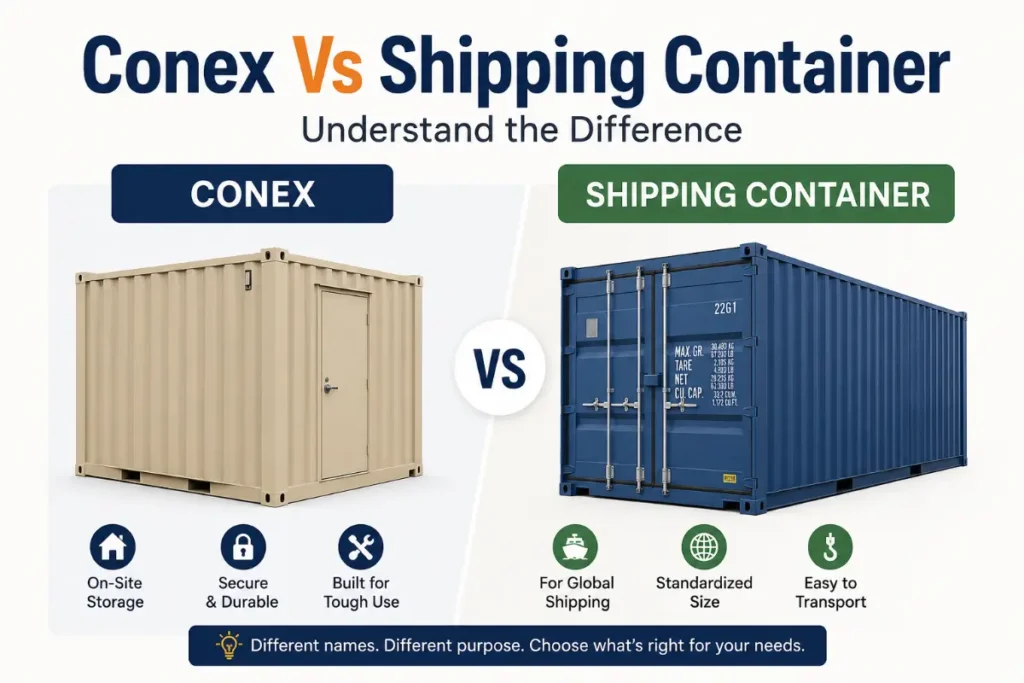
A shipping container is a standardized steel container designed for transporting cargo. A conex is often used as a practical term for a steel cargo or storage container, especially in American military, construction, and storage settings.
The two terms can overlap, but they are not always perfect synonyms in every technical context.
For example, a shipping container may be actively used in international freight transportation. A conex may be sitting permanently on a construction site as a storage unit.
The container’s actual design and specifications matter more than the label.
Conex Size
People searching for conex size are usually trying to find out how much space a container provides.
Common dimensions include:
- 20 foot containers.
- 40 foot containers.
- High cube versions with additional interior height.
The exact exterior and interior measurements vary by manufacturer and container type. Buyers should always check the specifications before ordering because dimensions affect transportation, placement, storage capacity, and local regulations.
Conex Container
A conex container is simply a steel container described using the industry term conex.
People may use the phrase for:
- Storage.
- Construction materials.
- Equipment.
- Agricultural supplies.
- Temporary offices.
- Workshops.
The term is especially common in commercial listings and construction conversations.
Used Conex Box For Sale
People searching for a used conex box for sale are usually looking for a secondhand steel storage or shipping container.
When evaluating a used unit, buyers should pay attention to:
- Rust.
- Floor condition.
- Door operation.
- Roof leaks.
- Structural damage.
- Delivery access.
- Locking mechanisms.
- Exact dimensions.
The word used can describe a wide range of conditions. A container that has made one trip may be in very different condition from one that has spent years outdoors.
Conex In Construction
Construction companies often use steel containers as secure storage at job sites.
They can hold:
- Power tools.
- Building materials.
- Safety equipment.
- Spare parts.
- Fuel related equipment where regulations permit.
The main advantage is practical. A strong steel container can provide a secure and weather resistant space without requiring a permanent building.
Conex In Military Logistics
The historical connection to military transportation remains important. Standardized containers helped military organizations move supplies efficiently across long distances. That history is the reason the term still carries a strong connection to logistics and military storage.
Conex In Everyday Conversation
A contractor might say:
Put the extra lumber in the conex.
A homeowner might say:
We are thinking about buying a shipping container for storage.
Both people may be talking about a similar object. The preferred word depends on their background and audience.
If you enjoy learning about frequently confused words, you’ll also find common plural spelling mistakes helpful, especially when dealing with words like copys and copies.
Related Words And Confused Terms
People who search for this topic often encounter several related terms. Some describe the same type of object, while others refer to different parts of the shipping and storage industry.
Understanding these terms helps prevent unnecessary confusion.
- Shipping container means a standardized container used to transport cargo.
- Cargo container focuses on the container’s role in transporting goods.
- Storage container usually refers to a container used to store materials or equipment.
- Steel container describes the material and general structure.
- Conex box is a common industry phrase for a steel cargo or storage container.
- Intermodal container refers to a container designed to move between different transportation systems such as ships trains and trucks.
- ISO container refers to a container built according to international standardization requirements.
- Container van is another term used in some markets for a large enclosed cargo container.
- Cargo van is different because it usually refers to a road vehicle rather than a detachable steel container.
- Container office describes a shipping container that has been modified for use as a workspace.
The most important distinction is between the object and the name people use for it. A container can be described using several different terms depending on its purpose, industry, and audience.
Conex Vs Shipping Container
The phrase conex vs shipping container can make the two sound like completely different products. In many situations, they are not.
A shipping container is a broad and widely understood term. It describes a standardized container designed to transport cargo. Conex is a specialized term with historical military roots that is now commonly used for steel storage and cargo containers.
The terms overlap, but context still matters.
For example, a logistics company discussing international freight may prefer shipping container or intermodal container. A construction company looking for a secure storage unit may naturally say conex box.
The best word depends on the audience and the purpose of the writing.
Connex Meaning In English
The connex meaning in English depends on context because the spelling can function differently in different situations.
When people use connex as an informal alternative to conex, they usually mean a steel shipping or storage container. In that context, the two forms refer to essentially the same type of object.
However, Connex may also appear as part of a company name, product name, organization, or brand. In those cases, it should be treated as a proper name rather than corrected automatically.
This distinction is important for editors and content writers. A spelling that looks unusual may be intentional.
For example, if a company officially calls itself Connex Storage, changing the name to Conex Storage would create an inaccurate reference. The official spelling belongs to the company.
On the other hand, if a general sentence says:
We need a connex for the construction site.
An editor may reasonably change it to:
We need a conex for the construction site.
Or, for a general audience:
We need a shipping container for the construction site.
The best choice depends on the purpose of the text.
Expert Language Insight
An experienced editor does not treat every spelling variation as a simple right or wrong question. Context matters.
For a general article, product description, educational resource, or professional document, conex is the safer generic spelling. It connects to the original term and is widely recognized in American industry language.
For a company name, product name, trademark, or official title, accuracy requires preserving the original spelling. That may mean using Connex even when the standard generic term would normally be conex.
This is a common principle in professional editing. Standard language and proper names follow different rules.
A second useful point concerns audience. Specialized industry vocabulary can make writing sound knowledgeable, but it can also create unnecessary confusion for general readers. If your audience includes people who may not know the term, introduce the familiar phrase first.
For example:
The company sells steel shipping containers, often called conex boxes in construction and storage industries.
That sentence does two jobs. It explains the object clearly and introduces the specialized term naturally.
A strong editor also avoids pretending that terminology is more precise than it really is. People often use conex, conex box, storage container, and shipping container in overlapping ways. The actual specifications matter more than the label when buying or transporting one.
Before choosing a term, consider three questions.
- Who will read this?
- What exactly does the container do?
- Is the spelling part of an official name?
Those questions usually lead to a clearer and more accurate sentence.
Frequently Asked Questions
Is conex or connex the correct spelling?
Conex is generally the preferred spelling for the generic term referring to a steel cargo or storage container. Connex also appears in informal usage, regional language, and official names. If you are writing about the object in general, use conex. If the spelling belongs to a specific business or product name, preserve the official form.
What is the difference between a conex and a shipping container?
In many modern contexts, the terms overlap. A shipping container is a broad term for a standardized cargo container. Conex is a specialized term with historical military connections that is now commonly used for steel storage and cargo containers. The exact design, dimensions, and purpose matter more than the label alone.
What does conex mean?
Conex refers to a steel cargo or storage container. The term is historically connected to CONEX, an abbreviation associated with Container Express. Today, people commonly use it for containers used in shipping, construction, military logistics, commercial storage, agriculture, and other practical applications.
What is the plural of conex?
The regular plural is commonly written as conexes. However, many writers prefer phrases such as conex containers or storage containers because they sound more natural and immediately clarify the meaning. The best choice depends on the audience and the surrounding sentence.
Is conex capitalized?
As a general noun, conex is usually written in lowercase. The original abbreviation may appear as CONEX, while a company or product may use its own official capitalization. Use lowercase for ordinary references and preserve the capitalization of official names exactly.
What is the meaning of connex in English?
When connex is used as an alternative spelling of conex, it usually refers to the same kind of steel shipping or storage container. The spelling may also appear in company names, brands, and product names. The exact meaning depends on the context in which the word appears.
What should I check when buying a used conex box for sale?
Check the container’s structural condition, rust, floor, roof, doors, locks, dimensions, and delivery requirements. Ask about leaks and previous use. A used container can vary greatly in condition, so photographs and a detailed inspection are more useful than the label alone.
What is the difference between a 20 foot and 40 foot conex?
The main difference is length and storage capacity. A 20 foot unit is easier to place in smaller spaces and may be more convenient to transport. A 40 foot unit provides significantly more storage space but requires more room for delivery and placement. Exact dimensions vary by container type and manufacturer.
Conclusion
The practical answer is clear. Conex is generally the preferred spelling for the generic term describing a steel cargo or storage container. It has historical roots in the military term CONEX, associated with Container Express, and it remains familiar in American construction, storage, logistics, and military contexts.
Connex is not meaningless. It appears as an alternative spelling and may be used intentionally in company names, product branding, regional language, and informal listings. The important point is context. Use the standard generic spelling when you are describing the container itself. Preserve the original spelling when it belongs to an official name.
The terms shipping container, cargo container, storage container, and conex box can overlap, but they are not always used in exactly the same situations. For a broad audience, shipping container is often the clearest phrase. For industry readers, conex may sound more natural and familiar.
If you are writing a product listing, focus on the facts buyers actually need. State the exact size, condition, height, dimensions, structural quality, and intended use. A clear description is far more valuable than relying on one industry term.
The strongest rule to remember is simple. Use conex for the general term, use Connex when it is an official name, and choose shipping container when clarity for a broad audience matters most.