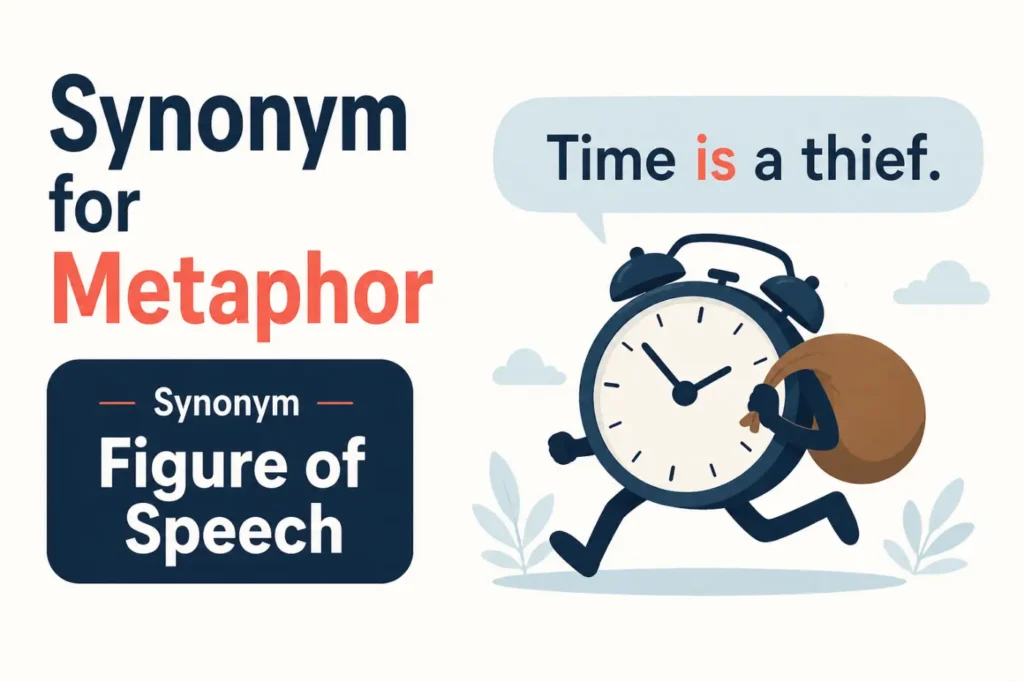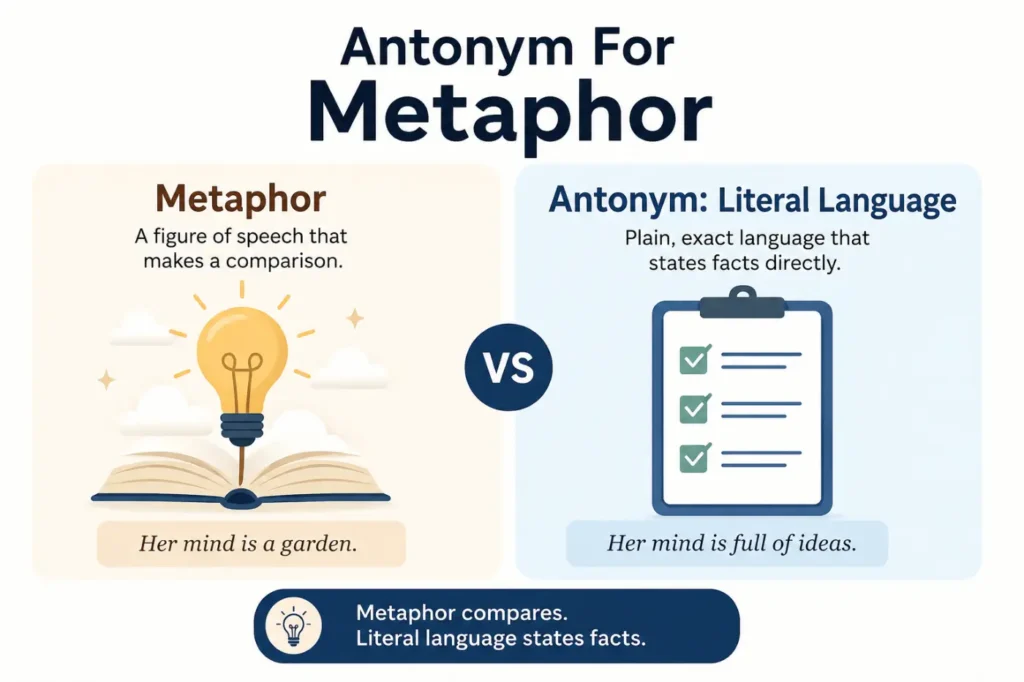
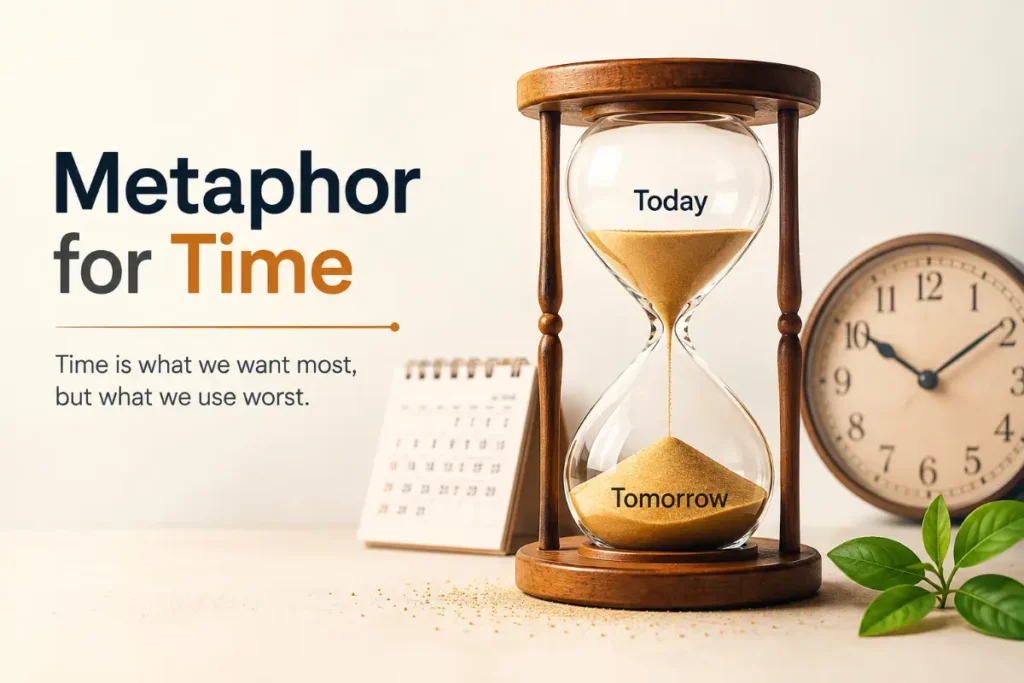
Time is one of those ideas everyone understands but nobody can physically hold. A Metaphor for Time helps turn this abstract idea into something readers can see and feel. We watch time pass through birthdays, changing seasons, old photographs, growing children, unfinished plans, and memories that suddenly feel decades away. We can measure it with clocks and calendars, but measurement does not fully explain what time feels like.
That is why writers often turn to metaphor. A good comparison can make an invisible idea feel almost physical. Time can become a river carrying everything downstream, a thief quietly taking moments away, a bank account that cannot be replenished, or a garden that rewards patience.
The best image depends on the feeling you want to communicate. A racing train creates urgency. An hourglass suggests limited time. A river suggests continuous movement. A sunrise suggests renewal. A fading photograph suggests memory and loss.
This guide explores more than 50 ways to describe time through vivid comparisons. The examples are organized by meaning so you can find an image that fits your sentence, poem, essay, speech, story, caption, or creative project. You will also learn how these comparisons work, how famous writers have used similar ideas, and how to create original figurative language that sounds natural rather than forced.
Quick Definition
Time is often described through images of movement, change, value, aging, and loss. Common comparisons include a river that keeps flowing, a thief that takes moments away, money that must be spent carefully, and an hourglass that steadily empties. The right image depends on the emotion you want to create, such as urgency, nostalgia, patience, regret, growth, or hope.
Just as a clock can represent life’s rhythm, a family as a compass can symbolize the people and relationships that help guide us through changing seasons of life.
Why Use Metaphors to Describe Time
Time is an abstract concept. You cannot place yesterday on a table or point to tomorrow in the sky. You can measure seconds, minutes, hours, and years, but the experience of time is much richer than those measurements suggest.
Think about the difference between five minutes spent waiting for important news and five minutes spent laughing with a close friend. The clock records exactly the same amount of time. Your experience does not.
Metaphor helps bridge that gap.
When you describe time as a river, you give movement to something invisible. When you describe it as money, you give it value. When you describe it as a thief, you emphasize loss. When you describe it as a garden, you highlight patience and growth.
This makes figurative language especially useful for writers. A literal sentence can tell the reader that time passes quickly. A vivid comparison can make the reader feel that speed. The choice of image also establishes mood.
A clock ticking in an empty room creates tension. A garden changing through the seasons creates calm. A fading photograph creates nostalgia. A train disappearing down the track creates a sense of distance and finality.
Good figurative writing therefore does more than decorate a sentence. It guides the reader toward a particular interpretation.
Metaphors for Time as a Force of Nature
Nature provides some of the most intuitive comparisons because natural processes are visible, physical, and familiar. Rivers flow. Seasons change. Tides rise and fall. Storms arrive and pass. Day becomes night.
These patterns give writers a powerful vocabulary for describing something that cannot be seen directly.
A Flowing River
A river is one of the clearest images for continuous movement. Once water moves downstream, it does not return to the same place in the same form.
This makes the river useful when you want to emphasize progression and the impossibility of returning to an earlier moment.
Time is a river carrying every moment toward the unknown.
The image works particularly well in reflective writing because it also suggests that life is part of a larger current. You can pause beside a river, but you cannot stop its flow.
An Ocean Tide
A tide suggests movement that follows a larger rhythm. It arrives, retreats, and returns, creating a sense of cycles rather than simple forward motion.
This image works well for writing about recurring experiences, generations, memories, and changing circumstances.
A Changing Season
Seasons offer a natural picture of temporary stages. Spring can suggest beginnings. Summer can represent abundance. Autumn can suggest maturity or letting go. Winter can symbolize rest, hardship, stillness, or the end of a cycle.
The power of this comparison comes from its reminder that no season lasts forever.
A Winter Storm
A storm gives time a more difficult personality. It can represent a period of hardship that seems overwhelming while it is happening.
Those years felt like a winter storm that refused to move on.
The image creates emotional weight without simply saying that the period was difficult.
A Rising Sun
Sunrise represents renewal. Darkness gives way to light, and one day begins after another ends. This makes sunrise useful for writing about second chances, new beginnings, recovery, and hope.
A Falling Leaf
A falling leaf can represent the passage of time through aging and release. It is especially effective when writing about acceptance because the leaf does not resist the changing season. This image works beautifully for reflective writing about childhood, aging, endings, and memories.
Time as a Commodity
Modern life often treats time as something valuable that can be spent, saved, wasted, invested, borrowed, or lost. This language is so familiar that we rarely stop to notice how metaphorical it is.
We spend time with friends. We save time by taking a shortcut. We waste time on unimportant tasks. We invest time in learning. We give someone our time. The underlying idea is simple. Time has value because it is limited.
Time Is Money
This is one of the most familiar comparisons in everyday English. It connects time with economic value and encourages people to think about how they use limited hours.
The comparison works especially well in business and productivity writing because it is already deeply established in ordinary speech.
A Ticking Bank Account
Imagine an account that loses a small amount every second and never accepts deposits. That image captures the scarcity of time more strongly than a normal bank account. You cannot simply earn back yesterday afternoon. Once a moment has passed, it cannot be returned.
A Vanishing Treasure
Treasure suggests something precious. Vanishing suggests that the opportunity to possess it is temporary. This comparison is useful when emphasizing the value of ordinary moments that people often overlook.
Gold Slipping Through Your Fingers
Gold represents value while slipping sand or another physical substance represents loss of control. The image works because the person can see the valuable material disappearing but cannot easily stop it.
A Limited Budget
A day can be treated like a budget. You have a fixed amount and must decide where to spend it. This comparison is useful in practical writing because it turns time management into a familiar decision making problem.
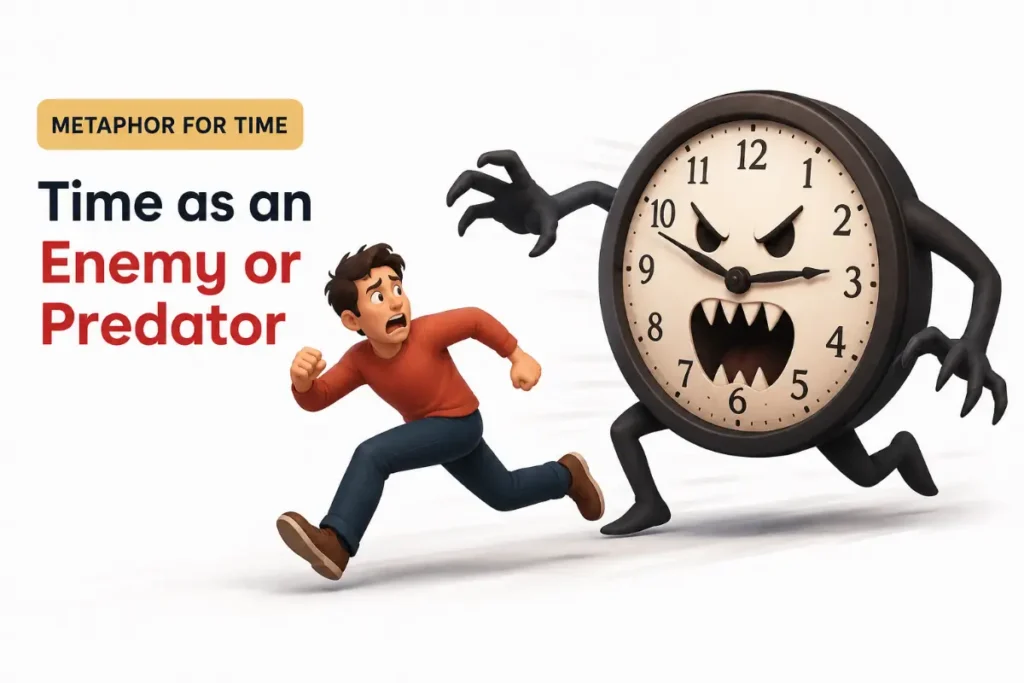
Time as an Enemy or Predator
Sometimes time feels less like a neutral process and more like something actively working against us. This happens when we focus on aging, deadlines, missed opportunities, or mortality.
A Thief
A thief suggests loss without permission.
Time is a thief that quietly takes moments before we realize their value.
The image works particularly well when writing about childhood, aging, memories, or people growing apart.
A Patient Hunter
A hunter creates tension because it follows its target slowly and consistently. The comparison can represent mortality or the awareness that nobody can escape the passage of time.
A Hungry Beast
A beast suggests something powerful and difficult to control. This image is useful when time seems to consume opportunities, youth, energy, or possibilities.
A Relentless Grinder
A grinding machine suggests pressure and repetition. It continues working regardless of individual circumstances. This comparison suits darker writing about demanding routines, aging, exhausting work, or historical change.
A Wave Chasing the Shore
A wave repeatedly reaches the shore and retreats before returning again. The image can represent moments arriving one after another while previous moments disappear behind them.
Time as a Machine or Structure
Mechanical imagery gives time a precise, relentless quality. Clocks, gears, trains, conveyor belts, and machines all suggest movement that continues according to a system.
A Ticking Clock
A ticking clock is particularly effective for urgency. The sound itself creates pressure because every tick confirms that another moment has passed. This image works naturally in stories involving deadlines, suspense, waiting, and difficult decisions.
A Conveyor Belt
A conveyor belt suggests a continuous sequence of moments. You can move with it or resist it, but the belt continues. This comparison works well for routines and repetitive experiences where days seem to move forward without much distinction.
A Train
A train suggests speed, direction, and departure. A train leaving the station can represent an opportunity that cannot be recovered. A fast moving train can represent time passing too quickly.
A Set of Gears
Gears work together to create movement. One turns another, creating a larger mechanism. This image can represent the relationship between individual moments and larger stages of life.
A Clockwork Door
A clockwork structure can represent a life controlled by schedules and routines. The image is particularly useful for writing about modern work, deadlines, appointments, and the pressure to stay productive.
Time as a Journey
Journey imagery focuses on movement through life rather than time as an enemy. This approach tends to feel more personal and reflective.
A Long Road
A road represents progression. The road behind you represents experience. The road ahead represents possibility. A crossroads represents a decision. This makes roads one of the most flexible images for discussing the passage of life.
A Train Journey
A train journey adds the idea of limited control. The passenger can choose to board but cannot control every turn along the route.
This is useful for describing how life can involve both personal choice and circumstances beyond individual control.
A Map
A map represents perspective. When people are young, the future can seem like a large unexplored map. Later in life, parts of that map become familiar while other areas remain unknown.
A Road With No Reverse Gear
This image emphasizes irreversibility. You can stop. You can change direction. You can choose another route. But you cannot drive back into yesterday.
A Distant Horizon
A horizon always remains ahead. The closer you move toward it, the farther it appears. This makes the horizon useful for describing future goals, aging, ambition, and the feeling that life continues beyond every immediate destination.
Time as Growth
Growth metaphors create a warmer and more hopeful interpretation. They work especially well for personal development, education, relationships, creativity, and long term goals.
A Garden
A garden requires patience. Some plants grow quickly while others take years. Some seasons produce visible results while others happen mostly beneath the surface.
This makes a garden a powerful image for progress that cannot be rushed.
A Tree
A tree captures both growth and continuity. The tree becomes larger while remaining connected to its roots. That makes it particularly useful for describing people who change without losing their identity.
Rings Inside a Tree
Tree rings offer a beautiful image for accumulated experience.
Each ring represents another year. The outside may look similar from a distance, but the interior contains evidence of everything the tree has endured.
A Seed
A seed represents potential before visible results appear. It works well for ideas, relationships, education, talent, and personal development.
A Winding Vine
A vine grows gradually and often takes unexpected directions.
This can represent a life that develops through opportunities, obstacles, relationships, and choices rather than following a perfectly straight plan.
Time as Memory
Time is closely connected with memory. The past does not physically remain with us, yet memories allow fragments of it to survive. This creates a rich group of comparisons.
An Old Photograph
A photograph freezes one moment while the world continues moving around it. This makes it a natural image for nostalgia.
A Fading Photograph
A fading photograph adds the idea that memory can become less vivid. It works especially well for childhood memories and relationships separated by many years.
An Attic
An attic contains objects from different periods of life. It can represent the mind as a place where old experiences remain stored even after they are no longer part of daily life.
An Old Song
A song can bring back a forgotten period almost instantly.
This makes music a powerful image for memory because one sound can collapse years of distance.
A Box of Letters
Letters preserve words from another time. They can represent the way the past remains accessible even though the original moment cannot be recovered.
When time feels slow during moments of worry, it can resemble anxiety as a constant alarm, making every passing minute feel heavier than it really is.
Time as Something That Heals
The idea that time heals is common, but it can become more meaningful when expressed through an image.
A Wound Closing
A wound does not disappear instantly. It changes gradually. This makes the image useful for grief, disappointment, heartbreak, and emotional recovery.
A Gardener
A gardener does not force a plant to grow faster by pulling on its leaves. The comparison suggests patience and care.
Calm Water After a Storm
This image emphasizes that emotional turbulence can eventually settle. It does not claim that the storm never happened. The marks remain, but the conditions change.
A Scar Becoming Faint
A scar represents an experience that leaves evidence behind. As it fades, it suggests healing without erasing history. This is often more realistic than saying that pain simply disappears.
Time as Loss and Regret
Some of the strongest comparisons deal with moments that cannot be recovered.
Sand in an Hourglass
Once sand falls through the narrow center, it cannot naturally return to the upper chamber. The image captures limited time and irreversible movement.
Smoke From a Candle
Smoke rises and disappears. It represents a moment that was once visible but becomes impossible to hold.
Footprints in Wet Sand
Footprints remain briefly before waves erase them. This is useful for writing about temporary experiences, childhood, travel, and mortality.
A Door Closing
A closing door represents an opportunity or stage becoming unavailable. The image is especially powerful when the person realizes too late that the moment has passed.
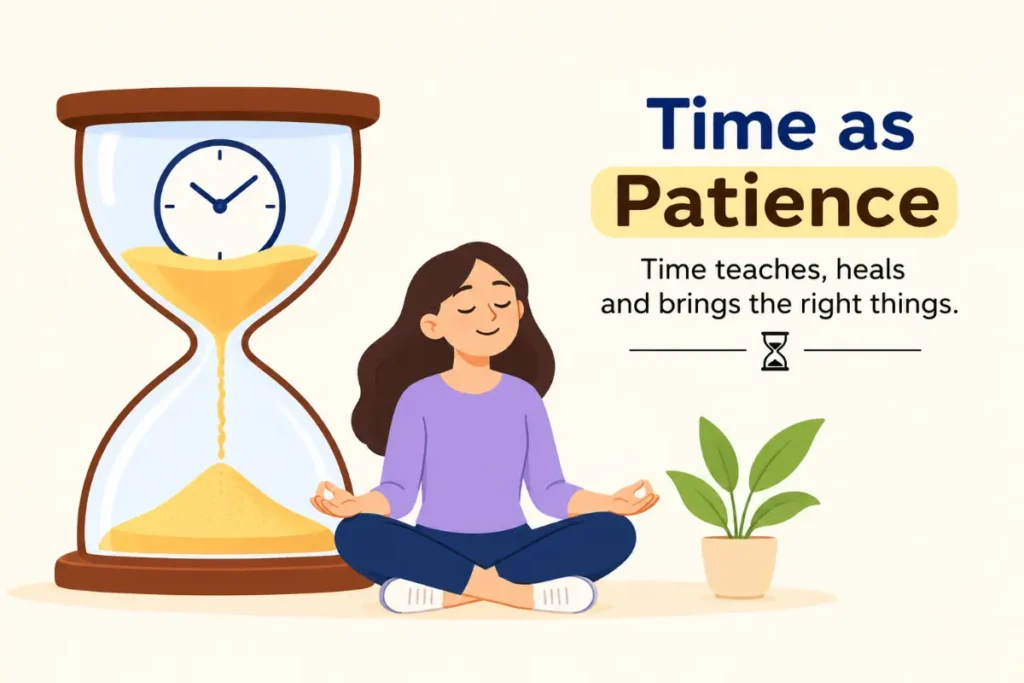
Time as Patience
Not every comparison needs to make time feel threatening. Sometimes time is what allows good things to develop.
A Slow Cooked Meal
A meal that requires patience becomes richer through time and careful preparation. This can represent skills, relationships, creative work, or long term success.
A Ripening Fruit
Fruit cannot be forced to become ripe simply because someone wants it sooner. The comparison communicates natural development and patience.
A Potter Shaping Clay
A potter works gradually, adjusting the material through repeated attention. This image suits personal growth and craftsmanship.
A Painting Taking Shape
A painting may begin with rough marks before the final image becomes clear. This represents the way progress can look messy before it becomes meaningful.
How to Choose the Right Metaphor
The strongest comparison depends on the feeling behind your sentence.
| If you want to convey | Useful image | Why it works |
|---|---|---|
| Urgency | A racing train | It suggests speed and limited control |
| Regret | Sand in an hourglass | It emphasizes irreversible loss |
| Healing | A wound closing | It suggests gradual recovery |
| Growth | A garden | It communicates patience and development |
| Nostalgia | An old photograph | It connects the past with memory |
| Aging | Tree rings | It shows accumulated years |
| Hope | Sunrise | It suggests renewal |
| Opportunity | An open door | It suggests a new possibility |
| Loss | A fading photograph | It suggests distance from the past |
| Progress | A long road | It emphasizes movement toward a destination |
| Uncertainty | A distant horizon | It shows that the future remains unknown |
| Patience | Ripening fruit | It suggests natural development |
| Pressure | A ticking clock | It creates urgency |
| Change | Changing seasons | It presents transition as natural |
| Mortality | A disappearing shadow | It emphasizes limited existence |
Before choosing an image, ask yourself one simple question: What should the reader feel? That answer will usually lead you toward the right source image.
Famous Metaphors for Time in Literature
Writers have been comparing time with physical forces for centuries because the abstract nature of time creates a natural challenge for language.
Shakespeare repeatedly presents time as a powerful force that acts upon youth, beauty, and human life. In his sonnets, time can appear as destructive, consuming, and impossible to defeat. His famous treatment of time in Sonnet 19 gives it an almost animal like appetite, creating a vivid image of something that devours what humans value.
The broader idea appears throughout Shakespeare’s work. Time is not merely a measurement. It becomes an active force capable of changing people, destroying beauty, and altering circumstances.
Virginia Woolf also explored time in ways that move beyond simple clock measurement. Her writing often distinguishes between measured time and lived time. A short event can occupy enormous emotional space while years can seem to disappear in memory.
This distinction is important for modern writers. Clock time and psychological time are not always the same. A year of waiting can feel endless. Ten years of childhood can seem to vanish when remembered as an adult.
Other literary traditions use images such as rivers, seasons, clocks, shadows, roads, and journeys to explore the same basic tension. Humans move through time while trying to preserve meaning, memory, identity, and relationships.
The lesson for writers is clear. Strong figurative language does not merely describe how long something lasts. It can reveal how that duration feels.
How to Create Your Own Time Metaphor
Original comparisons become easier when you follow a simple process.
Identify the Feeling
First decide what you want the reader to experience. Are you describing urgency, regret, nostalgia, patience, fear, hope, aging, growth, or loss? Do not begin by searching for a clever object. Begin with the emotional purpose.
Choose a Source Domain
Next choose an area of life that naturally contains the quality you need. Useful domains include:
- Nature for growth, cycles, movement, and renewal.
- Technology for speed, pressure, precision, and repetition.
- Travel for progress, direction, distance, and uncertainty.
- Architecture for stages, foundations, transitions, and rebuilding.
- Money for value, scarcity, spending, and investment.
- Memory for nostalgia, loss, distance, and aging.
- Food and farming for patience, preparation, growth, and maturity.
Map the Relationship
Now identify what the two ideas have in common. For example, if you want to describe slow personal growth, you might compare it with a garden.
Time and a garden share several qualities. Both require patience. Both produce visible results gradually. Both have seasons of growth and rest. That gives you a foundation for an original sentence.
My patience was a garden that finally began to bloom.
Strengthen the Verb
The verb often determines the quality of a metaphor. Instead of saying time is like a river, try giving the river an active role.
Time carried the summer away.
Instead of saying time is like a thief, create movement.
Time slipped into the room and stole another year.
Strong verbs make figurative language feel alive.
Remove Anything That Does Not Help
A metaphor should clarify the idea. If a sentence contains too many comparisons, remove the weaker ones. One clear image is usually stronger than three unrelated images competing for attention.
Common Mistakes When Writing About Time
Figurative language can become predictable when writers rely too heavily on familiar phrases without adding a fresh perspective.
The first problem is cliché. Phrases such as time flies and time is money are perfectly understandable, but they may not create much impact because readers have encountered them so often. The solution is not to avoid familiar concepts completely. Instead, develop them with specific details.
The second problem is mixed imagery. Combining rivers, clocks, roads, machines, and gardens in one sentence can create confusion because each image suggests a different system. The third problem is overexplaining. Once the comparison is clear, let it breathe.
The fourth problem is using a metaphor that conflicts with the intended emotion. A garden usually creates a gentler feeling than a predator. A ticking clock creates more urgency than a slowly growing tree.
The fifth problem is treating time as universally positive or negative. Human experience is more complicated. Sometimes passing time brings healing. Sometimes it creates regret. Sometimes it creates both.
Because time continually moves forward, it is also a powerful way to understand time as a force for transformation, reminding us that change is an unavoidable part of life.
How Native Speakers Use Time Metaphors
English speakers naturally use figurative language when talking about time.
People say that a deadline is approaching, a weekend flew by, a meeting dragged on, someone is running out of time, a memory goes back years, or a person is looking forward to something.
These expressions reveal something important. Native speakers do not treat time as purely abstract. They regularly describe it using movement, physical space, possession, distance, and force.
That means effective writing does not need to sound poetic all the time. A natural sentence such as The afternoon disappeared before I noticed can be more effective than an elaborate comparison.
Good figurative language fits the voice of the writing. A poem can be lyrical. A school essay can be clear and thoughtful. A business presentation may need a restrained image. A novel can develop an extended metaphor across several pages. The best writers adjust the intensity to the context.
Frequently Asked Questions
What is the most common metaphor for time?
One of the most common comparisons presents time as something that moves or disappears. Rivers, clocks, flying objects, and thieves are especially familiar images. A river emphasizes continuous movement, while a thief emphasizes loss. The most appropriate choice depends on the point of the writing rather than popularity alone.
What metaphor represents time passing quickly?
A racing train, flowing river, falling sand, or bird flying into the distance can represent time passing quickly. A train is especially effective when you want urgency because it suggests speed and limited control. Falling sand works better when the focus is on the finite nature of the available time.
What metaphor represents time passing slowly?
A slow moving river, growing tree, ripening fruit, or long winter can represent time moving slowly. These images are useful when writing about waiting, patience, recovery, or anticipation. A slowly changing landscape can be especially effective because the reader understands that transformation is happening even though the visible difference may be small.
Why is time often compared to a river?
A river provides a natural image for continuous movement. Water flows forward and does not return to its original position in exactly the same form. This makes the comparison useful for expressing the idea that moments continue moving away from the present. Writers can also extend the image through currents, rapids, shores, bridges, and changing courses.
What metaphor represents wasted time?
A leaking bucket, burning candle, empty wallet, or train leaving the station can represent wasted time. These images emphasize that something valuable has been used or lost without producing the intended result. A leaking container is particularly useful because the loss continues quietly until someone notices how much has disappeared.
What metaphor represents aging?
Tree rings, an old house, a fading photograph, changing seasons, and a weathered road can all represent aging. Tree rings are especially strong because they show that age is accumulated rather than simply counted. A weathered house can also suggest the relationship between time, memory, experience, and physical change.
What metaphor represents the future?
A distant horizon, unopened door, blank page, unexplored road, or sunrise can represent the future. Each image creates a different emotional tone. A horizon suggests uncertainty. A door suggests opportunity. A blank page suggests possibility. A road suggests movement. A sunrise creates a stronger sense of hope and renewal.
How do I make a metaphor about time original?
Start with the specific emotion rather than choosing a familiar image at random. Decide whether you want to communicate urgency, nostalgia, loss, growth, patience, or hope. Then choose an object or process that behaves in a similar way. Add a specific detail and use an active verb. Originality usually comes from the connection and context rather than from inventing an entirely unfamiliar image.
Final Thoughts
Time is difficult to describe because it has no single personality. It can feel generous when we have plenty of it, cruel when a deadline approaches, precious when we recognize how little remains, and almost invisible when years disappear into memory.
That is why writers have compared it with rivers, roads, clocks, gardens, storms, seasons, money, photographs, trains, trees, and countless other things.
The strongest choice is not necessarily the most beautiful one. It is the image that matches the exact idea you want to communicate.
Use a river when movement matters. Use a clock when urgency matters. Use a garden when patience matters. Use a photograph when memory matters. Use a thief when loss matters. Use a sunrise when renewal matters.