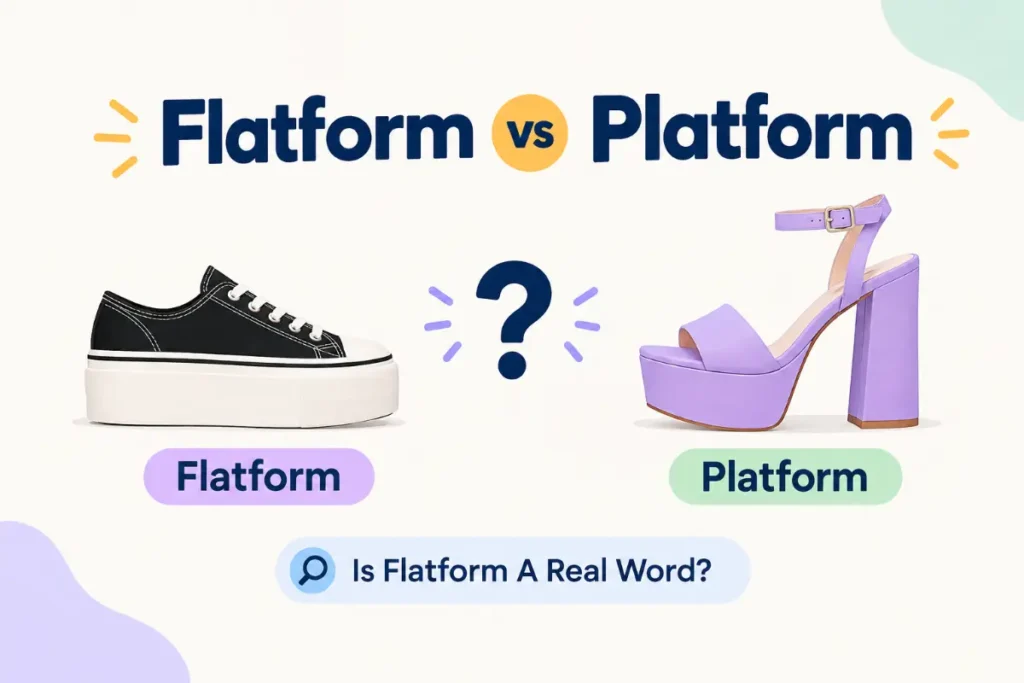
If you have seen the words flatform vs platform, you may wonder if one is a spelling mistake or if the two terms describe different types of shoes. The confusion makes sense because both words appear in fashion writing and both can describe footwear with an elevated sole. The important difference is that flatform is a real fashion term, while platform is the broader and much older word.
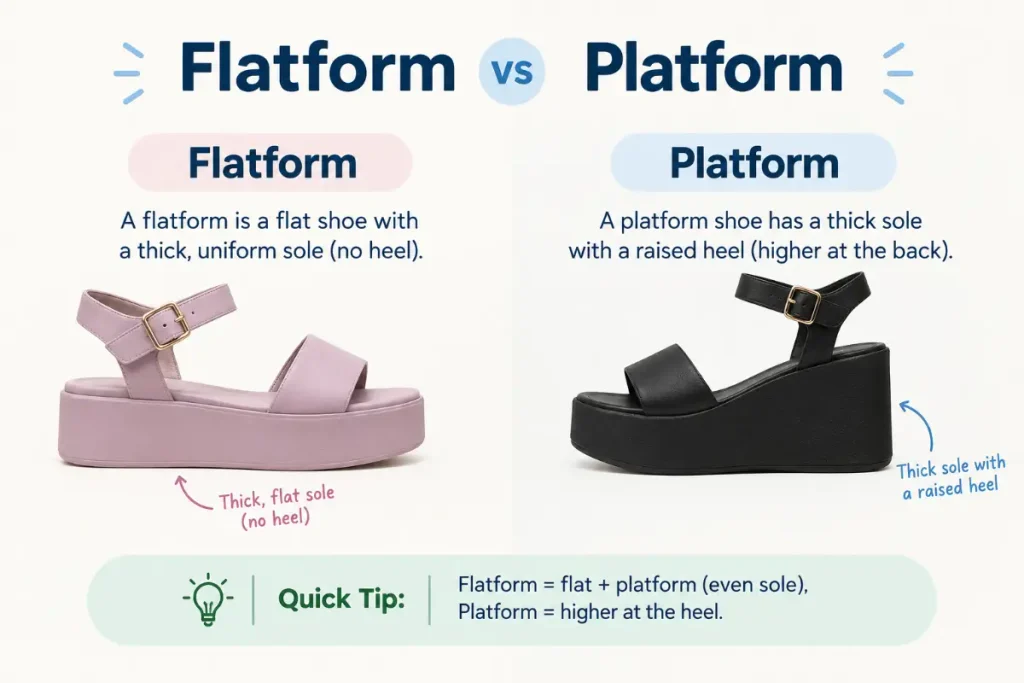
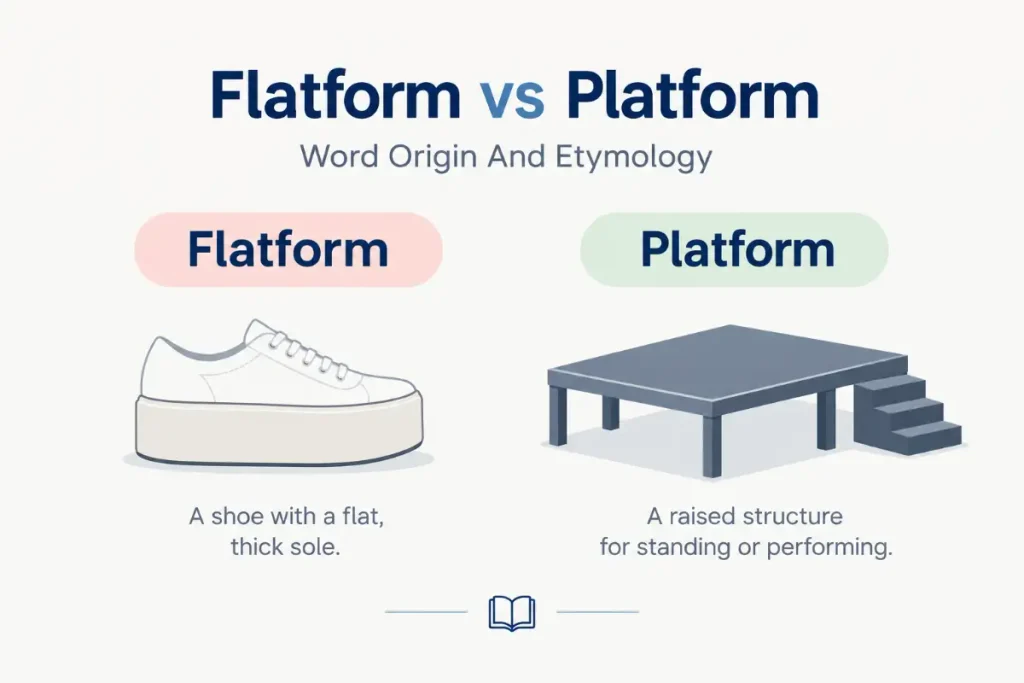
A platform shoe generally has a raised sole or heel that adds height. A flatform shoe also has a thick sole, but its defining feature is that the sole stays relatively level from the heel toward the front of the foot. In other words, a flatform gives you added height without the pronounced slope associated with many traditional platform styles.
The difference becomes even clearer outside fashion. Platform has several established meanings in English. It can describe a raised surface, a railway station area, a technology system, a social media service, a political set of ideas, or a construction structure. Flatform has a much narrower meaning and is mainly associated with footwear.
Quick Answer
Flatform and platform are both valid words, but they do not mean exactly the same thing. A platform is a raised surface or an elevated shoe style. A flatform is a type of shoe with a thick, mostly level sole that adds height without a steep incline. Use platform for the broader concept and flatform for this specific footwear style.
What Does Platform Mean
Platform is a noun with several meanings. At its most basic level, it describes a raised or elevated surface designed to support people or objects. The word later developed broader meanings in transportation, politics, technology, business, and everyday communication.
In footwear, a platform shoe has a thick sole or elevated section that raises the wearer’s foot above the ground. The sole can be thick throughout part of the shoe or combined with a heel that creates an incline.
The word also appears in familiar expressions such as:
- Social media platform.
- Online platform.
- Technology platform.
- E commerce platform.
- Political platform.
- Railway platform.
- Construction platform.
- Launch platform.
- Shoe platform.
The meaning comes from context. When someone says, “I posted it on the platform,” they probably mean an online service. When someone says, “She wore platform sandals,” they mean footwear.
Platform Shoes
Platform shoes are designed to add height through a thicker sole. The amount of elevation can vary considerably, and the shape of the sole can also vary.
Some platform shoes have a relatively even sole. Others have a thick front sole combined with an even thicker heel, creating a noticeable slope. This is where the distinction from a flatform becomes useful.
A platform describes the general elevated footwear category. A flatform describes a more specific design within that broader fashion vocabulary.
Just as another common spelling mix-up can change the intended word entirely, confusing “flatform” with “platform” can make otherwise clear writing look less polished.
What Does Flatform Mean
Flatform is a fashion term formed from flat and platform. It describes footwear with a thick sole that remains relatively flat or level instead of creating the pronounced heel to toe angle associated with many elevated shoes.
Flatforms can appear as sandals, sneakers, loafers, boots, and other footwear styles. They can give the wearer extra height while maintaining a more uniform sole profile.
For example:
She wore black flatform sandals with her summer dress.
Here, the word tells the reader something specific about the shoe. The sandals have an elevated sole, but the sole is designed to stay relatively level.
The term is especially common in fashion descriptions, product listings, magazines, and shopping content.
Flatform vs Platform In Footwear
The easiest way to understand the distinction is to look at the shape of the sole.
| Feature | Flatform | Platform |
|---|---|---|
| Basic meaning | Elevated shoe with a mostly level sole | Shoe with a raised sole or platform |
| Word type | Noun | Noun |
| Main context | Fashion and footwear | Fashion plus many other contexts |
| Sole shape | Generally level from front to back | Can be level or noticeably sloped |
| Main purpose | Add height while keeping a flat profile | Add height through an elevated sole |
| Broader meaning | Limited | Very broad |
| Example | Flatform sandals | Platform sandals |
| Standard spelling | Flatform | Platform |
The distinction is not always perfectly rigid because fashion terminology can vary between brands and retailers. A product page may use platform as a broad category even when the shoe has a flatform style.
That is why the terms can overlap in shopping searches. A flatform is best understood as a particular kind of elevated footwear rather than as a completely separate category unrelated to platforms.
The Main Difference Between The Two Terms
The biggest difference is specificity.
- Platform is the broad term. It can describe a raised structure, a type of footwear, an online service, or many other things.
- Flatform is much more specialized. In standard contemporary usage, it primarily refers to footwear with a thick and relatively level sole.
Think of the relationship this way:
- Platform = broad category.
- Flatform = specific footwear style.
This distinction helps explain why someone searching for flatform shoes may find platform shoes in the results. The two concepts overlap in footwear, but they are not interchangeable in every situation.
Is Flatform A Real Word
Yes. Flatform is a recognized fashion term rather than a simple misspelling of platform.
The word is a blend of flat and platform. This type of word formation is called a blend because parts of two existing words combine to create a new term.
The name makes practical sense. A flatform combines the height associated with a platform with the relatively level sole associated with a flat shoe.
You may see the word in descriptions such as:
- flatform sandals
- flatform sneakers
- flatform loafers
- flatform boots
- flatform shoes for women
The exact style can differ, but the elevated and relatively level sole is the central idea.
Platform Meaning Beyond Shoes
One reason this comparison causes confusion is that platform has a much wider semantic range.
Social Media Platform
A social media platform is an online service where people can create, share, view, or interact with content.
For example:
The company created a campaign for several social media platforms.
Here, platform has nothing to do with footwear.
Technology Platform
In technology, a platform can refer to a software environment, system, or technological foundation that supports applications or services.
For example:
The application runs on a cloud based platform.
The word describes the environment that supports the software.
Online Platform
An online platform can be a website or digital service that connects users with information, tools, products, communities, or other services.
For example:
Students use the online platform to access course materials.
Political Platform
A political platform is a set of policies, principles, goals, or positions associated with a political party or candidate.
For example:
The candidate released a detailed platform before the election.
Railway Platform
In transportation, a railway platform is the raised area beside railway tracks where passengers wait for and board trains.
For example:
The train will arrive at platform four.
These meanings show why platform is a general English word, while flatform belongs primarily to the language of fashion and footwear.
Flatform Shoes For Walking
People often search for flatform shoes for walking because these shoes combine an elevated sole with a relatively level foot position. However, the word itself does not guarantee that a particular shoe will be comfortable for walking.
Comfort depends on the shoe’s construction, weight, flexibility, cushioning, fit, sole material, and support. Two flatform shoes can feel completely different on the foot.
A thick sole can also change how the foot interacts with the ground. Someone shopping for everyday walking shoes should therefore look beyond the label and consider the actual design.
For casual walking, a lightweight flatform sneaker may feel very different from a heavy flatform sandal or boot.
Flatform Sandals And Shoes
Flatform sandals are among the most recognizable examples of this style. They typically have a thick sole that stays fairly level from heel to toe.
The style can range from simple casual sandals to dressier designs with straps, buckles, textured soles, or decorative details.
Flatform shoes is a broader phrase covering different shoe designs that use the same basic sole concept.
For example:
- Flatform sandals can work with casual summer outfits.
- Flatform sneakers can create a sporty look with added height.
- Flatform loafers can give a traditional shoe a more substantial silhouette.
- Flatform boots can combine an elevated sole with a heavier appearance.
The word describes the sole structure more than the entire fashion identity of the shoe.
Examples In Sentences
Here are natural examples showing how flatform works in everyday fashion writing.
- She bought a pair of white flatform sandals for the summer.
- The black flatform shoes added height without a steep heel.
- These flatform sneakers have a thick rubber sole.
- Her flatform loafers looked polished with the trousers.
- The store has several new flatform styles this season.
- I like flatform sandals because they give me extra height.
- The designer paired the dress with chunky flatform shoes.
- Those flatform boots have a surprisingly lightweight sole.
- She chose a simple flatform style for everyday wear.
- The brown flatform sandals matched her casual outfit.
Now compare examples using platform.
- She wore platform sandals to the concert.
- The platform shoes added several inches to her height.
- The store sells platform boots in several colors.
- Her platform heels created a dramatic silhouette.
- The social media platform has millions of users.
- We shared the announcement on an online platform.
- The train is waiting at the next platform.
- The company built a new technology platform.
- The candidate presented her political platform.
- Workers used a temporary construction platform.
These examples demonstrate why context matters. Flatform is mainly about a specific footwear design, while platform can refer to footwear or many completely different concepts.
Common Spelling Mistakes
The most common mistake is treating flatform as a misspelling of platform. That is not always correct.
If you are talking about an elevated shoe with a mostly level sole, flatform can be the intended term. If you are talking about a general raised surface or a digital service, platform is the correct word.
Another mistake is assuming that every thick soled shoe should be called a flatform. Fashion terminology is more specific than that. The sole profile matters.
For example:
Incorrect for a general online service:
The company launched a new flatform.
Correct:
The company launched a new platform.
Now consider footwear:
Natural:
She bought flatform sandals.
The first sentence uses the specialized fashion term, while the second uses the broad technology term.
These tricky spelling differences are often caused by pronunciation, word formation, or assumptions about how a familiar term should be written.
How To Remember The Difference
A simple memory trick can make the distinction easy.
Think of flatform as:
flat + platform = flatform
The word combines the idea of a flat sole with a platform sole.
If you mean an online service, a railway area, a raised structure, or the general shoe category, use platform. If you mean a specific elevated shoe with a relatively flat sole, flatform may be the better choice.
You can also remember the visual difference:
- Flatform = flat profile with added height.
- Platform = raised structure or broader elevated shoe category.
Pronunciation Guide
Platform is commonly pronounced:
/ˈplæt.fɔːrm/ in many American English pronunciation systems.
A simple pronunciation guide is:
PLAT form
The stress falls on the first syllable.
Flatform is pronounced naturally as:
FLAT form
Because the word is a blend of flat and platform, its pronunciation is fairly intuitive for English speakers.
The main challenge is usually not pronunciation. It is knowing which word fits the context.
Word Origin And Etymology
Platform has a much longer history in English than flatform. The English word developed through French and ultimately traces back to forms related to the idea of a flat or level surface. Its meaning expanded over time from physical structures to figurative and institutional uses.
That expansion explains the many modern meanings of platform. A physical platform supports people or objects. An online platform can support digital activity. A political platform presents a set of ideas or policies.
Flatform is much newer. It is a modern blend created from flat and platform, primarily to describe a fashion design that combines a level sole with platform height.
This is a useful example of how English vocabulary grows. New words often arise when speakers need a convenient label for a new product, style, technology, or cultural concept.
American And British English
There is no major American versus British spelling difference between these terms.
American English uses:
platform
and
flatform
British English also uses the same spellings when these terms are used.
The bigger difference is often vocabulary preference within a particular fashion market. Retailers and brands may choose different descriptions for similar shoes, and product terminology can change with fashion trends.
That does not create a separate American spelling of flatform.
Grammar Rules
Both platform and flatform function primarily as nouns.
Singular Form
Use platform for one platform.
The company created a new platform.
Use flatform for one flatform shoe or style.
She bought a black flatform.
Plural Form
The plural of platform is platforms.
Several platforms offer the same service.
The plural of flatform is flatforms.
The store introduced several new flatforms.
Adjective Use
Platform can also appear as part of a compound noun or noun phrase.
Examples include:
- platform shoes
- platform sandals
- platform technology
- social media platform
- online platform
Likewise, flatform commonly modifies another noun in footwear descriptions.
Examples include:
- flatform sandals
- flatform sneakers
- flatform shoes
- flatform boots
The surrounding noun usually makes the intended meaning immediately clear.
Formal And Casual Usage
Platform is a neutral and highly established English word. It works in casual conversation, academic writing, professional communication, technology writing, journalism, and many other contexts.
Flatform is more specialized and is most natural in fashion and retail contexts.
For example, a fashion article might say:
Flatform sandals are returning as a popular summer style.
A product description might say:
These flatform sneakers feature a lightweight sole.
In ordinary conversation, someone might simply describe the shoes as having a thick flat sole if the listener is unfamiliar with the fashion term.
That does not make flatform incorrect. It simply reflects the difference between specialized vocabulary and everyday description.
When two forms look plausible, choosing the correct spelling usually comes down to checking standard English usage rather than relying on how the word sounds.
Which Word Should You Use
The right choice depends on what you are describing.
Use platform when you mean:
- A general raised surface.
- A railway platform.
- A construction structure.
- A social media service.
- A technology system.
- A political set of policies.
- A general platform shoe style.
Use flatform when you mean:
- An elevated shoe with a relatively level sole.
- Flatform sandals.
- Flatform sneakers.
- Flatform boots.
- A specific fashion style built around a flat platform sole.
The key is not to think of one spelling as correct and the other as incorrect. Both are legitimate words. The real issue is meaning.
Frequently Asked Questions
Is Flatform A Correct Word
Yes. Flatform is a legitimate fashion term used for footwear with a thick, relatively level sole. It is formed from the words flat and platform. It is not simply a spelling mistake. The term is most commonly encountered in fashion, footwear, retail, and product descriptions.
What Is The Difference Between Flatform And Platform Shoes
A flatform usually has a thick sole that stays relatively level from heel to toe. A platform shoe is a broader category of elevated footwear and may have a level sole or a noticeable slope. The terms can overlap, but flatform is more specific.
Are Flatforms Good For Walking
They can be comfortable for casual walking, but the word flatform does not guarantee comfort. Walking comfort depends on the shoe’s fit, weight, cushioning, flexibility, sole design, and support. A lightweight flatform sneaker may be more practical for walking than a heavy fashion sandal or boot.
Is Flatform The Same As Flat Shoes
No. A flatform is elevated, while a traditional flat shoe generally has little or no added height. A flatform combines a relatively level sole profile with a substantial sole thickness. This gives the wearer more height while maintaining a flatter shape than many elevated shoes.
Are Platform Shoes And Flatform Shoes The Same
Not exactly. Platform is the broader footwear term, while flatform describes a more specific style. Some flatforms can reasonably be described as platform shoes, but not every platform shoe is a flatform. The shape and slope of the sole help distinguish the two.
Is Platform Only Used For Shoes
No. Platform has many meanings outside fashion. It can describe a social media service, technology system, political program, railway structure, construction surface, or raised physical area. Context determines the meaning. Flatform is much narrower and is primarily associated with footwear.
How Do You Spell Flatform Shoes
The standard spelling for the footwear term is flatform shoes. It combines flat and platform to describe shoes with an elevated but relatively level sole. Do not replace it with platform when you specifically want to identify this particular footwear design.
Is Flatform American Or British
Flatform is used in both American and British English, particularly in fashion and footwear contexts. There is no standard American spelling that changes it to another form. The same applies to platform. Differences are more likely to come from individual retailers or fashion terminology than from national spelling rules.
Final Takeaway
The answer to flatform vs platform is not a simple case of one spelling being right and the other being wrong. Both words are valid, but they serve different purposes.
Platform is the broad and established word. It can describe footwear, raised surfaces, railway structures, technology services, social media services, and political programs. Flatform is a specialized fashion term for elevated footwear with a relatively level sole.
If you are describing a digital service, raised structure, or general elevated shoe style, platform is usually the right choice. If you are describing footwear that combines platform height with a flat sole profile, flatform is the more precise term.
The easiest memory trick is simple: flatform combines flat and platform. Once you understand that connection, the difference becomes much easier to remember and use naturally.