
Even in the darkest moments, a small reason to keep going can make all the difference. That feeling is hope. It might be a light at the end of a tunnel, a seed waiting for spring, or a window opening after a long winter. These images give shape to an emotion that is often difficult to put into words.
The following 40 metaphors for hope capture everything from a quiet sense of possibility to the strength people find in believing in a better future. Each comes with a simple explanation and an example sentence to show how it works in everyday language and creative writing.
Whether you’re preparing a speech, writing an essay, or developing a story, you’ll find ideas to express hope in fresh and meaningful ways. There’s also a look at overused expressions and how to replace them. Explore more topics in our metaphor examples by topic collection.
Quick Answer
Metaphors for hope describe the belief that better days are ahead through images such as a light in the darkness, a seed waiting to bloom, or a sunrise after a storm. They make hope feel more vivid, personal, and powerful.
Quick Definition
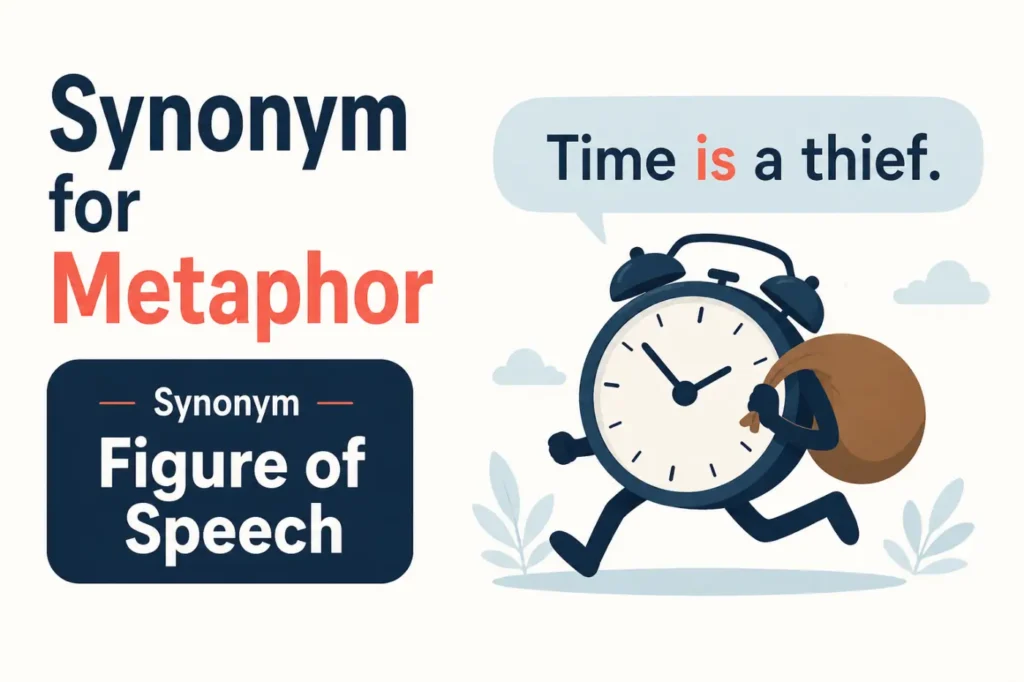
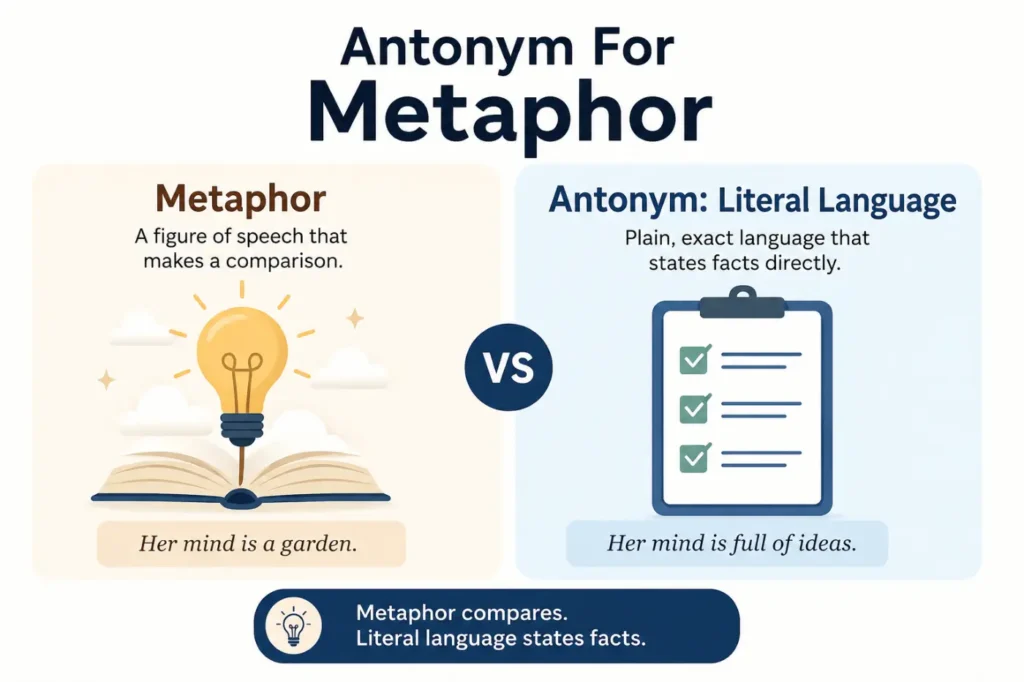
A metaphor is a figure of speech that describes one thing as another to highlight a shared quality or create a deeper meaning. Rather than making a direct comparison using “like” or “as,” it treats one thing as something else. Metaphors make language more vivid, expressive, and memorable by helping readers picture an idea or understand a feeling in a new way.
What Is a Metaphor for Hope?
A metaphor for hope describes the feeling as something else, without using “like” or “as.” “She felt hopeful” states a fact. “Hope is a lighthouse in the fog” lets the reader see a small light that guides people through difficulty. The comparison is not literal. It borrows the qualities of the image, such as light, growth, direction or support, to show what hope feels like.
We use hope metaphors in everyday speech without noticing: a ray of hope, a light at the end of the tunnel, a glimmer of hope, clinging to hope. These phrases show how naturally we imagine hope as light, as growth and as something to hold onto.
Why Do We Use Metaphors for Hope?
Hope is a feeling about the future, and the future cannot be seen. Metaphors make it visible. Light suggests a way forward, seeds suggest slow growth, open doors suggest possibility, and anchors suggest steadiness. Because hope matters most in difficult moments, these images are popular in graduation speeches, stories of recovery and encouraging messages.
Hope is also different from certainty. It lives in the gap between what is and what might be. The best hope metaphors respect that gap. They show something small and alive, not a guarantee, and that honesty is what makes them feel true.
Hope as Light and Flame
Light is the oldest image for hope because it shows the way in the dark.
- Hope is a lighthouse in the fog. It shows a way forward when you cannot see clearly.
- Hope is a small flame that refuses to go out. It stays alive even in dark times.
- Hope is a candle in a blackout. One small light changes the whole room.
- Her hope was a porch light left on. A sign that someone is waiting for you to come home.
- Hope is the first gray light before dawn. Morning is not here yet, but it is coming.
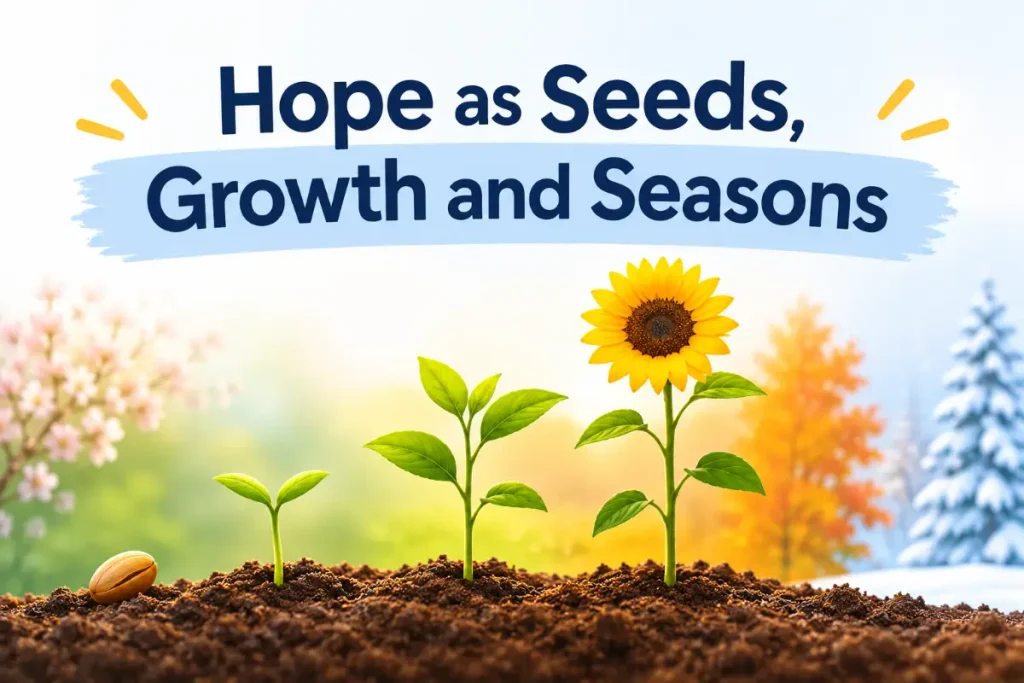
Hope as Seeds, Growth and Seasons
Growth images show hope as something that takes time.
- Hope is a seed under the snow. It waits quietly and will grow when the time is right.
- Hope is a green shoot through concrete. It grows even in harsh, unlikely places.
- Spring was a promise the winter could not break. Better days are on their way.
- Hope is a garden planted for tomorrow. You do the work now for a result you will see later.
- His hope was a root, quiet and deep, holding through the storm. Steady and unseen, but strong.
Hope as Paths, Doors and Horizons
These images show hope as direction and possibility.
- Hope is a door left slightly open. A sign that a new chance is still possible.
- Hope is a bridge to a better tomorrow. It carries you from where you are to where you want to be.
- The horizon was a line of possibility. Something to move toward, even if you cannot reach it yet.
- Hope is a compass that points forward when the road is hidden. It gives direction when everything looks unclear.
- Each sunrise is a fresh page. Every morning is a new chance to begin again.
Hope as Anchors, Wings and Rescue
These images show hope as support when things feel unsteady.
- Hope is an anchor in rough seas. It keeps you steady when everything shakes.
- Hope is a bird that sings before the sun comes up. It trusts the light before it arrives.
- Hope is a lifeline thrown across the water. Something to hold onto when you feel like you are sinking.
- Hope gave her wings. It lifted her above her fears and troubles.
- Hope is a rope dropped into a deep well. Help reaches down when you thought you were stuck.
Hope in the Darkest Times
Hope matters most when things are hardest. These images show it surviving in difficult places.
- Hope was a single star in a moonless sky. Small, but still there to guide.
- Hope is the thread that leads out of the maze. A thin line that shows the way when everything is confusing.
- Hope was a crack in the wall that let in light. Even a tiny gap changes the dark room.
- Hope is a match struck in a cave. A brief flare that shows the way for a moment.
- Hope was the last ember in a cold fireplace. Small and glowing, and enough to start again.
Hope and Effort: Building the Future
Hope often needs action. These images show hope as something you build.
- Hope is a blueprint for a house not yet built. A plan for something that does not exist yet.
- Each small step was a brick in the road ahead. Progress built piece by piece.
- Hope is a letter mailed to your future self. A message sent forward in trust.
- Hope is a sail raised before the wind arrives. Getting ready for something you believe is coming.
- Hope was a ticket bought for a train not yet in sight. A step taken in trust.
Fragile Hope
Not all hope is strong. These images are honest about hope that is thin and easily shaken.
- Hope was a candle in a draft. Small, flickering and worth shielding.
- His hope was a soap bubble, bright and fragile. Beautiful, but easy to pop.
- Hope hung by a spider’s thread. Thin, but still holding.
- Her hope was thin ice she trusted one step at a time. Cautious and careful with every move.
- Hope was a match cupped against the wind. It needed protection to stay lit.
Hope Shared and Passed On
Hope grows when people share it. These images show hope moving between people.
- Her kindness was a torch passed to the next runner. She handed hope to someone else.
- Hope is a song we hum together. Shared voices make it stronger.
- He kept the lamp lit for the others. He held hope for those who could not.
- Encouragement was water poured on a drooping plant. It helped hope recover.
- Hope is a lamp that lights the next lamp. Passing it on does not weaken it.
Metaphors for Hope in Sentences and Paragraphs
Here are short examples showing hope metaphors in real sentences.
- When the clinic’s lights flickered on after the storm, the volunteers saw hope as a candle in a blackout.
- Through the long winter of job interviews, he kept hope like a seed under the snow, small and patient.
- The letter was a door left slightly open, and she walked toward it.
- Hope, the coach told the team, is an anchor: it will not stop the waves, but it keeps you from drifting away.
Here is a longer example that builds one image across a paragraph:
After the flood, the farm looked like a gray page. But Elena planted anyway. Each row was a small bet on spring, each seed a letter mailed to a future she could not yet see. In March, when the first green shoot pushed through the mud, she did not cheer. She knelt down and touched it, as if it might be listening.
And here is a shorter example about shared hope:
The nurse kept a lamp lit in the hallway all night. By morning, three other lamps had been lit from it, and the whole corridor glowed.
The Hope Scale
Hope comes in different strengths. Matching your metaphor to the level keeps writing honest.
| Level | Feeling | Metaphor | What it shows |
|---|---|---|---|
| Faint | Barely hoping | Hope hung by a spider’s thread. | Thin but still holding |
| Cautious | Hoping carefully | Her hope was thin ice she trusted one step at a time. | Careful and unsure |
| Steady | Quietly hopeful | Hope is a seed under the snow. | Patient and alive |
| Strong | Confident | Hope is a lighthouse in the fog. | Clear direction |
| Bright | Joyful hope | Each sunrise is a fresh page. | Fresh start and energy |
| Shared | Hope among others | Hope is a lamp that lights the next lamp. | Spreading from person to person |
How Writers Use Hope Metaphors
Hope is at the heart of many speeches, stories and poems. A few techniques help.
Pair hope with a difficulty. Hope feels stronger when the reader sees what it is up against: fog, snow, a blackout or a storm. A candle means more in the dark.
Choose small, concrete images. A single candle or one green shoot feels more believable than a huge, shining promise.
Match the tone. A porch light is warm and personal. A horizon is wide and inspiring. A match in a cave is tense and urgent. Pick the one that fits your piece.
Do not make it too easy. Hope is not the same as certainty. Metaphors that show waiting and growth, like seeds and sunrise, are more honest than ones that promise a quick fix.
Show hope in action. Planting, lighting a lamp or buying a ticket shows hope as a choice. A metaphor then names what that action means.
Respect people’s struggles. In speeches and messages, avoid suggesting that hope solves everything. Acknowledge how hard things are, then offer an image of light or growth.
How to Use Hope Metaphors in Speeches and School Essays
In a speech, one clear hope image can carry the whole message. Start with the difficulty, introduce the image, then link it to the audience.
- “Right now, it feels like fog. But hope is a lighthouse, and we are building it together.”
In a school essay, follow three steps: find the metaphor, explain it and show its effect.
- Find it. Look for a comparison that says hope is something, such as “hope is a lighthouse in the fog.”
- Explain it. Say what the two things share. A lighthouse guides ships through danger, so the comparison shows that hope gives direction in difficult times.
- Show the effect. Say what the reader feels, such as comfort, courage or inspiration.
Here is a short sample paragraph:
The writer describes hope as “a seed under the snow.” This metaphor suggests that hope is quiet and hidden but still alive. The snow shows how hard the conditions are, while the seed shows that growth is still possible. As a result, the reader feels patient optimism.
When you write your own metaphor, always add a sentence that explains what it shows.
When Hope Metaphors Start to Sound Repetitive
Hope is often described using familiar images, but phrases like “light at the end of the tunnel” can feel predictable. A more original comparison can make your writing stand out. Here are some ways to give common expressions a fresh perspective.
| Familiar expression | A more original way to say it |
|---|---|
| Light at the end of the tunnel | A distant glow through the cracks in the wall. |
| Silver lining | A golden thread running through a grey sky. |
| Glimmer of hope | A candle still burning in an empty room. |
| Ray of hope | Morning sunlight touching a forgotten corner. |
| Rainbow after the rain | Wildflowers returning to a rain-soaked field. |
| Hope springs eternal | A stubborn green leaf growing through stone. |
A few things to keep in mind when writing:
- Keep comparisons consistent: Don’t force unrelated images into one metaphor.
- Make room for uncertainty: Hope feels more believable when difficulties remain.
- Avoid guaranteed outcomes: Hope suggests possibility, not certainty.
- Let the image breathe: A single strong comparison can say more than several mixed images.
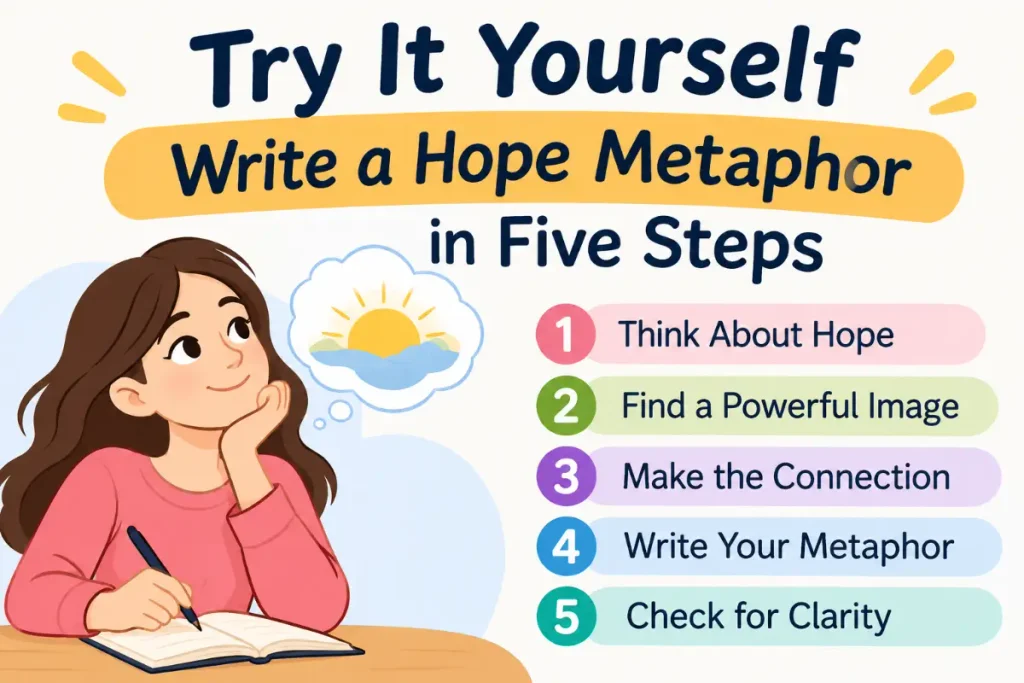
Try It Yourself: Write a Hope Metaphor in Five Steps
Use these steps with a situation you know.
- Choose a difficulty. For example: waiting for test results.
- Decide the strength. Is it faint, steady or strong?
- Pick a source. Think of light, plants, weather, travel or building.
- Write three versions. For example: Hope was a match cupped against the wind. / Hope was a seed under the snow. / Hope was a ticket for a train not yet in sight.
- Choose the best one and add a detail. Hope was a match cupped against the wind, and she kept her hands very still.
Now write a second version showing hope being shared with someone else.
Frequently Asked Questions
What is a good metaphor for hope?
“Hope is a lighthouse in the fog” is clear and powerful. “Hope is a seed under the snow” adds the idea of patience and slow growth.
What is a famous metaphor for hope in poetry?
Emily Dickinson compared hope to a bird that perches in the soul and sings without stopping. It is one of the best-known hope metaphors in English poetry.
What is the difference between hope and optimism metaphors?
Hope metaphors usually involve difficulty, such as fog, snow or darkness. Optimism metaphors are often brighter and more general, like sunshine or open skies.
Can I use a simile for hope instead?
Yes. “Hope is like a candle in the dark” is a simile because it uses “like.” A metaphor says “Hope is a candle in the dark.”
What is a metaphor for fragile hope?
Images of small, easily shaken things work best: a candle in a draft, a soap bubble, a spider’s thread or thin ice. They show hope that is real but needs care.
What is a metaphor for losing hope?
Try a candle blown out, a door closing, a road ending in fog or a seed that never sprouted. For a gentle story, follow it with a match struck or a window opened to show hope returning.
Are hope metaphors good for speeches?
Yes. They work well in graduation speeches, team talks and community messages. Name the difficulty first, then offer one clear image of light or growth.
Conclusion
Hope rarely announces itself. It shows up as a small flame, a green shoot or a porch light left on, and metaphors help us see it. The best hope images are honest about the difficulty around them, which is what makes the light matter. They show hope as quiet, sometimes fragile, and often shared.
Whether you are writing a speech, an essay or a poem, pick one clear image, pair it with the struggle it answers, and let it show readers that better days are possible. Avoid worn-out phrases when you can, and explain your metaphor in school work. Come back to these examples whenever you need a reminder of the light ahead.
Related Metaphors
- For brighter feelings, explore metaphors for happiness.
- If you are writing about goals and growth, see success metaphors.
- To pair hope with setbacks, read our guide to metaphors for failure.